

Hear from Our Customers

Standing water in a Thornbury yard isn’t just an eyesore. It’s a slow-moving threat to your foundation, your landscaping, and the long-term value of your property. When water sits against a foundation wall for days after a spring rain which happens regularly on Thornbury’s clay soils it creates hydrostatic pressure that leads to basement moisture, mold, and eventually structural damage that costs far more to fix than the drainage system that would have prevented it.
The rolling terrain throughout Thornbury Township means water doesn’t just pool it moves. It finds low spots, follows slopes, and concentrates in corners of your yard that didn’t used to be a problem until a new patio, a grading change, or a neighbor’s construction altered the flow. Properties near Chester Creek or Brinton Lake carry additional risk, sitting in a watershed that runs high during wet seasons and keeps groundwater elevated longer than you’d expect.
What changes after the drainage work is done isn’t dramatic it’s quiet. Your yard dries out after rain the way it’s supposed to. You stop seeing that soft, soggy corner near the back fence. You stop finding moisture along the basement wall every March. That’s the outcome: a property that handles water correctly, season after season, without you thinking about it.
We’re based in Aston, PA a few miles from Thornbury and have been doing drainage and grading work throughout Delaware County for over 15 years. That proximity matters. We know how water moves on western Delaware County’s hilly terrain, what clay soil does during a wet Pennsylvania spring, and what drainage systems hold up through years of freeze-thaw cycles in this specific climate. We’ve worked on Thornbury properties long enough to understand the township’s permitting process, the seasonal patterns that affect your yard, and the solutions that actually last here.
This isn’t a regional company sending out a crew that’s never worked in your township. We have an active project history in Thornbury, and that familiarity shows up in how we assess, design, and execute the work. No subcontractors, no handoffs the same team that walks your property is the one that does the work.
Grading and drainage are handled together here, not as separate scopes. That integration is what makes the fix permanent rather than temporary.
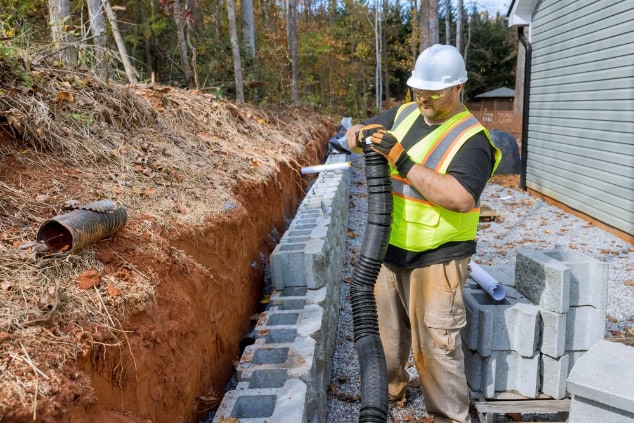
It starts with a site assessment not a sales pitch. Before any solution gets proposed, we walk your property to understand how water is actually moving across it. On a Thornbury lot, that means reading the slope, identifying where clay soil is slowing infiltration, and tracing the path water takes from the high point of your yard to wherever it’s causing the problem. That step alone separates a drainage system that works from one that just moves the problem somewhere else.
From there, we design the right solution around your specific conditions. That might be a French drain installation routed to a proper discharge point, a graded swale that follows a natural contour of your land, a catch basin in a low area that keeps collecting water, or some combination of all three. Thornbury Township requires permits for work that alters drainage patterns, and we handle that process you’re not left figuring out the township’s Cloudpermit system on your own.
Installation is done by the same crew that assessed and designed the system. Once the work is complete, we restore the site properly grading, seeding, cleanup. The goal is a yard that looks right and drains right, not one that shows the evidence of a drainage project for the next two seasons.

Ready to get started?
The drainage work we do in Thornbury covers the full range of what a property on rolling, wooded, clay-soil terrain actually needs. French drain installation is the most common solution for subsurface water management a perforated pipe set in gravel that intercepts groundwater before it reaches your foundation or pools in your yard. But a French drain installed without correct grading is only half a fix. The slope of the land has to direct water toward the drain, not away from it, which is why we handle grading and drainage as one integrated scope.
For properties dealing with surface water concentration low spots, areas at the bottom of a slope, yards where a new patio or driveway changed the flow catch basins and surface grading are often the more direct solution. Properties near Brinton Lake Road or in the Chester Creek corridor may also need discharge routing that accounts for seasonal high water and township stormwater requirements under Thornbury’s active NPDES MS4 program.
Every project we design gets built around what your specific property needs. That means the assessment determines the solution not the other way around. If regrading alone solves your standing water problem, that’s what we recommend. If it needs a full French drain system with a catch basin and a defined discharge point, that’s what we design. The scope follows the site.
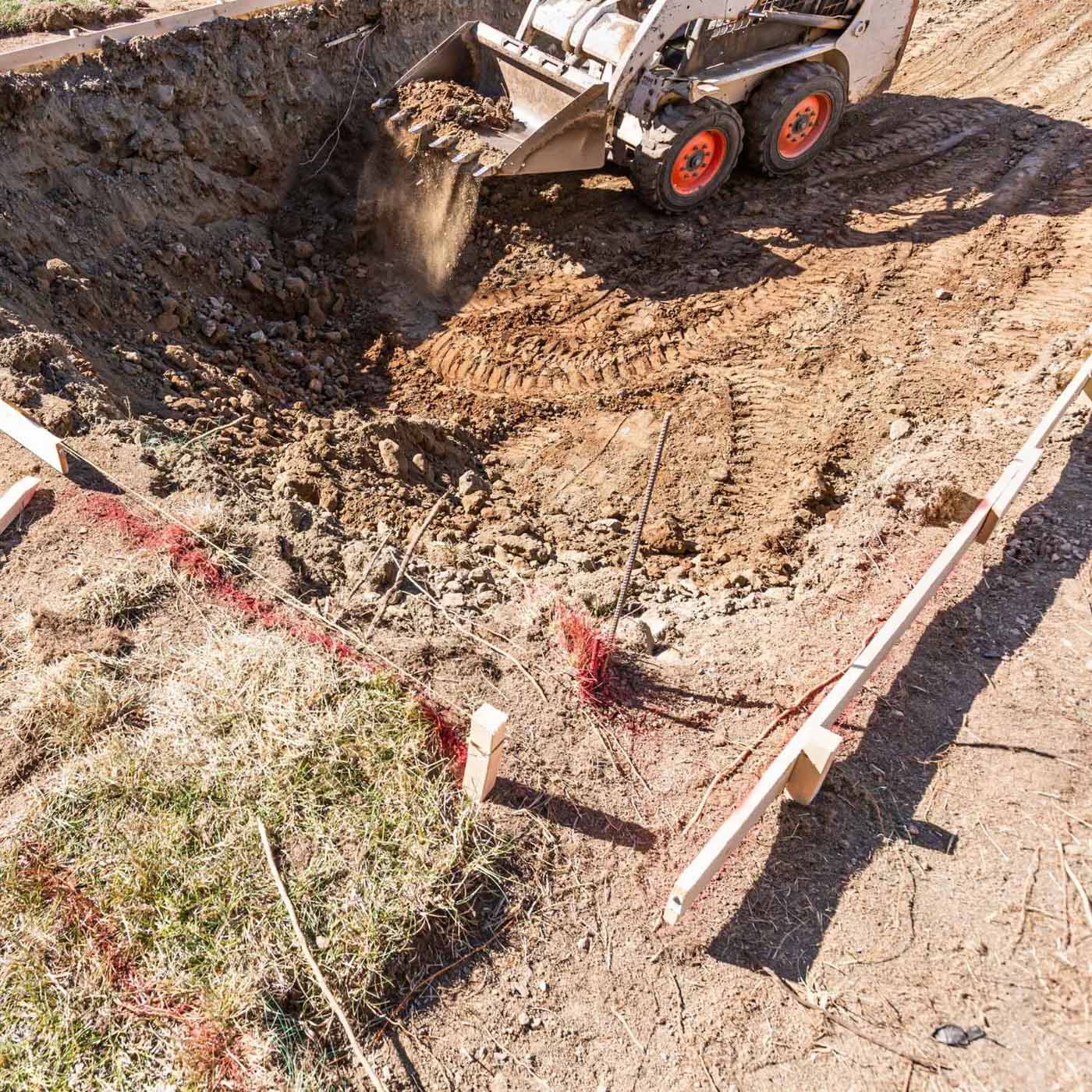
In many cases, yes. Thornbury Township requires permits for any work that alters a drainage pattern or changes how stormwater is absorbed on your property. That includes French drain installation, grading changes, excavation, and any drainage system that redirects water flow. The township administers its permitting through an online system called Cloudpermit, and drainage work that doesn’t comply with local standards can trigger enforcement action especially since Thornbury participates in Pennsylvania’s NPDES MS4 stormwater program, which creates real regulatory accountability for how water moves on and off private properties.
The practical takeaway: don’t assume drainage work is a permit-free project in Thornbury. A contractor who isn’t familiar with the township’s requirements can leave you with a non-compliant installation that you’re responsible for correcting. We handle the permit process as part of the project so you’re covered from the start.
French drain installation in Delaware County generally runs between $5,000 and $9,500 for a standard residential project, though the final number depends on the length of the drain run, the complexity of the discharge routing, and whether grading work is needed alongside it. On a Thornbury property where lots tend to be larger, terrain is more varied, and the drainage path from problem area to discharge point can be longer than on a typical suburban lot projects sometimes fall toward the higher end of that range.
Labor makes up the majority of the cost, typically 80 to 85 percent. Materials pipe, gravel, filter fabric, catch basins are a smaller portion. The most important thing to know is that the site assessment determines the actual scope, and a proper assessment sometimes reveals that regrading alone solves the problem for significantly less than a full French drain system. You won’t know until someone walks the property and reads it correctly.
The most common cause in Thornbury is the combination of clay-heavy soil and sloped terrain. Clay soil has low permeability water can’t move through it quickly, so it sits on the surface or just below it long after the rain has stopped. When that’s combined with a slope that channels water toward a low point in your yard, you end up with standing water that can take days to clear, even after a moderate rain event.
Other contributing factors include impervious surfaces that have been added to the property a new patio, an expanded driveway, a pool deck that prevent water from soaking in and redirect it across the surface toward wherever the ground is lowest. If your property is near Chester Creek or in a low-lying area of the township, elevated groundwater during wet seasons can also cause water to appear in your yard from below, not just from above. A site assessment identifies which of these is actually driving the problem on your specific property.
Often, yes and exterior drainage is usually the right place to start before considering interior waterproofing systems. Most basement moisture problems in homes throughout Thornbury originate from water that isn’t being directed away from the foundation properly. If the grade around your home slopes toward the foundation, if water is pooling near the basement wall, or if a downspout is discharging too close to the house, those are exterior drainage problems that an exterior drainage solution can fix.
A properly graded foundation perimeter, combined with a French drain that intercepts groundwater before it reaches the wall, eliminates the source of the hydrostatic pressure that causes basement leaks. Interior waterproofing systems sump pumps, interior drain tile manage water after it’s already gotten in. Fixing it outside is the more permanent approach, and it’s typically less disruptive to the interior of your home. The assessment will tell you which approach your specific situation calls for.
A properly installed French drain in Delaware County should last 30 to 40 years with minimal maintenance. The key words are “properly installed” because the freeze-thaw cycles Pennsylvania experiences every winter are hard on drainage systems that were installed with inferior materials, inadequate depth, or incorrect slope. When water sits in a poorly graded pipe and freezes, it expands. Over several seasons, that expansion cracks pipe, heaves the system out of alignment, and eventually causes the drain to fail or back up.
The materials and installation depth matter significantly in this climate. Pipe spec, gravel selection, filter fabric quality, and the slope of the drain run all affect how the system holds up over time. A French drain installed correctly for Pennsylvania’s climate with proper frost depth consideration and appropriate discharge routing performs reliably through decades of wet springs and hard winters. That’s the standard we work to, because we’ve seen what holds up in Delaware County and what doesn’t.
This is a genuinely common situation in Thornbury Township, where the ongoing conversion of former farmland and open parcels to residential development has changed how stormwater moves across the landscape. When a neighboring property adds impervious surface a new home, a driveway, a graded lawn it reduces the land’s ability to absorb water and can direct increased runoff onto adjacent properties that weren’t designed to handle it.
From a practical standpoint, the first step is having your property assessed to understand where the water is coming from and where it’s going. A drainage system designed around your property’s specific conditions a French drain that intercepts runoff before it reaches your foundation, a graded swale that routes it to an appropriate discharge point can protect your property regardless of what your neighbor’s site is doing. Thornbury Township also has stormwater ordinance provisions that address drainage concentration on adjacent properties, so there may be a regulatory avenue worth exploring depending on the severity of the situation. A contractor familiar with local code can help you understand your options.
Useful Links