
Hear from Our Customers
Thornbury gets the same brutal Pennsylvania winters as everywhere else in the county but with rolling terrain, forested lots, and Chester Creek drainage patterns that add real complexity to any outdoor project. Forty-plus freeze-thaw cycles a year will expose every shortcut taken during installation. A base that’s too shallow, poorly compacted, or not graded for drainage will shift, crack, and buckle before you’ve had three full winters on it.
When the base is built correctly, everything else holds. You get a patio that looks the same in year twelve as it did the week it was finished. No sunken corners, no weeds pushing through gaps, no water pooling against your foundation after a hard rain. For a property in Glen Mills or Cheyney, where the home itself might be a 200-year-old stone farmhouse or a custom contemporary estate on an acre-plus lot, that kind of durability isn’t optional it’s the whole point.
The other thing you get is a space you actually use. Not something you walk past and think “I should fix that.” A real outdoor living area designed around your yard, your sightlines, your summer evenings that becomes one of the best parts of owning your home.
We’re based in Aston directly south of Thornbury Township. That’s not incidental. It means our crew knows Thornbury’s terrain, understands what Chester Creek drainage challenges look like in practice, and has worked on properties with the same rolling topography and historic stone character that defines so much of the area’s housing stock.
This is an owner-operated operation. Renato Spennato isn’t a name on a website he’s the person responsible for every project that goes out under our name. There are no subcontractor handoffs, no crews you’ve never met showing up at your property. The same experienced team that starts your project finishes it.
Thornbury homeowners invest seriously in their properties. We expect the same level of seriousness from ourselves.
It starts with a conversation not a sales pitch. Before anything is measured or priced, we want to understand how you use your outdoor space, what you’re envisioning, and what your yard is actually working with. Thornbury lots vary significantly: a flat backyard behind a newer contemporary home in Thornton is a completely different project than a sloped, partially shaded yard behind a stone farmhouse near the Chester Creek Historic District. The site conditions drive the design, not the other way around.
Once the scope is clear, you get a straightforward quote. The pricing range for most residential patio projects runs $15 to $50 per square foot, with most projects landing between $3,500 and $12,000 though Thornbury projects often run toward the mid-to-upper end of that range, given the larger lot sizes and the preference for premium materials like flagstone and Pennsylvania Bluestone. There are no hidden costs added after you’ve already said yes.
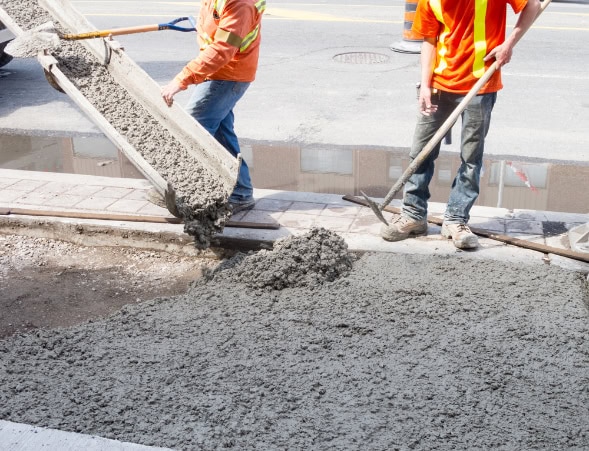
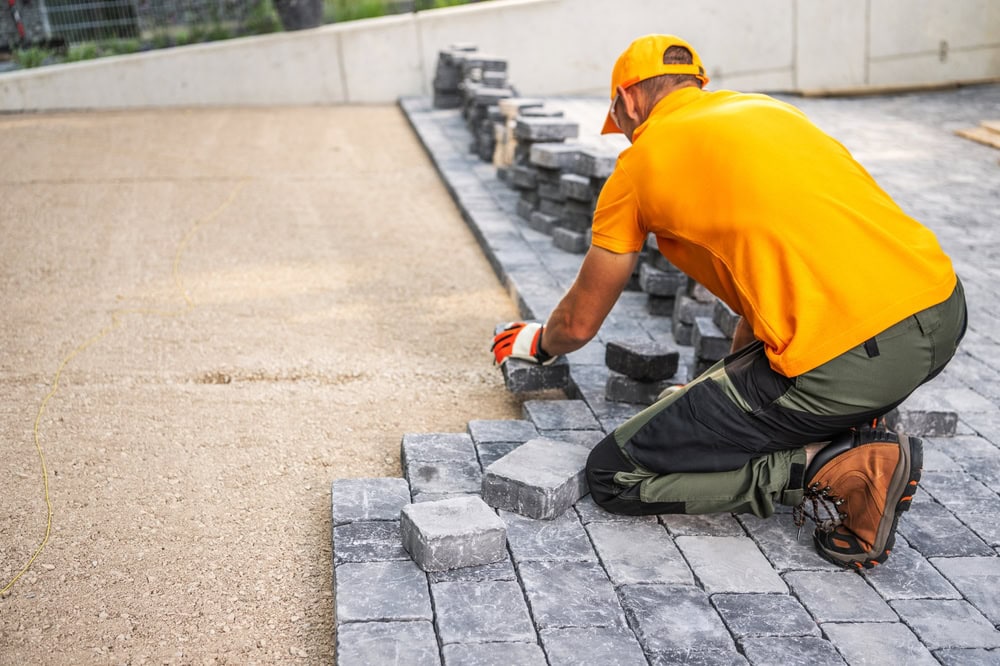
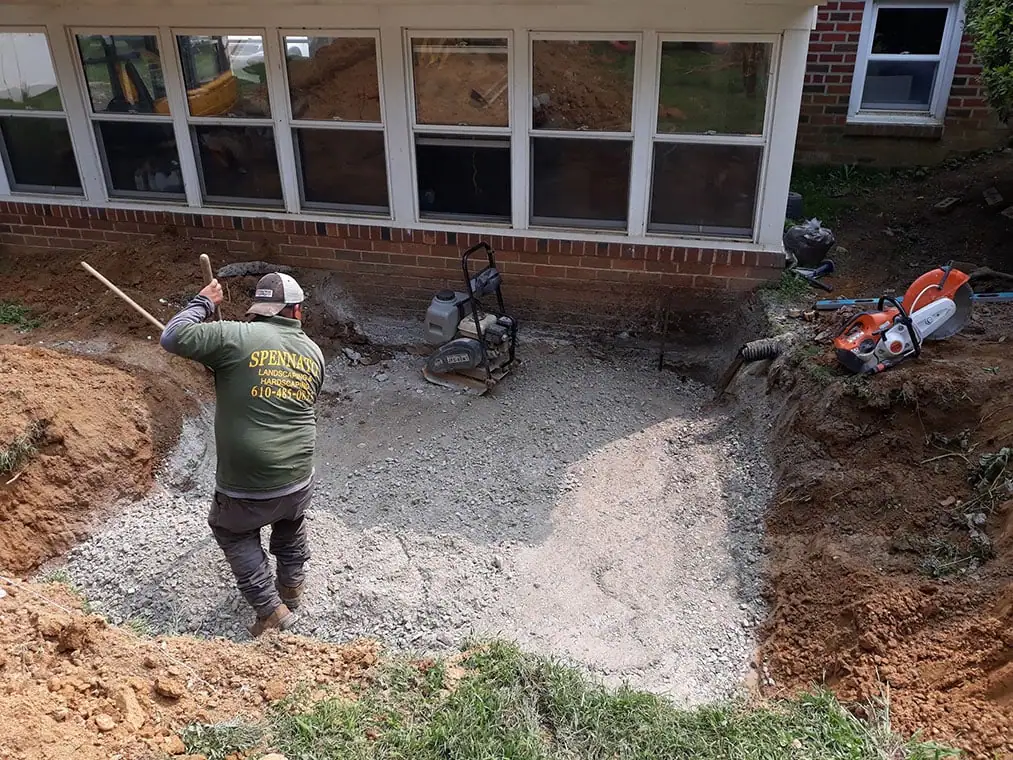
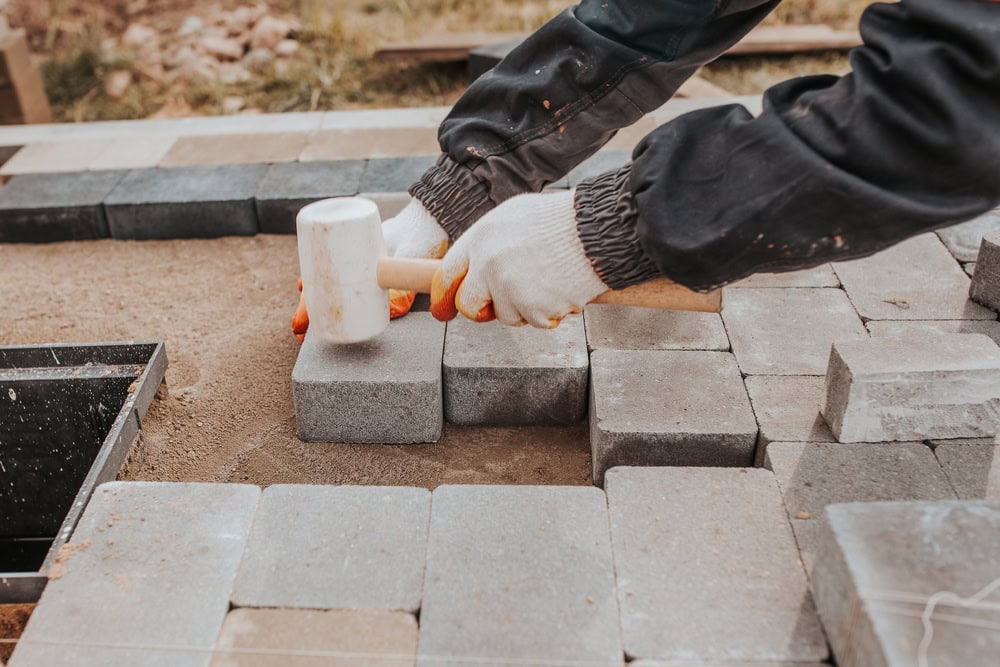
Installation begins with excavation and base preparation the part that determines everything. Proper depth, compacted aggregate layers, and correct drainage slope are non-negotiable. After that, the surface goes down: pavers, flagstone, natural stone, or concrete, depending on what you’ve chosen and what fits your home. We finish joints with polymeric sand, secure edges, and clean up the site before we leave. If a permit is required for your specific project scope, we handle that upfront Thornbury Township’s code department processes permits through their Cloudpermit system, and it’s something worth confirming before any work begins.
Ready to get started?
Material choice matters more in Thornbury than in most places. When your home is a colonial-era stone farmhouse with a National Register historic district down the road, a stamped concrete patio in a repeating geometric pattern can look genuinely out of place. It’s not about cost it’s about whether the outdoor space feels like it belongs to the property or was dropped onto it.
Flagstone and Pennsylvania Bluestone are natural fits for Thornbury’s most distinctive homes. They echo the stone character of the architecture, they weather beautifully over time, and they hold up well in shaded, wooded settings which describes a lot of the lots in Glen Mills and Cheyney. Natural stone does require more care in base preparation than uniform pavers, and the jointing and drainage details matter more, but when it’s done right, it’s the kind of patio that looks better at year ten than it did at installation.
Interlocking concrete pavers are the most popular option across the board they’re durable, freeze-thaw tested, and available in a wide range of tones and textures that can complement both historic and contemporary homes. Stamped or colored concrete is a solid option for homeowners who want a clean, low-maintenance surface at a lower per-square-foot cost. The right choice depends on your home, your yard, and what you’re trying to accomplish and that’s exactly the kind of conversation worth having before any decisions are made.

For most ground-level patio installations pavers, flagstone, or concrete at grade a building permit is typically not required in Pennsylvania municipalities. That said, Thornbury Township operates its own code department and processes permits through a system called Cloudpermit, and the specifics can vary depending on your project scope. If you’re adding a covered structure like a pergola or a roof over the patio, that changes the equation those projects almost always require a permit because they involve structural elements.
Retaining walls are another consideration. If your yard has any slope which is common on Thornbury’s rolling lots and the design calls for a retaining wall above four feet, that will likely require a permit and possibly engineered drawings. The safest approach is to confirm with Thornbury Township’s code department at (610) 399-0844 before any work starts. A contractor who handles this research as part of their intake process rather than leaving it to you to figure out is worth a lot more than one who shows up on day one without asking.
This is one of the most important questions a Thornbury homeowner can ask, and the answer isn’t the same for every property. If you’re working with a colonial-era stone farmhouse or a home near one of the township’s historic districts the Chester Creek Historic District and Thornton Village Historic District are both on the National Register of Historic Places material choice is as much a design decision as a budget decision.
Flagstone and Pennsylvania Bluestone tend to be the strongest fits for these properties. They share the natural, irregular character of the stone used in historic construction, they age gracefully, and they feel like they belong in the landscape rather than being imposed on it. Interlocking concrete pavers in muted, natural tones can also work well, especially for larger patio areas where the cost of full natural stone becomes significant. What tends to look out of place is a highly uniform, geometric stamped concrete surface the contrast with the organic character of a stone farmhouse is hard to ignore. We walk material samples through the context of your specific home before any decisions are locked in.
It’s the single biggest technical factor in this climate, and it’s the reason base preparation matters more than almost anything else. Southeastern Pennsylvania including Thornbury goes through 40 or more freeze-thaw cycles in a typical winter. Water gets into any gap in the base, freezes, expands, and pushes the surface material up. Do that 40 times in a season, and a patio with a shallow or poorly compacted base will start to show it quickly. Settled pavers, cracked concrete, and uneven flagstone are almost always the result of base failure, not surface material failure.
The fix isn’t complicated it’s just work that has to be done correctly the first time. Proper excavation depth, multiple compacted layers of aggregate base, correct drainage slope, and secure edge restraints are what separate a patio that holds for 20 years from one that needs attention after three winters. On a Thornbury property where you’ve invested $700,000 or more in the home itself, this is not the place to cut corners to save a few hundred dollars on the base.
The honest answer is that it depends on size, material, site conditions, and what’s involved in the base preparation. The general range for residential patio installation runs $15 to $50 per square foot, with most projects landing somewhere between $3,500 and $12,000. Thornbury projects tend to run toward the mid-to-upper end of that range for a few reasons: the lots are larger, which often means larger patio footprints; the terrain can involve grading and drainage work that adds to the base cost; and the preference for premium materials like flagstone and Pennsylvania Bluestone carries a higher per-square-foot cost than standard concrete pavers.
A 400-square-foot paver patio on a relatively flat site with straightforward access might come in around $8,000–$10,000 with quality base preparation included. A flagstone patio of similar size on a sloped lot near Chester Creek, with drainage considerations built in, could run higher. The best way to get a real number is a site visit there’s no substitute for seeing the actual yard, the grade, the access, and the existing conditions before putting a price on paper.
For a typical residential patio somewhere in the 300 to 600 square foot range the installation itself usually takes two to four days on-site. That includes excavation, base preparation, surface installation, and finishing details like polymeric jointing sand and edge cleanup. Larger or more complex projects, or anything involving significant grading or retaining walls, will take longer.
The part that catches people off guard is the timeline between signing and start date. During peak season late spring through early fall, which is the optimal installation window in Pennsylvania quality contractors book out weeks in advance. If you’re thinking about a patio for summer use, the conversation is worth starting in late winter or early spring. Waiting until June to call usually means you’re looking at a July or August start at the earliest. Once a project is scheduled, we complete it within the agreed window not start it and then leave equipment in your driveway for two weeks while working three other jobs simultaneously.
A few things matter more than price. The first is whether the contractor can explain their base preparation process in plain terms how deep they excavate, how many layers of aggregate they use, how they handle drainage slope, and how they secure the edges. If that conversation is vague or gets brushed past quickly, that’s a signal worth paying attention to. The base is what you’re really paying for, and it’s the part you’ll never see once the project is done.
The second thing is accountability after the job is finished. In a township like Thornbury, where properties are substantial and contractors are known by their work, responsiveness after the final payment matters. Ask directly: who do you contact if something needs attention after the project is complete, and how quickly can you expect a response? A contractor who gives you a clear, confident answer to that question and backs it up with a named point of contact is worth more than one who gives you a warranty document and a disconnected phone number.
Useful Links