

Hear from Our Customers

Most excavation problems don’t show up the day the crew leaves. They show up the first time it rains hard water pooling against your foundation, a yard that won’t drain, a basement that takes on an inch of water every spring. In Yeadon, that’s not a hypothetical. The borough sits adjacent to Cobbs Creek and Blunston Run, and the stormwater pressure that creates is real enough that Yeadon Borough has a formal ordinance requiring proper grading on every property. The Code Department enforces it.
The housing stock here makes this more complicated, not less. Most of Yeadon’s homes were built in the post-WWII era twins and semi-detached properties on small lots with minimal setbacks. Decades of tree root growth, utility repairs, and settled soil mean the original grading on a lot of these homes has shifted in ways the homeowner can’t see until there’s a problem. Getting it corrected means understanding how water moves on a constrained urban lot, not just knowing how to operate an excavator.
When the grading is done correctly with proper slope away from the foundation, drainage integrated into the plan from the start, and compaction done right for Delaware County’s clay-heavy soil the difference is real. Dry basement. Yard that sheds water the way it’s supposed to. A surface that holds through Pennsylvania’s freeze-thaw cycles instead of heaving and cracking the first winter.
We’re based in Aston, PA same county as Yeadon, not a regional chain dispatching crews from two hours away. Renato Spennato has been doing masonry, grading, excavation, and outdoor work across Delaware County long enough to know exactly what Yeadon’s lots demand: tight equipment operation, drainage-first grading, and a clear understanding of how the borough’s Code Department works.
That local track record shows up in the details. BuildZoom ranks us in the top 11% of more than 125,000 licensed Pennsylvania contractors a score based on permit history, license status, and verified project quality. That’s not a self-declared claim. Any homeowner can check it independently in about 30 seconds.
Renato is personally involved in the work not managing from a distance while a rotating crew handles your property. Reviewers have called it “arguably the best contractor experience I have had as a homeowner,” specifically noting he was “always on time or early.” For Yeadon homeowners commuting into Philadelphia on the Route 13 trolley or the Media/Wawa Regional Rail line, that kind of reliability isn’t a nice-to-have. It’s the whole thing.
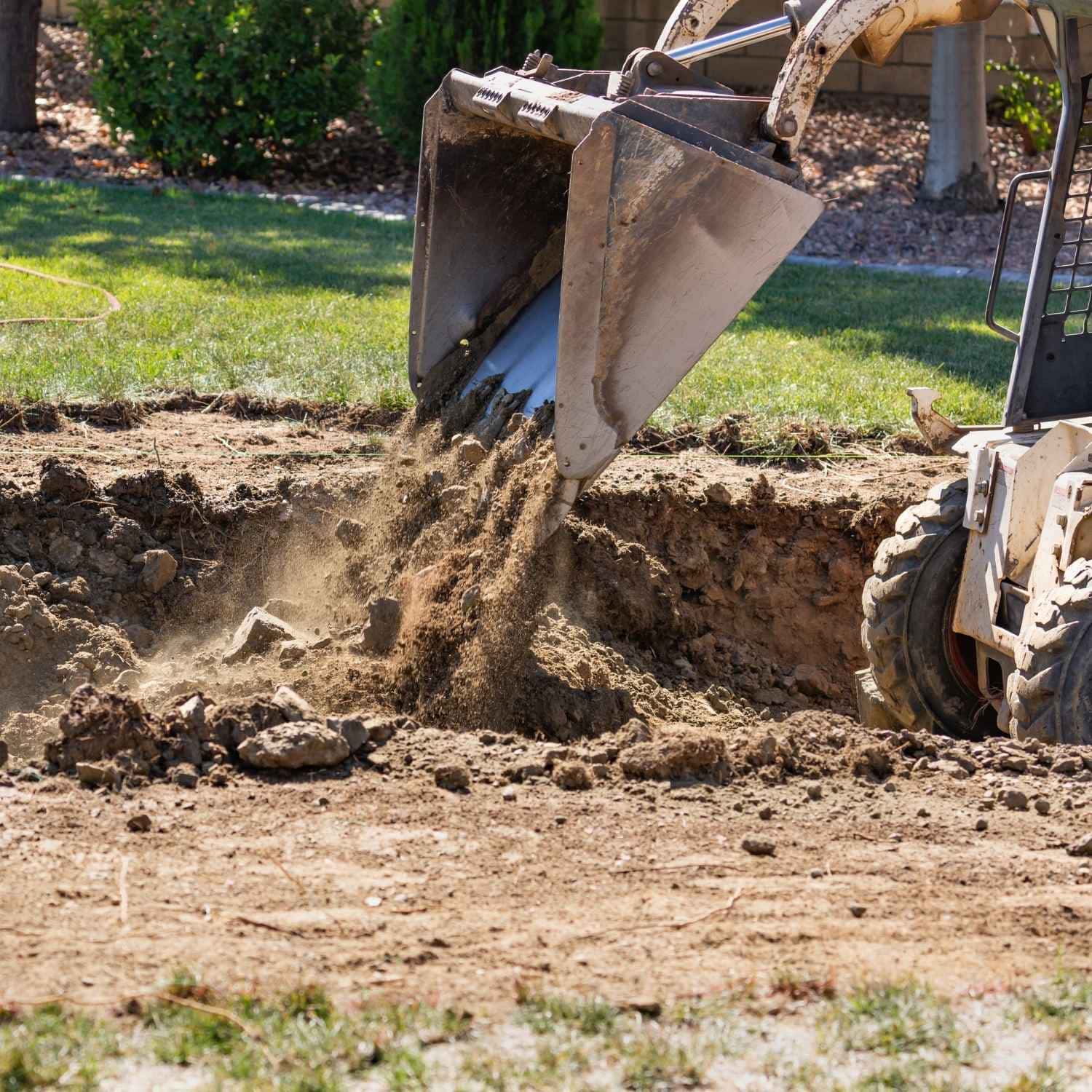
It starts before a single machine touches your property. Yeadon Borough’s Stormwater Management ordinance (Chapter 264) requires a drainage plan approved by the borough before regulated earth disturbance begins. That means pulling the right permits through the Code Department at 600 Church Lane, identifying drainage areas and discharge points, and making sure the scope is fully documented before work starts. We handle that process you don’t have to figure out what Yeadon requires or chase down approvals yourself.
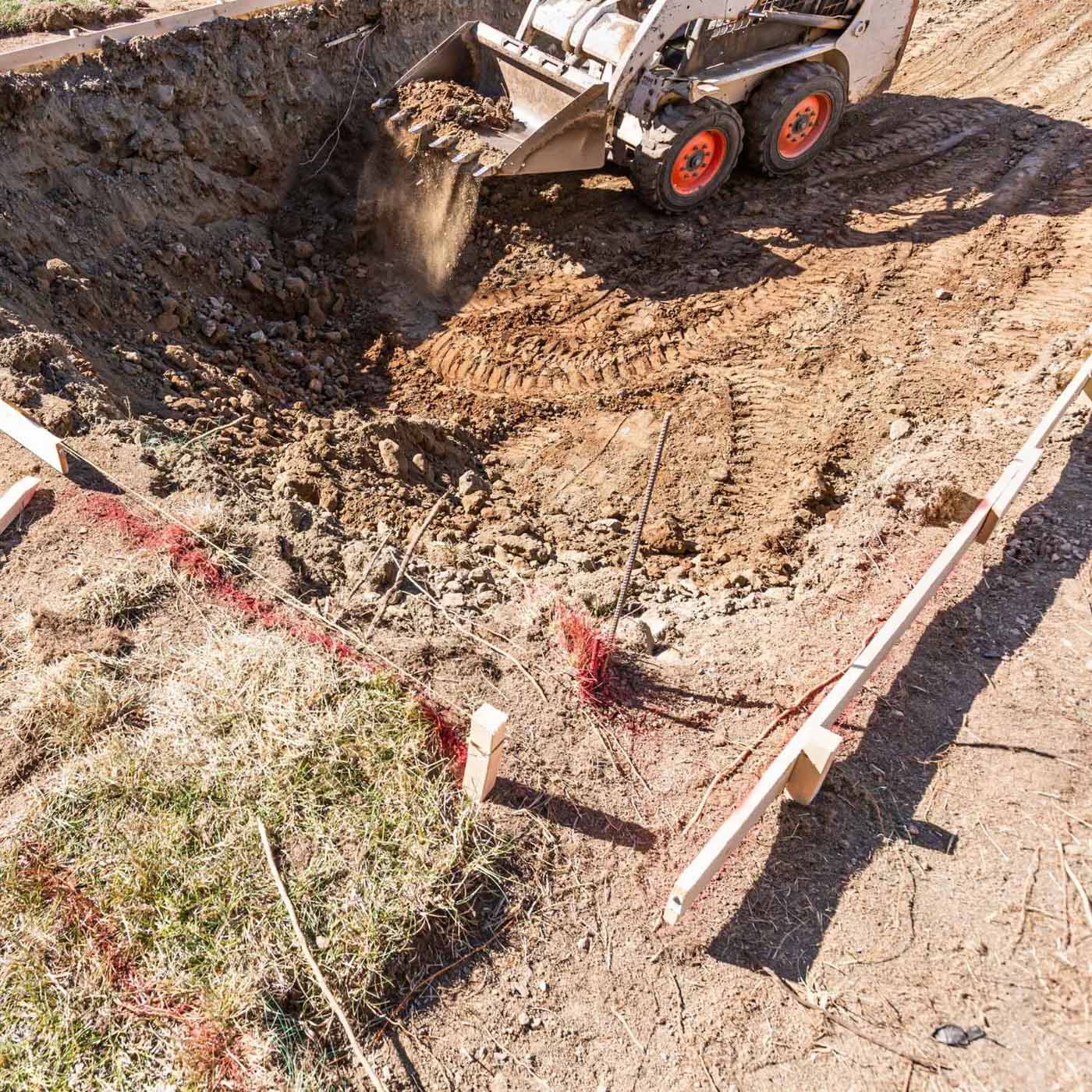
Once permits are in place, the site gets marked through Pennsylvania’s 811 utility call-in process a legal requirement before any digging, and one that matters especially on Yeadon’s older streets where utility infrastructure hasn’t always been mapped cleanly. From there, excavation and grading proceed with equipment sized for the actual lot not oversized machinery that puts neighboring foundations or fences at risk on a tight Yeadon block.
The grading itself is set with drainage as the primary objective. Slope is established away from the foundation, soil is compacted properly for Delaware County’s clay composition, and the finished surface is built to handle Pennsylvania’s freeze-thaw cycles not just look flat when the crew leaves. If excavation is the first step toward a patio, retaining wall, or driveway, that finished project is built by the same team. One scope. One contractor. No handoffs.
Ready to get started?
Excavation and site grading in Yeadon covers a range of work that often gets treated as separate jobs by separate contractors. We handle it as one continuous scope: permit acquisition through Yeadon Borough’s Code Department, drainage plan preparation per Chapter 264, utility marking, excavation, grading, compaction, and full site restoration. If the excavation is prep work for a larger project a paver patio, a retaining wall, a new driveway that work continues under the same contract with the same crew.
For Yeadon homeowners on or near the streets where Aqua Pennsylvania is actively replacing water mains in 2026 Cedar Ave, Norma Rd, Alfred Ave, Coventry Ave, Glen Cove Rd, Londonderry Ln, and Shetland Rd utility work frequently leaves yard grading disrupted and drainage patterns altered. Re-grading and site restoration after utility replacement is a specific service that addresses exactly that situation, and it’s work that needs to be done correctly to prevent the kind of foundation and drainage problems that show up a season later.
The cost of residential excavation and grading in this market typically ranges from $1,600 to $6,700 for most projects, with foundation-related excavation running $5,000 to $12,000 depending on scope and access. Every project gets a clear, written estimate with itemized scope before any work begins no vague ranges, no surprise line items after the fact.
Yes and it’s more involved than just pulling a standard construction permit. Yeadon Borough’s Stormwater Management ordinance, codified in Chapter 264 of the Borough Code, requires anyone proposing regulated earth disturbance to submit a drainage plan to the Borough for review and approval before work begins. That plan needs to identify drainage areas, discharge points, recharge areas, and hydrologic soil groups specific to your site. The Code Department at 600 Church Lane administers this process, and permit fees are calculated based on job cost $40 for the first $1,000, plus $20 per additional $1,000.
Separately, the Borough’s Property Maintenance Code (Chapter 220, Article III) explicitly requires all premises to be graded to prevent stagnant water accumulation. That’s an enforceable code requirement, not a suggestion. Working with a contractor who understands what Yeadon specifically requires and who handles permit acquisition as part of the project removes a significant friction point and protects you from unpermitted work that creates title problems and remediation costs down the road.
For most residential excavation and grading projects in the Delaware County market, you’re looking at a range of roughly $1,600 to $6,700 depending on scope, site access, and what the ground is actually like when the crew gets there. Foundation excavation for additions, new garages, or structural repairs typically runs $5,000 to $12,000. Labor in the Philadelphia suburban market runs about 15 to 25% higher than rural Pennsylvania, so cost estimates from national average calculators tend to understate what you’ll actually pay here.
The factors that move the number up or down are usually access constraints, soil conditions, and whether drainage work is included. On a typical Yeadon lot small, constrained, with clay-heavy soil access limitations and drainage requirements are almost always part of the conversation. Getting a written, itemized estimate before work starts is the only way to know what you’re actually committing to. Any contractor who can’t give you a clear scope in writing before the first machine shows up is a contractor worth being cautious about.
The consequences tend to show up gradually and then all at once. Improper grading on a post-WWII twin or semi-detached home in Yeadon typically means water is moving toward the foundation instead of away from it. Over time, that produces basement moisture, efflorescence on foundation walls, and eventually cracking or settling if hydrostatic pressure builds up enough. In a borough where Cobbs Creek and Blunston Run already create stormwater pressure during heavy rain events, improper grading on your lot compounds a problem that’s already present at the neighborhood level.
Beyond the structural risk, Yeadon’s Property Maintenance Code requires grading that prevents stagnant water accumulation and the Code Department enforces it. A property with visibly improper drainage can generate a code enforcement notice that requires corrective work on your timeline, not yours. Getting the grading right the first time costs significantly less than foundation remediation, drainage correction, and code compliance work after the fact.
Clay soil behaves very differently from sandy or loamy soil, and it affects nearly every part of the excavation and grading process. Clay retains water, which means it stays saturated longer after rain making it heavier, more difficult to grade cleanly, and more prone to shifting once disturbed. When it dries out, it contracts. When it freezes, it expands. That cycle is what causes improperly compacted excavations to settle unevenly and inadequately prepared surfaces to heave and crack through a Pennsylvania winter.
For grading work specifically, clay soil requires more careful attention to compaction depth and drainage slope than most homeowners realize. A surface that looks flat and finished in September can behave very differently by March if the compaction wasn’t done right for the soil type. Delaware County’s clay-heavy composition is a known variable not a surprise and it should be accounted for in how the excavation is planned and executed, not discovered after the fact.
Most excavation contractors in the Yeadon area are specialists they dig, grade, and hand the project off. That means you’re coordinating a separate masonry contractor or patio installer, and every handoff is an opportunity for something to not line up. The excavation grade doesn’t match what the patio contractor expected. The retaining wall doesn’t account for the drainage work. Two contractors pointing at each other when something doesn’t look right.
We handle the full scope under one contract excavation and grading through retaining walls, paver patios, driveways, and finished outdoor spaces. The excavation is designed with the finished project in mind from day one, which means the grade is set for the patio, not just for drainage in isolation. For Yeadon homeowners who are excavating as the first step toward a larger outdoor project, that continuity matters. It’s the difference between a project that works as a system and one that was assembled in pieces.
Yes Pennsylvania law requires utility marking through PA 811 before any excavation, regardless of how small the dig is. This applies to homeowners and contractors alike. The call-in triggers a process where utility companies mark underground lines gas, electric, water, sewer, telecommunications so they can be avoided during excavation. Failing to call before digging doesn’t just risk damaging a line. It creates legal liability and can result in service disruptions that affect your neighbors, not just your property.
In Yeadon specifically, this step carries extra weight. The borough’s utility infrastructure is aging Aqua Pennsylvania is actively replacing water mains on multiple streets right now and not all underground lines are mapped with the precision you’d find in newer developments. On a dense block where homes sit close together and utility connections run at various depths and angles, assuming you know where the lines are is a risk no crew should take. We handle the 811 process before the first machine moves. If a contractor skips it, that tells you something important about how they approach the rest of the job.
Useful Links