
Hear from Our Customers
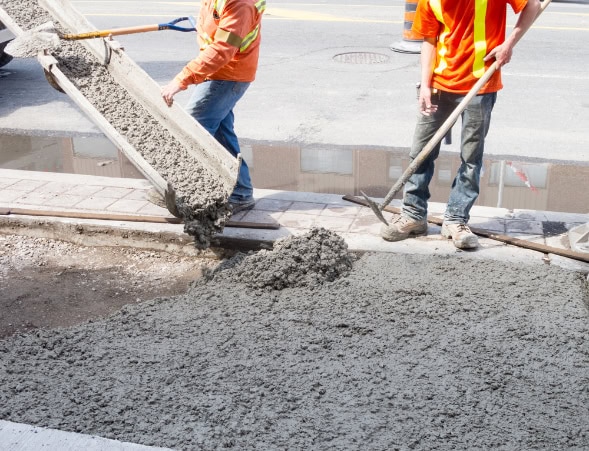
Southeastern Pennsylvania puts patios through real stress. Yeadon gets 40-plus freeze-thaw cycles every winter, and the clay-heavy soil throughout this part of Delaware County holds water instead of draining it. That combination is exactly what causes patios to heave, crack, and develop soft spots usually after the second or third winter, when it’s too late to point fingers at the contractor who’s stopped answering calls.
A properly installed patio starts with the base, not the surface. That means excavating to the right depth, compacting aggregate in layers, building in a drainage slope away from your foundation, and using edge restraints that keep everything locked in place year after year. None of that is visible once the job is done which is precisely why it matters who does it.
For the 1920s and 1950s stone and brick twins that make up most of Yeadon’s housing stock, the rear yard is often small, bounded by fencing, and dealing with drainage from neighboring properties and aging downspouts. A well-designed patio accounts for all of that. The goal isn’t to cover every square foot it’s to create a defined, functional outdoor space that works with your home’s layout and holds up without ongoing maintenance headaches.
We’re based in Aston, PA a Delaware County address, not a regional franchise with a satellite crew that’s never worked a Yeadon job before. Renato Spennato runs the company, and his name is attached to every project. That’s not a marketing angle it’s a practical reality that changes how the work gets done.
There’s no subcontractor juggling here. The same team that designs your patio installs it, and the same person you spoke with before the project started is reachable after it’s finished. In a borough as tight-knit as Yeadon where neighbors talk, block associations meet, and word travels fast that kind of accountability matters. It’s the only way to build a reputation worth having.
We’ve been working throughout Delaware County long enough to know what clay soil does to an under-built base, what Yeadon’s compact lots actually require in terms of design, and how to navigate the borough’s permit process without turning a straightforward project into a drawn-out ordeal.
It starts with a conversation about your specific yard not a generic consultation built around a Broomall half-acre. Yeadon properties have their own set of conditions: narrow rear yards, shared drainage patterns, mature trees with root systems that complicate base prep, and homes with architectural character that deserves a design that complements it rather than clashes with it. That context shapes everything from material selection to drainage planning before a single measurement is taken.
Once the design is agreed on and the estimate is in writing, we handle the permitting side with Yeadon Borough’s Code Enforcement Department. Depending on the scope of your project, a permit may be required and the borough’s standard review period runs up to 15 business days. Getting that process started early is part of the plan, not an afterthought.
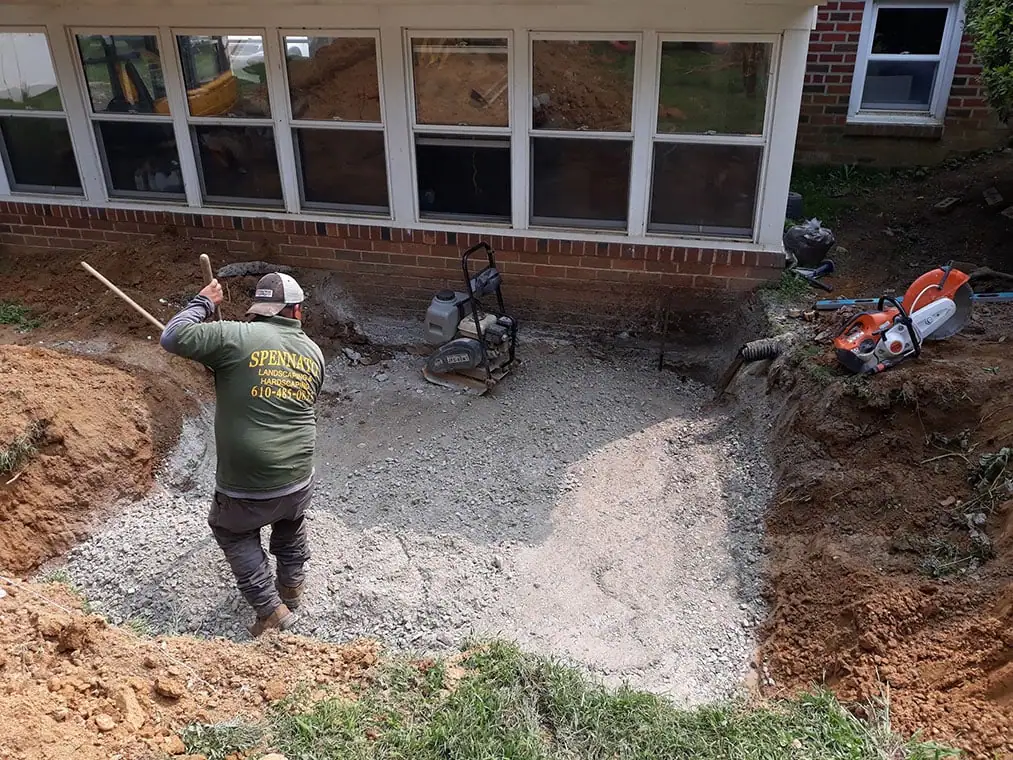
Installation begins with excavation and base preparation the part of the job most contractors rush or shortcut. Aggregate is compacted in layers, drainage slope is built in from the start, and edge restraints go down before any surface material is laid. Whether you’re going with pavers, flagstone, or concrete, the surface installation follows a base that’s built to handle Delaware County winters. Cleanup is part of the job, and the timeline you were given at the start is the timeline you get.
Ready to get started?
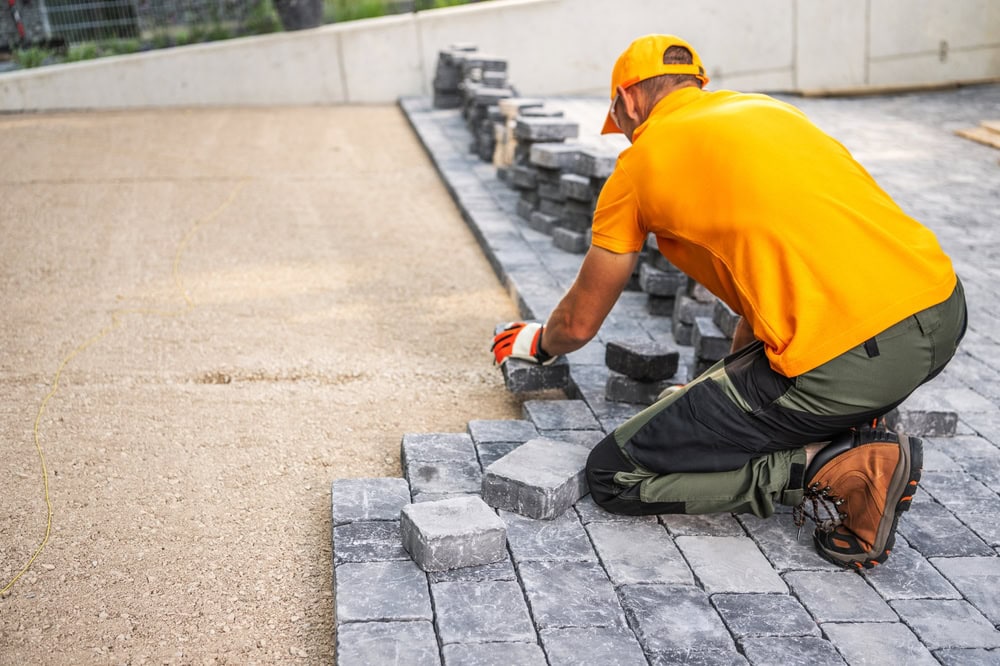
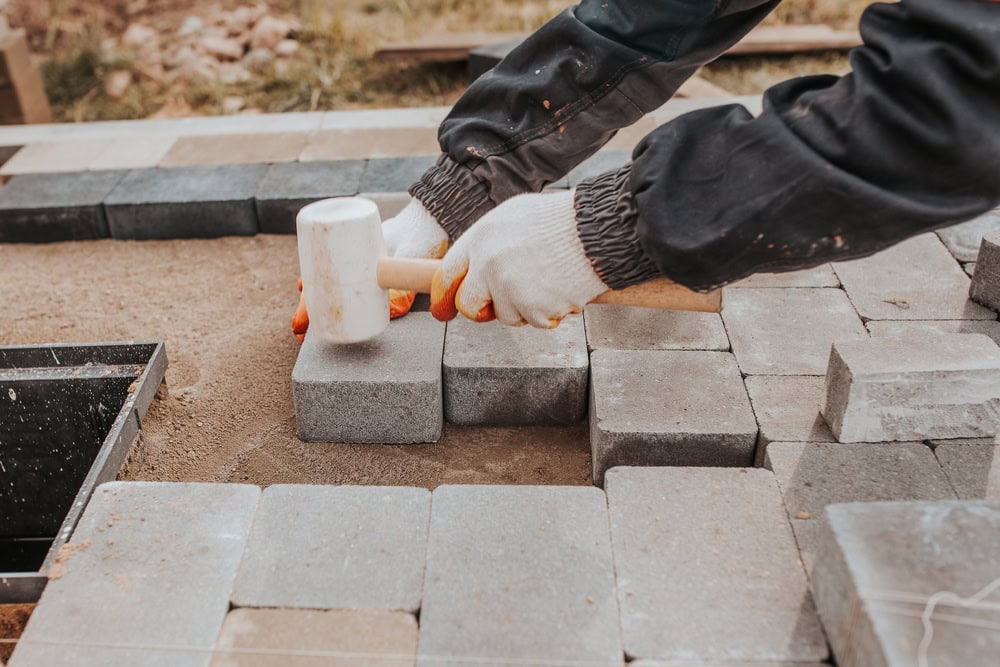
Paver patio installation is the most popular choice for Yeadon properties, and for good reason. Pavers handle freeze-thaw movement better than poured concrete because individual units can shift slightly without cracking the entire surface. They’re also repairable if a section ever needs attention, you’re replacing a few pavers, not resurfacing a slab. Brick-toned and natural-color pavers work particularly well alongside Yeadon’s Colonial and Dutch Colonial stone and brick homes, keeping the aesthetic consistent rather than jarring.
Flagstone patios are worth considering if your home has natural stone elements which many Yeadon twins do. Pennsylvania Bluestone and similar materials echo the character of the existing architecture in a way that poured concrete rarely can. Flagstone costs more per square foot than pavers, but for the right property, the visual payoff is substantial, and it holds up well when the base is built correctly.
Concrete patio installation is available for homeowners who want a clean, lower-maintenance surface at a more accessible price point. Properly installed concrete with control joints and adequate base depth performs well in this climate the failure stories you’ve heard usually trace back to inadequate base prep, not the material itself. Pricing across all options runs $15 to $50 per square foot depending on material and complexity, with most Yeadon projects landing between $3,500 and $8,000 given the typical lot sizes in the borough. Every project starts with a written estimate what’s quoted is what you pay.

It depends on the scope of the project, and it’s worth getting that answered before any work starts. Yeadon Borough has an active Code Enforcement Department that administers the Pennsylvania Uniform Construction Code, and permits are required for construction and improvement projects that meet certain thresholds. The borough’s standard permit review period runs up to 15 business days, so factoring that into your project timeline from the beginning rather than treating it as a last-minute checkbox keeps things moving without unnecessary delays.
Starting work without a required permit in Yeadon carries a penalty, and unpermitted work can surface as a problem during a property sale. We handle the permit coordination as part of the project process, so you’re not navigating borough paperwork on your own. If you’re unsure whether your specific project requires a permit, the borough’s Code Enforcement Office can clarify and that’s always worth a quick call before anything else.
For most Yeadon properties the 1920s and 1950s stone and brick twins with narrow rear yards that define much of the borough pavers tend to be the most practical and versatile choice. They work well at smaller scales, they come in sizes and colors that complement older Colonial and Dutch Colonial architecture, and they handle Pennsylvania’s freeze-thaw cycles better than poured concrete because individual units can accommodate minor movement without cracking across the whole surface.
Flagstone is worth considering if your home has natural stone on the facade it creates a visual continuity that feels intentional rather than added on. Concrete is a solid option if you’re working with a tighter budget and want a low-maintenance surface, provided the base is built correctly. The material conversation really starts with your yard’s specific drainage situation, the architectural character of your home, and what you want to use the space for. Those three things together usually make the right choice fairly clear.
Clay soil is one of the most common reasons patios in this part of Delaware County fail before they should. Unlike sandy or loamy soil, clay holds water instead of draining it which means the ground beneath a patio stays saturated longer after rain or snowmelt. When that water freezes, it expands. When it thaws, it contracts. Repeat that 40-plus times over a Pennsylvania winter, and a patio built on an inadequate base starts to heave, develop soft spots, and pull apart at the joints.
The fix isn’t complicated, but it requires doing the base work correctly from the start excavating to the right depth, using compacted aggregate that allows drainage, and building in a slope that moves water away from your home’s foundation rather than letting it pool beneath the surface. Yeadon’s proximity to the Cobbs Creek corridor also means some properties on the eastern side of the borough deal with higher soil saturation during heavy rain events, which makes proper drainage design even more important. A patio that accounts for all of that on day one is one you won’t be calling about in year three.
Most patio installation projects in Yeadon fall between $3,500 and $8,000, which reflects the typical lot sizes and yard dimensions in the borough. Pricing runs $15 to $50 per square foot depending on the material concrete and basic pavers sit at the lower end of that range, while natural flagstone and more detailed paver designs move toward the higher end. A small paver patio in the 100 to 150 square foot range might run $1,500 to $3,750, while a mid-size project in the 200 to 300 square foot range typically lands between $4,000 and $7,500.
What matters as much as the material cost is the base work underneath it and that’s where quotes can vary significantly between contractors. A lower bid that skips proper excavation depth or compaction isn’t actually saving you money; it’s deferring a larger repair bill to a later date. We provide written estimates before any work begins, and the number in that estimate is the number on the final invoice. Home values in Yeadon have more than doubled since 2000, and real estate listings in the borough regularly call out updated rear patios as selling points so the investment tends to hold its value well.
For a typical Yeadon backyard patio in the 150 to 250 square foot range, the physical installation usually takes two to four days once the project is underway. The fuller timeline from initial consultation through permit approval and scheduling is more like three to six weeks depending on the time of year and how quickly the borough’s Code Enforcement Office processes the application. Yeadon’s standard permit review runs up to 15 business days, so projects that get started earlier in the planning process tend to move more smoothly.
The best time to start the conversation is late winter or early spring February through April. That’s when contractor schedules have the most flexibility, and it positions your project to be completed in May or June rather than late summer. Paver and flagstone installation requires temperatures above freezing to set properly, so the practical installation window in Delaware County runs from April through early November. If you’re hoping to use your patio this season, the earlier you lock in a timeline, the better your chances of getting there.
The honest answer is that it comes down to three things: base depth, drainage, and edge restraints none of which are visible once the job is done. A patio that looks identical to a well-built one on day one can fail completely after two or three winters if the base was under-excavated, the aggregate wasn’t compacted properly, or the drainage slope wasn’t built in from the start. In Yeadon specifically, where clay soil retains water and freeze-thaw cycles are relentless from November through March, those details aren’t optional they’re the difference between a patio that lasts 20 years and one that needs major repairs in five.
Beyond the base, material choice and joint treatment matter. Polymeric sand in paver joints resists weed infiltration and ant activity far better than standard sand, and edge restraints prevent lateral spreading that causes the surface to shift and separate over time. For Yeadon’s older homes, where rear yards often share drainage with neighboring properties and deal with runoff from aging downspouts, a drainage plan that accounts for those inputs not just the rain that falls directly on the patio is what separates a competent installation from one that creates new problems while solving the old ones.
Useful Links