
Hear from Our Customers
Most excavation problems in Newtown Township don’t show up the day the job is done. They show up the first time it rains hard water pooling against your foundation, a retaining wall starting to lean, a patio that’s already shifted after one winter freeze. That’s the cost of skipping proper drainage planning on clay-heavy Piedmont soil, and it happens more often than it should.
Newtown Square properties sit on some of the most drainage-challenging terrain in Delaware County. The clay soils here expand when wet, drain slowly, and compact differently than the sandy or loamy ground you’d find elsewhere. When a grading contractor doesn’t account for that when the slope is close but not right, or the drainage layer behind a wall is an afterthought the finished result fails. Not dramatically at first, but consistently over time.
When excavation and grading are done with drainage as the priority from the start, the outcome looks different. Water moves away from your foundation instead of toward it. Your retaining wall holds through freeze-thaw cycles. The patio you’re building on top of the graded surface actually stays level. On a property worth $800,000 or more, getting this right isn’t a premium it’s the only version of the job worth paying for.
We’re based in Aston, PA Delaware County, same as Newtown Township. Owner Renato Spennato has 15-plus years of hands-on experience in excavation, grading, masonry, and outdoor construction, and he’s personally involved in the work we do. That’s not a marketing angle it’s just how we run the business. When you call, you’re talking to someone who knows the ground conditions along West Chester Pike as well as they know the ones in their own backyard.
What makes us different from excavation-only contractors in this area is the full-service capability. The same team that excavates and grades your Newtown Township property can build the retaining wall, install the patio, and finish the landscaping. No handoffs. No separate contractor trying to work on top of someone else’s grade. One team, accountable for the whole thing.
We hold an active Pennsylvania contractor license and carry a BuildZoom score of 102 placing us in the top 11% of over 125,000 licensed contractors in the state. You can verify that independently. In a township that requires contractor registration for all work, that credential matters before anyone breaks ground.

Every excavation project in Newtown Township starts with a site assessment not a quick walkthrough, but a real look at existing grade, drainage patterns, soil conditions, and what the finished use of the space needs to accomplish. On rolling Piedmont terrain with clay-heavy soils, that assessment directly shapes how the job gets planned. The slope has to direct water somewhere specific. The depth of any excavation has to account for what’s underneath. None of that gets figured out after the machine shows up.
Before any digging begins, Pennsylvania’s 811 One Call requirement is handled every utility line gets located and marked. Newtown Township also requires contractor registration and, depending on the scope of your project, zoning permits for surface improvements and stormwater compliance documentation under the township’s Crum Creek watershed obligations. If your project crosses certain disturbance thresholds, a plan submission may be required. We navigate all of that as part of the process, not as something you’re left to sort out on your own.
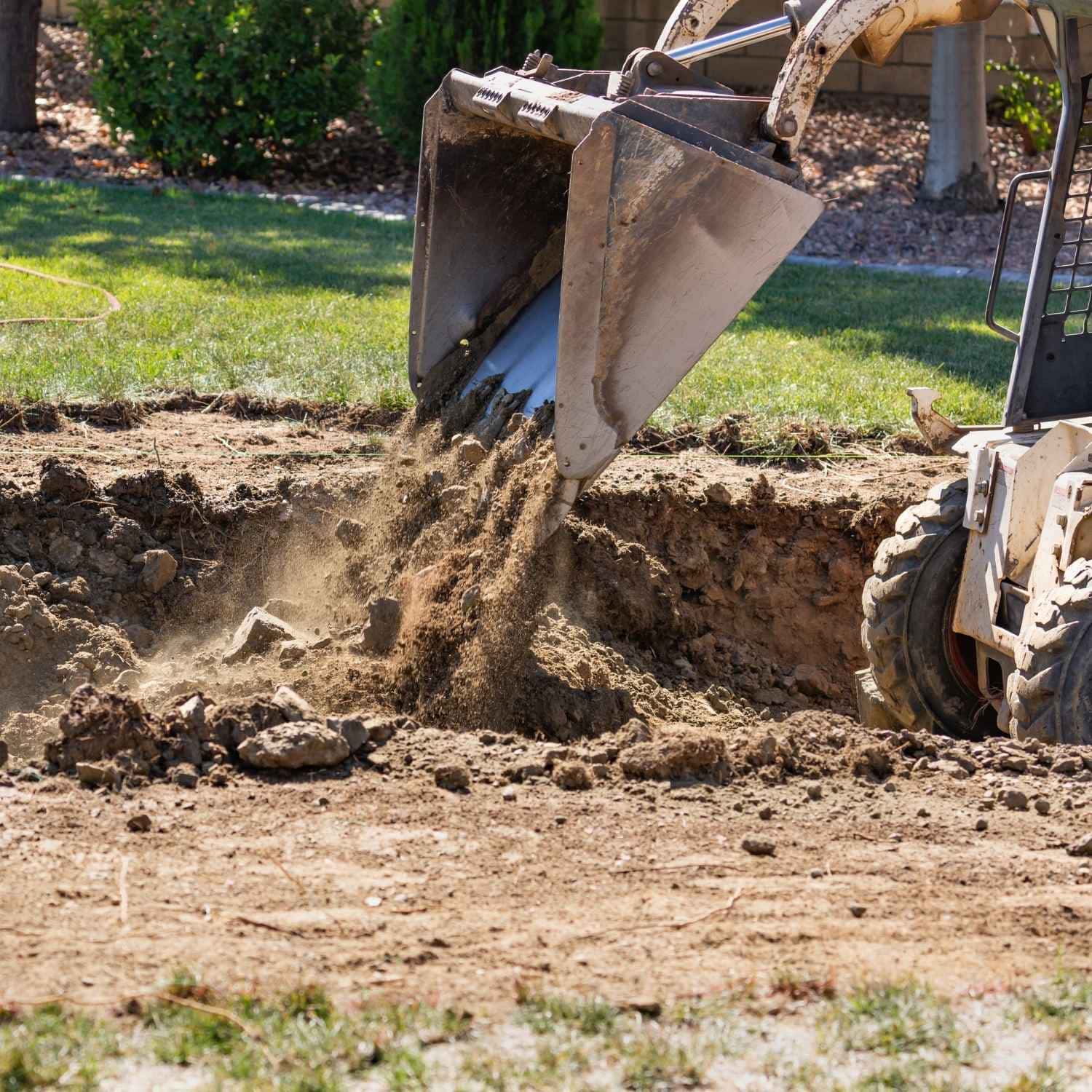
Once the site is assessed and permits are in order, excavation and grading proceed with drainage as the constant reference point not an afterthought at the end. If a retaining wall is part of the project, the backfill and drainage layer behind it get built the same day, by the same crew. When the excavation phase is complete, you have a graded surface that’s ready for whatever comes next whether that’s a patio, a wall, a pool, or a foundation and water is already moving the way it’s supposed to.
Ready to get started?
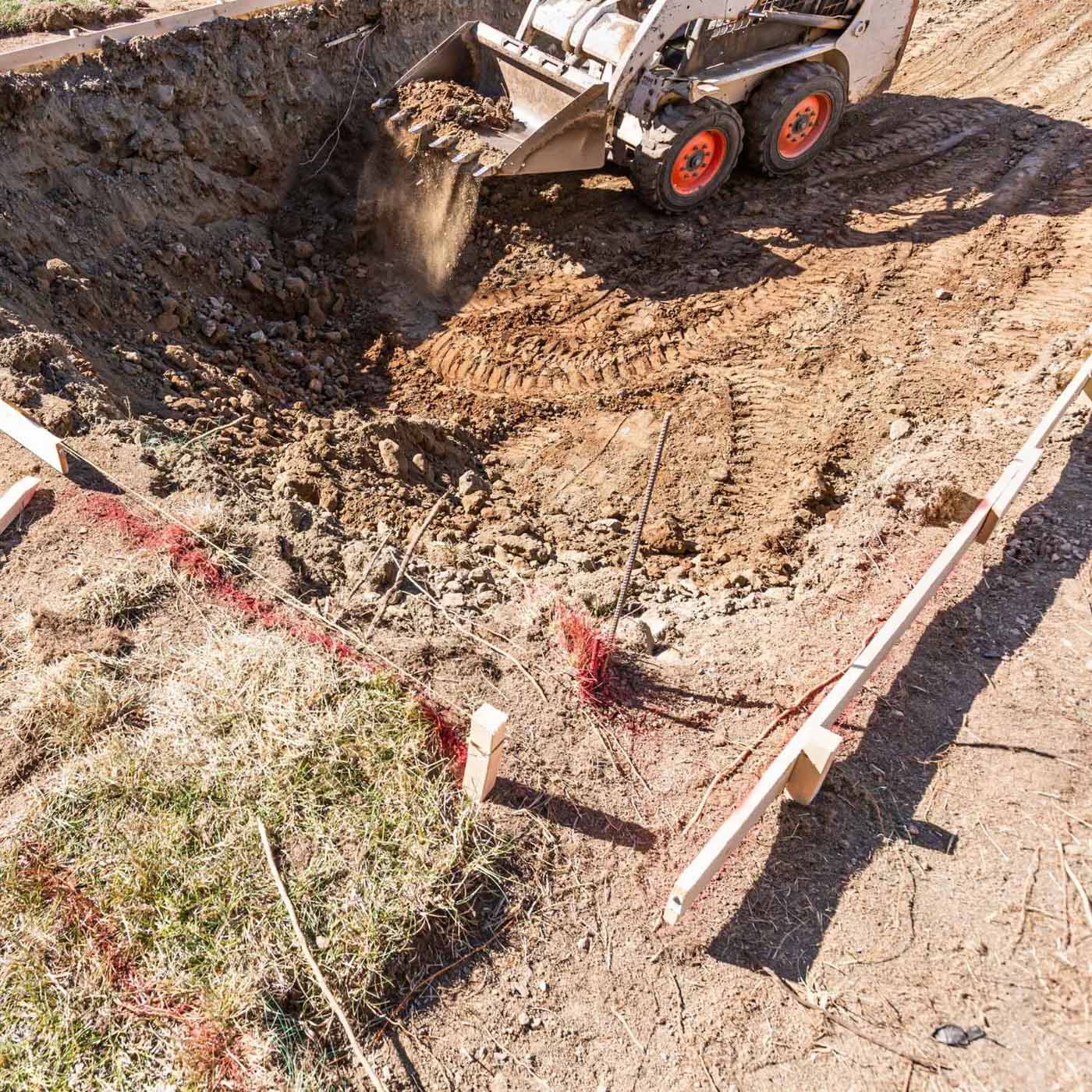
Residential excavation in Newtown Township covers a wider range of work than most homeowners initially expect. Site preparation for patios, outdoor kitchens, and retaining walls on sloped Piedmont lots often involves significant earth movement grade changes of several feet aren’t unusual on the larger properties throughout Newtown Square. Foundation excavation for additions and accessory structures, pool excavation on high-value lots, drainage correction on clay-heavy ground that’s been holding water for years these are the real-world projects that come through regularly, and each one requires a different approach based on what the site is actually doing.
Because we handle both excavation and the construction that follows, the grading decisions made during the dig are always made with the finished project in mind. That matters more on a Newtown Township property than it might elsewhere. The rolling terrain, the Marple Newtown School District neighborhood character, the proximity to Ridley Creek State Park and the Crum Creek watershed all of it shapes what proper site preparation looks like here. Impervious surface limits are real. Stormwater compliance under the township’s Act 167 obligations is real. A contractor who doesn’t know those requirements going in creates problems you’ll be dealing with long after they’ve left.
Excavation costs in Delaware County typically run $1,658 to $6,709 for residential projects, with the Philadelphia metro area running 15 to 25 percent above rural Pennsylvania averages due to labor, access conditions, and permitting complexity. Scope, soil conditions, site access, and disposal requirements all affect the final number. We provide clear, itemized estimates so you understand exactly what you’re paying for and why before anything starts.

In most cases, yes and the specific requirements depend on what type of work you’re doing and how much ground gets disturbed. Newtown Township requires zoning permits for surface improvements like patios, walkways, and driveway expansions because of impervious surface limits enforced under the township’s zoning ordinance. Building permits are required for structural work, including decks 30 inches or higher above grade, which typically involve footing excavation. For any earth disturbance that affects drainage patterns or runoff, the township’s stormwater management ordinance tied to Pennsylvania Act 167 and the Crum Creek watershed plan may require a plan submission and post-construction inspection.
On top of that, all contractors working in Newtown Township are required to register with the municipality before performing any work. Pennsylvania’s 811 One Call law also requires utility locating before any digging begins, regardless of project size. We handle permit acquisition and stormwater compliance documentation as part of every project, so you’re not navigating the township’s building and planning department on your own.
Clay soil which is the dominant soil type throughout Newtown Township and most of Delaware County’s Piedmont Upland affects excavation in a few direct ways. It’s heavier than sandy or loamy soil, which means more equipment effort per cubic yard of material moved. It drains poorly and expands when saturated, which means grading has to be precise a slope that’s close but not quite right will hold water instead of shedding it. And it compacts differently, which affects how backfill behind retaining walls and under hardscape surfaces needs to be installed to prevent settling.
From a cost standpoint, clay-heavy conditions can increase excavation time and material disposal requirements compared to lighter soils. They also raise the stakes on drainage planning cutting corners on slope and drainage layer work in clay soil almost always shows up as a problem within a year or two. The cost of doing it right the first time is almost always less than the cost of remediating a drainage failure or a shifted retaining wall on a property in Newtown Square.
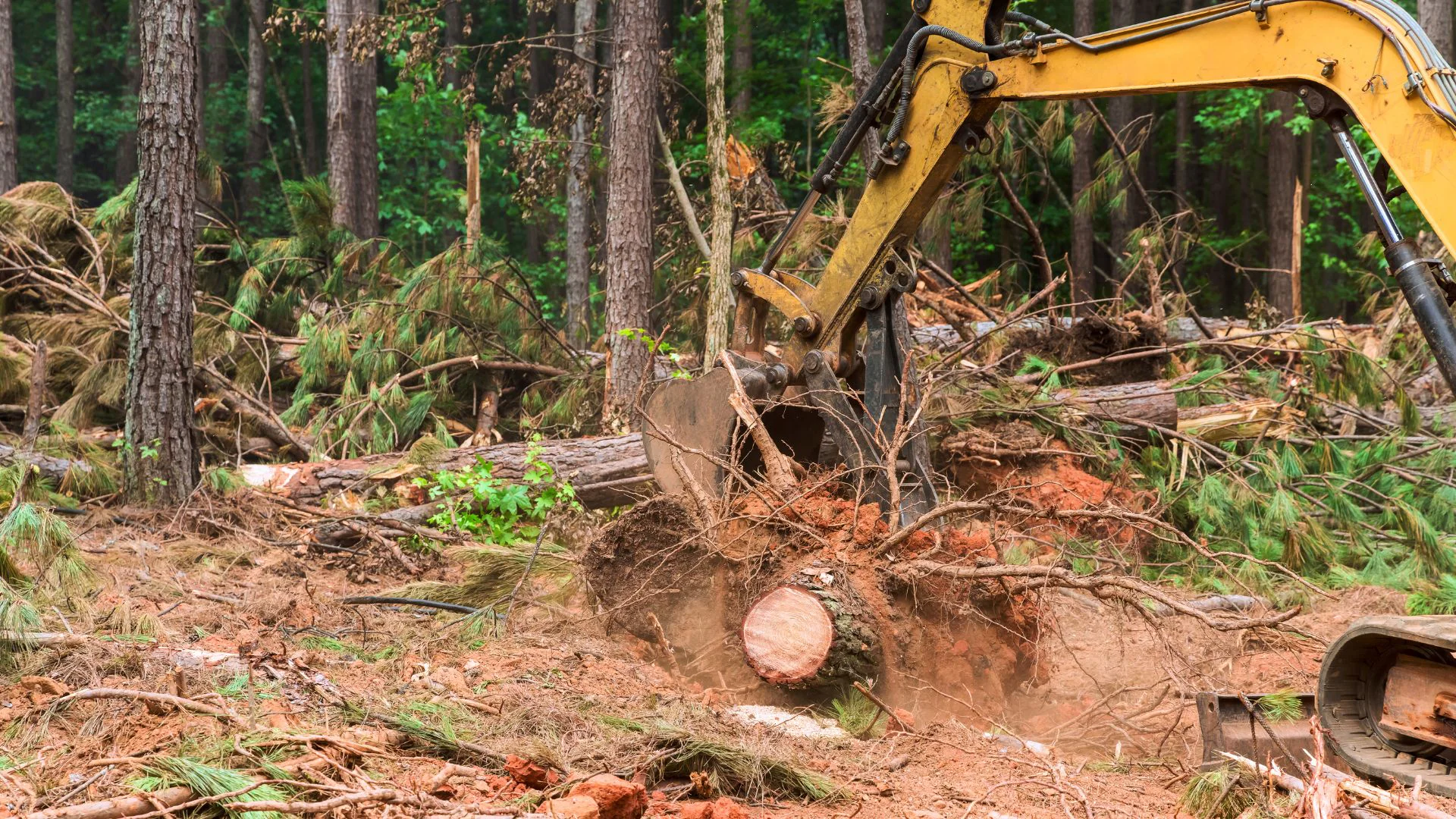
Site preparation is the foundational phase of any outdoor construction project it’s the work that happens before anything gets built. For a Newtown Township property, that usually means clearing the area of vegetation or debris, excavating to the required depth, grading the surface to the proper slope for drainage, and compacting the subbase so whatever goes on top of it stays stable. Depending on the project, it might also include topsoil removal, rock breaking if bedrock is encountered, and installation of drainage infrastructure like French drains or catch basins.
On a typical Newtown Square lot larger than average for Delaware County, often with meaningful grade changes and mature landscaping site prep is rarely a simple flat dig. The rolling Piedmont terrain means there’s almost always a drainage plan involved, and the finished grade has to account for where water will travel once the surface above it is hardscape or structure. Getting that right before the patio, wall, or foundation goes in is the difference between a project that holds up and one that needs to be redone.
Residential excavation in Newtown, PA typically falls between $1,658 and $6,709 for most projects, based on national averages but the Philadelphia metro area, including Delaware County, runs 15 to 25 percent higher than rural Pennsylvania due to labor rates, equipment access on suburban lots, and permitting complexity. That puts a realistic range for most Newtown Township residential excavation projects somewhere between $2,000 and $8,500 depending on scope, with foundation excavation and pool excavation on the higher end.
The factors that most directly affect your specific cost are the size of the area being excavated, the depth required, soil conditions (clay-heavy Piedmont soil is heavier and slower to work than sandy ground), site access for equipment, and whether material needs to be hauled off-site or can be redistributed on the property. Permit fees and stormwater compliance documentation add to the overall project cost in Newtown Township, where those requirements are actively enforced. A clear, itemized estimate before work begins is the only way to know what you’re actually paying for and that’s exactly what we provide.
Spring and fall are the strongest windows for excavation work in Newtown Township, though each comes with its own considerations. Spring roughly March through May is peak demand season, and for good reason: homeowners want outdoor projects completed before summer, and the ground has thawed enough to work. The catch is that early spring in Delaware County can leave clay-heavy Piedmont soils saturated from snowmelt and rain, which can compromise compaction and grading quality if the work is rushed. Scheduling for mid-to-late spring, once the ground has had time to dry out, typically produces better results.
Fall, from September through November, is often the most favorable season for excavation and grading work. Drier soil conditions, cooler temperatures, and the natural motivation to finish projects before ground freeze make it a reliable window. Winter excavation in Newtown Township is significantly more difficult and expensive frozen Piedmont clay is hard to work and increases the risk of frost heave damage to any graded or compacted surface. Many homeowners use winter to plan and contract for spring execution, which also helps secure a spot on the schedule before the spring rush fills up.
In most cases, yes and it’s usually the most effective long-term fix available. Drainage problems in Newtown Square yards are almost always a grading issue at the root. Clay-heavy Piedmont soils drain slowly by nature, so when the surface grade directs water toward a low spot, a foundation, or a retaining wall instead of away from it, that water has nowhere to go. It pools, it saturates, it finds its way into basements and crawl spaces, and it puts lateral pressure on walls that weren’t designed to hold saturated soil. Regrading the surface to redirect that flow combined with drainage infrastructure like French drains or catch basins where needed addresses the actual cause rather than managing the symptom.
What makes drainage correction work in Newtown Township is getting the slope calculations right for clay soil specifically, not just leveling the surface. A grade that looks flat or slightly pitched to the eye may not be moving water fast enough to clear before the next rain event on clay ground. Our approach to every grading and excavation project in Newtown, PA starts with where water needs to go when the job is done and works backward from there to make sure the finished grade delivers that result consistently, not just on the day the crew leaves.
Useful Links