

Hear from Our Customers
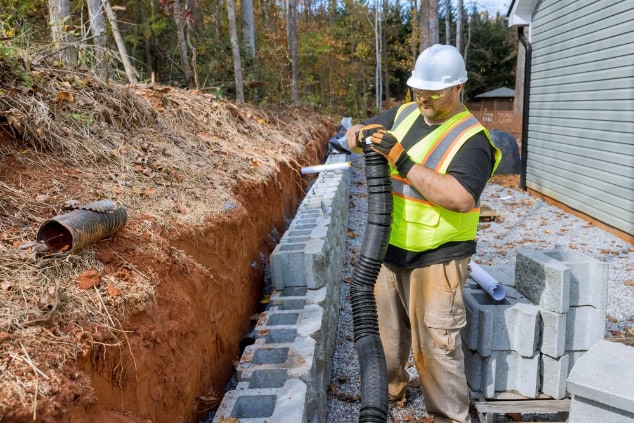
When your yard holds water after every rain, it’s not just an eyesore it’s pressure building against your foundation, moisture saturating your soil, and a problem that compounds every season you wait. In Newtown Township, where the Piedmont clay soils along the Darby Creek watershed absorb moisture slowly and release it even slower, that standing water isn’t going anywhere on its own. It sits. It softens the ground. And over time, it finds its way toward whatever is closest usually your foundation.
Most homes in the 19073 ZIP code were built in the 1940s and 1950s. The original grading on those properties is now seven or eight decades old. Soil settles. Tree roots expand. Freeze-thaw cycles shift slopes. What once directed water away from your home may now be funneling it straight toward it. That’s what happens to every property in this area given enough time.
When the drainage is right, the yard is usable again. The lawn recovers. The basement stays dry. And for a home in Newtown Square where median sale prices run above $869,000, a properly functioning drainage system isn’t an upgrade it’s basic asset protection.
We’ve been working in Delaware County for over 15 years, based out of Aston about 8 to 10 miles south of Newtown Square on Route 252. That’s the same road many Newtown Township residents take to get to Media. We’re not a regional chain sending unfamiliar crews to unfamiliar properties. We’re a local Delaware County operation that has worked through the same seasonal patterns, the same clay-heavy Darby Creek watershed soils, and the same township regulatory environment you’re dealing with right now.
Renato and our crew handle every project from the first site assessment through final cleanup. There are no handoffs, no subcontractors showing up mid-project, and no one disappearing once the hard part is done. You get one team that’s accountable for the whole job start to finish.
That matters especially in Newtown Township, where properties often have mature, established landscaping that took years to build. We treat what’s already there with the same care we’d want applied to our own.

It starts with a site assessment not a quote over the phone. We walk your property, read how water is currently moving across it, identify where it’s pooling, and look at the underlying grading to understand why. In Newtown Township, that assessment almost always involves evaluating the original slope of the property, because on homes built in the 1940s and 1950s, decades of settlement and landscape maturation have often reversed what the original builders intended.
Once we understand the full picture, we recommend a solution that fits your specific site whether that’s a French drain installation, a catch basin system, a dry well, grading correction, or some combination. We don’t prescribe until we’ve diagnosed. A property near the Crum Creek corridor has different drainage dynamics than a newer-construction home near Ellis Preserve, and the solution should reflect that.
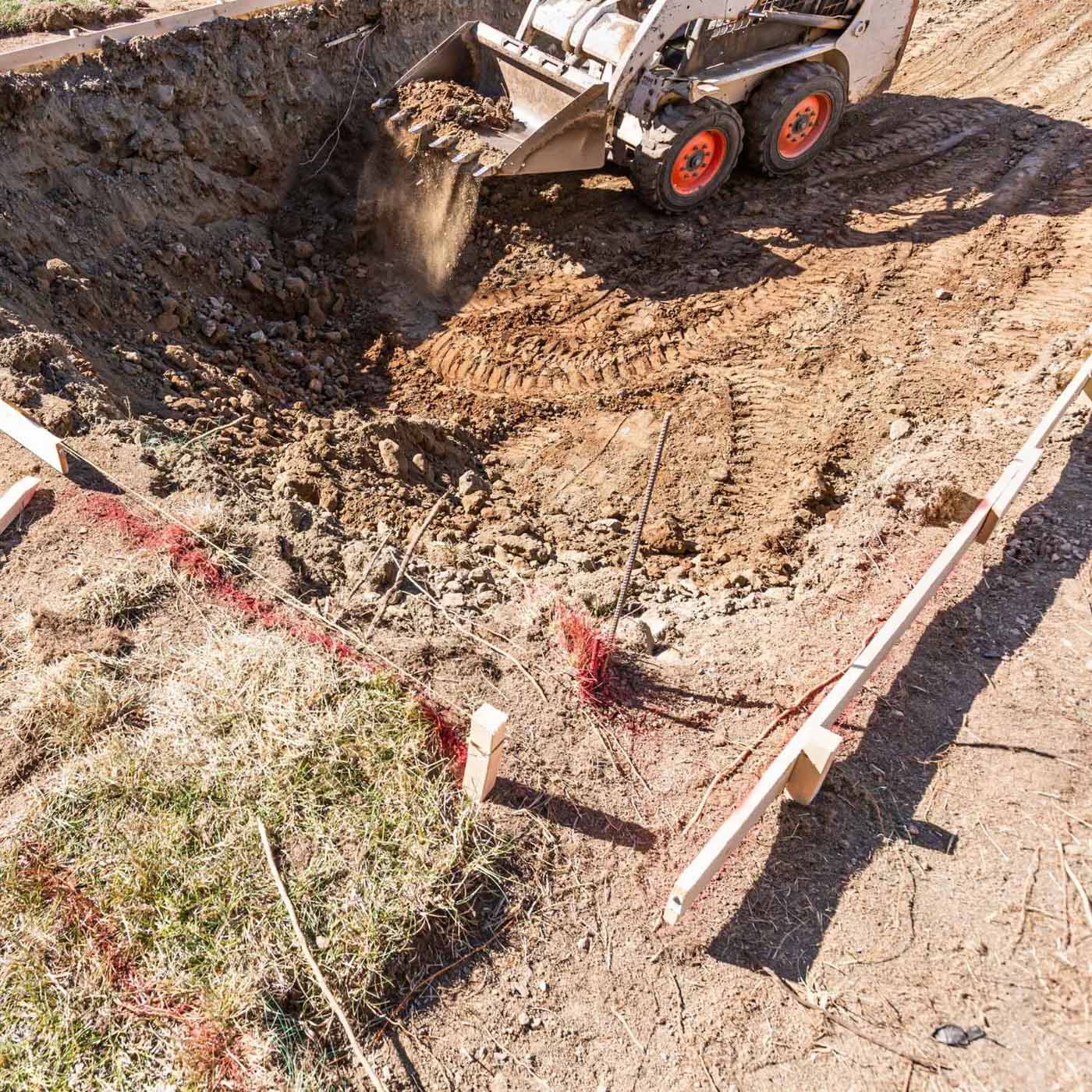
From there, we handle excavation, installation, and full surface restoration. Newtown Township’s stormwater ordinances require that drainage systems manage runoff without displacing the problem onto adjacent properties, so every system we design includes a proper discharge point a storm connection, dry well, or daylight outlet that actually resolves the issue. When we leave, your yard looks like a yard again, not a job site.
Ready to get started?
Drainage work in Newtown Square isn’t one-size-fits-all. The mix of aging mid-century homes, newer construction near the Goshen Road and Route 252 corridor, and properties sitting at the intersection of two watershed systems Darby Creek to the north and Crum Creek to the west means the drainage demands here are genuinely varied. A French drain that works on a flat lot near Caley Road isn’t necessarily the right answer for a rolling property near the Aronimink area, and we don’t treat them the same.
The services we bring to Newtown Township include French drain installation, catch basin and channel drain systems, dry well installation, grading correction, swale design, and downspout management. Most projects involve more than one of these, because drainage problems rarely have a single cause. We also handle full sod restoration and landscape repair after excavation because tearing up your yard to fix the drainage and leaving the surface in rough shape isn’t a finished job.
Before any excavation, we call 811 and comply with Pennsylvania’s dig-safe requirements. We’re also familiar with Newtown Township’s updated stormwater management ordinance and MS-4 program obligations, so the systems we install are designed to meet local code not just fix your immediate problem while creating a compliance issue down the road.

This is one of the most common situations we run into in Newtown Township. A previous contractor installed a French drain, the problem seemed better for a season or two, and then the water came back. Usually, the reason is that the drainage infrastructure was installed without correcting the underlying grading issue first. If the slope of your property is directing water toward a problem area, a drain alone can only handle so much volume before it’s overwhelmed especially during the heavy spring rains that Delaware County sees between March and May.
The other common culprit is a drainage system that was installed without a proper discharge point. Newtown Township’s stormwater ordinances require that runoff be managed without pushing it onto adjacent properties, and systems that simply redirect water to the property line eventually back up or create new problems. When we assess a property where previous drainage work has failed, we look at both the grading and the discharge point before recommending anything new.
For most residential properties in Delaware County, French drain installation runs somewhere between $5,000 and $12,000 depending on the length of the system, the depth of excavation required, and whether grading correction is part of the scope. More complex systems properties with significant grade issues, multiple problem zones, or the need for catch basins and dry wells in addition to perforated pipe can run higher.
In Newtown Township specifically, the combination of clay-heavy Piedmont soils and aging original grading on 1940s and 1950s-era homes often means that grading correction is part of the project, not just drain installation. That adds to the scope, but it’s also what makes the fix permanent rather than temporary. For a home in Newtown Square where values regularly exceed $800,000, the cost of a properly installed drainage system is a fraction of what a single foundation repair event would run and a far better use of that money.
They solve different parts of the same problem, and most properties in Newtown Township need both. Regrading corrects the slope of your property so that surface water naturally flows away from your home and toward an appropriate outlet. It’s the foundation of any drainage solution if the grade is wrong, nothing we install underground is going to fully compensate for it. Think of regrading as fixing the direction the water is going.
A French drain handles the volume of water that moves through or beneath the soil. It’s a perforated pipe set in gravel that intercepts groundwater or subsurface flow and redirects it to a discharge point. On Newtown Township’s clay-heavy soils, where water doesn’t percolate downward quickly, a French drain is often essential for managing the water that accumulates below the surface after a rain event. The right answer for most properties here is a grading correction that establishes the proper slope, combined with a French drain system that handles what the soil can’t absorb fast enough.
It depends on the scope of the work. Newtown Township adopted updated stormwater management regulations in 2024 under Ordinance 2024-09, and the township participates in the Pennsylvania DEP’s MS-4 program, which means stormwater management is taken seriously at the local level. For most standard residential drainage projects French drains, catch basins, grading corrections a formal permit is typically not required, but any work that disturbs soil must comply with the township’s erosion and sediment control requirements.
If your property is in or near a flood hazard area and Newtown Township’s code explicitly identifies certain areas near Darby Creek and Crum Creek as floodplain zones additional review may be required before work begins. Pennsylvania law also requires that all excavation contractors call 811 before any digging, regardless of scope. We handle that as a standard part of every project, and we’re familiar with Newtown Township’s regulatory environment so you don’t have to navigate it on your own.
Clay soil is the defining factor in most Newtown Square drainage situations. Unlike sandy or loamy soils that allow water to percolate downward relatively quickly, clay absorbs moisture slowly and holds it for a long time after a rain event ends. The Darby Creek watershed soils that underlie much of Newtown Township are classified as silty and clay-heavy, which means surface pooling and soggy turf are structural conditions here not just a result of heavy rain.
What this means practically is that drainage solutions designed for fast-draining soils often underperform in Newtown Township. A simple dry well, for example, works well in sandy soil where the surrounding ground can absorb the water it collects. In clay-heavy soil, that dry well fills up and has nowhere to send the water. The most effective systems we design here typically involve gravel-packed French drains with properly sized discharge points outlets that move water off the property entirely rather than relying on the surrounding soil to absorb it.
Late summer through early fall roughly August through October is generally the best window for drainage work in Newtown Township. The ground is workable, the heaviest spring rains have passed, and getting the system installed before the ground freezes means it’s ready to perform when the following spring’s rain arrives. Pennsylvania’s freeze-thaw cycles, which are particularly hard on clay-heavy soils like those in the Darby Creek watershed, can shift grading and disrupt drainage infrastructure if work is done too late in the season without adequate time to settle.
That said, spring is when most homeowners in Newtown Square actually notice the problem after a wet March or April exposes everything the winter left behind. We do take spring projects, and they’re often urgent for good reason. The key is not waiting until the problem has compounded through another full season. If you’re watching water pool near your foundation or seeing the same soggy spots return every year, the right time to address it is before the next freeze-thaw cycle makes the underlying grading worse.
Useful Links