
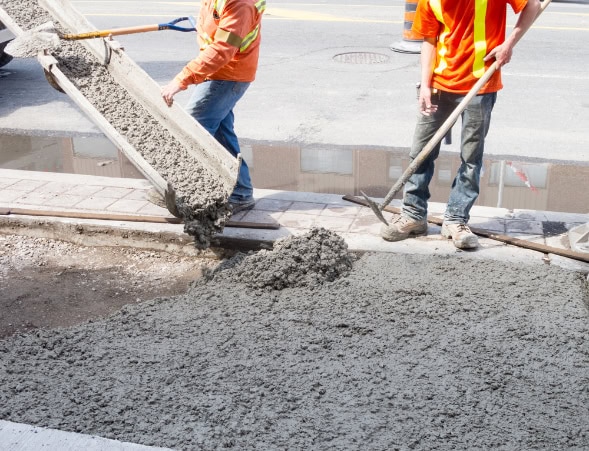
Hear from Our Customers
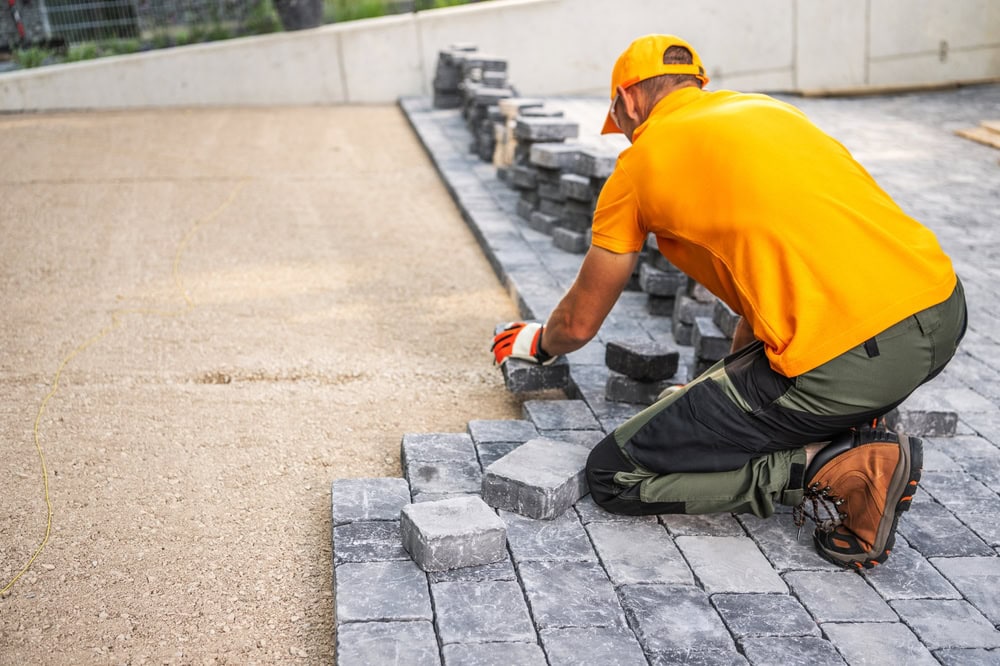
Newtown homeowners invest seriously in their properties. With median home values sitting around $783,000, every improvement you make either adds to that investment or quietly chips away at it. A well-designed, properly installed patio built with the right base depth, correct drainage slope, and materials suited to this climate adds real, measurable value. Professionally installed patios return over 80% of their cost at resale, and paver installations specifically outperform plain concrete by 30–50% when it comes to long-term ROI.
What most people don’t see is what’s underneath. Bucks County winters deliver 30 to 45 freeze-thaw cycles every year. Water gets into the base, freezes, expands, and pushes the surface up. If the base wasn’t excavated deep enough, compacted properly, or graded to drain water away from your foundation, you’ll know about it by spring. The surface tells the story of what’s underneath and a patio that’s heaving, cracking, or sinking after a few seasons is almost always a base problem, not a surface problem.
For homes in Newtown Township near Tyler State Park, or in the historic borough where properties carry that colonial and Victorian character, the right patio also has to look like it belongs. Natural stone, Pennsylvania Bluestone, and premium pavers complement the architectural context here in a way that stamped concrete simply doesn’t. The result should feel like a natural extension of your home not something dropped onto the yard from a catalog.
We’ve been doing residential hardscaping and landscaping work across southeastern Pennsylvania for over 15 years. The business is owner-operated by Renato Spennato, which means there’s a real person not an anonymous LLC accountable for every project from the first conversation to the final cleanup.
Newtown is Bucks County, and serving clients here means understanding what Newtown Township’s zoning permit requirements actually look like, knowing that communities like Tyler Walk require HOA Architectural Change Request approvals before any exterior work begins, and being familiar with the soil conditions and seasonal patterns that affect how a base needs to be built in this part of the region. That’s not something you pick up from a zip code lookup.
What customers have consistently said in reviews is that Renato and our crew show up when we say we will, finish when we say we will, and are reachable after the project is done not just before you sign. In a category where post-project disappearing acts are one of the most common complaints, that kind of accountability is rarer than it should be.
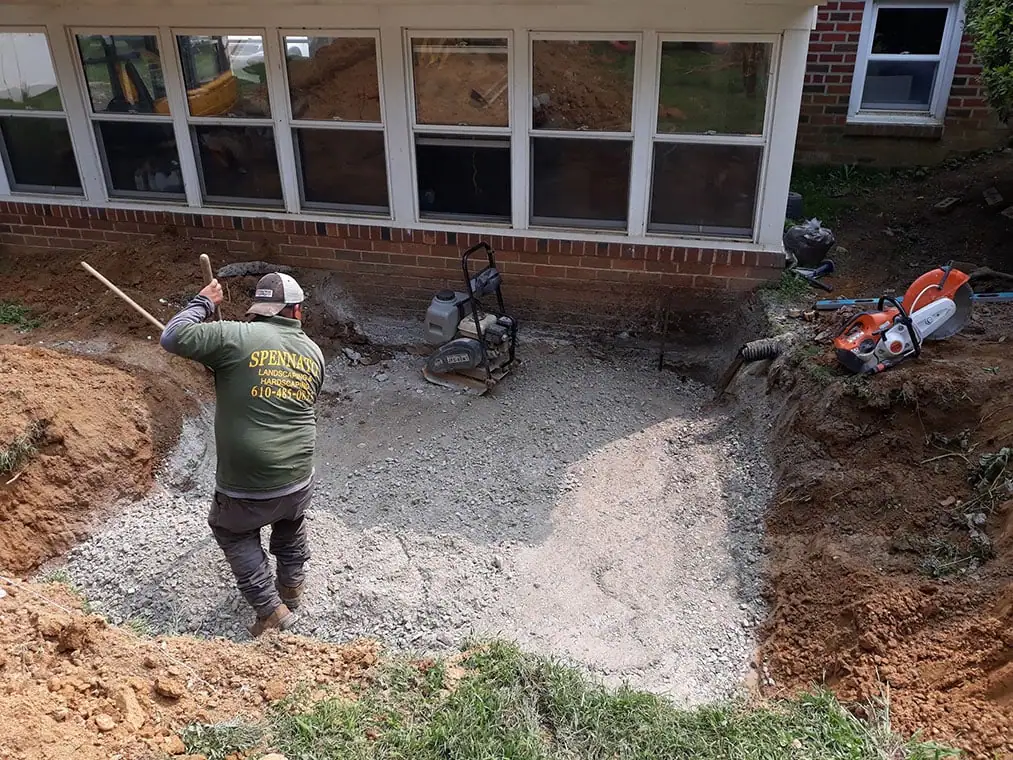
It starts with a conversation about how you actually use your outdoor space not a hard sell. Renato will walk your property, look at the grade, assess drainage, talk through material options that fit your home’s style and your budget, and give you a clear picture of what the project involves before anything is agreed to. Pricing is published openly at $15–$50 per square foot, with most projects landing between $3,500 and $12,000, so you’re not walking into a blank-check situation.
Before work begins, permits get handled. Newtown Township requires a Zoning Permit for patios, walkways, and driveway expansions to verify setbacks and impervious surface compliance and if you’re in the historic borough, certain exterior changes may require review by the Historic Architectural Review Board (HARB). If you live in Tyler Walk or another HOA community in the township, an Architectural Change Request needs to be submitted and approved before our crew arrives. We navigate all of that as part of the job, not something you’re left to figure out on your own.
Once approvals are in place, our crew excavates to the proper depth for this climate, installs a compacted aggregate base, sets edge restraints, and lays the surface material whether that’s interlocking pavers, Pennsylvania Bluestone, flagstone, or concrete. Drainage slope is built into the grade from the start, not corrected at the end. When the project is done, the site is cleaned up, and you have a direct line to Renato if anything needs attention down the road.
Ready to get started?
Not every patio is the same, and the right material depends on your home’s architecture, the size of your outdoor space, and how you plan to use it. For homes in Newtown Borough’s historic district where the streetscape along State Street and Chancellor Street has been on the National Register of Historic Places since 1969 natural stone options like Pennsylvania Bluestone and flagstone tend to be the right fit. They complement the colonial and Victorian character of older homes, they age well, and they hold up to Bucks County winters without the surface cracking issues that can affect lower-grade concrete work.
For Newtown Township properties newer colonials, larger suburban lots, homes in communities like the Woods of Saxony or Jericho Valley interlocking concrete pavers are often the most practical and visually versatile choice. They allow for custom patterns, they’re easier to repair if a section ever needs attention, and they perform well in freeze-thaw conditions when the base is built correctly. Covered patio structures, pergolas, and defined outdoor living zones are also popular additions for Township homeowners whose lots have the space to support them.
For smaller yards and Newtown Borough lots in particular can be more constrained given the historic proportions of the neighborhood a well-designed compact patio done in the right material can completely transform how you use your outdoor space. A 200-square-foot flagstone patio built to scale does more for a period property than a sprawling slab that overwhelms the yard. The design conversation always starts with your space, your home, and how you actually want to live outside.

Yes Newtown Township requires a Zoning Permit before a patio, walkway, or driveway expansion can be installed. The permit process is there to verify that your project meets setback requirements and stays within the township’s impervious surface limits. Impervious surface rules matter here because Newtown Township, like much of Bucks County, has stormwater management regulations that restrict how much of your lot can be covered by non-draining material and that includes brick pavers, concrete, and similar surfaces, even if they appear to drain.
If your property is in Newtown Borough’s historic district, certain exterior changes may also require review by the Historic Architectural Review Board (HARB) before work begins. And if you live in a community like Tyler Walk, your HOA requires an Architectural Change Request to be submitted and approved before any exterior project can start. We get all of this sorted before our crew shows up so you’re not hit with a stop-work order or a problem at closing because the permit was skipped.
The material matters, but the base matters more. Bucks County winters typically bring 30 to 45 freeze-thaw cycles temperatures that drop below freezing at night and rise above it during the day. That cycling is what destroys patios that weren’t built with the right foundation. Water infiltrates the base layer, freezes, expands, and physically pushes the surface up. Any patio installed with insufficient base depth, poor compaction, or inadequate drainage will show the damage within a season or two, regardless of what material is on top.
That said, interlocking concrete pavers and natural stone Pennsylvania Bluestone and flagstone in particular tend to perform better in this climate than poured concrete slabs. Pavers can flex slightly with ground movement, and individual units can be reset if a section ever shifts, whereas a concrete slab cracks and stays cracked. For Newtown Borough homes with historic architecture, natural stone is often the preferred choice for both durability and aesthetic fit. The honest answer is that the right material depends on your specific project, but no material performs well on a bad base.
We publish pricing openly: $15 to $50 per square foot, with most residential projects coming in between $3,500 and $12,000. Where your project lands in that range depends on the size of the patio, the material you choose, site conditions like grade and drainage, and whether the project involves additional elements like steps, a retaining wall, or a covered structure.
In Newtown, material choice often has a meaningful impact on cost. Pennsylvania Bluestone and natural flagstone are premium materials that carry a higher price per square foot than standard concrete pavers but for homes in the historic borough or for properties where the architectural character calls for natural stone, that investment is usually worth it both aesthetically and at resale. A $10,000 to $15,000 patio on a home valued at $783,000 is a proportionate upgrade, and one that returns a strong percentage of its cost when the home eventually sells. Getting a clear, itemized quote before any work starts is standard practice no surprises once the project is underway.
For a standard residential patio somewhere in the 300 to 500 square foot range the physical installation typically takes two to four days once the project is underway. Larger projects, or ones that involve steps, walls, or more complex grading, can run longer. The timeline that most homeowners don’t account for is the front end: permits, HOA approvals, and material lead times can add a few weeks before our crew ever arrives.
In Newtown Township, the Zoning Permit process takes time, and if you’re in a community with HOA oversight like Tyler Walk, the Architectural Change Request review adds another step. That’s not a reason to delay it’s a reason to start the conversation earlier than you think you need to. Homeowners who reach out in late winter or early spring typically get better scheduling, more time for the design conversation, and are ready to go as soon as the ground conditions are right. Waiting until June to start the process usually means a July or August install at the earliest, which cuts into the outdoor season you were planning to use.
Flagstone is a natural material typically Pennsylvania Bluestone, slate, or limestone cut or broken into irregular or uniform pieces and set into a sand or mortar bed. It has a natural, organic look that works particularly well with older homes, colonial architecture, and properties where you want the outdoor space to feel like it grew out of the landscape rather than being installed on top of it. For homes in Newtown Borough’s historic district, flagstone often fits the architectural context better than any manufactured product.
Pavers are manufactured typically concrete or clay cut to uniform dimensions and installed in a pattern over a compacted aggregate base. They’re extremely versatile in terms of color, pattern, and layout, they’re easier to repair if a section ever needs to be reset, and they tend to be more cost-effective per square foot than premium natural stone. For Newtown Township’s newer suburban homes colonials on larger lots, homes in planned communities pavers are often the more practical and equally attractive choice. Both materials perform well in this climate when the base is built correctly. The decision usually comes down to the architectural character of your home and what aesthetic you’re going for.
The most important thing to evaluate is what the contractor is actually doing underneath the surface because that’s where the work either holds up or fails. Ask specifically about base depth, the type of aggregate they’re using, how they compact it, and how they handle drainage slope. A contractor who can answer those questions in plain, specific language is one who understands the work. One who deflects to generic assurances without specifics is worth a closer look.
Beyond the technical side, pay attention to how they handle the permit process. Newtown Township requires Zoning Permits for patios, and depending on your property and community, HOA approvals or HARB review may also apply. A contractor who treats that as your problem to figure out is one who’s going to be harder to work with when other issues come up. Also worth noting: BBB complaint data in this industry consistently shows that contractors who are responsive before you sign become unreachable once the project is done. Ask how you reach them after the project is complete, and see how they answer. A named, owner-operated business where you know exactly who to call is a different situation than an anonymous company with a rotating crew and no clear point of accountability.
Useful Links