

Hear from Our Customers
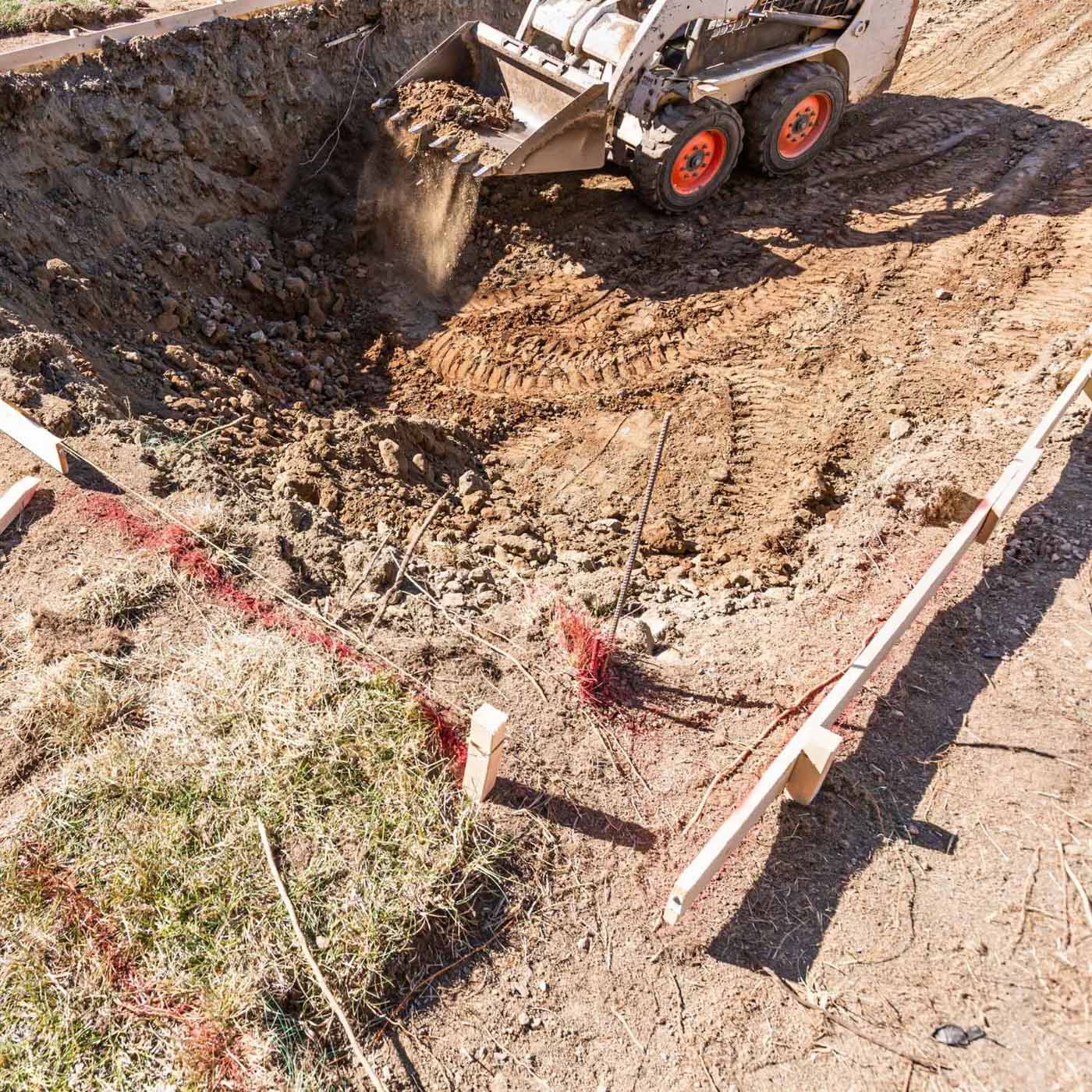
Standing water in a Prospect Park yard isn’t just an eyesore. It’s hydrostatic pressure building against a foundation that’s already been standing for 70 or 80 years. Left alone, that moisture works its way into basements, erodes soil around footings, and kills the landscaping you’ve spent real money on. Once the drainage is right, that cycle stops.
Prospect Park sits in one of the most densely developed pockets of Delaware County nearly 8,700 people per square mile packed into less than a square mile of land. That density means small lots, high impervious surface coverage, and almost no open ground to absorb runoff naturally. When it rains hard here, the water has to go somewhere. If your grading and drainage aren’t directing it away from your home, it’s staying right where you don’t want it.
The borough also borders Tinicum Township to the south, which sits in the low-lying Delaware River watershed near Philadelphia International Airport. That geography elevates groundwater levels in parts of Prospect Park and slows natural drainage in ways that catch a lot of homeowners off guard. Getting the drainage right here means understanding the local terrain not just dropping in a standard system and hoping for the best.
We’ve been working in Delaware County for over 15 years, based out of Aston about 7 miles from Prospect Park along the Route 420 corridor. That proximity isn’t a marketing point. It means the crew that shows up at your property has worked in Prospect Park, Ridley Park, Norwood, Glenolden, and communities throughout southeastern Delaware County. We know the soil. We know the slope patterns. We’ve seen what happens to mid-century homes in Prospect Park when drainage gets ignored for another season.
What sets our work apart is that grading and drainage aren’t treated as two separate jobs. Grading establishes the elevations and slopes that control where water flows. Drainage infrastructure French drains, catch basins, dry wells manages it from there. Doing one without the other is how you end up with a system that works for a season and fails the next. We handle both, as one project, with one crew, from start to finish.

It starts with a site evaluation. Before anything gets dug, we read the yard where water is entering, where it’s pooling, what the existing grade is doing, and where it needs to discharge. On a compact Prospect Park lot, that discharge point matters. There’s not a lot of room for error when your neighbor’s foundation is 20 feet away, and Prospect Park Borough’s stormwater ordinance under Chapter 144 means the solution has to manage water on your property, not redirect it onto the next one.
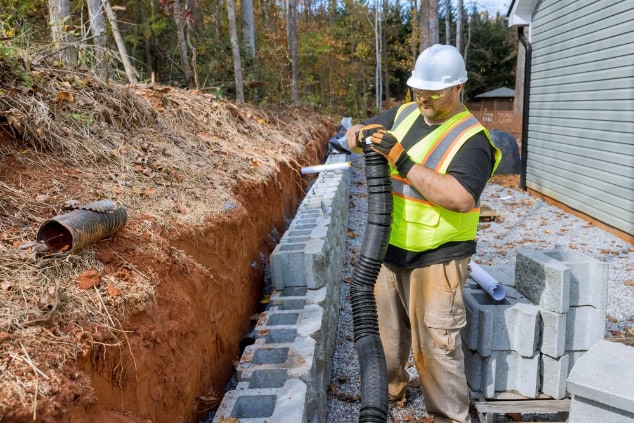
From there, the grading work comes first if needed. Getting the slope right before any drainage infrastructure goes in is what separates a system that lasts from one that needs to be redone. Once the grade is established, the French drain installation begins trenching, gravel bed, perforated pipe, filter fabric, and clean backfill. Catch basins and dry wells are added where the site calls for them.
Before any excavation starts, we call 811 always. Pennsylvania requires it, and it protects your property and our crew. The whole process is communicated clearly upfront so you know what to expect, when it starts, and when it’s done. Most Prospect Park homeowners are commuting into Philadelphia on the SEPTA Wilmington/Newark Line during the day the work happens while you’re out, and the yard is restored when you get back.
Ready to get started?
Drainage work on a small, dense lot in Prospect Park requires more precision than a half-acre property in a newer development. The lots here were laid out in the 1870s and built out over the following century. Many were graded for an era before modern impervious surface coverage before expanded driveways, concrete patios, and attached additions changed how water moved across the property. The drainage system we install today has to account for all of that.
Our core services include French drain installation, surface regrading, catch basin installation, dry well systems, and downspout drainage management. Every system is designed around where the water is coming from and where it needs to go not a template dropped onto the property. For homes in the southern end of Prospect Park, closer to the Tinicum Township line, groundwater depth factors into the design as well.
Delaware County’s freeze-thaw cycle is real, and it matters for how a system gets built. A drainage installation that doesn’t account for Pennsylvania winters the repeated freezing and thawing of saturated soil will heave and fail within a few years. The materials and methods we use are selected for this climate specifically, so the system holds up through season after season without needing to be redone.

Flat lots are actually more prone to drainage problems, not less. Without any natural slope to carry water away, it has nowhere to go except down and if the soil is compacted or clay-heavy, which is common throughout Delaware County, it won’t absorb quickly enough to keep up with a heavy rain event. The water just sits.
In Prospect Park specifically, a lot of this comes down to how the original lot was graded and what’s happened to it over the decades. Driveways, patios, and additions have added impervious surfaces that push more water onto the remaining open ground. Soil around older foundations settles over time, sometimes creating low spots that didn’t exist when the home was built. The fix usually involves correcting the grade first, then installing a drainage system that gives the water a defined path out.
French drain installation in Prospect Park typically runs between $5,000 and $9,000 for a standard residential system, though that range shifts depending on how much linear footage is needed, whether grading work is required first, and how complex the discharge routing is on a small lot. Simpler systems on straightforward properties can come in lower. More involved projects especially on older homes with compromised original grading can run higher.
The more useful comparison isn’t French drain cost versus doing nothing. It’s French drain cost versus what you’re looking at if the drainage problem continues unchecked. Foundation repair in Delaware County commonly runs $10,000 to $30,000 or more. Basement mold remediation is in the same range. A properly installed drainage system that lasts 30 to 40 years is a fraction of either of those outcomes. On a home built in the 1940s in Prospect Park, getting the drainage right now is one of the most cost-effective things you can do for the property’s long-term value.
For most standard residential French drain installations in Prospect Park, a formal permit isn’t required. However, Prospect Park Borough has an active stormwater management program under Chapter 144 of the municipal code, and any work that affects stormwater discharge off your property or alters existing stormwater infrastructure may require borough notification or approval. It’s not something to guess on.
What is always required before any excavation in Pennsylvania is calling 811. That’s a state requirement, not optional, and it protects underground utility lines on your property. A contractor who doesn’t mention 811 before breaking ground is cutting a corner you don’t want cut. Beyond that, working with us means the project gets done correctly from a compliance standpoint no surprises after the fact.
The honest answer is that most wet basements in older Delaware County homes are exterior drainage problems that show up as interior moisture. If water is getting into your basement after heavy rain, the first question is where it’s coming from and in the majority of cases on pre-1950 homes like those throughout Prospect Park, the answer is that water is accumulating against the foundation outside before it ever finds its way in.
Interior waterproofing systems drain tile, sump pumps, wall panels manage water after it’s already inside. They don’t stop it from getting there. Exterior grading and drainage work stops the accumulation before it reaches the foundation wall. If you’ve been quoted $12,000 or more for an interior waterproofing system and nobody has assessed the exterior grade and drainage first, that’s worth a second look. In many cases, correcting the outside drainage resolves the basement moisture without any interior work at all.
A properly installed French drain in Delaware County should last 30 to 40 years under normal conditions. The variables that shorten that lifespan are installation quality, material selection, and whether the system was designed to handle Pennsylvania’s freeze-thaw cycle. Drain systems that weren’t built with the right gravel bed, proper filter fabric, or adequate pipe grade will clog, heave, or collapse sometimes within just a few years.
For Prospect Park homes, the freeze-thaw factor is worth taking seriously. Delaware County goes through repeated freeze-thaw cycles every winter, and saturated soil that freezes and thaws around drainage infrastructure puts real stress on the system. Pipe joints shift. Gravel beds compact unevenly. A system built with cheap materials or incorrect installation depth won’t hold up to it. The difference between a 5-year fix and a 35-year fix comes down to how it was built not just whether it was installed.
It can, and the effect is more direct than most homeowners expect. Chronic drainage problems standing water, dying grass, eroded landscaping beds, basement moisture are visible to buyers and to home inspectors. In Prospect Park, where median home values sit around $239,300 and most homes are over 70 years old, a drainage problem that shows up during an inspection gives buyers leverage to negotiate down or walk away entirely.
Resolving the drainage before you list removes that vulnerability. Beyond resale, there’s the ongoing cost of what a drainage problem does to a property year over year dead landscaping, soil erosion, foundation stress, and the slow accumulation of moisture damage that doesn’t announce itself until it’s expensive. A well-maintained yard with no standing water signals that the home has been taken care of. That reputation has real value on Maryland Avenue and throughout Prospect Park.
Useful Links