
Hear from Our Customers
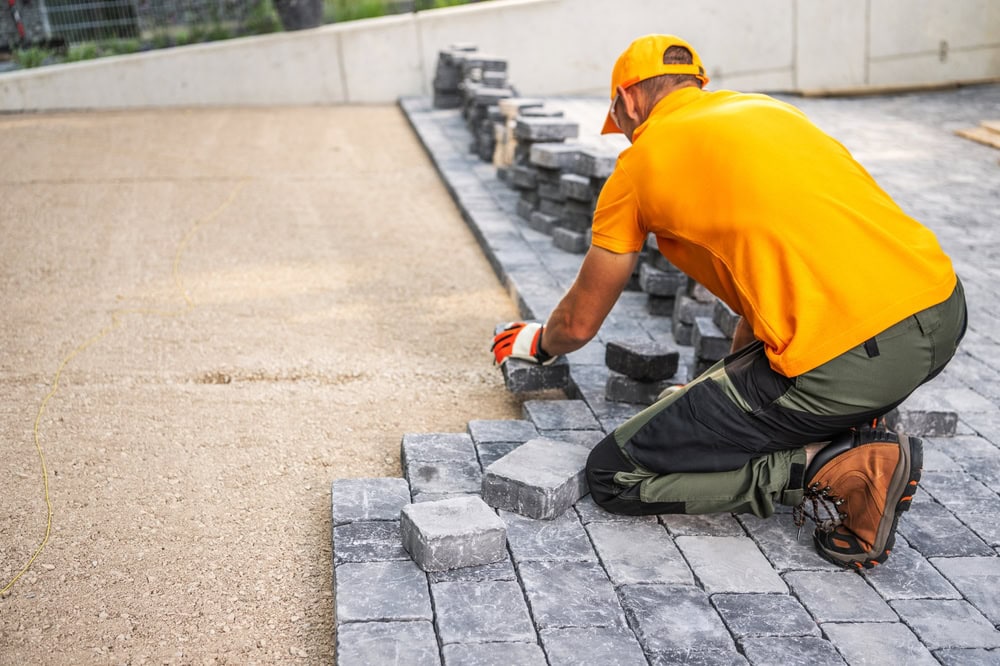
The cracked slabs and sunken pavers you’ve seen around Prospect Park didn’t fail because of the surface they failed because of what was skipped underneath. In Prospect Park, southeastern Pennsylvania’s freeze-thaw cycle hits hard every winter, and any patio built without a properly compacted aggregate base and correct drainage slope is already on borrowed time. It’s just what happens when contractors cut corners on the work you can’t see.
When it’s done right, you get an outdoor space that looks the same in year eight as it did on day one. No heaving, no gaps opening between pavers, no water pooling against your foundation. For homes in Prospect Park many of them 70 to 100 years old with outdated or nonexistent hardscaping that kind of durability is the whole point of doing this in the first place.
And beyond the practical side, there’s the everyday value. A well-designed patio changes how you use your home. It’s where summer evenings happen, where the neighbors end up after a Swim Club day, where your backyard stops being wasted space and starts being part of your life.
We’re based in Aston about ten miles from Prospect Park via US-13 and we’ve been doing hardscape work across Delaware County for over 15 years. That means we know the housing stock in Prospect Park specifically: the lot sizes, the soil conditions, the drainage patterns, and what borough-level permitting actually looks like when you’re working in a dense grid community like this one.
This isn’t a regional company that added Prospect Park to a list of 200 service areas. We work in Norwood, Glenolden, Ridley Park, and Tinicum Township on a regular basis, and we know the neighborhoods here. When your neighbor on the next block asks who did your patio, there’s a real chance they’ve already heard our name.
I’m Renato Spennato, and I run the business and stand behind every project. One team, one point of contact, no subcontractor handoffs. If something comes up after the job is done, you’re not calling a customer service line you’re calling me.
It starts with a consultation where we walk through what you’re working with the yard size, how you want to use the space, your budget range, and any design ideas you already have. For most Prospect Park properties, this conversation includes a realistic look at what fits well in a compact rear yard without overwhelming it. The goal is a patio that’s proportional, functional, and designed around your actual life not a generic layout pulled from a catalog.
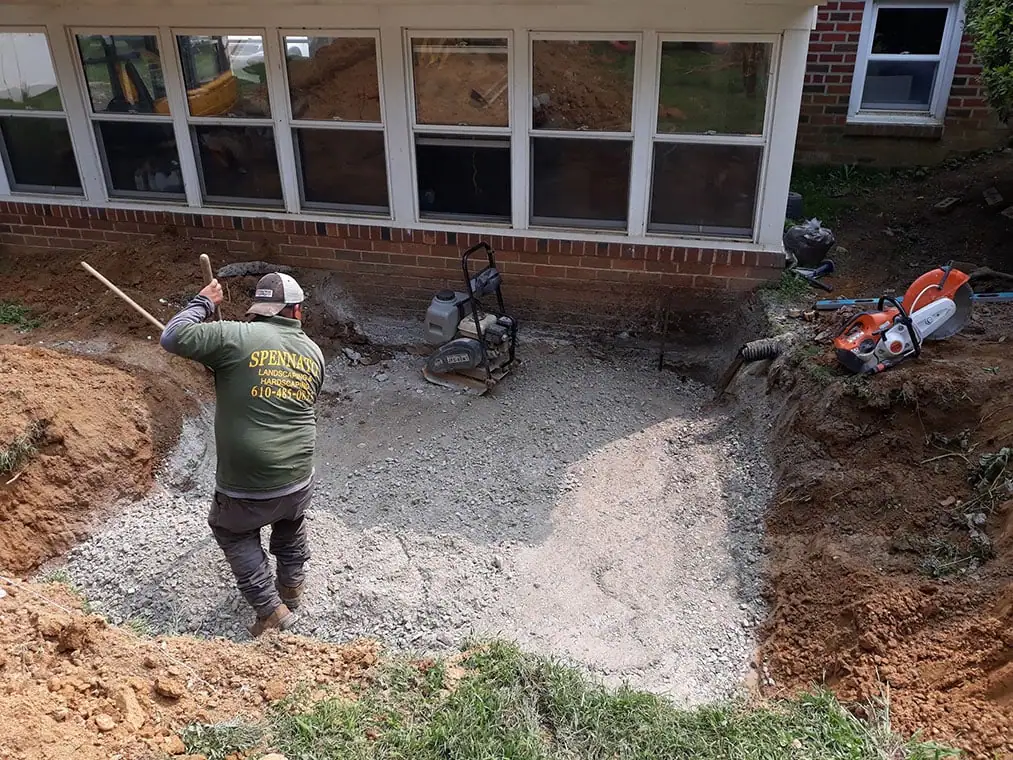
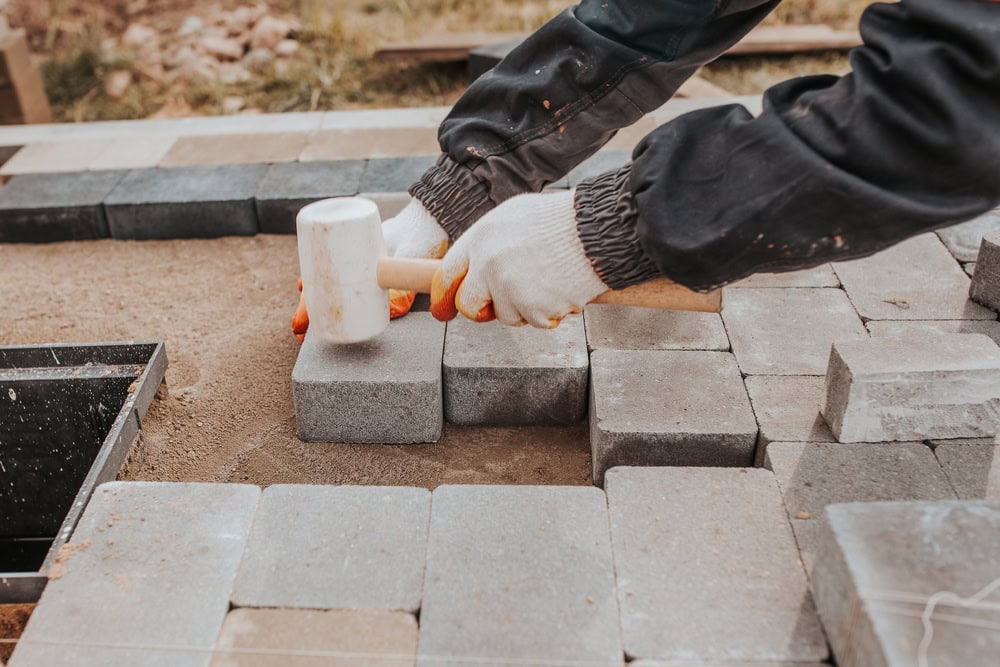
Once the design is set and pricing is agreed on in writing, permitting comes next. Prospect Park Borough requires a building permit for new patio construction, and we handle that process as part of the project you don’t have to navigate the borough’s requirements on your own. After permits are in order, our crew handles excavation, base preparation, surface installation, and finishing with polymeric jointing sand and edge restraints. The base work is where the real quality lives, and it gets the same attention as everything visible above it.
From there, cleanup is thorough and the timeline is what we agreed on at the start. No dragging the job out, no disappearing between phases. When we leave, the space is ready to use and the yard is left cleaner than we found it.
Ready to get started?
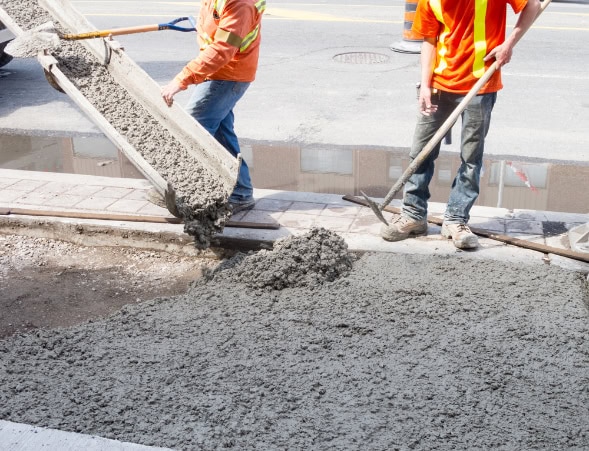
Prospect Park’s housing stock is predominantly early 20th-century construction homes with brick facades, covered front porches, and architectural character that deserves materials chosen to complement it. Interlocking concrete pavers are the most popular choice for durability, design flexibility, and long-term value. They’re available in colors and patterns that suit older homes well, and they’re built to handle Pennsylvania’s freeze-thaw cycles better than poured concrete when installed correctly.
For homeowners who want a more natural look, Pennsylvania Bluestone and flagstone are strong options that fit the aesthetic of Prospect Park’s older residential streets beautifully. These materials carry a higher price point but add a level of character that’s hard to replicate with manufactured products. On the more budget-conscious end, stamped or colored concrete delivers a clean, finished look at a lower cost per square foot and when it’s properly installed with the right base, it holds up well in this climate.
Pricing runs $15 to $50 per square foot depending on material, with most residential projects in the $3,500 to $12,000 range. For a typical Prospect Park backyard patio of 200 to 400 square feet, that’s a plannable, realistic number and we publish it upfront so you’re not walking into a quote blind. Whatever direction makes sense for your home and your budget, the conversation starts with what fits your property, not what’s easiest to install.

Yes Prospect Park Borough requires a building permit for new patio construction and for significant enlargements of existing patios. This is standard across most Delaware County municipalities, and it’s not something to skip. Unpermitted work can create real problems when you go to sell the home, and in a borough with its own zoning code and council, the permit process is something a knowledgeable contractor should know how to navigate.
We handle permit coordination as part of the project. You won’t be left figuring out the borough’s application process on your own or trying to interpret setback requirements for your specific lot. We pull the permit before work starts, the project proceeds in compliance with local code, and you’re not left with any loose ends when the job is done. In a dense grid borough like Prospect Park where lot lines are close together, setback compliance is a real design consideration and it gets addressed during the planning phase, not as an afterthought.
For most residential projects in Prospect Park, patio installation runs between $3,500 and $12,000 depending on the material, size, and complexity of the design. The per-square-foot range is $15 to $50 basic concrete on the lower end, premium natural stone like Pennsylvania Bluestone or flagstone on the higher end, with interlocking pavers landing in the middle of that range for most projects.
For a typical Prospect Park backyard which tends to run 200 to 400 square feet given the borough’s compact lot sizes most projects fall in the lower to middle part of that range. That’s actually an advantage in this market: you’re not paying for square footage you don’t have, and a well-designed smaller patio can deliver the same functional outdoor living space as a much larger one on a bigger lot. We publish these numbers upfront rather than holding them back until the quote stage.
The Philadelphia metro area including Prospect Park averages more than 40 freeze-thaw cycles every winter. Each one of those cycles puts stress on whatever is beneath your patio surface. When water gets into a poorly prepared base, it freezes, expands, and forces the material above it to move. Over time, that movement shows up as sunken pavers, cracked slabs, and gaps in the joints. It’s a pattern you’ve probably seen on your own street in Prospect Park.
The fix isn’t a better surface material it’s a properly built base. That means a minimum five-inch compacted aggregate base, a drainage slope that moves water away from your home’s foundation, solid edge restraints to prevent lateral spreading, and polymeric sand in the joints to block water infiltration and weed growth. These aren’t optional upgrades. They’re the difference between a patio that lasts a decade and one that needs work after the second winter. In Prospect Park’s climate, skipping any part of that base process is how contractors create the exact problems you’re trying to avoid.
For compact rear yards which are common in Prospect Park given the borough’s pre-war grid layout interlocking concrete pavers tend to be the most versatile choice. They come in a wide range of sizes, colors, and patterns, which gives you real design flexibility in a smaller space. Smaller-format pavers can make a compact area feel more intentional and proportional, while larger formats can create a cleaner, more open look depending on the yard’s dimensions.
Natural stone options like Pennsylvania Bluestone or flagstone also work well in smaller spaces and tend to complement the architectural character of Prospect Park’s older homes in a way that feels genuine rather than generic. If budget is the primary driver, stamped concrete is a solid option that delivers a finished look at a lower cost per square foot. The material conversation really depends on your home’s aesthetic, how you plan to use the space, and what you want the patio to look like in ten years all of which gets covered during the design consultation before any decisions are locked in.
For a standard residential patio in Prospect Park typically 200 to 400 square feet the installation itself usually runs two to four days once our crew is on-site. That includes excavation, base preparation, surface installation, and finishing. The permit process through Prospect Park Borough adds time to the overall schedule, so the realistic window from signed contract to completed patio is generally two to four weeks depending on where the project falls in the season and how quickly permits are processed.
Peak installation season in the Philadelphia metro area runs from April through October. If you’re planning around a specific date a summer gathering, a graduation party, a home sale the time to start the conversation is late winter or early spring. Fall installation is also possible and technically sound as long as the base has time to cure before the first hard freeze. The timeline gets established clearly before work begins, and it doesn’t move without a real reason and a conversation.
In a market where Prospect Park home values rose 24.7% in a single year reaching a median sale price of $340,000 as of late 2024 the question of what protects and extends that value matters. Professionally installed patios return more than 80% of their cost at resale on average, and paver patios specifically deliver 30 to 50% better return than plain concrete. For a home in Prospect Park that may already be your largest financial asset, that’s a meaningful number.
Beyond the resale math, there’s the practical reality of what buyers are looking for. Outdoor living space consistently ranks among the top features that influence purchase decisions, and a well-designed patio adds usable square footage that photographs well and shows well during a sale. For Prospect Park homeowners who have been in their homes for years and are watching the neighborhood appreciate around them, a patio investment isn’t a splurge it’s a decision that improves daily life now and pays back a real portion of its cost when it’s time to sell.
Useful Links
Other Services we provide in Prospect Park