
Hear from Our Customers
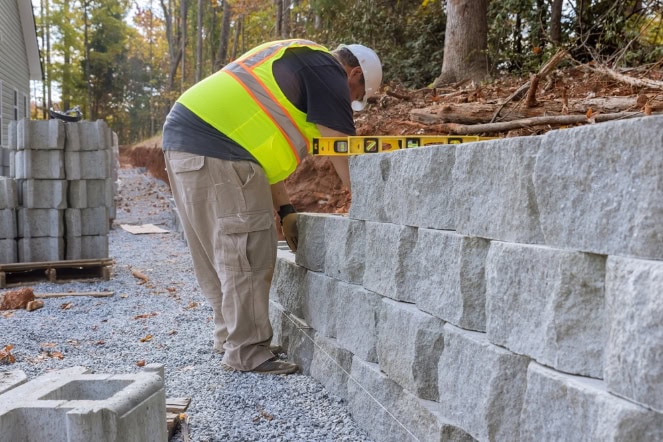
A lot of homes in Clifton Heights were built between the 1940s and 1960s, and the retaining walls that came with them weren’t exactly engineered for the long haul. If yours is starting to lean, crack, or let water through, that’s not just cosmetic. That’s your soil moving, and it won’t stop on its own.
A well-built retaining wall does two things at once: it holds the grade so your yard stays where it belongs, and it manages water so the pressure doesn’t build up behind the wall and push it over. Clifton Heights sits within the Darby Creek watershed, which the Delaware County Conservation District has specifically flagged for flooding and stormwater problems. That context matters when you’re deciding how a wall gets built not just what it looks like.
When the drainage is right and the structure is solid, you get usable outdoor space where there used to be a slope you couldn’t do anything with. You also protect what’s underneath your foundation, your soil, your investment in a home that’s likely worth more than double what it was twenty years ago.
We’re a Delaware County-based hardscaping and landscaping company that handles retaining wall projects from the first site visit to the final cleanup no subcontractors, no crew rotations, no one passing the job off to someone who wasn’t there for the original conversation. Renato Spennato holds an active Pennsylvania contractor license (PA057623) and a BuildZoom score that puts us in the top 11% of licensed contractors statewide.
We work throughout Delaware County, including the compact, tightly packed boroughs like Clifton Heights where small lots and close neighbors mean every job requires more care and awareness than a sprawling suburban township. Westbrook Park, the streets near Baltimore Avenue, the properties that slope down toward Kent Park and the creek these aren’t unfamiliar conditions. They’re the kind of sites we work on regularly.
When something comes up after the job is done, the same person who built it is the one who picks up the phone.
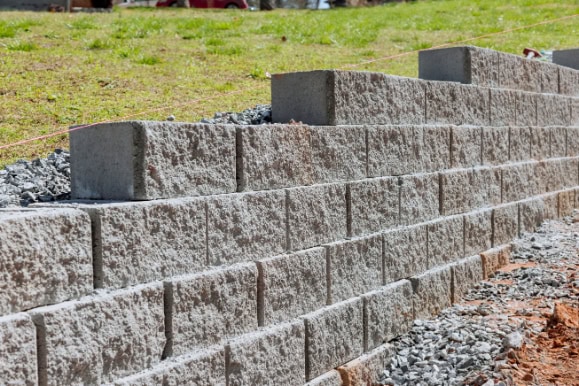
It starts with a site visit not a phone estimate, not a ballpark based on square footage. Clifton Heights properties have real grade changes, aging adjacent structures, and drainage patterns that vary block by block depending on how close you are to the creek. A photo or a description doesn’t tell the full story. Seeing it does.
From there, the conversation covers what material makes sense for your wall’s actual job. Natural stone, concrete block, VERSA-LOK modular systems each one performs differently depending on wall height, soil conditions, and how much water the site moves. For most Clifton Heights properties, the freeze-thaw cycle from November through March is the biggest long-term threat to any retaining structure. That gets factored into the design, not treated as an afterthought.
Before any work begins, we pull the necessary permits. Clifton Heights Borough Code Chapter 178 requires a grading permit before any earthwork starts, and the borough’s Code Enforcement office is active about it. We handle that paperwork so you’re covered not exposed. Once the work is underway, the process follows professional stepped-layering and compacted backfill methods, with drainage built into the wall from the start. The cleanup is complete before we leave.
Ready to get started?
Every retaining wall project in Clifton Heights starts with an honest assessment. If your existing wall can be repaired, that’s what we recommend. If it needs to come down and be rebuilt correctly, we explain that clearly with the reasoning behind it, not just a number on a page. The goal is a wall that lasts, not a wall that gets you through the next few winters.
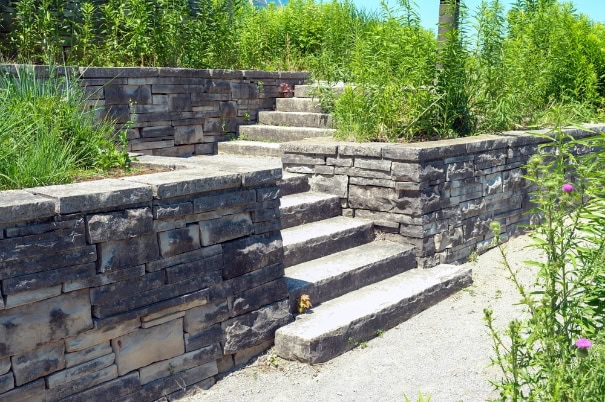
Material options are matched to the specific demands of your site. VERSA-LOK segmental systems work well on many Clifton Heights properties because they’re engineered to handle the natural soil movement that comes with Delaware County’s clay-heavy ground and seasonal moisture changes. Natural stone is an option for homeowners who want something that blends with the brick character of the neighborhood and can last well beyond fifty years with proper drainage behind it. Concrete block sits in between durable, clean, and a practical choice for mid-height walls on tighter lots.
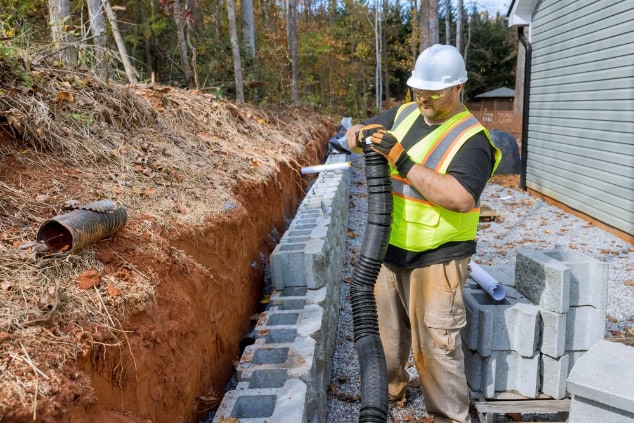
Drainage isn’t an add-on. Every wall we build includes a drainage plan designed to prevent hydrostatic pressure from building up behind the structure the single most common reason retaining walls fail prematurely. For properties near the Darby Creek corridor, that’s not optional. It’s the difference between a wall that holds and one that doesn’t make it through a wet spring.
Yes, and it’s worth taking seriously. Clifton Heights Borough Code Chapter 178 the borough’s Grading, Drainage and Erosion Control ordinance requires a permit before any person or contractor begins grading, filling, or regrading land within the borough. That applies to retaining wall projects that involve earthwork, which most do. The borough’s Code Enforcement office is active, and when you go to sell your home, unpermitted work can create real complications during inspection and title review.
On top of the grading permit, the borough requires all contractors to provide a valid Pennsylvania Home Improvement Contractor (HIC) license number and proof of insurance when applying for a permit. If your contractor can’t produce those, the permit can’t be legally pulled and you’re the one left exposed. We hold an active PA contractor license and handle the permit application process as part of the project, so you’re not navigating Borough Hall on your own.
The range is wide because the variables are real. Nationally, residential retaining walls run anywhere from $3,500 to $10,000 for a typical project, with per-linear-foot costs ranging from roughly $40 to $345 depending on material, wall height, and site complexity. In Delaware County, site access, soil conditions, and drainage requirements all affect the final number and in a dense borough like Clifton Heights, tight lots and close neighboring properties can add time and care to the job.
Material choice is one of the biggest cost drivers. VERSA-LOK modular systems and concrete block tend to sit in a mid-range price point and offer strong longevity. Natural stone costs more upfront but can last a century with proper installation. Timber is the least expensive option but has the shortest lifespan typically 10 to 30 years which means you may be looking at the same project again sooner than you’d like. A site visit is the only way to give you a number that means anything.
The most common cause is poor drainage or no drainage at all. When water builds up behind a wall and has nowhere to go, it creates hydrostatic pressure that pushes outward. Over time, that pressure causes walls to bow, crack, or tip forward. In Clifton Heights, this problem is compounded by two local factors: the borough sits within the Darby Creek watershed, which has documented stormwater management challenges, and the clay-heavy soil common throughout Delaware County holds moisture rather than draining it quickly.
Pennsylvania’s freeze-thaw cycle makes it worse. Water seeps into the soil behind a wall, freezes and expands in winter, then thaws and shifts the earth. For aging walls and most walls in Clifton Heights are 55 to 70 years old this cycle is the primary mechanism of ongoing deterioration. A wall that survived its first forty winters may fail in the next five if the drainage behind it was never addressed. That’s why drainage design isn’t a secondary consideration on any project we build.
In Pennsylvania under the Uniform Construction Code, retaining walls over four feet in height measured from the bottom of the footing to the top of the wall are generally subject to building permit requirements and may require a structural review or engineer-sealed plans. Clifton Heights has adopted the 2009 International Codes as issued by the ICC and incorporated into the Pennsylvania UCC, so those thresholds apply here.
Even for walls under four feet, Clifton Heights Borough Code Chapter 178 still requires a grading permit if the project involves earthwork. The borough’s zoning code also specifies that retaining walls are exempt from the general four-foot height restriction that applies to fences and decorative walls, but the sight triangle rule still applies near street corners no obstruction over 24 inches within the 25-foot sight triangle. If your wall is near a corner lot or a property line, those details matter and should be confirmed before any work begins.
For most Delaware County properties, concrete block and segmental systems like VERSA-LOK perform well because they’re designed to accommodate the natural soil movement that comes with freeze-thaw cycling. Unlike poured concrete, which can crack under the pressure of expanding and contracting ground, segmental retaining wall systems allow for slight movement without compromising the overall structure. VERSA-LOK specifically doesn’t require frost footings, which reduces both cost and installation complexity while still delivering long-term stability.
Natural stone is the most durable option when it’s installed correctly with proper drainage behind it. It can last well over a century and holds up to Pennsylvania winters without the degradation that affects timber or lower-grade block. Timber is the most affordable upfront but the least resilient in a wet, freeze-thaw climate it absorbs moisture, rots from the inside, and typically needs full replacement within 10 to 30 years. The right choice depends on your wall’s structural requirements, your budget, and how long you want to go before thinking about this project again.
A few signs point clearly toward replacement: the wall is visibly leaning or bowing outward, there are horizontal cracks running along the face of the wall, sections have shifted or separated, or water is visibly coming through the wall face after rain. Any of these indicate that the structure has been compromised often because drainage behind the wall was never adequate in the first place. In Clifton Heights, where most walls were built in the 1940s through 1960s, these aren’t unusual findings.
Repair is a reasonable option when the damage is isolated a cracked cap block, minor settling in one section, or surface deterioration that hasn’t affected the wall’s structural integrity. The honest answer is that it depends on what’s actually happening behind the wall, not just what’s visible from the front. That’s exactly why a site visit matters before anyone gives you a recommendation. A contractor who tells you the wall needs full replacement based on a photo, or tells you a repair will hold without seeing the drainage situation, is guessing. You deserve a real assessment before you make that call.
Useful Links
Other Services we provide in Clifton Heights