

Hear from Our Customers

When clearing is done properly on a Clifton Heights property, you’re not just getting rid of overgrowth you’re reclaiming usable space that’s been sitting there for years, sometimes decades. Over 80% of homes in Clifton Heights were built before 1970. That means mature root systems, shrubs that have become small forests, and fence lines that haven’t been touched since the previous owner planted them. Getting that cleared the right way means the ground underneath is actually ready for what comes next whether that’s a patio, a garage, a home addition, or simply a backyard you can use again.
There’s also a drainage piece that matters more here than in most places. Clifton Heights sits on the Darby Creek watershed, and the borough has invested real money into stormwater infrastructure because runoff is a genuine issue in this area. A clearing job that doesn’t account for how water moves across your property can leave you with standing water problems, soggy ground near your foundation, or drainage issues that affect your neighbor’s property too. That’s not a theoretical risk it’s the kind of thing that leads to complaints and code enforcement calls in a borough this dense.
What you want at the end of a clearing project is a property that looks better, drains better, and is actually ready for the next step. Not a pile of debris sitting on a half-cleared lot while you try to reach someone who already took your deposit.
We’re based in Aston, PA, about 12 miles from Clifton Heights on the same Baltimore Pike that runs right through the center of the borough. That’s not a coincidence it’s context. We’re a Delaware County operation that has worked throughout the borough and its surrounding first-ring suburbs for over 15 years. The dense, older neighborhoods. The tight lots. The properties along creek corridors where drainage actually matters. Renato, our owner, has been doing this work personally long enough to know what a Clifton Heights lot looks like before and after and what it takes to get from one to the other.
That kind of experience doesn’t come from a regional chain running templated service pages. It comes from showing up in Clifton Heights and communities like Westbrook Park and Primos, doing the work, and building a reputation one project at a time. We carry full liability insurance, workers’ compensation coverage, and a Pennsylvania Home Improvement Contractor license everything the Clifton Heights Code Enforcement Department requires before a permit gets issued.
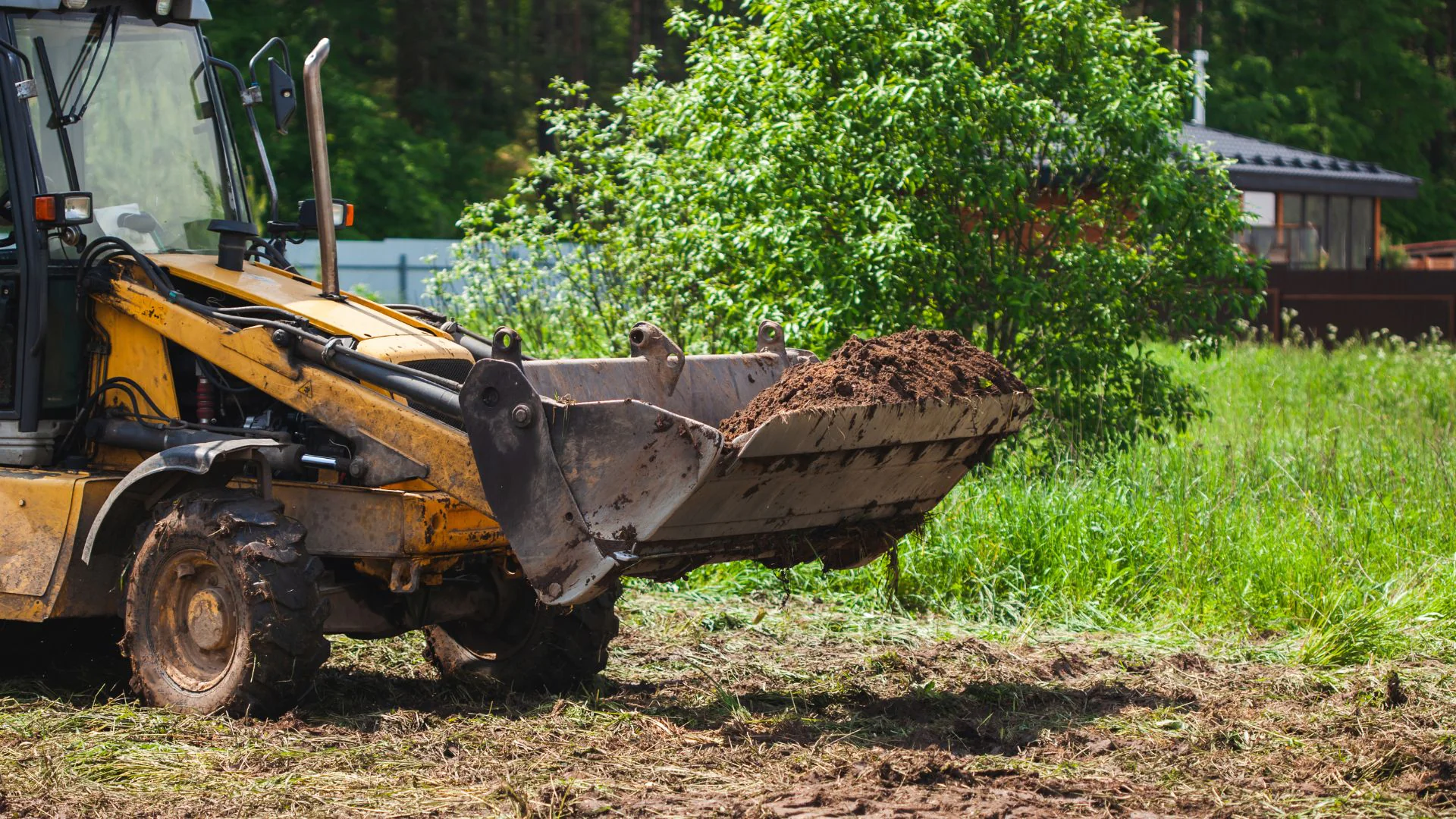
It starts with a free consultation. Renato walks the property with you, looks at what’s there, and gives you a real scope and a real number not a vague range that triples once the crew shows up. For most Clifton Heights properties, that means assessing vegetation density, access points through tight side yards, proximity to neighboring structures, and any grading or drainage work the project will require downstream.
Once the scope is agreed on, the permit process comes next when it applies. Clifton Heights has an active Code Enforcement and Community Development Department, and any clearing or grading work that precedes construction an addition, a garage, a patio will need borough approval. Chapter 178 of the borough’s municipal code governs grading and excavation specifically, and any building permit requires a grading and drainage plan sealed by a licensed engineer. We know this process. We don’t leave you to figure it out on your own or discover mid-project that you needed approvals you didn’t get.
The clearing work itself is done with the finished result in mind. Vegetation is removed, stumps are ground down, debris is hauled off, and any grading needed to level the site or correct drainage is handled before our crew leaves. When the job is done, the property is clean and ready not cleared on the surface with a root problem waiting underneath.

Ready to get started?
Land clearing in a borough like Clifton Heights isn’t a single task it’s a sequence. Brush clearing and overgrowth removal gets the surface vegetation gone. Stump grinding takes care of what’s left below. Grading levels the site and establishes proper drainage slope. And for projects that go further patios, retaining walls, drainage systems, full landscaping we handle all of it under one contract. No handoff to a separate grading crew. No waiting for a different contractor to show up for the next phase.
For properties in the Darby Creek corridor or in low-lying areas along the borough’s drainage network, the grading piece is especially important. Clearing land without addressing how water will move across it afterward is a common mistake, and in a borough with active stormwater regulations under Chapter 290, it’s one that can create real problems down the line. Every clearing and grading project we do accounts for post-clearing drainage because getting the water right is just as important as getting the vegetation out.
The work is fully insured, properly permitted, and done by the same team from start to finish. No rotating subcontractors. No crew showing up once and disappearing. The scope you agree to at the start is the scope that gets delivered.
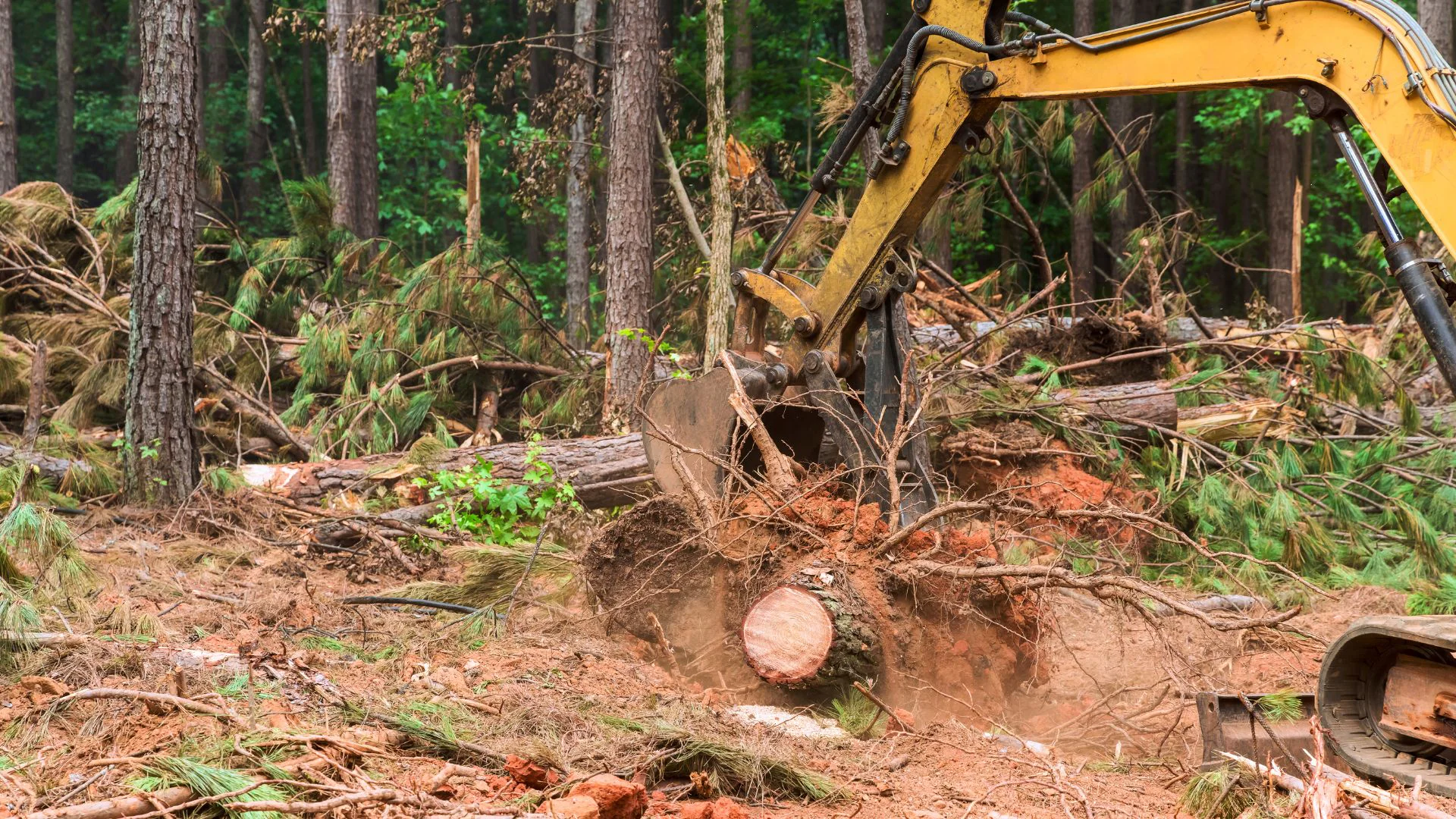
It depends on what you’re doing with the property afterward, but in most cases yes. The Borough of Clifton Heights has a Code Enforcement and Community Development Department that actively enforces zoning, grading, and construction requirements. Chapter 178 of the borough’s municipal code specifically governs grading and excavation work. If your clearing project is a precursor to any construction an addition, a garage, a patio, a deck you’ll need borough approval before work begins, and any building permit requires a grading and drainage plan sealed by a registered professional engineer.
Even if you’re just reclaiming an overgrown backyard with no construction plans, it’s worth a conversation with the borough before you start. Clifton Heights Code Enforcement requires all contractors to provide a certificate of insurance and a Pennsylvania HIC license number when applying for any permit. Hiring a contractor who isn’t licensed or insured doesn’t just put you at risk on the job it can create compliance problems that cost more to fix than the original project.
For a residential lot clearing job in Delaware County the kind that’s most common in Clifton Heights you’re generally looking at somewhere in the $500 to $3,000 range for the clearing itself, depending on vegetation density, lot size, and access conditions. Stump grinding, debris hauling, and grading are common add-ons that affect the final number, and they should be spelled out clearly in any quote you receive. If a contractor gives you a clearing price without mentioning what happens to the stumps and debris, ask because those costs have a way of appearing on the final invoice.
For projects that include grading, drainage work, or site preparation ahead of construction, the scope expands and so does the cost. A full site prep package on a small residential lot in Clifton Heights clearing, grading, and drainage can run anywhere from $3,000 to $8,000 or more depending on conditions. The best way to get a real number is a walkthrough of the property, which we do for free before any commitment is made.
It should be, but not every contractor includes it automatically. Stump grinding and debris removal are separate line items for many clearing crews meaning you could end up with a cleared surface that still has stumps poking up and a pile of brush sitting at the back of your property. In a dense borough like Clifton Heights, where your property line is close to a neighbor’s fence or a shared wall, that’s not just an eyesore it’s a problem that affects the people around you.
When we clear a property, stump grinding and debris removal are part of the conversation upfront. The goal is a finished result, not a half-done job that leaves the next phase of your project on hold. If the property needs grading after clearing to level the site or correct drainage that gets addressed before our crew leaves, not added as a surprise after the fact. You’ll know exactly what’s included before any work starts.
This is the question that separates contractors who know Clifton Heights from ones who don’t. When 67% of the borough’s housing stock is row houses or attached homes, clearing work almost always happens in tight, constrained spaces narrow side yards, shared fence lines, neighboring structures within feet of where equipment needs to operate. A crew that shows up with equipment sized for rural acreage is going to cause damage in that environment.
The right approach starts with a site assessment that accounts for access before anything else. What’s the entry point? What equipment fits through the side yard? What’s the proximity to the neighboring fence or structure? We’ve been working in eastern Delaware County’s dense residential neighborhoods long enough to know how to clear a backyard in a row house setting without turning it into a property damage situation. The work gets done with the same care on a 20-foot-wide lot as it does on a half-acre parcel because the stakes are actually higher when the neighbors are that close.
Spring and fall are the two windows most homeowners in Clifton Heights work with. Spring roughly March through May is when demand peaks. The ground thaws, the window before full leaf-out makes it easier to see what’s actually there, and homeowners planning summer construction projects need sites cleared before builds can begin. If you’re planning a patio, a garage, or a home addition for this year, getting the clearing done in early spring keeps the project on schedule.
Fall September through November is the second strong window. It’s the preferred time to clear before the ground freezes, and post-storm cleanup following nor’easters and wind events is common in this area. Properties along the Darby Creek corridor sometimes see storm damage that accelerates the timeline. Late winter can also work for clearing work that doesn’t require immediate grading frozen ground actually makes heavy equipment easier to operate with less soil disturbance. The short answer is: whenever you’re ready to move forward, there’s a workable window. The longer you wait on an overgrown property, the more established the root systems get.
We handle the full scope clearing, grading, excavation, drainage, masonry, and landscaping all under one contract. That matters more in Clifton Heights than it might somewhere else, because the borough’s permit requirements mean that clearing and grading are connected to a process, not just a one-time task. If your clearing project is the first step toward a home addition or a new outdoor space, you don’t want to coordinate three separate contractors across three separate timelines while the borough’s Code Enforcement clock is running.
Having one team handle everything from the initial clearing through the finished construction means the grading is done with the end use in mind, the drainage is designed for what’s being built, and the permit process moves as one connected project rather than a series of disconnected approvals. For homeowners in a borough where the housing stock is aging, the lots are tight, and the drainage requirements are real, that kind of continuity is the difference between a project that finishes on time and one that drags on for months. One call, one team, one result.
Useful Links
Other Services we provide in Clifton Heights