
Hear from Our Customers

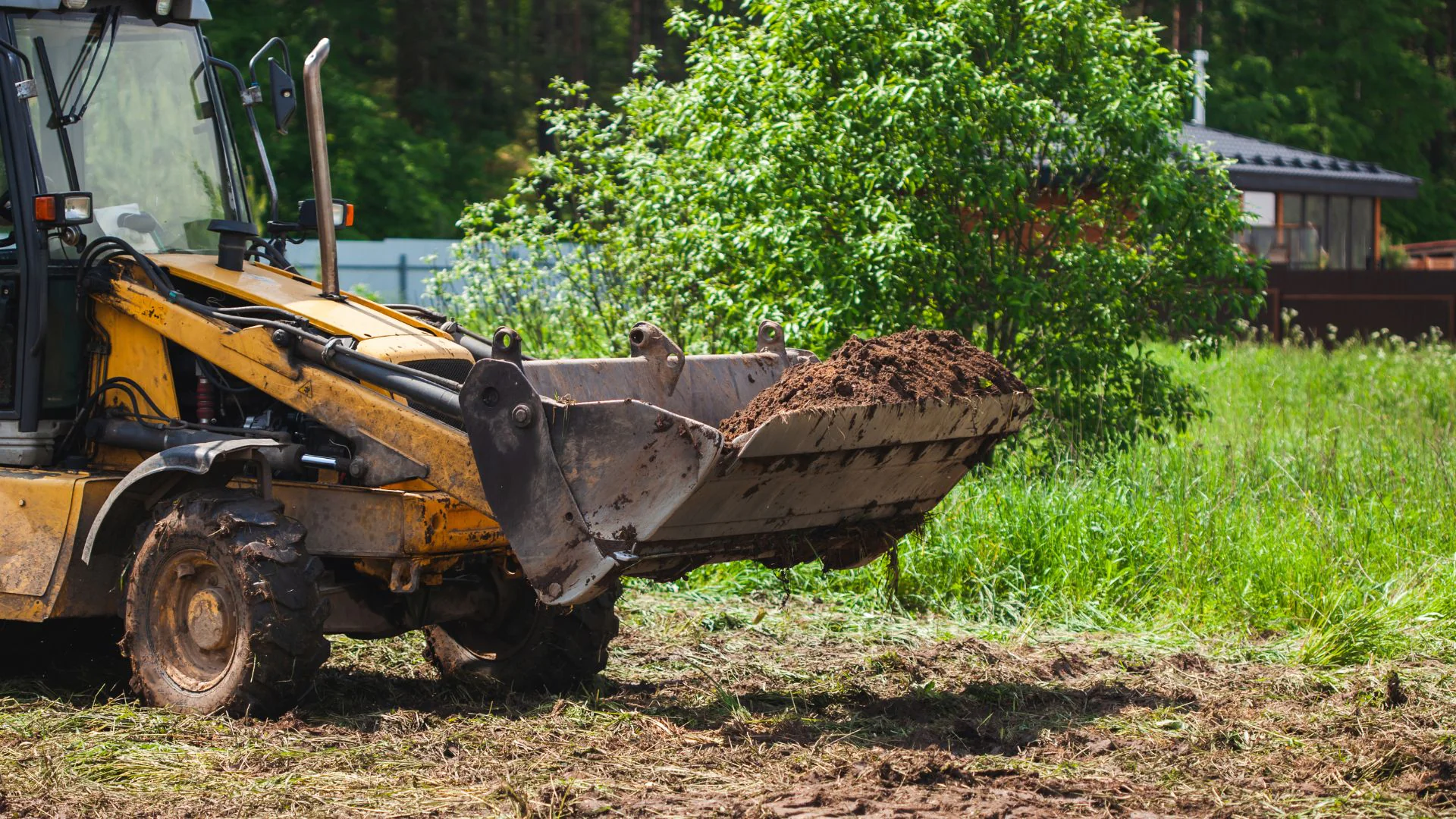
A lot of Village Green-Green Ridge homes were built between the 1940s and 1980s. The trees planted back then are full-grown now and the fence lines, back corners, and forgotten patches of the yard that nobody touched for 20 years have a way of turning into something you can’t ignore anymore. Whether you’re reclaiming usable space, prepping for a patio or addition, or just tired of looking at it, the clearing process is straightforward when the right crew handles it.
What you get on the other side isn’t just a cleaner yard. It’s a site that’s actually ready for what comes next graded properly, debris gone, and no half-done stumps left to heave through your lawn in two years. For homes near Pennell Road and Concord Road where lots run tight and neighbors are close, that kind of clean, precise work matters. A crew that doesn’t protect adjacent fences or leaves mud tracked across the driveway isn’t just an inconvenience it’s a problem you’ll hear about.
We handle clearing as part of a larger process, not a standalone chop-and-leave job. If grading, drainage, or masonry is the next step, you’re not starting over with a new contractor. The same team that cleared the site can take it all the way through.
We’re based in Aston, PA the same township that Village Green-Green Ridge sits in. That’s not a marketing line. It means when you call, you’re talking to a contractor who has worked on properties within a mile of yours, knows how Aston Township’s permit process works, and has a real stake in the reputation we carry in this neighborhood.
Renato runs the operation personally. Customers mention him by name because he’s actually on the job, not managing from a distance while a rotating crew handles the work. That kind of accountability is harder to find than it should be, and it’s the reason most of the work here comes from referrals people in Village Green-Green Ridge talk, and the work speaks for itself.
This isn’t a regional company that added Village Green-Green Ridge to a service area dropdown. We’re a local contractor who’s been working in this township for over 15 years, fully insured, and familiar with the specific conditions and regulations that apply to your property.

It starts with a free on-site consultation. Before any equipment shows up, we assess the property access points, tree size and placement, proximity to structures, drainage patterns, and what the site needs to look like when the work is done. For Village Green-Green Ridge lots, that assessment matters more than most people realize. A fenced backyard on a quarter-acre lot with a 60-year-old oak near the foundation isn’t the same job as clearing an open rural acre, and quoting it without seeing it leads to surprises nobody wants.
Once the scope is clear, you get a written estimate with line items clearing, stump removal, debris hauling, and any grading that’s needed. Aston Township requires permits for site grading and construction-related clearing, and contractors must carry current Certificates of Insurance before any permit is issued. We handle that paperwork on our end. You don’t need to navigate the township’s Building Code Department on your own.
Work begins on a confirmed date, with a real timeline attached to it. We complete the clearing, remove all debris from the site, and leave the property clean not “mostly done.” If the project continues into grading, drainage, or masonry, the same team carries it forward. No handoffs, no gaps, no new contractor to vet halfway through your project.
Ready to get started?
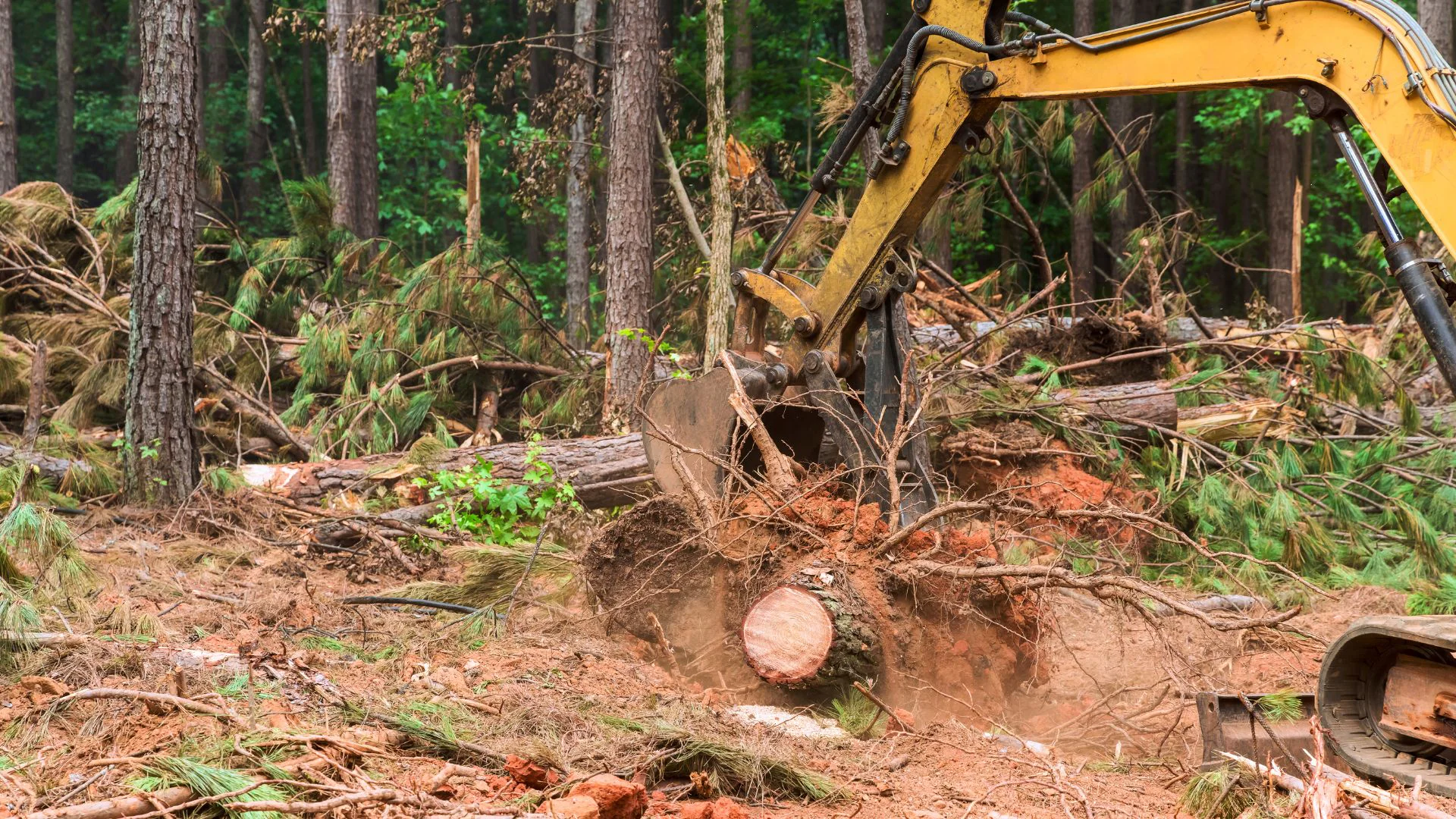
Land clearing in this area covers a range of work depending on what you’re dealing with. Overgrowth removal along fence lines and property edges, full lot clearing for pre-construction site preparation, mature tree removal, stump grinding, and brush clearing for invasive species English ivy, Japanese knotweed, and multiflora rose are common throughout southeastern Pennsylvania and spread fast on suburban lots that haven’t been maintained. If that’s what you’re working with, we address it completely, not just cut back to the surface.
Stump removal is included where it’s needed, not treated as an add-on to inflate the final number. The site gets graded after clearing so water flows correctly this matters in Aston Township, where properties near drainage swales and the Chester Creek corridor are subject to EPA and DEP stormwater management requirements. A cleared lot that isn’t graded properly can create erosion problems, drainage complaints, and moisture issues that are more expensive to fix than the original clearing job.
If your project goes beyond clearing a new patio, a retaining wall, an addition footprint, a pool installation our full-service capability covers grading, excavation, masonry, and landscaping as follow-on work. You’re not managing a chain of separate contractors. One team, one contract, one point of contact from the first cut to the finished project.

It depends on the scope of the work. In Aston Township, permits are required for site grading and any construction-related clearing so if you’re clearing land as part of an addition, pool installation, or significant grade change, you’ll need to go through the township’s Building Code Department before work begins. Contractors are also required to carry current Certificates of Insurance for both Liability and Workers’ Compensation before any permit can be issued, which means hiring an uninsured operator puts the liability back on you as the homeowner.
For smaller-scale brush clearing or overgrowth removal that doesn’t involve structural work or significant soil disturbance, the permit requirement may not apply but that determination should be confirmed with the township before you start. We’re familiar with Aston Township’s process and handle the permit side of projects that require it, so you’re not left figuring out the paperwork on your own.
Professional land clearing in Delaware County generally runs between $1,395 and $6,174 per acre, but that range doesn’t tell the full story for a Village Green-Green Ridge property. Most residential lots here run from 5,000 square feet to a quarter acre tight suburban lots with mature trees, fenced backyards, and structures nearby. That kind of work is priced differently than rural acreage clearing, because precision matters more and equipment access is more constrained.
The variables that affect your specific cost include vegetation density, tree size and quantity, stump removal, debris hauling, and whether finish grading is needed after the clearing is complete. A property with decades of accumulated growth along fence lines and several large oaks will cost more than a lot with light brush. The best way to get an accurate number is a written estimate after an on-site assessment that’s what we provide, free of charge, before any work begins.
Stump removal is not automatically included in every clearing quote it depends on the contractor and how they structure their pricing. With us, stump grinding and removal is addressed as part of the overall project scope during the initial assessment, not quietly added to the final invoice after the fact. If stumps need to come out for the site to function correctly whether that’s for grading, drainage, or future construction that gets factored into the written estimate upfront.
This matters more than it might seem. Flush-cut stumps left in place will continue to produce surface roots, create tripping hazards, and interfere with grading and drainage for years. On the tight residential lots common in Village Green-Green Ridge, a stump left near a fence line or drainage swale is a problem that compounds over time. Getting it out completely during the clearing phase is almost always less expensive than addressing it separately later.
Spring and late fall are the two peak windows for land clearing in this area, and both have practical reasons behind them. Spring roughly March through May is when most homeowners who spent the winter planning a renovation or backyard project are ready to move. The ground is workable, and clearing in spring gives you the full building season to complete whatever comes next. Late fall, once leaves have dropped, is the second strong window it’s easier to assess what needs to go, and clearing in October or November means the site is ready when spring construction season opens.
Late winter is worth considering for larger projects. Frozen ground can actually reduce equipment impact on surrounding lawn areas, which matters on tight suburban lots where you don’t want heavy machinery tearing up the yard you’re not clearing. Summer works for smaller residential jobs backyard reclamations, fence line clearing, pre-patio prep but heat and debris management slow down larger-scale work. Delaware County also sees nor’easters and wind events that create emergency clearing needs regardless of season, and we handle those as well.
Yes and this connection is more relevant in Aston Township than most homeowners realize. The township sits within the Chester Creek watershed, and properties throughout Village Green-Green Ridge are subject to EPA and DEP stormwater management requirements. When land is cleared without proper grading afterward, the bare soil is vulnerable to erosion, runoff increases, and water can start pooling in areas where it didn’t before sometimes leading to basement moisture issues or drainage complaints from neighboring properties.
The right clearing job accounts for this from the start. Our process includes finish grading as part of the project scope where it’s needed, which means water flows correctly off the cleared site rather than pooling or running toward structures. For properties near drainage swales or low-lying areas common throughout Village Green-Green Ridge given the area’s topography this isn’t optional. It’s the difference between a cleared lot that functions well and one that creates a new set of problems as soon as it rains.
This is one of the more important questions to ask before any work starts, and it’s worth being direct about. Aston Township requires contractors to carry current Certificates of Insurance for both Liability and Workers’ Compensation before any permit is issued. If a contractor can’t produce proof of both, and something goes wrong on your property an injury, damage to a neighboring fence, a drainage problem caused by improper grading the liability can fall back on you as the homeowner.
Beyond insurance, the signals worth looking for are straightforward: a physical business address in the area (not just a service area claim on a website), a named owner who is reachable and involved, a written estimate before work begins, and references from actual jobs in the township. In a community like Village Green-Green Ridge, where people tend to stay long-term, a contractor’s local track record isn’t hard to verify. We’re based in Aston, fully insured, and have been working in this township for over 15 years that history is checkable, not just claimed.
Useful Links
Other Services we provide in Village Green-Green Ridge