

Hear from Our Customers

If you’ve watched your yard turn into a swamp after every spring storm and written it off as just how things are around here that’s not quite right. The flooding you’re seeing is a solvable problem, and it’s one that shows up constantly in homes like yours across Village Green-Green Ridge. The combination of clay-heavy soil throughout Aston Township and the rolling terrain that sends water running toward foundations instead of away from them creates the exact conditions most of these mid-century homes were never built to handle.
When standing water gets addressed the right way with the right drainage system and corrected grading your yard stops being a liability and starts being usable again. No more muddy patches that kill the grass. No more kids tracking in mud from the back door. No more watching a puddle sit in the same spot for four days after it rains. And more importantly, no more wondering whether that water pooling near your foundation is quietly working its way into your basement.
Village Green-Green Ridge carries a very high flood risk zone classification, and Delaware County has been hit with 18 federally declared water-related disasters. That’s the reality of what these properties deal with year after year. A properly installed outdoor drainage system in Delaware County, designed for the soil and terrain here, is what actually changes that pattern.
We’re based in Aston, PA which means Village Green-Green Ridge isn’t just a pin on a service area map. It’s the same township we work in every week. We know the terrain around Pennell Road. We know what the soil does after a hard rain. We know the housing stock the split-levels, the ranches, the Colonial Revivals built between the 1940s and 1980s that make up most of this neighborhood and what their drainage systems were and weren’t designed to handle.
Over 15 years in this market means we’ve seen what works and what doesn’t when it comes to grading and drainage in Delaware County. Renato and the crew that shows up to your property are the same people who assessed it no subcontractors, no handoffs, no gaps in communication. In a community as tight-knit as Village Green-Green Ridge, we’ve built our reputation one honest job at a time.

It starts with a site assessment, not a sales pitch. Before anything gets recommended, we walk the property and figure out exactly why the water is accumulating. In Village Green-Green Ridge, that usually comes down to one of a few things: the grade is sloping toward the house instead of away from it, the clay soil is saturated and has nowhere to send the water, the original drainage is undersized or failed, or the downspouts are discharging too close to the foundation. Sometimes it’s all four.
Once we understand what’s actually happening, we put together the right solution whether that’s a French drain installation, a catch basin, surface regrading, or a combination. Some properties in Aston Township need a full outdoor drainage system. Some just need the grade corrected. You’ll know what we found and why we’re recommending what we are before any work begins.
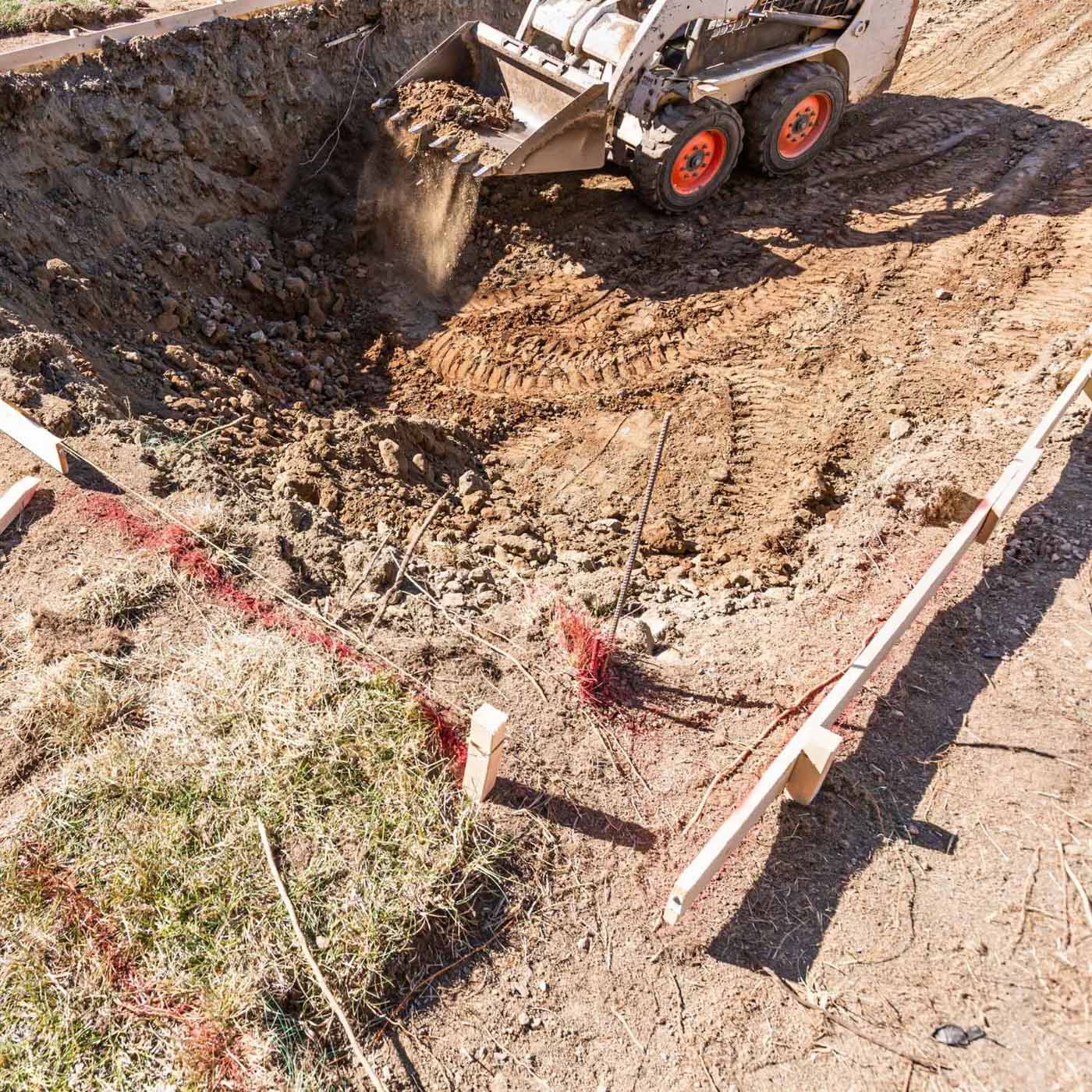
When work starts, it’s the same crew from day one to cleanup. We handle the excavation, install the system using materials built for Pennsylvania’s freeze-thaw winters, and restore the disturbed areas before we leave. Aston Township requires compliance with stormwater management ordinances under the Chester Creek Watershed Act 167 Plan, and we’re familiar with those requirements. We also call 811 before any excavation that’s not optional, it’s the law in Pennsylvania, and it’s a baseline any qualified contractor should be meeting.
Ready to get started?
Drainage problems in Village Green-Green Ridge rarely have a single cause, which is why a single-solution approach usually falls short. We handle grading and drainage in Delaware County as a connected scope of work not two separate services you have to hire two separate contractors to manage. If the slope needs correcting before a French drain will function properly, we handle both. If a catch basin is needed at a specific low point in the yard before water can be routed away from the foundation, that’s part of the plan.
The homes in this part of Aston Township most of them built between the 1940s and 1980s were constructed before modern drainage standards existed. The original grading has shifted over decades. Tree roots have disrupted drainage paths. Downspout extensions fall short of where water actually needs to go. What you’re dealing with today is often the accumulated result of 50 or 60 years of small changes that nobody addressed along the way. We look at the full picture.
Every project includes a thorough site assessment, a clear explanation of what we found and what we’re recommending, and a finished job that accounts for how water moves across your specific lot. Whether your yard drainage issue in Delaware County calls for a French drain, surface regrading, a dry well, or a more comprehensive outdoor drainage system, the work is designed around your property not a standard package applied to every job on the schedule.
The most common reason is the combination of clay-heavy soil and grading that doesn’t direct water away from your property effectively. Clay doesn’t absorb water the way sandy or loamy soil does it holds moisture near the surface, and once it’s saturated, there’s nowhere for additional rainfall to go except toward the lowest point on your lot. In a lot of Village Green-Green Ridge homes, that lowest point is right next to the foundation.
The rolling terrain throughout Aston Township compounds this. Homes built on or near slopes which describes a large portion of the housing stock here are especially vulnerable to water running toward rather than away from the house. Add in the fact that most of these properties were built between the 1940s and 1980s with minimal original drainage infrastructure, and you have a situation where the yard flooding you’re seeing isn’t random. It’s structural. It needs a real fix, not just a longer downspout extension.
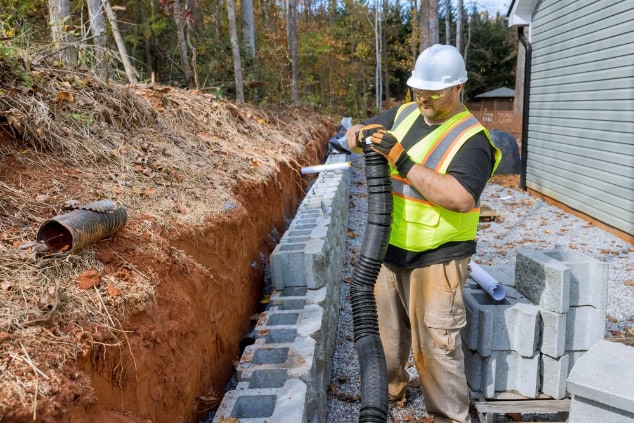
Regrading changes the slope of the ground so water flows away from your home instead of toward it. A French drain is a buried drainage system typically a perforated pipe surrounded by gravel that collects subsurface water and routes it to a discharge point away from the property. They solve different parts of the same problem, and in many cases, you need both.
If the grade is sloping toward your foundation, correcting it is often the first step. But in Delaware County’s clay soil, even a well-graded yard can still accumulate water because the soil doesn’t drain quickly enough on its own. That’s where a French drain installation fills the gap it gives the water a path out before it has time to pool. For most of the homes in Village Green-Green Ridge, the permanent fix involves addressing both the slope and the drainage infrastructure, not just one or the other.
The typical range for French drain installation in Delaware County runs from around $5,000 to $9,250 for most residential projects, though simpler installs can come in lower and more complex systems especially those involving significant grading work or difficult discharge routing can run higher. Cost is driven primarily by linear footage, how deep the system needs to go, what type of pipe and gravel are used, and where the water is being directed.
The more useful way to think about cost is what you’re preventing. Foundation repair in a home like the ones throughout Village Green-Green Ridge most of them mid-century construction can run anywhere from $10,000 to $30,000 or more depending on the extent of the damage. Chronic water intrusion doesn’t announce itself until it’s already done significant harm. A properly installed outdoor drainage system in Delaware County is a fraction of that cost and eliminates the source of the problem rather than patching the result of it.
It depends on the scope of the work and where the water is being discharged. Aston Township operates under stormwater management requirements tied to the Chester Creek Watershed Act 167 Plan and holds an NPDES MS4 permit through the Pennsylvania DEP. Drainage work that alters how stormwater flows to neighboring properties or connects to public storm sewer infrastructure typically requires coordination with the township.
For most standard residential French drain installations that discharge to a suitable area on your own property, the permit requirements are less involved but that determination needs to be made based on your specific project, not assumed. We’re familiar with Aston Township’s requirements and handle that coordination as part of the process. We also call 811 before any excavation, which is a legal requirement in Pennsylvania. If permits are needed for your project, we’ll let you know upfront before work begins.
A properly installed French drain in Pennsylvania should last 30 to 40 years or more. The key phrase is properly installed. Delaware County’s freeze-thaw cycles are one of the main reasons drainage systems installed with inferior materials or improper technique fail well before that. Water that gets into pipe joints or the gravel bed expands when it freezes, shifting pipe positions and widening gaps over multiple winters. After enough freeze-thaw cycles, a system that was marginal to begin with starts to fail.
The materials and installation method matter more in this climate than in warmer regions. We use pipe and gravel specifications suited to Pennsylvania winters not products designed for areas that don’t experience the same freeze-thaw stress. The discharge point also matters. A system that terminates in an area that freezes solid and backs up water into the pipe during winter can degrade faster than one routed to a proper outlet. These are the details that separate a drainage system that lasts decades from one that needs to be dug up and redone in five years.
Yes and it tends to happen gradually, which is part of what makes it easy to underestimate. Water that pools consistently against a foundation wall creates hydrostatic pressure. Over time, that pressure forces moisture through the wall, causing basement seepage, mold growth, and eventually cracking or structural movement. In homes built between the 1940s and 1980s which is most of Village Green-Green Ridge’s housing stock the original foundation waterproofing wasn’t built to the standards used today, which makes these homes more vulnerable to exactly this kind of damage.
Delaware County has recorded 18 federally declared water-related disasters, and Village Green-Green Ridge sits in a very high flood risk zone. That’s the documented pattern of what these properties face during heavy rain events and storm seasons. The good news is that a properly designed outdoor drainage system in Delaware County addresses the problem at the source, redirecting water before it ever builds pressure against the foundation. It’s a significantly less expensive fix than foundation repair, and it protects the long-term integrity of a home that, in a community like this one, may stay in your family for a generation.
Useful Links
Other Services we provide in Village Green-Green Ridge