

Hear from Our Customers
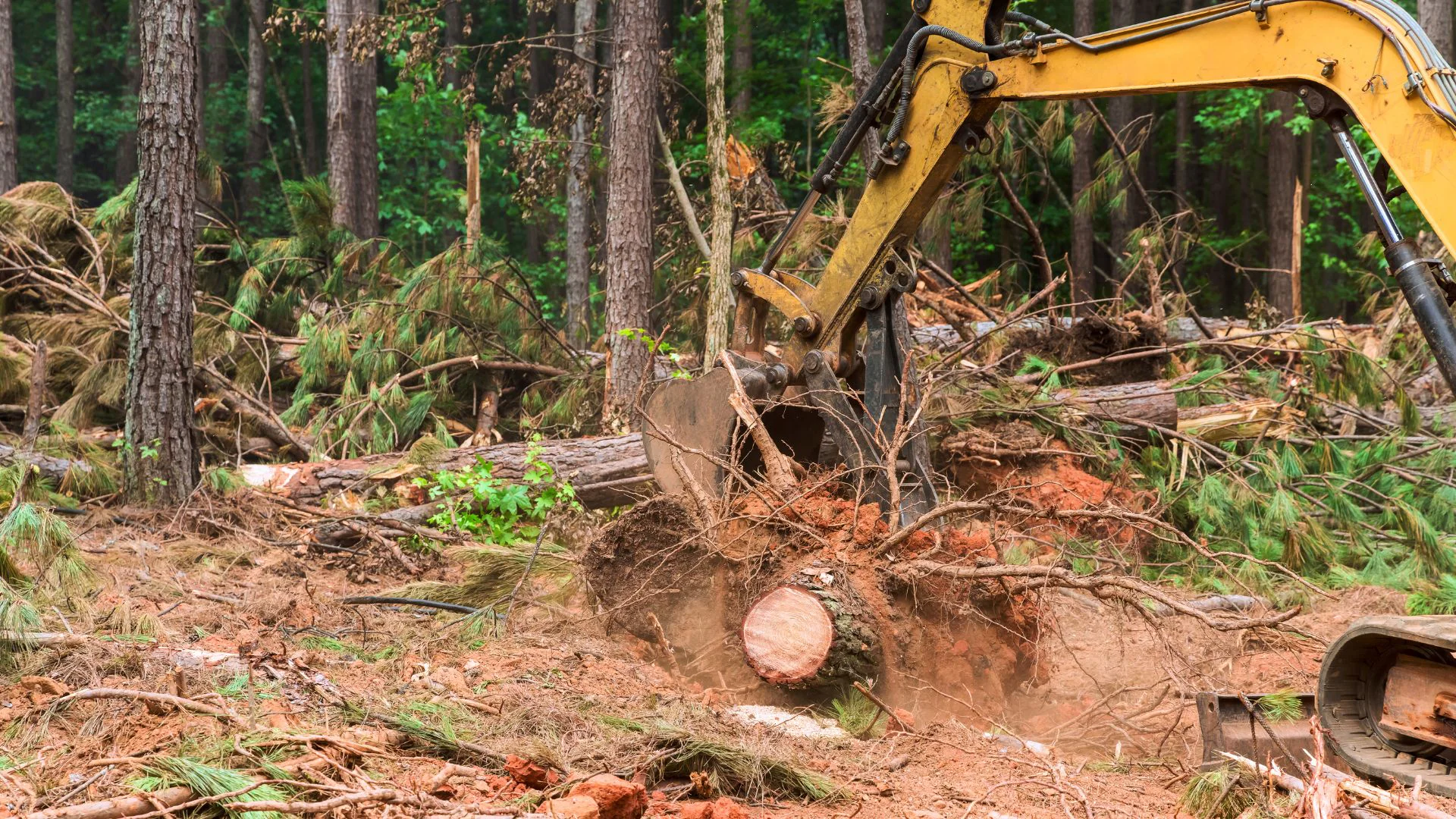
Most clearing jobs in Swarthmore don’t start with a blank slate. They start with an overgrown backyard behind a Victorian on Yale Avenue, or a fence line that’s been swallowed by brush on a property that hasn’t been actively managed in years. When the work is done right, you get usable land again and you don’t get a bill from the borough for violating a tree ordinance you didn’t know existed.
That’s a real risk here. Swarthmore’s tree replacement code is one of the stricter ones in Delaware County. Remove a tree over twelve inches in caliper without prior Borough approval, and you’re looking at a ten-tree replacement requirement. That’s not a fine that’s a landscaping project you didn’t budget for. We know this because we’ve navigated it on dozens of Swarthmore properties, and we protect our clients before the first cut.
Beyond compliance, there’s the bigger picture. Most homeowners clearing land in Swarthmore are doing it because something else is coming a patio, a pool, an addition, a backyard that finally works the way it should. When your clearing contractor can also handle grading, drainage, masonry, and landscaping, you don’t lose weeks re-explaining your project to a second crew. The whole thing moves forward, cleanly, without the gaps.
We’re based in Aston, PA a short drive from Swarthmore and have been working across Delaware County for over 15 years. That’s not a tagline. It means we’ve navigated Swarthmore’s borough permit processes, worked along the Crum Creek corridor, and handled the kind of clearing jobs that come with century-old root systems, tight lot lines, and neighbors who are paying attention.
Renato is on the job, not behind a desk. Our customers name him in reviews because he’s the person they actually worked with and that kind of accountability matters when you’re trusting someone to work around a $500,000+ historic home. You’ll get a written estimate before anything starts, a clear scope, and a team that doesn’t disappear mid-project.
This is a full-service operation. From overgrowth removal in Swarthmore through grading, excavation, masonry, and landscaping it’s one team, one contract, and no hand-off chaos between trades.

It starts with a free consultation. Renato comes out, walks the property with you, and assesses what’s there not just what needs to go, but what needs to stay. In Swarthmore, that conversation includes a real look at your trees. With roughly 4,000 catalogued street trees in the borough and an active Tree Committee enforcing replacement ordinances, knowing which trees are protected and which require Borough approval to remove isn’t optional. It’s how we avoid a compliance problem before work begins.
Once the scope is clear, you get a written estimate with everything spelled out. No vague line items, no surprises that surface after the deposit clears. If your project will trigger a stormwater management plan which is required in Swarthmore for any new impervious coverage over 499 square feet that gets factored in from the start, not discovered halfway through.
On the job, we handle brush clearing with the kind of precision that compact lots and close neighbors in Swarthmore demand. Debris is removed, the site is left clean, and if the next phase of your project is grading, drainage, or construction, the same team is ready to move forward. You’re not starting over with someone new.
Ready to get started?
Swarthmore’s housing stock much of it Victorian and Colonial Revival, built between the late 1800s and 1920s comes with decades of accumulated growth. Ivy that’s worked its way into retaining walls. Shrub beds that went feral. Old stone walls buried under brush. Overgrowth removal in Swarthmore isn’t the same as clearing a raw suburban lot, and it shouldn’t be approached that way. There’s often more underneath the vegetation than the homeowner realizes, and a crew that moves too fast can damage structures that were hidden, not gone.
The service covers the full range of what Swarthmore properties typically need: lot clearing for construction prep, brush clearing along fence lines and wooded edges, stump removal, and site preparation for patios, pools, additions, and backyard overhauls. Emerald ash borer has been an active issue in the borough’s tree canopy, and dead or dying ash trees on your property can create both a hazard and a clearing need that should be handled before any larger project begins.
Every job includes proper erosion control important in a borough that sits in the Crum Creek watershed, where bare disturbed soil can contribute directly to downstream flooding. We leave the site clean, compliant, and ready for whatever comes next.

In many parts of Delaware County, clearing brush or removing smaller trees on your own property doesn’t require a permit. Swarthmore is different. The borough has an active Tree Committee and a tree replacement ordinance that applies to trees over twelve inches in caliper. If you remove one of those trees without prior Borough approval, the replacement requirement is ten trees at a minimum of three-and-a-half inches caliper each per tree removed. That’s a significant obligation that catches homeowners off guard when they hire a contractor who didn’t flag it beforehand.
Beyond the tree ordinance, any project that involves land disturbance and leads to new or replacement impervious coverage over 499 square feet a patio, driveway, pool deck, addition will require a Stormwater Management Plan submitted to the borough. The safest approach is to have your contractor assess the full scope of the project before any work begins and confirm what approvals are needed. We’ve worked in Swarthmore and understand these requirements, so you’re not learning about them after the fact.
Residential land clearing costs vary based on lot size, vegetation density, access, and what’s being done with the site afterward. In Swarthmore, where lots are compact, trees are mature and often regulated, neighboring properties are close, and the work may need to be done with precision around historic structures, the cost per square foot tends to be higher than a rural bulk clearing job and for good reason.
The complexity here isn’t just physical. It’s regulatory. If the project involves tree removal that requires Borough approval, replacement plantings, or a stormwater management plan, those factors affect the overall scope and cost. The best way to get an accurate number is a site visit and a written estimate which we provide at no charge. You’ll know exactly what you’re paying for before any commitment is made, and there won’t be line items showing up mid-project that weren’t in the original scope.
Land clearing is the removal of vegetation brush, trees, stumps, overgrowth to get a site to a workable state. Site preparation goes further. It typically includes grading the land to establish proper slope and drainage, removing debris and organic material from the soil, and getting the ground ready for whatever construction comes next. In practice, most homeowners in Swarthmore need both, because clearing is almost never the end goal it’s the first step toward a patio, a pool, an addition, or a redesigned backyard.
The reason this distinction matters is that not every contractor who does clearing also does site prep, and not every site prep contractor handles clearing. When those two phases are split between different companies, you get scheduling gaps, scope disagreements, and a second crew that has to re-assess a site the first one already worked on. We handle both under one contract, which means the team that clears your land already knows the site when it’s time to grade, excavate, and build.
Yes and in Swarthmore, where a lot of the housing stock dates back to the early 1900s, this is more than a theoretical concern. Ivy and climbing vines are the most common offenders. They look manageable from a distance, but over time they work their way into mortar joints, behind siding, and under rooflines. By the time you can see the damage, it’s already been happening for years. Old stone walls and retaining walls that are common on Swarthmore’s older properties are especially vulnerable the vegetation that seems to be growing on them is often actively deteriorating them.
Beyond structural damage, overgrowth creates drainage problems. Dense brush along a fence line or at the back of a lot can redirect water in ways that weren’t originally planned, and in a borough that sits within the Crum Creek watershed, poor drainage on one property can have downstream consequences. Clearing that overgrowth and doing it correctly, with proper erosion control afterward is both a property protection measure and a responsible thing to do for the surrounding area.
Spring is the highest-demand window typically March through May because homeowners want sites cleared and prepped before summer construction begins. The ground is workable, the weather is cooperative, and if you’re planning a patio, pool, or addition for the summer, spring clearing gives you the lead time you need. If you’re planning a larger project, booking your clearing contractor in late winter gives you the best shot at getting on the schedule before the spring rush fills up.
Fall is the second-best window, and in some ways the easier one to work in. Once the leaves are down, it’s much easier to assess what’s on the lot what needs to go, what’s worth keeping, and what the site actually looks like without the canopy covering everything. Delaware County also sees its share of nor’easters and fall wind events that bring down mature limbs and compromise trees, so fall often generates clearing demand that wasn’t on anyone’s radar in the spring. Either season works well for Swarthmore; the key is not waiting until you’re mid-project and suddenly need clearing done on a compressed timeline.
Aston is in Delaware County, and so is Swarthmore they’re a short drive apart. We’ve been working across Delaware County for over 15 years, which means our team has real familiarity with the differences between municipalities in this county. Swarthmore’s regulatory environment the tree replacement ordinance, the stormwater management requirements, the Planning and Zoning process is meaningfully more involved than what you’d encounter in a lot of other Delaware County townships and boroughs. A contractor who has worked here before knows that going in.
The borough’s character also matters for how the work gets done. Swarthmore’s compact lots, close neighbors, mature tree canopy, and historic homes require a different approach than clearing a half-acre in a newer subdivision. We understand that. We’re not dispatching a crew that’s never been to the borough before and figuring it out on the fly. When you call for a consultation, you’re talking to people who know the Crum Creek corridor, who understand what Swarthmore’s Tree Committee oversees, and who have worked on properties that look a lot like yours.
Useful Links