
Hear from Our Customers

Standing water in your yard isn’t just an eyesore it’s a slow-moving threat to your foundation. In Swarthmore, where the median home value sits above $630,000, letting that problem sit is one of the more expensive gambles a homeowner can make. Foundation repair in this region routinely runs $10,000 to $30,000 or more. A properly installed drainage system costs a fraction of that and handles the problem before it ever reaches your basement walls.
What makes Swarthmore particularly tricky is the combination of factors working against you at once. The borough sits entirely within the Crum Creek watershed an area with documented stormwater and flooding issues that Delaware County has addressed in its own Act 167 management plan. Add in the clay-heavy Piedmont soils that don’t absorb water efficiently, and you’ve got a yard that holds moisture long after the rain stops. For homes near Little Crum Creek in the southern part of the borough, that risk is even more concentrated.
Then there’s the housing stock. Many homes on Yale Avenue, Princeton Avenue, and throughout the “college streets” neighborhood were built in the 1910s through 1930s. Original grading on those properties has shifted over decades soil settles, tree roots from hundred-year-old trees displace the ground, and what used to drain away no longer does. The result isn’t a new problem. It’s an old one that’s been quietly getting worse.
We’re based in Aston, PA about five to seven miles south of Swarthmore on Chester Road. We’re not a regional chain expanding into Delaware County. We work here, we know the soil here, and we’ve been dealing with the same watershed conditions and aging housing stock that you’re dealing with right now in Swarthmore.
For over 15 years, we’ve been handling outdoor drainage systems, French drain installation, and grading work across Delaware County including communities that share Swarthmore’s exact drainage environment: Nether Providence, Springfield Township, Ridley Township. The Crum Creek watershed isn’t new territory for us. Neither are the Victorian and Colonial Revival homes that make up so much of Swarthmore’s character.
When we show up to your property, we’re not guessing. We’ve seen this before the clay soil that won’t drain, the foundation perimeter that’s shifted, the mature trees that have rerouted everything. You get one experienced crew from assessment to cleanup, no subcontractors, and a clear answer on what’s actually causing your problem before any work begins.

It starts with a site assessment not a sales pitch. We walk your property, read the slope, identify where water is entering and where it’s going, and look at what’s contributing to the problem. In Swarthmore, that often means accounting for mature tree root systems that have shifted soil, impervious surfaces like patios or expanded driveways that are pushing more runoff toward your foundation, and original grading that simply no longer functions the way it did when the house was built.
From there, we give you a clear recommendation. Sometimes that’s a French drain. Sometimes it’s a catch basin at a low point in the yard, a dry well for concentrated roof runoff, or a combination of grading correction and drainage infrastructure together. We don’t default to the most expensive option we recommend what your specific property actually needs. Before any work starts, you’ll know what we’re doing, why, and what it costs.
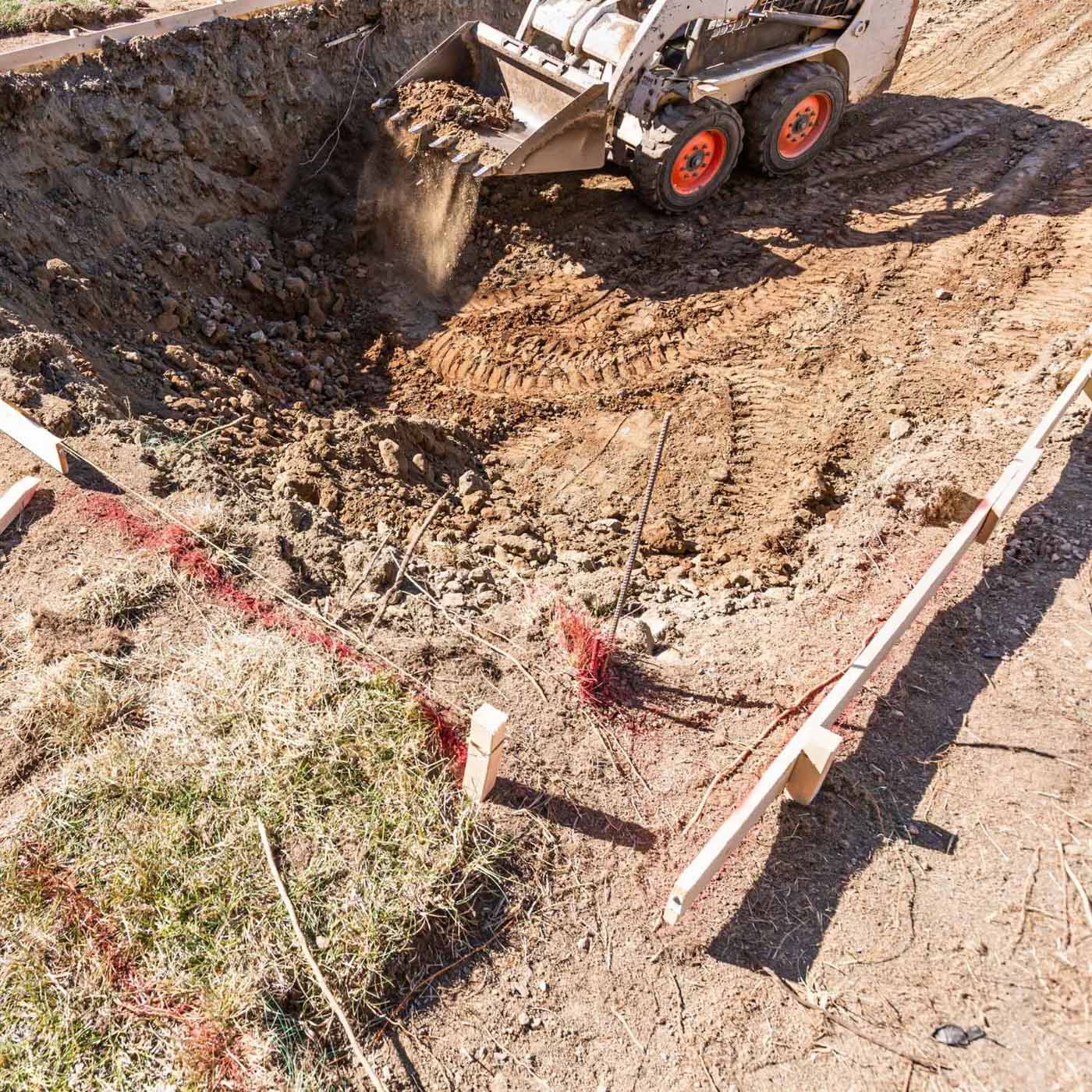
Once we’re on the job, we handle everything: excavation, pipe installation with properly graded slope and the right drainage aggregate, and full landscape restoration when we’re done lawn, mulch, plantings. It’s also worth knowing that Swarthmore Borough requires a Stormwater Management Permit for certain projects, and the borough’s ordinances prohibit connecting drainage systems to the sanitary sewer. We’re familiar with those requirements and handle permit coordination as part of the process, so you’re not left figuring that out on your own.
Ready to get started?
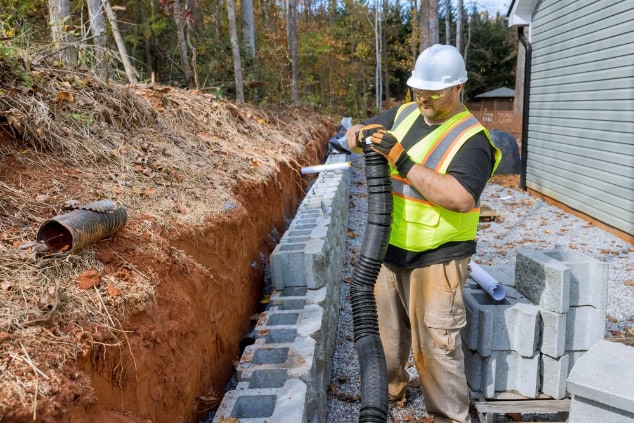
French drain installation is the most common solution we install a perforated pipe bedded in drainage aggregate and wrapped in filter fabric, designed to intercept groundwater and surface water before it reaches your foundation or pools in your yard. For Swarthmore properties with clay soil, getting the slope calculation and aggregate selection right is what separates a system that lasts 20 years from one that backs up after the first hard freeze. We use materials rated for Pennsylvania’s freeze-thaw cycles because that’s what the climate here actually demands.
Beyond French drains, we install catch basins at yard low points, dry wells for homes dealing with concentrated downspout or patio runoff, and surface channel drains for hardscaped areas. Grading and drainage go hand in hand if the slope is wrong, no drain system will fully solve the problem. We assess both and correct both when needed, under one crew, without handing off grading to one contractor and drainage to another.
For properties near the Crum Creek or Little Crum Creek corridors, we also factor in floodplain proximity and any applicable Pennsylvania DEP requirements before work begins. Swarthmore’s stormwater ordinances are specific, and the last thing you need is a code issue after spending money on a fix. Every project we take on in this borough is scoped with those local regulations in mind from the start.

Swarthmore Borough requires a Stormwater Management Permit when a project involves adding or replacing more than 499 square feet of impervious cover or disturbs more than 4,999 square feet of earth. Many drainage installations especially those involving significant excavation or new surface elements can cross those thresholds depending on the scope of work. It’s not a complicated process, but it’s one that needs to be handled correctly from the start.
The borough also has a specific ordinance prohibiting sump pumps, downspouts, and yard drains from being connected to the sanitary sewer system. Any drainage work needs to discharge to an appropriate stormwater outlet a storm drain, dry well, or daylight outlet. We’re familiar with Swarthmore’s requirements and coordinate permit documentation as part of every project so you’re not left navigating that on your own after the fact.
French drain installation in Delaware County generally runs between $5,000 and $12,000 for most residential projects, with more complex systems longer runs, difficult access, or properties requiring grading correction alongside the drain reaching $15,000 or higher. Labor accounts for the largest share of the cost, typically 80 to 85 percent of the total, which is why quotes can vary significantly between contractors based on experience and crew capability.
For Swarthmore specifically, a few factors tend to push projects toward the mid-to-upper end of that range: the presence of mature trees requiring careful hand excavation near root zones, older foundation perimeters that need more precise grading work, and properties near the Crum Creek corridor that may involve additional site considerations. The best way to get an accurate number is a site assessment the scope of work on a Victorian-era home on Princeton Avenue is going to look different from a 1960s Colonial in a neighboring township, and the price should reflect that.
The most common culprits in Swarthmore are clay soil, failed or outdated grading, and impervious surface accumulation and most properties dealing with standing water have more than one of these working against them at the same time. Swarthmore’s underlying Piedmont geology produces clay-heavy soil that doesn’t absorb water efficiently. When it rains, that water doesn’t sink in it moves laterally until it finds the lowest point on your property.
For homes in the older parts of Swarthmore, grading is often the hidden piece of the problem. Original slope established when the house was built in the 1920s or 1930s has shifted over decades due to soil settling, freeze-thaw cycles, and root displacement from mature trees. What once directed water away from the foundation now channels it toward it. If you’ve also added a patio, expanded a driveway, or installed a walkway in recent years, that additional impervious surface is reducing the amount of ground available to absorb runoff which compounds the problem further.
The honest answer is that it depends on where the water is coming from and where it’s going which is exactly why a site assessment matters before any recommendation is made. A French drain is designed to intercept groundwater moving through the soil or surface water sheeting across the yard. A catch basin collects water at a specific low point and routes it out through a pipe. Regrading corrects the slope of the land so water moves away from the foundation rather than toward it.
In practice, many Swarthmore properties need a combination. If your grading is off and you install a French drain without correcting the slope, the drain will be fighting an uphill battle literally. We look at all three factors during the site assessment and recommend the solution that addresses the actual source of the problem, not just the symptom. A lot of homeowners who’ve had drainage work done before and still have issues find out that only part of the problem was addressed the first time.
It’s a legitimate concern, especially in Swarthmore where the tree canopy is part of what makes the neighborhood what it is. The short answer is that it depends on how the work is done. Trenching with heavy equipment directly through a root zone can cause real damage to mature trees and in Swarthmore, where century-old oaks and maples are common in the “college streets” neighborhood and throughout the borough, that’s not a risk worth taking carelessly.
We plan drainage routes to avoid root zones where possible, and when excavation near established trees is unavoidable, we use careful hand digging rather than mechanical trenching in those areas. Beyond the trees, full landscape restoration lawn, mulch, plantings is a standard part of every project we complete. The goal is that your yard looks better when we leave than it did before we started. That’s not an add-on. It’s part of the job.
A properly installed French drain in Delaware County should last 30 to 40 years under normal conditions. The variables that shorten that lifespan are almost always installation-related: incorrect slope that allows water to pool inside the pipe rather than flow through it, drainage aggregate that’s too fine and compacts over time, pipe without adequate fabric wrap that silts up within a few seasons, or discharge points that aren’t maintained. When any of those shortcuts are taken, you’re looking at a system that fails in three to five years sometimes sooner.
In Swarthmore specifically, tree root intrusion is a real long-term consideration. The borough’s mature tree canopy is one of its defining characteristics, and roots from established trees will eventually seek out moisture including the moisture near a drainage pipe. Using quality root-barrier fabric during installation significantly reduces that risk. We also make sure discharge points are accessible for occasional maintenance, because even a well-installed system benefits from a periodic check to confirm it’s flowing cleanly. A drain that’s properly built and occasionally maintained is one you shouldn’t have to think about again.
Useful Links
Other Services we provide in Swarthmore