
Hear from Our Customers
Most patios in Swarthmore don’t fail because of bad materials. They fail because of what’s underneath them. Swarthmore averages enough freeze-thaw cycles each winter to destroy a slab that wasn’t built with a proper compacted base, correct drainage slope, and solid edge restraints. You don’t see that work once it’s done which is exactly why it matters who does it.
When the base is right, the surface stays flat. When the drainage is right, water moves away from your foundation instead of pooling against it. That’s not a bonus that’s the whole job. And for homes near the Crum Creek corridor where the terrain slopes toward the western edge of the borough, getting that drainage detail right is even more critical.
Beyond the technical side, there’s the design side. Swarthmore’s housing stock is genuinely varied older stone homes near the college, mid-century builds in Swarthmorewood, wooded lots with mature trees and established gardens. A patio that works for one property can look completely wrong on another. The goal isn’t just a functional slab. It’s an outdoor space that feels like it belongs to your home and your yard.
We’re based in Aston, PA Delaware County, not hours away. Renato Spennato has been doing this work for over 15 years, and his name is on every project. That’s not a tagline. It means when something comes up during the job or after you’re calling the same person who built it.
The crew that sets your base is the same crew that lays your surface and cleans up your yard. We don’t hand jobs off to subcontractors who didn’t quote the work themselves. No accountability gap when a question comes up six months later. That consistency matters in Swarthmore, where most homeowners have already had at least one contractor experience they’d rather forget.
Pricing is published openly $15 to $50 per square foot depending on material, with most residential projects landing between $3,500 and $12,000. You’ll know your range before you ever pick up the phone.
It starts with a site visit. Before any design conversation happens, we look at the yard the slope, the existing plantings, what’s already there in terms of hardscape, and where the drainage naturally wants to go. For a lot of Swarthmore properties, that first visit surfaces things a phone call never would: a mature oak with roots that need to be worked around, a grade change toward the back of the lot, an original bluestone path worth preserving.
From there, you get a written estimate with a clear scope and timeline. No vague ranges, no “we’ll figure it out as we go.” If a permit is needed Swarthmore Borough requires one for certain hardscape work, and contractors doing residential work here must carry proof of Commonwealth registration and insurance we handle that before a shovel goes in the ground.
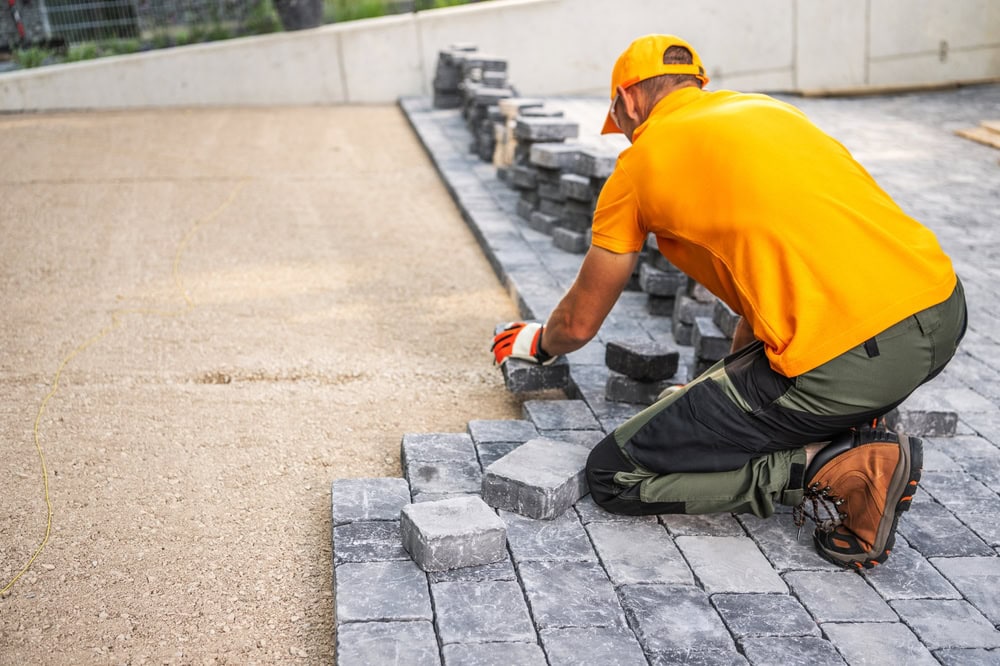
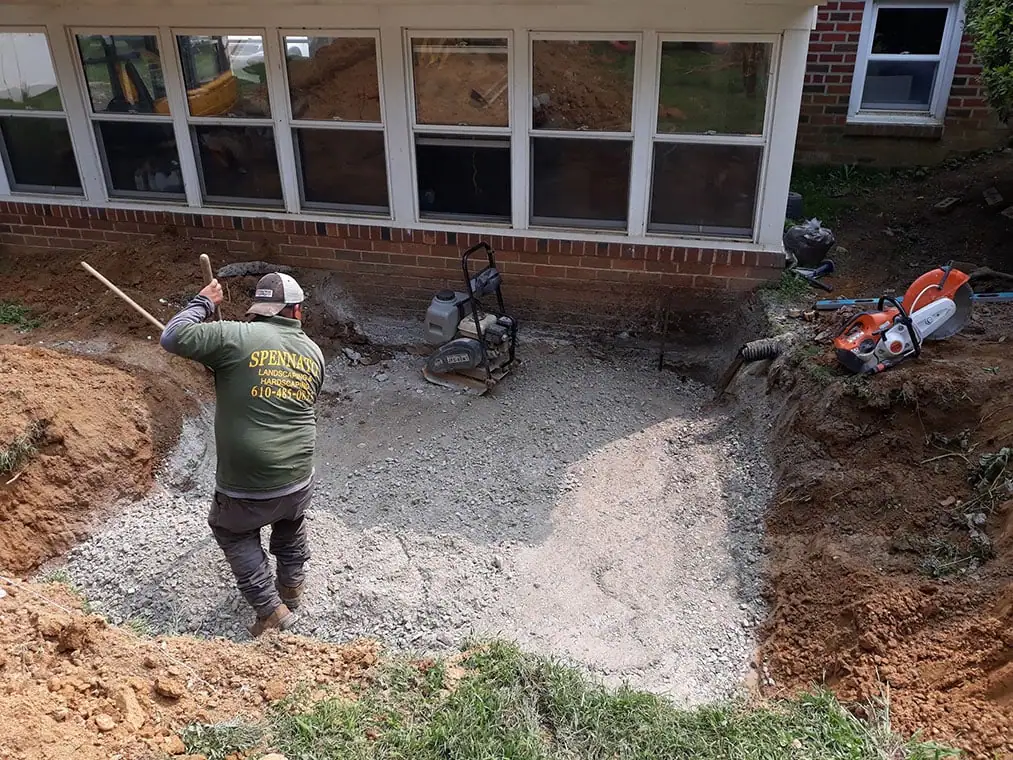
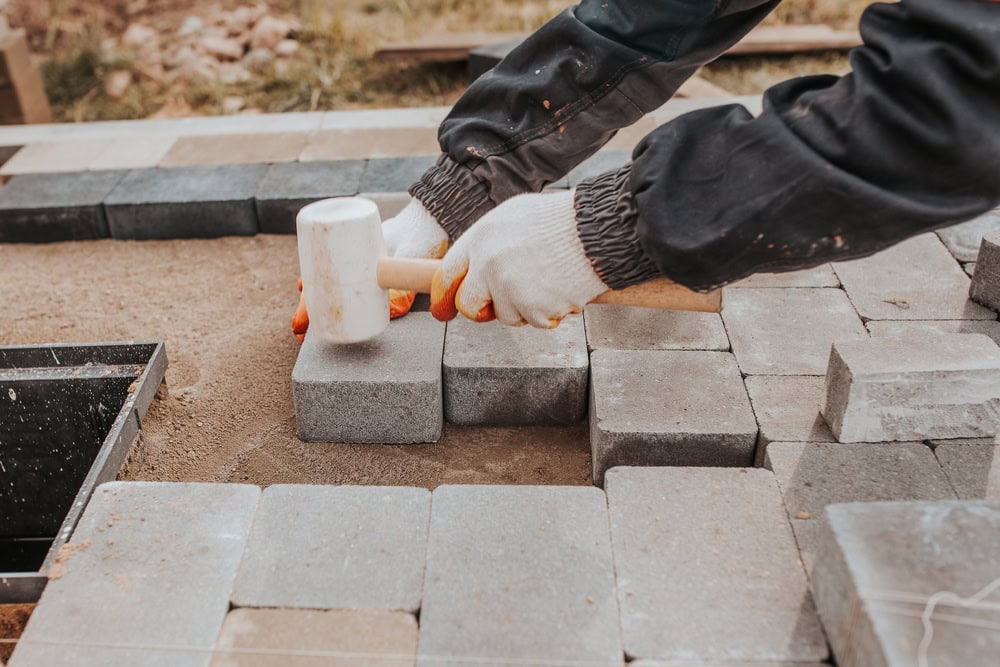
Installation starts with excavation and base preparation. That’s where the real work happens: compacted aggregate base, drainage slope set correctly, edge restraints locked in. The surface material goes down after the base is done right not before. Final walkthrough happens with you present, before our crew leaves. If something’s not right, we fix it on the spot.
Ready to get started?
Material selection is where a lot of patio projects go sideways not because the material is bad, but because it’s wrong for the house. For older homes in Swarthmore, particularly the stone and stucco Tudors along the streets near the college, natural flagstone and Pennsylvania Bluestone tend to be the right call. They complement the architectural character of those properties in a way that standard pavers simply don’t.
For mid-century homes in Swarthmorewood, interlocking pavers in classic patterns offer durability, design flexibility, and better long-term ROI than poured concrete which cracks under Pennsylvania’s freeze-thaw conditions and typically needs full replacement rather than spot repair. Concrete is an option where budget is the primary driver, but the trade-off is worth understanding before you commit.
If your lot is on the smaller side or you’re working with a compact backyard, that’s not a limitation it’s a design challenge with real solutions. A well-proportioned smaller patio outperforms an oversized slab every time. And for properties near the Crum Creek side of the borough where impervious surface limits or environmental sensitivity matter, permeable paver options are worth discussing they allow rainwater to filter through the joints rather than running off, which aligns with Swarthmore Borough’s Green Points program and protects the local watershed.

It depends on the scope of the project. Swarthmore Borough operates under the Pennsylvania Uniform Construction Code, and certain hardscape work including driveways and walkways does require a permit. For a standard patio installation under 1,000 square feet with no roof or attached structure, a building permit may not be required, but zoning setback rules and impervious surface limits can still apply regardless of size.
The safest move is to confirm directly with the borough before work begins. What is required across the board is that contractors doing residential work in Swarthmore provide proof of Commonwealth registration and current insurance coverage. That’s a borough-specific requirement, not just a general best practice. Any contractor you hire should be able to hand you that documentation without hesitation if they can’t, that’s a red flag worth taking seriously.
For the stone and stucco Tudor homes and Victorian-era properties that define a lot of Swarthmore’s older neighborhoods especially near the college along College Avenue and Elm Avenue natural flagstone and Pennsylvania Bluestone tend to be the most architecturally compatible choices. They feel like they belong on those properties. Stamped concrete or standard pavers in a modern pattern can look out of place against that kind of character.
That said, material choice should always start with the specific house, not a general rule. Mid-century homes in Swarthmorewood, for example, often work well with interlocking pavers in traditional patterns durable, design-flexible, and better suited to the scale of those properties. The design conversation is worth having before any material is selected, because the wrong choice is harder to fix after the fact than it is to avoid from the start.
Swarthmore’s January average sits right around 33 degrees Fahrenheit, which means temperatures cross the freezing threshold repeatedly throughout the winter. Every time that happens freeze, thaw, freeze again any moisture trapped in a poorly built patio base expands and contracts. Over a few seasons, that movement heaves pavers, cracks slabs, and causes surfaces to sink or shift.
The fix isn’t a better surface material. It’s a properly built base compacted aggregate at the right depth, drainage sloped away from your home’s foundation, and edge restraints that keep everything locked in place. That base work is invisible once the surface is laid, which is why a lot of homeowners don’t realize it was skipped until the second or third winter. A patio built with the right base in Delaware County’s climate should hold up for 25 to 50 years without major issues.
Yes and it’s more common in Swarthmore than people expect. The western side of the borough slopes toward Crum Creek, and a lot of properties in that area have rear yards with real grade changes. That terrain isn’t a reason to skip the project. It’s a design challenge we work with regularly.
The typical approach for a sloped yard is either a terraced patio design two or more levels connected by steps or an integrated retaining wall that creates a flat usable area at a single elevation. Which option makes more sense depends on the degree of slope, the size of the yard, and how you want to use the space. A site visit is the only way to evaluate it properly. What doesn’t work is ignoring the grade and pouring a flat slab anyway that approach creates drainage problems that end up worse than the original slope.
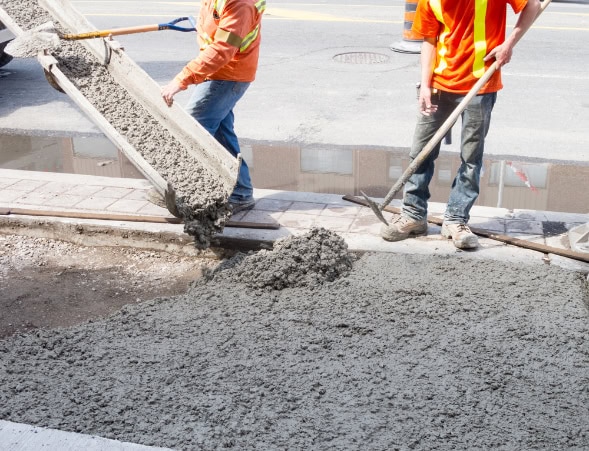
Most residential patio projects in Swarthmore fall somewhere between $3,500 and $12,000, with the per-square-foot cost ranging from $15 on the lower end to $50 on the higher end depending on material. Natural stone and Pennsylvania Bluestone sit toward the top of that range. Interlocking pavers fall in the middle. Basic concrete sits at the lower end though the long-term cost picture for concrete in Pennsylvania’s freeze-thaw climate is worth factoring in, since cracked concrete typically requires full replacement rather than spot repair.
For Swarthmore specifically, a lot of homeowners with older, architecturally distinctive homes find that the premium materials are the right investment both for the look and for the resale value. Professionally installed patios return more than 80% of their cost at resale, and paver installations specifically outperform concrete on ROI by a significant margin. In a market where Swarthmore home values have been appreciating steadily, that’s not a trivial consideration.
Start with the basics: proof of Commonwealth registration and current insurance. Swarthmore Borough specifically requires contractors doing residential work to carry both, so any legitimate contractor should be able to provide that documentation upfront. If they hesitate or can’t produce it, move on.
Beyond credentials, pay attention to how they communicate before the project starts because that’s a preview of how they’ll communicate during and after it. A contractor who takes days to return a call during the quoting phase isn’t going to get more responsive once your deposit is in. Ask for a written estimate with a clear scope and timeline before anything is signed. Ask who specifically will be doing the work whether it’s their own crew or subcontractors they’ve hired out. And ask what the process looks like if something needs to be addressed after the project is complete. In a small borough like Swarthmore, a contractor’s reputation travels fast. The ones who do good work and stay reachable tend to stay in business.
Useful Links
Other Services we provide in Swarthmore