
Hear from Our Customers

Most land clearing jobs in Haverford aren’t simple. The neighborhoods along Lancaster Avenue and throughout Havertown, Llanerch, and Brookline were built up over a century and the trees grew right along with them. What looks like a manageable brush job on the surface often means mature root systems, decades of layered undergrowth, and vegetation that’s been undisturbed long enough to become a real project. When it’s done right, you’re not just looking at cleared ground. You’re looking at a site that drains properly, grades correctly, and is actually ready for the next phase whether that’s a patio, a pool, a new driveway, or a full backyard renovation.
Haverford Township sits within the Cobbs Creek and Darby Creek watersheds, which means how land is cleared and graded here has real downstream consequences. A contractor who strips vegetation without thinking about drainage doesn’t just leave you with an ugly site they can leave you with runoff problems, erosion toward a neighboring property, and potential regulatory headaches under the township’s updated stormwater ordinance. That’s not a small thing when your home is worth what Haverford homes are worth. Getting the clearing right protects the investment you’re already sitting on, and it sets up every phase of work that follows.
We’re a Delaware County–based, owner-operated contractor out of Aston, PA. Renato Spennato has been running projects across this county for more than 15 years which means he’s worked in Haverford Township before, knows what the Shade Tree Commission requires, and isn’t going to hand your job off to a subcontracted crew he’s never worked with.
That matters more in Haverford than almost anywhere else in Delaware County. The township’s tree ordinance isn’t just a formality it has real teeth. Heritage tree removals require a permit. Remove six or more trees of six inches DBH or greater in a single year and you’re in permit territory again. If you hire a contractor who doesn’t know that, you’re the one who ends up dealing with the fallout.
We handle the full scope: clearing, grading, excavation, drainage, masonry, and landscaping. One team, one contract, one point of contact from the first walkthrough to the finished site.

It starts with a free on-site consultation. Renato walks the property with you, assesses what’s there trees, brush, stumps, drainage patterns and gives you a written estimate scoped to exactly what your property needs. No vague ranges, no surprises that show up after work starts.
Before any equipment rolls, the permit situation gets sorted. If your project involves heritage trees or meets the threshold for Haverford Township’s tree removal permit requirement, we handle that upfront. The township’s Shade Tree Commission review process takes time, and the tree replacement formula needs to be factored into your project plan. Getting that wrong delays everything. Getting it right keeps the project on schedule.
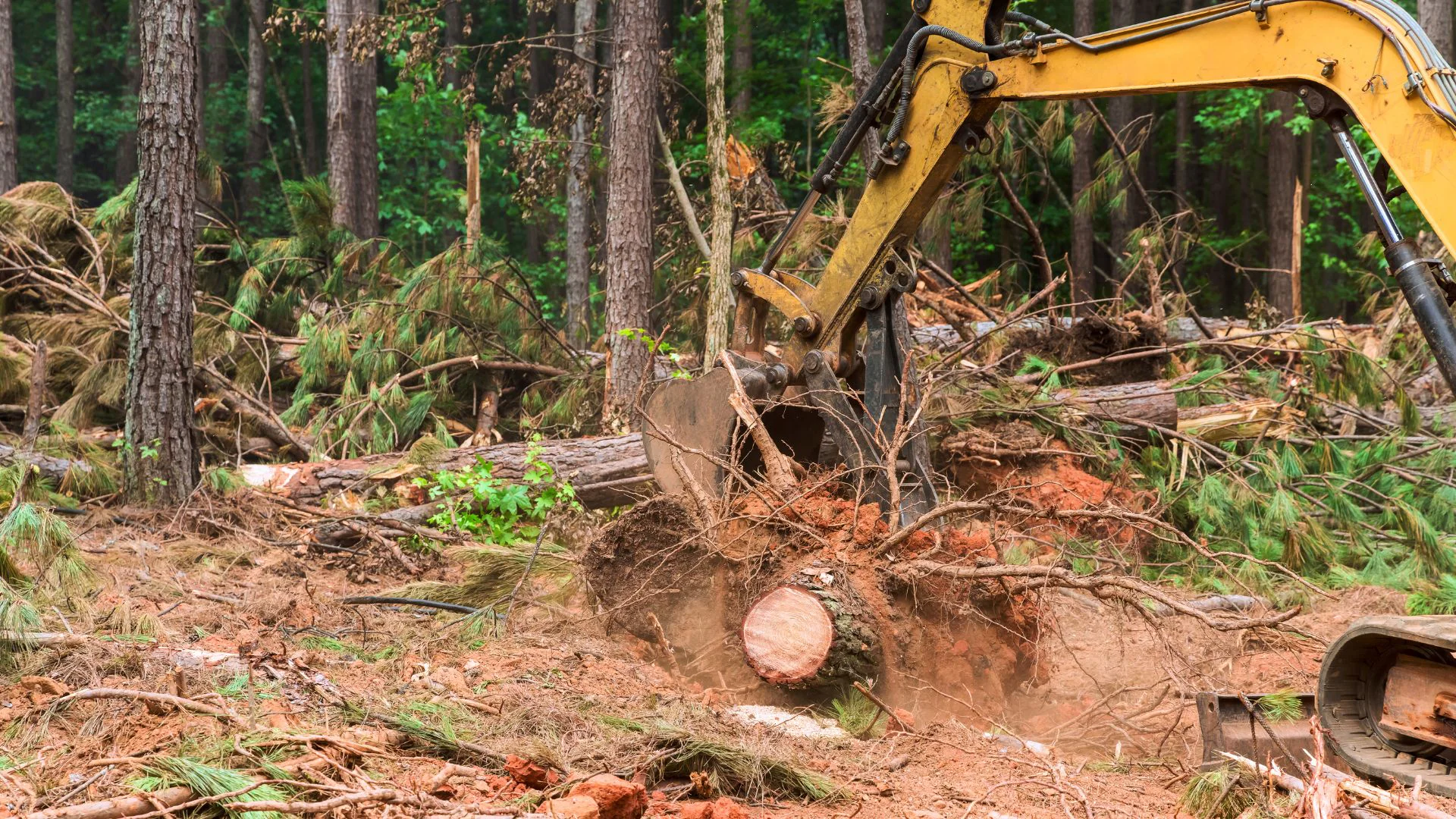
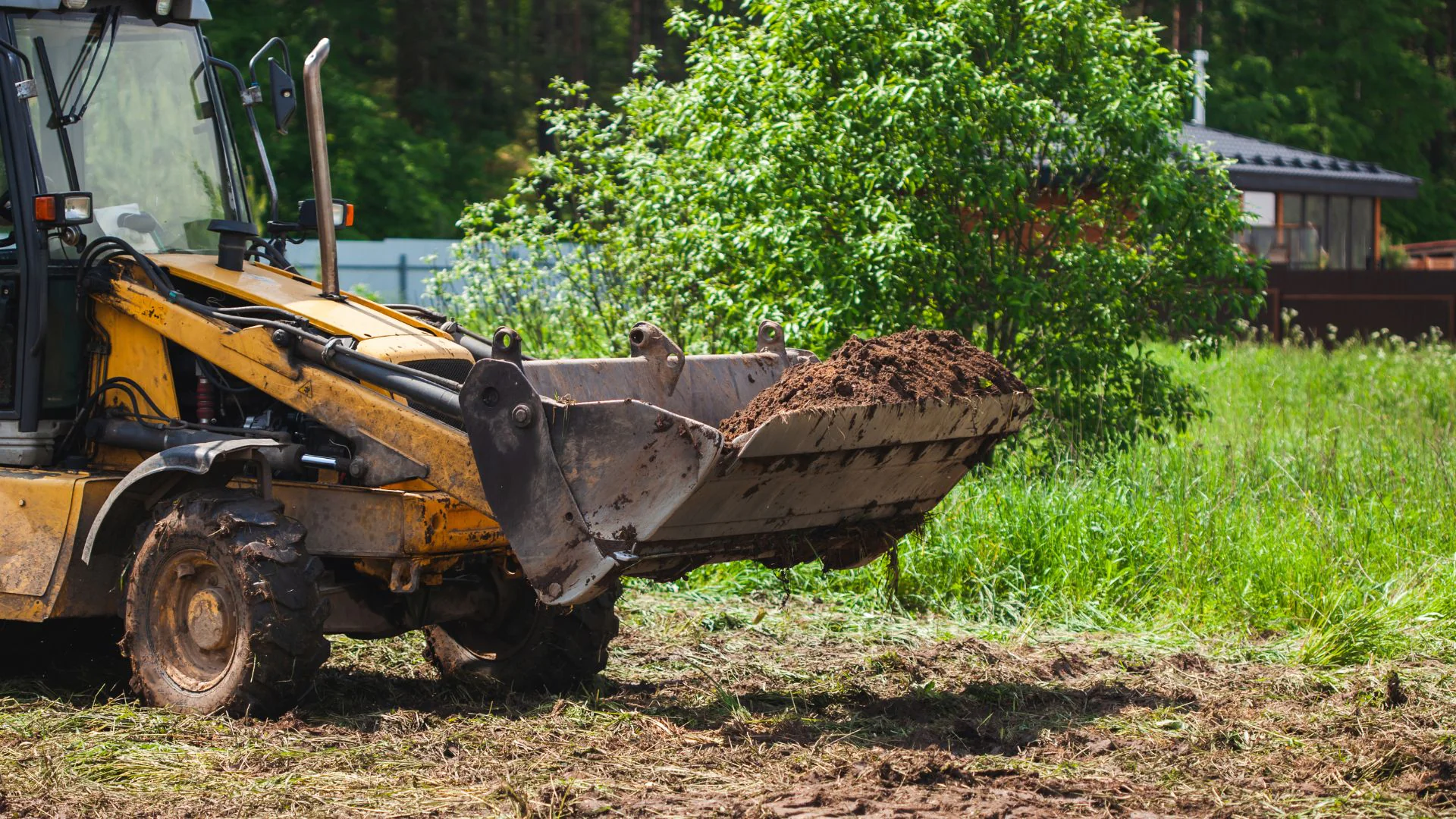
Once work begins, the clearing is done with the right equipment for your specific site excavators, stump grinders, and skid steers where needed not just a chainsaw crew that leaves stumps and debris behind. After vegetation is removed, the site gets graded for drainage and left in a condition that’s genuinely ready for the next phase. Spring is the busiest window for clearing in Haverford, when homeowners are gearing up for summer construction, so booking early matters if you have a firm project timeline.
Ready to get started?
Land clearing in Haverford, PA covers a wide range of work depending on what you’re starting with. That might be a heavily wooded corner of a large lot in the Haverford 19041 corridor, an overgrown fence line on a Havertown property that hasn’t been touched in 20 years, or a full lot that needs to be stripped and graded before a builder can break ground. Every project gets scoped specifically there’s no one-size approach when you’re dealing with the kind of mature, varied vegetation that defines this part of Delaware County.
What’s included goes beyond just cutting things down. Stump removal, debris hauling, finish grading, and drainage considerations are all part of how a clearing project gets done properly here. Haverford Township’s building permit process requires impervious surface ratio calculations for any project that changes what’s on the ground, so if your clearing is tied to a larger construction plan, those calculations need to be right from the start. Our full-service capability clearing through masonry and landscaping means the site prep is designed with the finished project in mind, not just the immediate task.
For homeowners in Chatham Park, Llanerch, Manoa, Brookline, and the surrounding neighborhoods, this kind of integrated approach is what separates a job that sets you up well from one that creates more work down the road.

It depends on the size and number of trees involved. Haverford Township’s tree ordinance requires a permit for the removal of any heritage tree defined as a tree with a diameter at breast height (DBH) of 30 inches or greater. The Shade Tree Commission reviews those applications and makes a recommendation to the Township Manager before approval is granted. Separately, if you’re removing six or more trees in a single year, each with a DBH of six inches or greater, that also triggers the permit requirement even if none of them individually qualify as heritage trees.
There’s also a tree replacement formula to account for. For trees under 30 inches DBH, you’re required to replant one inch of new tree diameter for every four inches removed. For heritage trees, it’s a one-for-one ratio. If replanting isn’t practical on your property, the township allows an in-lieu payment instead. This is one of the more detailed tree ordinances in Delaware County, and it’s worth understanding before any clearing work begins not after.
Land clearing costs in Haverford vary significantly based on what’s actually on the property. A straightforward brush and overgrowth removal on a manageable section of a residential lot is a very different job from clearing mature trees with significant root systems on a large Main Line property. Factors that affect cost include the size of the area being cleared, the density and diameter of vegetation, stump removal, debris hauling, and whether grading or drainage work is part of the scope.
For a typical residential clearing project in Haverford Township, you’re generally looking at a range somewhere between $1,500 and $8,000 depending on those variables with larger, more complex projects on bigger lots running higher. The best way to get an accurate number is a site walkthrough, not an over-the-phone estimate. We provide free on-site consultations with a written estimate that covers the full scope before any work starts, so you know exactly what you’re committing to.
They’re often used interchangeably, and for most residential projects in Haverford, the distinction doesn’t matter much in practice. Land clearing typically refers to the broader process of removing trees, brush, stumps, and vegetation from a property often as a first step before construction or major landscaping. Lot clearing tends to describe the same work applied to a specific parcel, often in the context of preparing a residential lot for a build or renovation.
What matters more than the label is what the finished scope actually includes. A cleared lot that still has stumps flush-cut to the ground, no grading done, and debris left in piles isn’t actually ready for anything. In Haverford, where many projects involve follow-on construction patios, pools, additions, retaining walls the clearing needs to set up the next phase correctly. That means proper stump removal, finish grading, and drainage consideration built into the clearing work from the start.
Haverford Township updated its Erosion and Sediment Control and Stormwater Management ordinance in November 2024, and it’s directly relevant to land clearing work. The ordinance addresses how accelerated runoff from development including clearing and grading can increase runoff volumes, contribute to erosion, and overtax the carrying capacity of local streams. Haverford Township sits within the Cobbs Creek and Darby Creek watersheds, both of which drain to the Delaware River, so stormwater management here carries real environmental weight.
For homeowners, this means that clearing work which significantly disturbs the land or alters drainage patterns needs to be handled with proper erosion and sediment controls in place. A contractor who strips vegetation without thinking about what happens to water flow when the ground cover is gone can create drainage problems that are expensive to fix and potentially put you on the wrong side of a township inspection. Any clearing project tied to a building permit will also require impervious surface ratio calculations, which need to be accurate before work starts.
Clearing can technically be done in any season, but timing does affect both the work itself and your project schedule. Spring roughly March through May is the most in-demand window in Haverford. Homeowners planning summer construction want sites cleared before building begins, and the ground is workable without being frozen. If you have a firm construction timeline, booking your clearing early in the year is the safest move.
Fall is the second-busiest window, and it’s actually a practical choice for clearing. After a nor’easter or wind event which Haverford’s mature tree canopy makes a regular occurrence there’s often storm debris that needs to be addressed alongside planned clearing work. Late winter can also work well for certain projects because frozen ground reduces soil disturbance from heavy equipment. Summer is moderate in demand, mostly driven by backyard projects and pool preparation. The main thing to avoid is assuming you can schedule a clearing project on short notice during peak spring season lead times get longer fast.
The most important things are insurance, local knowledge, and a clear written scope before work starts. On the insurance side, Haverford Township requires contractors working in the public right-of-way to carry a Certificate of Insurance including workers’ compensation coverage naming the township as the certificate holder. Even for purely private property work, you want a fully insured contractor. If someone gets hurt on your property and the contractor doesn’t carry workers’ comp, that liability can land on you.
Local knowledge matters in Haverford specifically because the township’s tree ordinance is more detailed than what you’ll find in most surrounding municipalities. A contractor who doesn’t know the permit thresholds, the replacement formula, or the Shade Tree Commission process can create regulatory problems that delay your project and cost you money to resolve. Beyond that, look for a contractor who provides a written estimate that accounts for the full scope stump removal, debris hauling, grading not just the cutting. Vague quotes that expand mid-project are one of the most common complaints homeowners have about clearing contractors, and a written estimate upfront is the clearest signal that a contractor is being straight with you.
Useful Links