

Hear from Our Customers
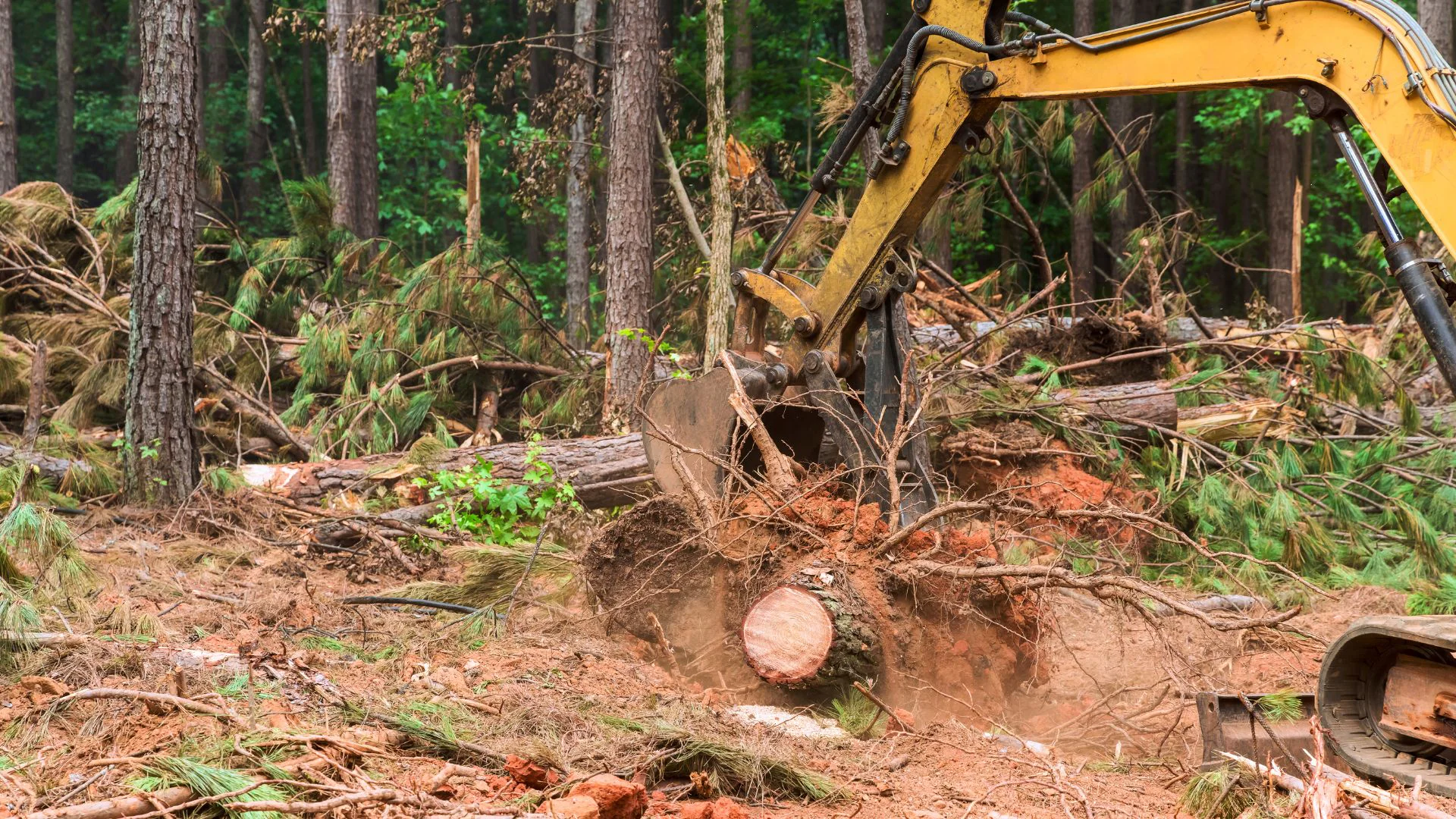
Most homeowners in Linwood don’t call about excavation because they want a new patio. They call because water is pooling against their foundation, a retaining wall is starting to lean, or the yard that’s been “fine for years” is suddenly anything but. These aren’t random problems. They’re what happens when clay-heavy soil in southeastern Delaware County cycles through enough wet winters and dry summers it shifts, it settles, and whatever was graded wrong twenty years ago gets worse.
When the grading is corrected properly, water moves away from your foundation instead of toward it. The yard stops holding puddles after every rain. The retaining wall sits on a footing that was actually designed for the slope behind it. That’s not a luxury outcome for a home in Linwood that’s been standing since the postwar era, it’s the difference between a property that holds its value and one that slowly works against you.
What makes this different from a standard dig job is that we handle excavation, grading, retaining walls, and finished hardscape under one roof. The crew that moves the earth is the same crew that builds above it. That matters because drainage slope, wall footing placement, and base compaction all have to be planned together from day one not handed off between contractors who’ve never spoken to each other.
We’re based in Aston, PA directly connected to Linwood via PA 452, the same Market Street corridor that runs straight through the heart of Lower Chichester Township. This isn’t a contractor traveling from across the county. We’ve worked the same neighborhoods, the same soil conditions, and the same compact residential lots that define this part of Delaware County for over a decade.
Renato Spennato is personally involved in the work not dispatching crews from an office. Reviews across BuildZoom, Yelp, and Angi consistently name him by name, describe him as on time or early, and call the experience “arguably the best contractor experience I have had as a homeowner.” That’s not marketing copy. It’s documented, and you can read it before you ever pick up the phone.
We hold a confirmed Pennsylvania contractor license and a BuildZoom score of 102 placing our business in the top 11% of more than 125,000 licensed PA contractors. That ranking is independently verifiable. It’s the kind of credential that means something in a trade where the gap between good and bad work is wide and the consequences land on your property.

It starts with a site assessment. Before any equipment shows up, the slope of your yard, the condition of existing structures, and the drainage pattern of your property get evaluated together. For homes in Linwood where lots are small, neighbors are close, and original grading from the 1950s or 60s may never have been corrected this step isn’t optional. It’s what separates a job that holds up from one that looks fine in June and causes problems by November.
From there, the scope gets defined clearly: what needs to be excavated, what needs to be graded, whether a retaining wall is part of the picture, and what permits Lower Chichester Township requires for the work. Grading and fill placement in this part of Delaware County falls under township code, and Pennsylvania’s 811 Call Before You Dig requirement applies to every job regardless of size. We handle permit coordination as part of the process you don’t have to figure out which township office to call or what documentation triggers a stormwater management review.
Once the work begins, the timeline and site conditions are communicated directly. On a compact Linwood lot, our crew operates with the kind of precision that small residential properties demand right-sized equipment, careful access, and attention to what’s on either side of your property line. When the job is done, you’re not left with a raw site and a handshake. If the scope includes hardscape above the graded area, that work follows in the same sequence, same crew, same accountability.
Ready to get started?
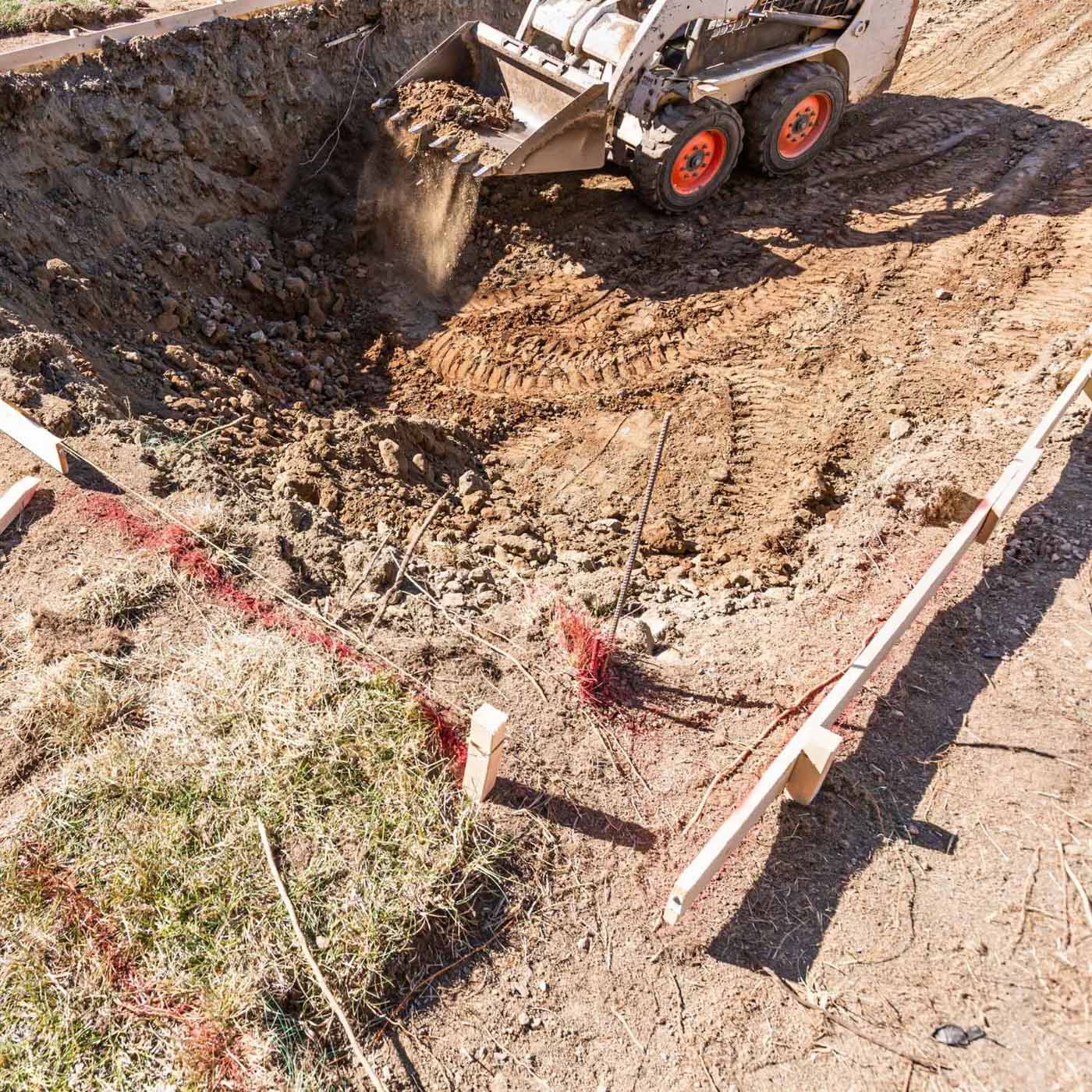
The excavation and grading work we handle in Linwood covers the full range of what homeowners in this part of Lower Chichester Township actually deal with. Foundation perimeter excavation for waterproofing and drainage correction. Yard regrading to redirect water away from structures. Retaining wall removal and replacement including the excavation and footing work that has to happen before the new wall goes in. Site preparation for patios, walkways, and driveway aprons on lots where the original base material is decades old and long past its useful life.
The clay-dominant soils throughout southeastern Delaware County require specific attention during grading. Clay holds water, resists natural drainage, and shifts with seasonal moisture changes in ways that sandy or loamy soils don’t. Proper slope, compaction, and drainage planning aren’t add-ons here they’re built into how every job is scoped and executed. Cutting corners on any of those elements in this soil type means the problem comes back, usually worse.
Because we also handle retaining walls, patios, and finished hardscape, the excavation work doesn’t happen in isolation. If your project involves both a graded yard and a patio or wall above it, everything is designed and built as a connected system. You get one point of contact, one crew that understands the full scope, and no gaps between what was dug and what was built on top of it.
In most cases, yes and the threshold is lower than most homeowners expect. Linwood falls within Lower Chichester Township’s jurisdiction, which enforces Pennsylvania’s Uniform Construction Code alongside its own local ordinances governing fill placement, grading, and site disturbance. Placing fill on your property even without active excavation typically requires a grading permit under township code. Properties located in or near flood hazard areas, which is a real consideration given Linwood’s proximity to the Delaware River watershed, face additional permit requirements tied to FEMA flood zone designations.
Pennsylvania’s 811 Call Before You Dig law also applies to every job statewide, regardless of size. In a dense residential grid like Linwood’s, where utility lines and older stormwater infrastructure may not be precisely mapped, this step is legally required and genuinely important. We handle permit coordination and 811 compliance as part of the project so you’re not left guessing what the township needs or whether you’ve checked the right boxes before work begins.
Excavation cost in Linwood depends on the scope of the work, the condition of the soil, and what the project requires beyond the dig itself. A straightforward yard regrading on a small residential lot typically runs in the range of $1,500 to $4,000 depending on the area being graded and how much material needs to be moved or removed. Foundation perimeter excavation for drainage correction, or excavation tied to retaining wall replacement, generally runs higher often $3,000 to $8,000 or more because those projects involve more precise work, deeper digging, and coordination with structural elements above.
The clay-heavy soils in southeastern Delaware County can affect cost in ways that aren’t always obvious upfront. Clay is harder to move when dry and heavier when wet, which affects equipment time and disposal volume. If your property has existing retaining walls, old fill material, or buried debris from the original construction era common in Linwood’s postwar housing stock that affects scope too. The most accurate number comes from a site assessment where the actual conditions can be evaluated, not an estimate given over the phone based on square footage alone.
Excavation is the process of removing earth digging down to create a foundation, clear a site, or expose a drainage problem. Grading is the reshaping of the existing ground surface to control how water flows across it. They often go together, but not always. If you’re dealing with yard pooling or water moving toward your foundation, grading alone may be the right fix no deep excavation required. If you’re replacing a retaining wall, adding a patio, or correcting a drainage issue that originates below the surface, excavation comes first.
For homes in Linwood, the most common scenario is a combination of both. The original grading on a home built in the 1950s or 60s may have been adequate when the house was new, but decades of soil settlement, mature tree root systems, and neighboring property changes can alter drainage patterns significantly. A site assessment will tell you which scope applies to your specific situation and a contractor who can handle both in one project is going to produce a more consistent result than one who only does the dig and leaves the grading to someone else.
The honest answer is that most retaining walls in Linwood’s housing stock particularly the concrete block, railroad tie, and stacked stone walls built between the 1950s and 1980s are at or past their functional end of life. If the wall is leaning, cracking, or showing signs of movement at the base, those aren’t cosmetic issues. They’re structural signals that the wall is no longer doing its job, and in most cases, patching or reinforcing it is a temporary fix that delays the inevitable.
What matters more than the wall’s surface condition is what’s happening behind and beneath it. Clay soil in southeastern Delaware County exerts significant lateral pressure on retaining walls, especially after wet seasons when the soil is saturated. A wall that was never built on a proper footing, or that doesn’t have adequate drainage behind it to relieve hydrostatic pressure, will continue to move regardless of how it looks on the face. The right call is to excavate, assess the slope and soil condition, and build the replacement wall on a footing designed for the actual load not just patch what’s visible and hope it holds another winter.
Spring and fall are the strongest windows for excavation and grading work in this part of Delaware County. Spring roughly March through May is when drainage failures and frost heave become visible after winter, and when most homeowners move from “I need to deal with this” to actually booking. The ground is workable, conditions are cooperative, and the urgency is real after a freeze-thaw season that makes every existing drainage problem more visible.
Fall is equally strong, particularly for grading and retaining wall work. The ground is firm, the weather is consistent, and completing drainage corrections before the ground freezes means you’re not watching the problem get worse through another winter. Summer work is entirely feasible but worth noting that Linwood’s clay-heavy soils can become very hard in dry summer conditions, which affects excavation difficulty and, in some cases, cost. Winter bookings for spring projects are also common if you know you have a drainage issue or a wall that needs to come out, getting on the schedule in January or February means you’re not waiting until May to get a start date.
Yes and for most projects in Linwood, that’s actually the better way to approach it. When the same contractor handles excavation, grading, retaining walls, and finished hardscape like patios or walkways, everything gets designed as a connected system from the start. The drainage slope built into the grading phase directly informs how the patio above it is pitched. The retaining wall footing depth is coordinated with the base preparation for the surface above it. These aren’t details that can be handed off between separate contractors without something getting lost in translation.
The alternative hiring one crew to dig and grade, then bringing in a separate masonry or hardscape contractor creates a coordination gap that frequently shows up as drainage problems, uneven settling, or walls that shift within a few seasons. On a small Linwood lot where every square foot of outdoor space matters, that kind of rework is expensive and disruptive. Our full-service model means one point of contact from raw earth to finished surface, one crew that understands the full scope, and one contractor accountable for how the whole thing performs not just the part we touched.
Useful Links