
Hear from Our Customers

Linwood is a compact, densely settled community where homes were built mostly between 1940 and 1969. That housing stock is aging, and a lot of those original driveways are either failing quietly or have been patched so many times they’re holding on by a thread. When you finally replace it the right way, you stop reacting to every new crack and start actually owning your property again.
The coastal plain terrain around Lower Chichester sits low and flat, which means water doesn’t drain away quickly on its own. If your driveway isn’t graded properly during installation, that water works its way under the surface and the freeze-thaw cycles do the rest. Southeastern Pennsylvania sees 25 to 35 freeze-thaw cycles every year and Linwood’s position near the Delaware River makes it one of the more exposed communities in the county. Asphalt handles that stress better than concrete because it flexes instead of cracks, but only if the base underneath it was built correctly.
A properly installed driveway also does something most people don’t think about until they’re selling: it changes how the whole property reads from the street. On a block where homes are close together and neighbors notice everything, a clean, even surface signals that the house is cared for. That matters when appraisers show up and it matters even more when buyers do.
We’re based in Aston, PA the township directly adjacent to Lower Chichester where Linwood is located. That’s not a service-area stretch. It means the crew driving to your property in Linwood is coming from the next town over, not dispatching from somewhere across the county with no stake in the work we leave behind.
We handle more than asphalt. Patios, retaining walls, walkways, outdoor kitchens, and full landscaping all fall under the same roof. For a homeowner on a street near Linwood Terrace who needs a new driveway and a retaining wall that’s been shifting for two seasons, that matters you’re not managing two separate contractors and hoping they coordinate. One crew handles it, start to finish.
We operate as a registered Pennsylvania Home Improvement Contractor, which means you have real legal protections built into every agreement written estimates, compliant contracts, and a business that’s accountable by law, not just by reputation.
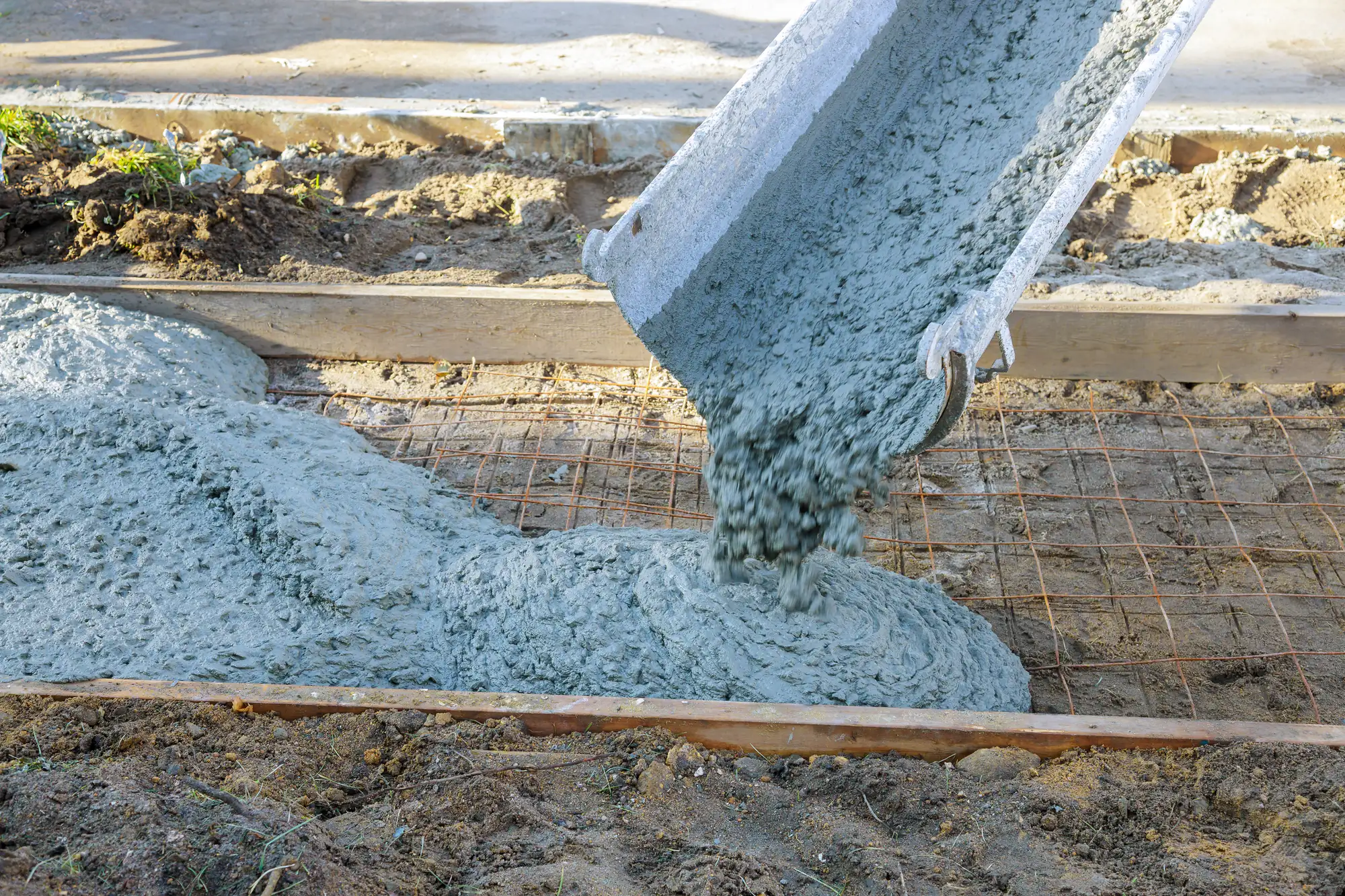
The part that determines whether your driveway lasts five years or twenty-five happens before any asphalt is poured. It starts with a site assessment looking at your current surface, the drainage pattern on your lot, and the condition of the subbase underneath. In Linwood’s flat, low-lying terrain, drainage grading isn’t optional. It’s what keeps water from pooling under the surface and accelerating freeze-thaw damage through every Pennsylvania winter.
From there, the old material is removed, the subbase is excavated to the right depth, and a compacted aggregate base is installed. This is the step that most homeowners never see and that low-bid contractors routinely shortcut. Once the base is solid and graded correctly, the asphalt goes down in the appropriate thickness for a residential driveway not the thinnest layer that passes a visual inspection, but what actually holds up under daily use and seasonal stress.
Before anything starts, you’ll have a clear, written estimate in hand. Lower Chichester Township’s zoning code requires that driveways be paved with an acceptable hard surface, so if you’re replacing a deteriorated surface or converting from gravel, you’re also bringing the property into compliance. After the job is done, we walk you through sealcoating timing new asphalt needs roughly twelve months to cure before the first sealcoat and what a reasonable maintenance schedule looks like going forward.
Ready to get started?
Not every driveway in Linwood needs a full replacement. Some need it badly especially those original post-war surfaces that have been patched past the point of return. Others are candidates for resurfacing or a crack fill and sealcoat that buys another decade of life. We assess each job on its own terms and give you an honest read on which option makes sense, along with the cost difference so you can make an informed call.
For full driveway installations, the typical cost range in the Delaware County area runs between $3,000 and $7,000 for a standard residential driveway, depending on size, grade, and site conditions. Sealcoating which should be applied every two to three years after the initial cure period typically runs $100 to $300 for a standard driveway and is the single most cost-effective thing you can do to extend the life of an asphalt surface. Road salt exposure from I-95 and Route 13 accelerates surface oxidation in this corridor, which makes that maintenance window more important here than in communities further inland.
We also handle the surrounding work that often comes up alongside a driveway project retaining walls that border the drive, walkways that connect to it, and drainage corrections that affect how the whole front of the property performs. In a dense neighborhood like Linwood, where your driveway sits close to a neighbor’s property line, getting the drainage right isn’t just about your driveway. It’s about not redirecting water toward someone else’s foundation.
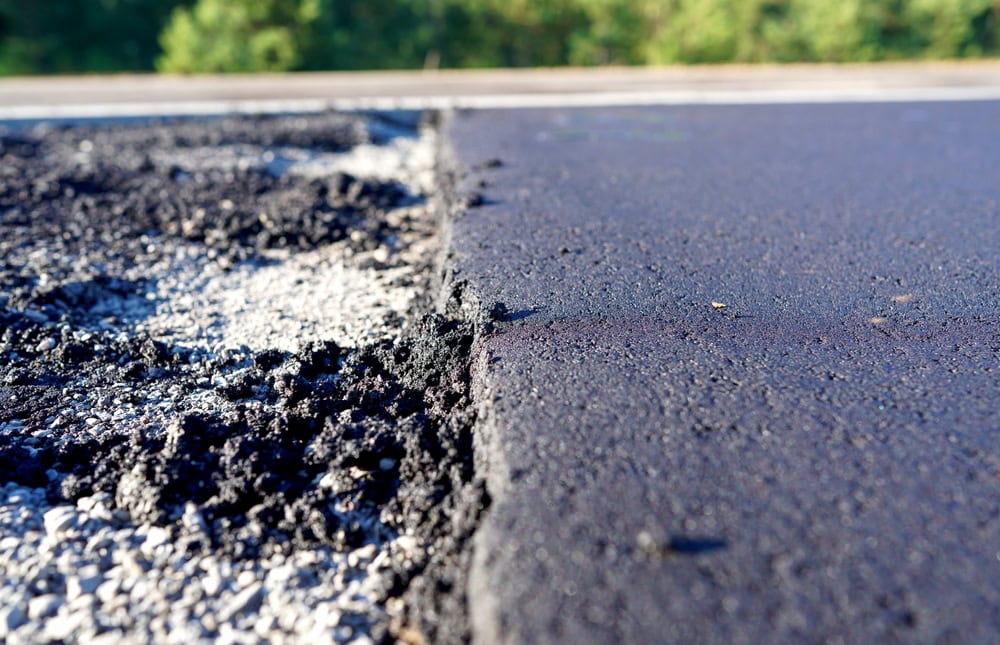
The honest answer depends on what’s actually happening beneath the surface, not just what it looks like from the street. If you’re seeing widespread cracking, areas where the asphalt has started to crumble at the edges, or sections that have heaved or sunk those are signs the base has been compromised. Sealcoating over a structurally failed driveway is like painting over a rotted wall. It looks better for a season and then the underlying problem shows through.
If the surface is still structurally sound but showing surface oxidation, minor cracking, or fading, a crack fill and sealcoat can genuinely extend the life of the driveway by several years. Given that many Linwood homes were built between 1940 and 1969, a lot of driveways in the area fall into the “past the point of patching” category but not all of them. The only way to know for certain is to have someone look at it who will give you a straight answer, not just quote you the most expensive option.
For a standard residential driveway in the Delaware County area, you’re typically looking at somewhere between $3,000 and $7,000 installed, depending on the size of the driveway, the condition of the existing subbase, and whether any grading or drainage corrections are needed. Per square foot, asphalt installation generally runs $7 to $15. A smaller driveway in the 400 square foot range might come in closer to $1,500 to $4,000, while a longer or wider surface will push toward the higher end of that range.
What affects the cost most is the base work, not the asphalt itself. A site that requires significant excavation, subbase repair, or drainage grading will cost more than a straightforward overlay on a solid existing base. In Linwood’s flat terrain, drainage grading is almost always part of the conversation and it’s worth doing right the first time rather than dealing with the consequences of pooling water under the surface through several Delaware County winters.
Every two to three years is the standard recommendation for asphalt driveways in Pennsylvania, and that window holds true for Linwood. The reason it matters here specifically is the combination of freeze-thaw cycles and road salt. Southeastern Pennsylvania sees 25 to 35 freeze-thaw cycles annually, and communities along the I-95 and Route 13 corridor which runs right through southern Delaware County see heavier road salt application than inland suburban areas. Salt accelerates the oxidation process that causes asphalt to dry out, crack, and become brittle.
Sealcoating creates a barrier between the asphalt surface and that salt-laden water before it penetrates micro-cracks and starts doing structural damage. A professional sealcoat for a standard residential driveway typically costs $100 to $300. That’s not a significant expense when you consider that skipping it consistently turns a $200 maintenance item into a $1,500 pothole repair, and eventually into a $5,000-plus full replacement. One thing worth knowing: if you’ve just had a new driveway installed, wait twelve months before the first sealcoat. New asphalt needs time to fully cure before it’s sealed.
Lower Chichester Township’s zoning code explicitly requires that all driveways be paved with an acceptable hard surface so if your current surface is gravel, severely deteriorated, or missing sections, you may already be out of compliance with the township ordinance. Whether a formal building permit is required for a driveway replacement or new installation depends on the scope of the project and the township’s current requirements, which can change. The safest approach is to confirm directly with Lower Chichester Township before work begins.
As a registered Pennsylvania Home Improvement Contractor, we’re familiar with the permit process in Delaware County municipalities and handle that coordination as part of the project. You don’t need to figure out the paperwork side of it on your own. What matters most is that the work is done by a contractor who is legally registered, properly insured, and operating under a written contract that meets Pennsylvania’s Home Improvement Consumer Protection Act requirements because those protections exist specifically to give homeowners recourse if something goes wrong.
For most homeowners in Linwood and the surrounding Lower Chichester area, asphalt is the more practical choice and it’s not a close call. Concrete costs significantly more to install, running $10 to $15 per square foot compared to $7 to $15 for asphalt. More importantly, concrete is rigid. When Pennsylvania’s freeze-thaw cycles cause the ground beneath it to shift, concrete cracks and concrete crack repair is expensive and difficult to make look right. Asphalt flexes with seasonal ground movement, which is exactly what you want in a climate with 25 to 35 freeze-thaw cycles per year.
Asphalt is also far more repairable. A crack or small pothole in an asphalt driveway can be addressed without replacing the entire surface. With concrete, localized repairs are structurally sound but visually obvious and often cost more than the equivalent asphalt fix. The one genuine advantage of concrete is longevity when conditions are ideal but in southern Delaware County’s climate and soil conditions, asphalt with proper base prep and regular sealcoating consistently outperforms concrete on a cost-per-year basis over the life of the driveway.
Yes and for many Linwood homeowners, that’s actually the more efficient way to approach it. Driveways don’t exist in isolation. A retaining wall that borders the driveway, a walkway that connects to it, or a drainage issue that affects both the driveway and the yard often need to be addressed together rather than separately. When you hire one crew to handle all of it, the work is coordinated from the start the grading decisions for the driveway account for the retaining wall, the drainage corrections serve the whole front of the property, and nothing gets undone by the next trade coming through.
In a compact neighborhood like Linwood, where lots are close together and the margin for drainage errors is small, that kind of integrated planning matters more than it might in a larger suburban lot. We handle paving, retaining walls, walkways, patios, and full landscaping under one roof. If you’ve been putting off a driveway replacement partly because you knew there were other things that needed attention at the same time, that’s exactly the kind of project we’re set up to handle one conversation, one crew, one finished result.
Useful Links