
Hear from Our Customers

Standing water in a Linwood yard isn’t just an eyesore. When your home was built in the 1940s or earlier which describes most of the housing stock here the original grading was done by hand, without engineering, and it’s been settling ever since. After enough freeze-thaw cycles, that grade has shifted in ways that send water toward your foundation instead of away from it. Fixing that is what actually solves the problem.
When the drainage works the way it should, the basement stays dry. That matters in Linwood, where roughly half of all homes have full basements built from stone or brick materials that absorb moisture far more readily than modern poured concrete. A properly graded yard with a functioning drainage system is the most direct line of defense between a heavy rain and a wet basement floor.
Beyond the foundation, you get your yard back. No more soggy patches that never dry out, no more standing water that turns into a mosquito breeding ground something Lower Chichester Township actively flags as a public health concern every season. And when it comes time to sell, a home with documented drainage work doesn’t carry the red flags that send buyers walking.
We’re based in Aston, PA about 8 miles up the I-95 corridor from Linwood. We’ve been doing drainage and grading work throughout southern Delaware County for over 15 years, and the housing stock in Lower Chichester Township is familiar territory. Dense lots, homes built before World War II, grades that have been shifting for decades we’ve seen it on nearly every street in Linwood we’ve worked.
What makes the difference on a drainage job isn’t just the pipe in the ground it’s understanding why the water is going where it’s going in the first place. That requires a real site assessment, not a quick walk-around and a ballpark number. Renato and the same crew that assesses your property are the ones who show up to do the work. No handoffs, no subcontractors, no surprises mid-project. That’s how we’ve built a reputation in Delaware County that keeps people calling us back.

It starts with a site assessment. Before anything gets designed or quoted, we walk the property and read how water is actually moving across it. In Linwood, that usually means looking at a yard that’s been through 60 to 100 years of settling, tree root movement, and Pennsylvania winters. The grade you see isn’t always the grade that was originally there and that gap between the two is usually where the problem lives.
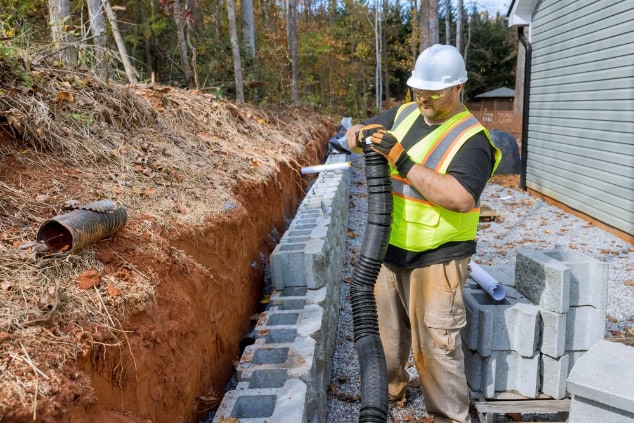
Once we understand the drainage pattern, we design a solution around it. That might mean regrading the yard to re-establish proper slope away from the foundation. It might mean a French drain running along the low side of the property to intercept water before it pools. It might mean a catch basin at the downhill corner where everything collects. Most of the time, it’s a combination. We handle all of it as one integrated project grading and drainage together because installing a drain on a yard that still slopes the wrong way doesn’t fix anything.
After installation, we restore the disturbed areas and walk you through what was done and why. Lower Chichester Township participates in Pennsylvania’s stormwater management framework, and larger grading projects may require a permit we’ll flag that during the assessment so there are no surprises. The goal is a yard that drains correctly and stays that way through whatever Pennsylvania’s winters throw at it.

Ready to get started?
Drainage work in Linwood isn’t a one-size-fits-all job. The lots here are small and tightly packed many between 1,600 and 6,000 square feet which means there’s limited room for water to disperse naturally. Add in the high percentage of impervious surface (roofs, driveways, concrete walks), and what you have is a property that sheds water fast and has very little ground left to absorb it. The drainage system has to be designed with those constraints in mind.
The solutions we install most often in Linwood and the surrounding part of Delaware County include French drains with perforated pipe and gravel aggregate, surface catch basins tied into underground discharge lines, and full regrading where the yard slope is working against the drainage. For homes near the Marcus Hook end of Lower Chichester Township where elevation is lower and the water table sits closer to the surface we pay particular attention to discharge point selection so water exits the property completely rather than just relocating the problem.
Every installation uses materials rated for Pennsylvania’s freeze-thaw cycles. Pipe joints that can’t handle frost heave, gravel that compacts and blocks flow, drain grates that ice over these are the failure points we design around from the start. The goal isn’t a drainage system that works in October. It’s one that still works correctly in April after a hard winter, and for the 30 to 40 years after that.
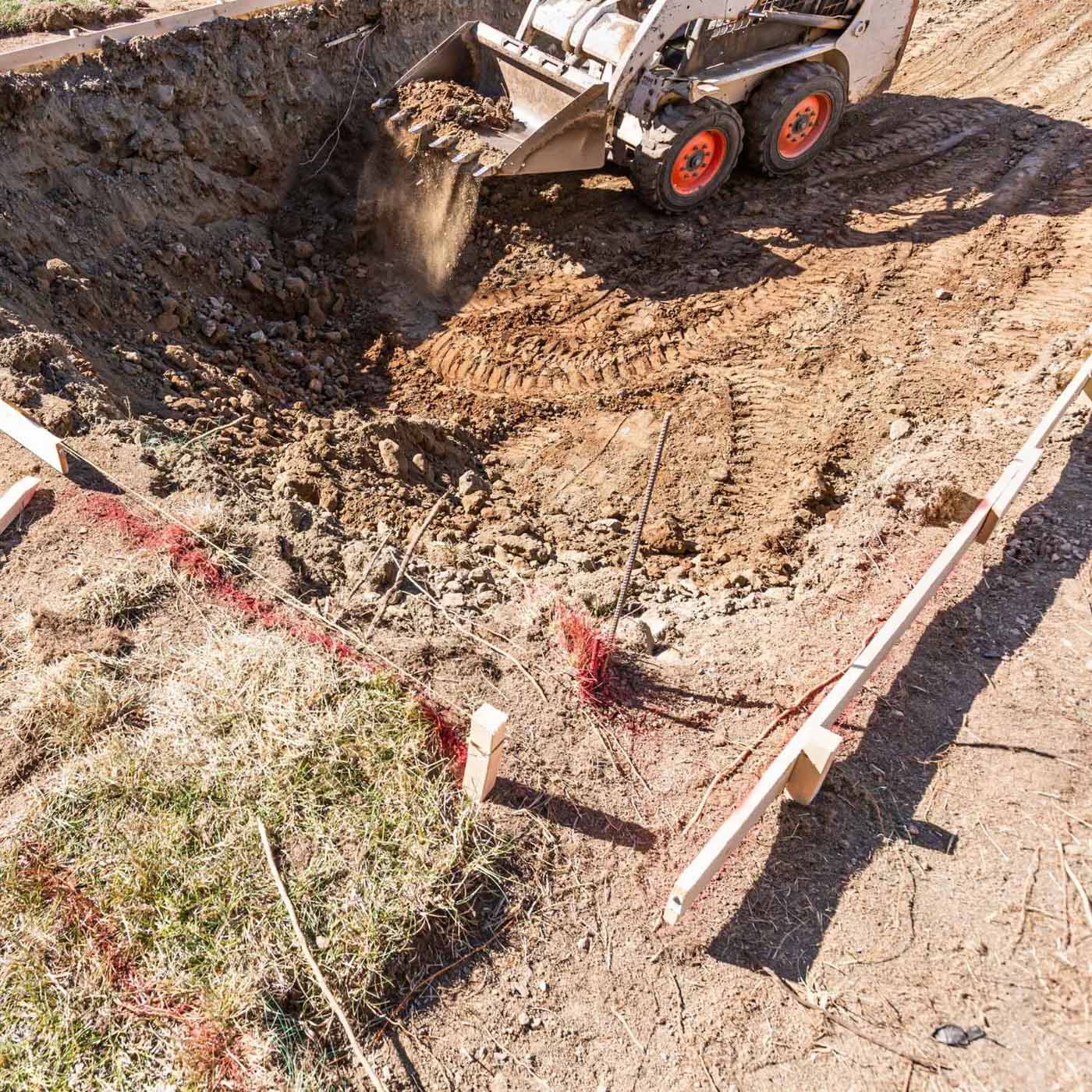
The most common reason is grade failure the ground around your home no longer slopes away from the foundation the way it was originally intended to. In Linwood, where most homes were built between the early 1900s and the 1960s, that original grading was done without engineering oversight, and decades of settling, freeze-thaw cycling, and root movement have shifted it significantly. Many properties now slope toward the foundation rather than away from it, which means every rain event pushes water in exactly the wrong direction.
The second factor is impervious surface coverage. Linwood is a densely settled community roofs, driveways, sidewalks, and patios cover a large percentage of most lots, leaving very little permeable ground to absorb rainfall. When water can’t soak in, it runs off fast and collects at the lowest point, which is often a basement window well, a foundation wall, or a corner of the yard that never fully dries out. A proper site assessment will identify which of these factors is driving your specific flooding pattern and what combination of regrading and drainage infrastructure will fix it.
A French drain is a subsurface drainage system a trench filled with gravel and a perforated pipe that collects water moving through the soil and redirects it to a safe discharge point away from your home. It’s one of the most effective solutions for yards that hold water after rain, particularly in areas with clay-heavy soil that drains slowly. In southern Delaware County, where soil composition tends toward clay and the water table is relatively close to the surface, French drains are one of the most commonly recommended solutions for Linwood properties.
That said, a French drain only works correctly if the grade supports it. If the yard is still sloping toward the foundation, a drain alone won’t solve the problem it’ll just slow it down. The right approach is to assess the grade first, correct it where needed, and then install drainage infrastructure that complements the slope. When those two things work together, a French drain installation in Linwood can permanently eliminate the standing water issue rather than just managing it season to season.
It depends on the scope of the project. Lower Chichester Township participates in Pennsylvania’s Act 167 stormwater management framework and maintains an active NPDES MS4 permit program, which means the township takes stormwater compliance seriously. For smaller drainage improvements a catch basin, a short French drain run, minor regrading a permit may not be required. For larger projects that involve significant grading or changes to how stormwater leaves the property, a permit and potentially an engineer-reviewed plan may be needed.
The best way to get a clear answer is to contact Lower Chichester Township directly at 610-485-1472 before work begins. We flag this during every site assessment so you know what’s required before any work is scheduled. Drainage work that redirects water onto a neighboring property or discharges improperly into municipal storm infrastructure can create code violations so getting the permit question answered upfront isn’t just a formality, it’s how you protect yourself from problems down the road.
Most residential French drain installations in Delaware County fall somewhere between $3,000 and $8,000, depending on the length of the drain run, how much regrading is involved, the discharge point location, and site access. Smaller jobs on compact Linwood lots with straightforward drainage paths tend to come in on the lower end. Larger projects that involve significant regrading, multiple drain lines, or catch basins tied into a common discharge will run higher.
What affects cost most is whether the grading needs to be corrected before the drain goes in. If the yard slope is working against the drainage, that regrading work adds to the project but skipping it means the drain won’t perform correctly, and you’ll be looking at the same problem again in a few years. We give detailed, itemized quotes after the site assessment so you know exactly what you’re paying for and why. There are no packages or tiers here the quote is built around what your specific property actually needs.
Yes and in Linwood’s older housing stock, this is one of the more serious long-term risks of ignoring a drainage problem. Homes built in the 1930s, 1940s, and 1950s typically have foundation walls made of stone or brick rather than poured concrete. Those materials are significantly more permeable, which means water that sits against the foundation wall doesn’t just stay outside it works its way through. Over time, that repeated moisture exposure causes efflorescence, mortar deterioration, and in more serious cases, structural compromise.
Even in homes with poured concrete foundations, hydrostatic pressure the force that builds up when saturated soil presses against a foundation wall can cause cracking and seepage. The most cost-effective way to address this is from the outside, before the water ever reaches the wall. An exterior French drain that intercepts groundwater and redirects it away from the foundation is far less expensive than interior waterproofing or foundation repair after the damage is already done. Getting the yard drainage right is the first line of defense.
Most residential drainage projects in Linwood take between one and three days to complete, depending on the scope. A single French drain run on a compact lot can often be finished in a day. Projects that involve regrading across a larger area, multiple drain lines, or catch basins with underground discharge runs typically take two to three days. We don’t schedule jobs we can’t finish the timeline you’re given at the start of the project is the one we hold to.
Timing within the year also matters. Spring is the busiest season for drainage work in this part of Delaware County the freeze-thaw cycle reveals failures that were masked all winter, and the first heavy rains of March and April make the problem impossible to ignore. If you’re dealing with standing water now, the earlier in the season you schedule an assessment, the better your chances of getting the work done before the wet months are fully underway. Fall is also a reasonable window addressing drainage before the ground freezes means you’re not starting the next winter with an unresolved problem.
Useful Links