
Hear from Our Customers

If you’ve watched water pool against your foundation after every heavy rain, or noticed your yard draining toward your house instead of away from it, the grade is the problem. It’s not a mystery it’s physics. And in Folcroft, where the substratum is coastal plain sand, silt, and gravel sitting on top of a high water table, a yard that isn’t graded correctly doesn’t just look bad. It actively works against your foundation, your basement, and the long-term value of your home.
Folcroft’s drainage runs in three directions depending on where you live toward Hermesprota Creek in the north, Muckinipattis Creek to the west, and Darby Creek along the southern edge of the borough. That’s not something a generic contractor thinks about. It’s something we understand before the first bucket of dirt moves. Getting the grade right means knowing where the water is supposed to go and making sure it gets there.
Once the grade is corrected, the difference is immediate. Water moves away from your structure. Your yard becomes usable. If you’re adding a patio, a retaining wall, or expanding your outdoor space, the work that comes after actually holds. For homeowners in Delmar Village and Old Folcroft where homes were built between the 1920s and 1950s and original drainage grades have had decades to shift this isn’t a cosmetic improvement. It’s foundational protection for your most valuable asset.
We’re based in Aston a short drive from Folcroft along Chester Pike and have been doing excavation, grading, and site preparation work across Delaware County for over 15 years. We hold a verified Pennsylvania contractor license and a BuildZoom score of 102, which puts us in the top 11% of more than 125,000 licensed contractors in the state. That’s not a self-declared claim you can look it up.
What makes us different from most excavation contractors in this area is simple: we don’t stop at the dig. Most operators move the dirt and move on, leaving you to coordinate a separate crew for the retaining wall, another for the patio, and a third for drainage. We handle all of it excavation, grading, masonry, patios, retaining walls under one contract, with one crew, from start to finish.
For Folcroft homeowners dealing with tight row home lots, aging infrastructure, and the kind of drainage challenges that come with living near Darby Creek, that continuity matters. One team means one point of accountability. If something doesn’t line up, there’s no finger-pointing between contractors just a straightforward fix.
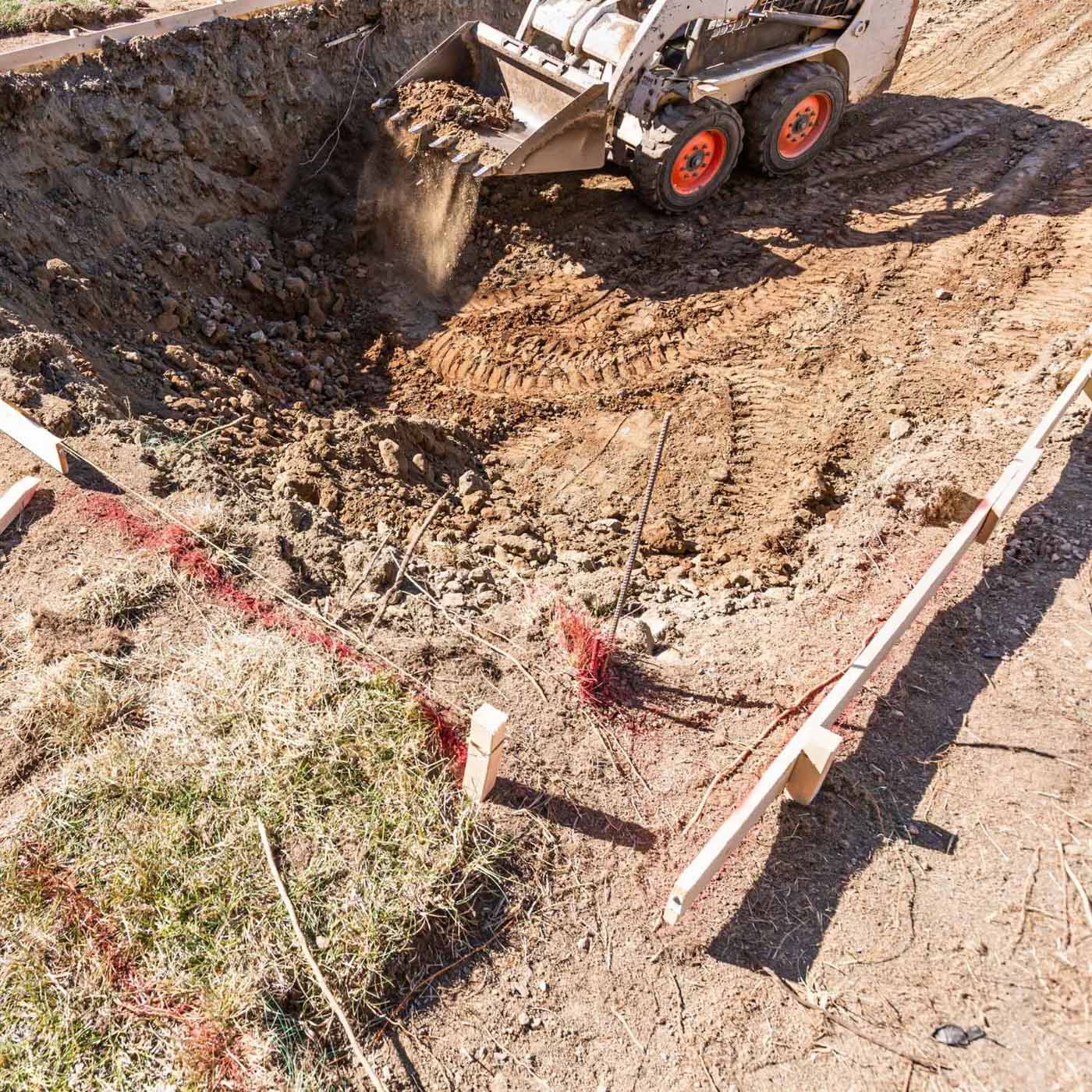
It starts with a site visit. Before any equipment shows up, we walk the property, assess the existing grade, identify where water is moving and where it shouldn’t be, and look at what’s already underground. In Folcroft, that last part matters more than most people expect the borough’s dense street grid and aging infrastructure mean buried utilities are everywhere, and Pennsylvania law requires calling 811 before any digging begins. That call gets made on every job, without exception.
Once the site is assessed, you get a written estimate with a clear scope of work. Folcroft Borough requires permits for grading and related site work under Borough Code § 536-20, and if your property falls within the floodplain near Darby Creek, there are additional requirements under the borough’s flood ordinance. We handle the permit process you don’t have to navigate that on your own.
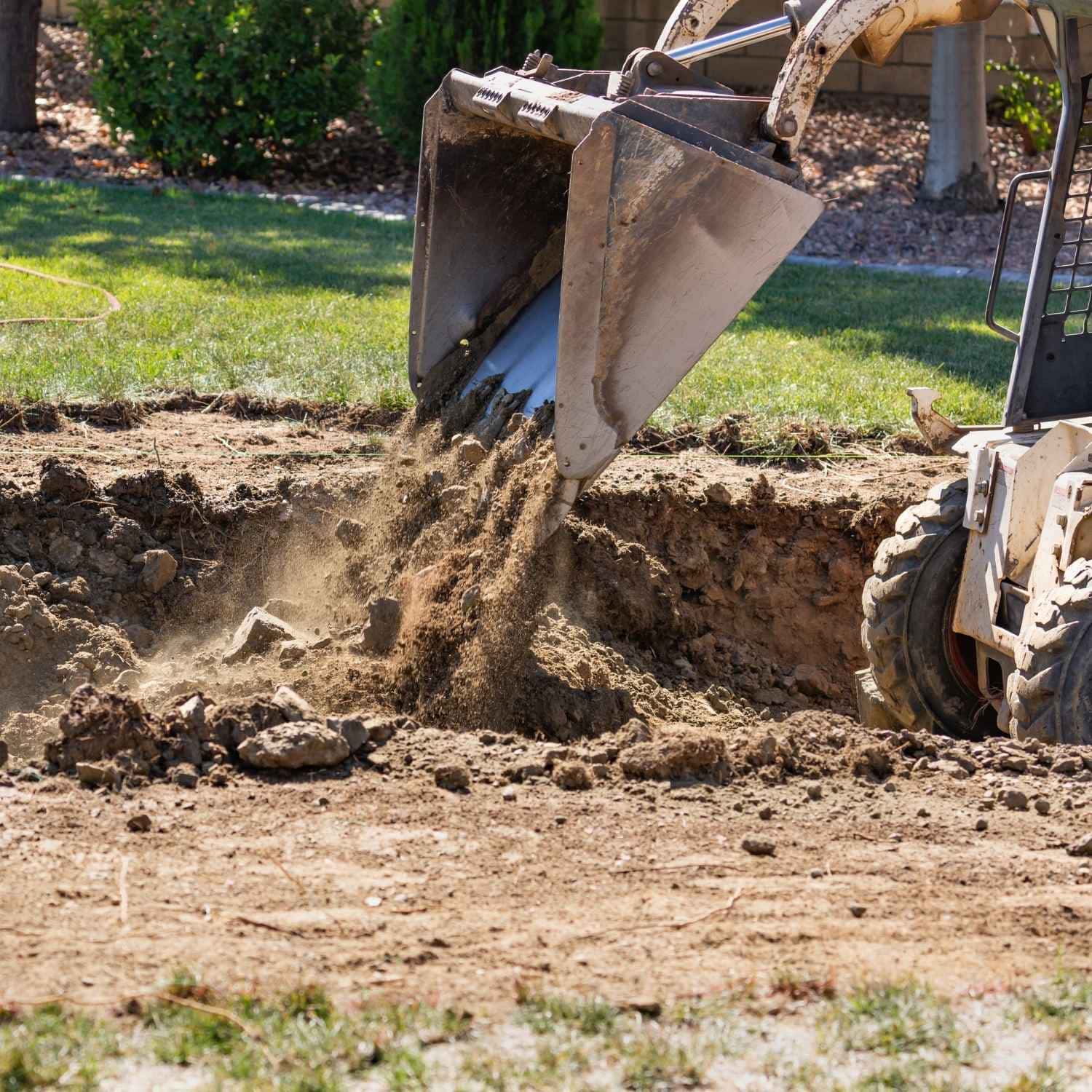
When the work begins, we bring equipment sized for the job. In a borough with row homes, shared walls, and lots measured in feet rather than acres, that means working carefully and deliberately not just efficiently. Once excavation and grading are complete, the site is left clean, stable, and ready for whatever comes next, whether that’s a retaining wall, a patio, or simply a yard that finally drains the way it should.
Ready to get started?
Excavation and grading work in Folcroft covers a range of residential needs yard regrading to correct drainage toward foundations, site preparation ahead of patios or retaining walls, excavation for new construction or additions, and drainage correction for properties affected by Folcroft’s documented high water table. The coastal plain soils here behave differently than the soils you’d find further inland in Delaware County, and we plan the work accordingly.
For homes in Delmar Village the 1950s-era red-brick row homes accessed off Primos Avenue onto Delmar Drive the most common projects we handle involve correcting original drainage grades that have shifted over 70 years, creating level outdoor living space on sloped lots, and excavating for retaining walls that hold back grades running toward neighboring properties. Old Folcroft’s earlier housing stock presents similar challenges, often with more complex underground conditions given the age of the infrastructure.
Every excavation project we undertake includes a full site assessment, utility marking through PA 811, permit acquisition where required, and a written scope before any work begins. Pricing is itemized and explained upfront Folcroft’s specific conditions, including lot access, soil type, and depth requirements, all affect cost, and you’ll know exactly what drives the number before you commit to anything. The national average for residential excavation runs between $1,658 and $6,709, with Philadelphia-metro projects typically landing 15 to 25 percent above rural Pennsylvania rates.

Yes Folcroft Borough requires a permit for grading and related site work under Borough Code § 536-20. The ordinance is explicit: no grading, paving, or sidewalk work can begin without one. If your property is in or near the floodplain along Darby Creek, there are additional requirements under the borough’s flood management ordinance, including specific timelines tied to when excavation begins.
Most homeowners don’t want to deal with that process on their own, and they shouldn’t have to. A contractor who handles permit acquisition as part of the job removes a real friction point especially in a borough with active code enforcement. When you work with us, permit coordination is included. You don’t have to figure out which forms to file or which borough office to call.
Nationally, residential excavation averages between $1,658 and $6,709 depending on scope, depth, soil conditions, and access. In the Philadelphia metro area which includes Folcroft and the rest of Delaware County costs typically run 15 to 25 percent higher than rural Pennsylvania rates. That reflects labor costs, disposal fees, and the complexity of working in a densely settled urban-adjacent area.
In Folcroft specifically, a few factors can influence cost beyond the basics. The borough’s high water table and coastal plain soil composition can affect excavation depth and drainage planning. Tight lot access in Delmar Village row home sections may require smaller equipment or more careful staging. And if the project falls within the Darby Creek floodplain, there may be additional permitting steps that add time. Any reputable contractor will explain these factors upfront and give you an itemized estimate before work begins that’s what you should expect, and it’s what we provide.
The most obvious signs are standing water after rain, water pooling against your foundation or basement wall, soft or consistently muddy areas in the yard, and erosion patterns that show water moving in the wrong direction. In Folcroft, these issues are especially common because the borough sits on coastal plain deposits sand, silt, and gravel with a high water table that causes prolonged poor drainage. That’s documented in Folcroft’s own Comprehensive Plan.
If your home is in Delmar Village or Old Folcroft, the housing stock is between 70 and 100-plus years old. Original drainage grades shift over decades. What worked in 1953 may not be directing water away from your foundation today. If you’re seeing any of the signs above or if you’re planning a patio or outdoor improvement and want to make sure the grade is right before you build a site assessment will tell you exactly what you’re dealing with before any money is spent.
Excavation is the process of removing earth digging down to a required depth for a foundation, a patio base, a retaining wall footing, or a drainage correction. Grading is the process of shaping the remaining or surrounding soil so that the surface slopes correctly and water moves where it’s supposed to go. The two often go together, but not always.
If you’re adding a patio in a Folcroft backyard that already sits at the right elevation, you may need excavation to remove material and create a level base, but grading may be minimal. If your yard is draining toward your house, you may need grading without significant excavation. In many cases especially on older properties in Delmar Village where the original grade has settled unevenly you need both. The best way to know is a site visit, not a phone estimate. Soil conditions, lot slope, and proximity to drainage channels all affect what the job actually requires, and those things can only be assessed in person.
Yes, but it requires care and the right equipment. Folcroft’s row homes and twin houses are built close together in some cases sharing a wall, in others sitting just a few feet apart. Excavation work that disturbs soil too close to a shared foundation or neighboring property line can cause settling, cracking, or drainage problems next door. That’s a real risk in a borough this dense, and it’s why equipment selection and operator experience matter as much as price.
The right approach is to assess the proximity to neighboring structures before any digging begins, use equipment scaled to the site rather than the largest machine available, and monitor soil stability throughout the process. If there’s any question about how close the work is to a shared foundation, that conversation happens before the first bucket moves not after. Folcroft’s tight residential lots are not unusual for us; they’re the norm in this part of Delaware County, and we’ve built our process around them.
Spring and fall are the most practical windows for excavation and grading work in Folcroft. Spring is peak demand ground thaw, post-winter drainage assessment, and the visibility of drainage problems after a wet winter all drive homeowners to act between March and May. If you’re seeing standing water or muddy areas in your yard right now, you’re not alone. That’s the season when Folcroft’s high water table and coastal plain soils make drainage problems impossible to ignore.
The trade-off with spring is scheduling. It’s the busiest window for every contractor in Delaware County, and the best crews book up fast. Fall is often a smarter move if you’re planning ahead ground conditions are stable, we can grade and prep before freeze, and you’re set up for a spring patio or retaining wall project without competing for the first available slot. Winter excavation is possible but costs more and is more complicated in Folcroft’s frost-prone soils. If your project can wait until fall, booking early gives you better timing, better access to our crew, and more flexibility on scheduling.
Useful Links