
Hear from Our Customers
When standing water sits against the foundation of a Delmar Village row home one that was built 60 or 70 years ago with a grade that has long since settled and shifted the finished basement on the other side of that wall is the first thing to pay for it. Moisture works through block foundations quietly. By the time you see it, the damage is already done.
Proper yard drainage in Folcroft isn’t just about getting water off the lawn. It’s about protecting the investment you’ve made in your home. A professionally installed French drain or corrected grade redirects water before it ever reaches your foundation, keeping your basement dry and your yard functional after every rain not just the light ones.
The other piece that’s specific to this area: Darby Creek doesn’t stay put. During heavy rain events, the creek can rise fast enough to backfill sewers and raise the water table under low-lying properties in Old Folcroft. A drainage system that relies entirely on ground absorption will fail the moment the soil is already saturated. The systems we install are designed with that reality in mind not just average conditions, but the conditions that actually show up in this part of Delaware County.
We’re based in Aston, about 10 minutes down MacDade Boulevard from Folcroft. That’s not a coincidence this is the part of Delaware County we’ve been working in for over 15 years. The soil conditions, the creek-adjacent flooding patterns, the mid-century housing stock that lines Delmar Drive none of that is new to us.
What that experience means for you is straightforward: you get a team that already understands what’s happening in your yard before we even walk the property. We’ve seen the same drainage failures repeat across Folcroft and boroughs like it settled grading, overwhelmed downspouts, compacted soil that sheds water instead of absorbing it. We know what causes the problem, not just what covers it up.
There are no subcontractors handed the job after the estimate. The same team that assesses your property installs the system. That consistency matters when your entire usable yard is the job site.

The first step is a site assessment not a sales call. We walk your property, read where water is actually moving, check your current grade, and look at how your downspouts are routing runoff. In a dense row-home environment like Delmar Village, that assessment also accounts for your neighbors. A drainage solution that pushes water onto the adjacent property isn’t a solution it’s a new problem. Folcroft Borough operates under the Darby and Cobbs Creeks Watershed Act 167 stormwater framework, which governs how runoff is managed in this watershed. Knowing where water can and can’t be discharged is part of designing a system that holds up long-term.
Once the assessment is complete, you get a clear recommendation what type of system fits your yard, why, and what it’s going to cost. Sometimes the fix is a grading correction and properly extended downspouts. Sometimes it’s a full French drain installation with a catch basin and a defined discharge point. The assessment determines that answer, not a default pitch.
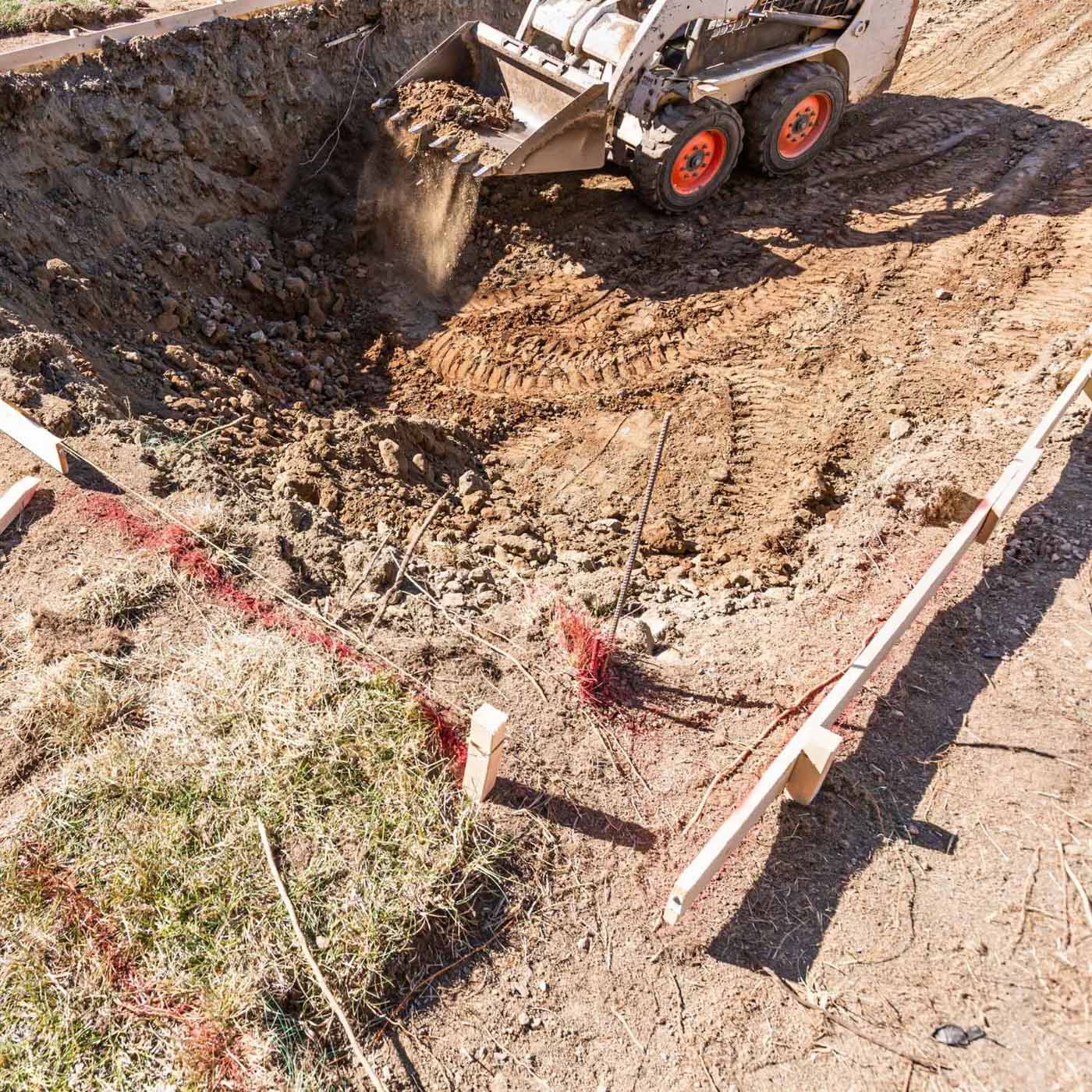
Installation on a Folcroft row-home lot is precise work. Space is limited, excavation has to be deliberate, and cleanup is part of the job not an afterthought. When we leave, the drainage system is in place and the yard is back in usable condition. The results show up the next time it rains.

Ready to get started?
Our drainage work covers the full picture: grading corrections, French drain installation, catch basin placement, downspout integration, and site restoration. In Folcroft specifically, grading is almost always part of the conversation. The row homes in Delmar Village were built decades ago, and the original grade around most of them has had 60 to 80 years to compact and shift. What once sloped away from the foundation now often slopes toward it. Correcting that grade before installing any drainage infrastructure is what separates a fix that lasts from one that doesn’t.
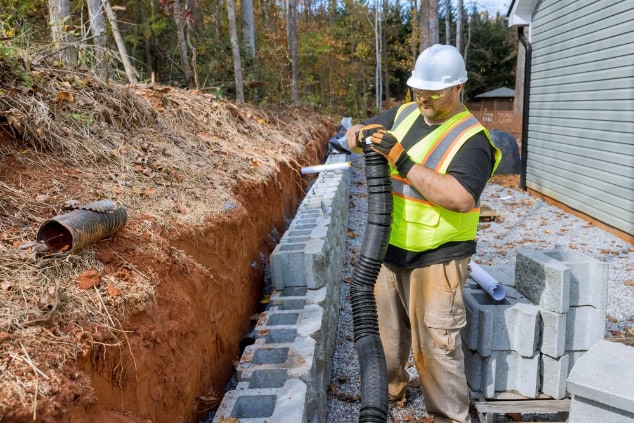
For yards with more significant water volume low-lying areas of Old Folcroft near the creek, or properties where runoff from the roof and driveway concentrates in one corner a French drain with a properly sized gravel bed and perforated pipe handles what surface grading alone can’t. Catch basins are added where surface water needs a defined collection point, particularly along driveways or at the base of slopes.
Every system is designed to discharge appropriately not onto neighboring properties, not into the sanitary sewer, and not toward Darby Creek without proper controls. That’s not just good practice in this watershed; it’s what the stormwater management framework for this area requires. You get a system that works, complies, and doesn’t create a new problem for the people next door.

A few things tend to work together in Folcroft to create that problem. First, the soil in older, dense boroughs like this one is heavily compacted from decades of development, foot traffic, and construction. Compacted soil doesn’t absorb water the way loose or amended soil does it sheds it. Second, the original grading around mid-century row homes has had a long time to settle, and in many cases it now directs water toward the foundation rather than away from it. Third, Folcroft’s high concentration of impervious surfaces rooftops, driveways, sidewalks means there’s very little permeable ground to absorb runoff in the first place.
When all three of those conditions exist at once, even a moderate rain event creates standing water that has nowhere to go. The fix usually involves correcting the grade, improving how downspout runoff is routed, and in more severe cases, installing a French drain that gives water a defined path out of the yard. A site assessment is the only way to know which combination of solutions fits your specific property.
French drain installation in Delaware County generally ranges from around $3,000 to $9,000 for a residential yard, depending on the length of the system, soil conditions, how the discharge needs to be routed, and whether grading corrections are part of the scope. Simpler surface drainage fixes can come in lower. More complex systems especially on properties with significant water volume or limited discharge options can run higher.
For Folcroft homeowners, it’s worth framing that cost against what it protects. A finished basement in a Delmar Village row home represents a meaningful portion of the home’s total value. Mold remediation, foundation repair, and damaged flooring and drywall in a flooded basement can easily cost more than a properly installed drainage system and those repairs don’t solve the underlying problem. Our drainage system does. The best way to get an accurate number for your property is a site assessment, where the scope can be defined based on what’s actually happening in your yard.
Yes, and it’s one of the more important factors to account for when designing a drainage system for properties in the southern end of Folcroft, particularly in Old Folcroft near the creek. During significant rain events, Darby Creek can rise quickly fast enough to backfill the sewer system and raise the water table in low-lying areas nearby. When that happens, the ground is already saturated before the rain even stops falling.
A drainage system that relies primarily on soil absorption like a simple dry well or a basic French drain without a defined discharge point will fail under those conditions. The soil has nowhere to send the water. Systems we design for Folcroft’s creek-adjacent properties need to account for elevated water table conditions and route water to a discharge point that remains functional even when the ground is fully saturated. That’s something a site assessment identifies specifically so the system you install actually works on the days when you need it most, not just on average rain days.
It depends on the scope of the work. Minor grading adjustments and downspout extensions typically don’t require a permit. More significant work like installing a French drain system, making substantial grade changes, or altering how stormwater leaves your property may require a permit from Folcroft Borough, and the project needs to comply with the Darby and Cobbs Creeks Watershed Act 167 Stormwater Management Plan, which governs drainage and runoff standards across this watershed.
One of the practical reasons to work with a contractor who knows Delaware County’s regulatory environment is that the permit question gets answered correctly upfront before any work starts. Drainage that redirects water onto a neighboring property or discharges into the sanitary sewer system can create both code violations and neighbor disputes. Getting the discharge point and system design right from the beginning is both a compliance issue and a good-neighbor issue in a dense borough like Folcroft. Our team factors these requirements into every system design.
Regrading reshapes the surface of your yard so that water flows away from your foundation and toward an appropriate outlet a street, a swale, or a designated drainage area. It’s often the right starting point, and in some cases it’s all that’s needed. But regrading alone only manages water that falls on the surface. It doesn’t address water that’s already moving through the soil, rising from below, or coming off the roof in concentrated volumes through downspouts.
A French drain is a subsurface system a trench filled with gravel and perforated pipe that intercepts water moving through the ground and redirects it to a discharge point. It handles what regrading can’t. In Folcroft’s row-home environment, the answer is often both: correct the grade first so surface water moves in the right direction, then install a French drain to manage the subsurface flow and concentrated roof runoff. That combination is what produces a yard that stays dry after heavy rain, not just light showers. The site assessment is what determines which approach or which combination fits your property.
A few signs that it’s time to stop waiting: water is pooling within a few feet of your foundation after rain, your basement is showing moisture, efflorescence, or water stains on the walls, your yard stays wet for more than 24 to 48 hours after a storm, or you’re seeing erosion along the edges of your property or driveway. Any one of those is worth addressing. All of them together means the problem is already progressing.
In Folcroft specifically, the risk of waiting is higher than it might be in a neighborhood with larger lots and more permeable ground. Row-home lots leave very little buffer between where water sits and where your foundation begins. And with finished basements being a standard feature of Delmar Village homes, the cost of water intrusion isn’t just cosmetic it’s structural and financial. A drainage assessment doesn’t commit you to anything. It tells you what’s actually happening, what the options are, and what it would take to fix it. That’s worth knowing before the next heavy rain rolls in off Darby Creek.
Useful Links