
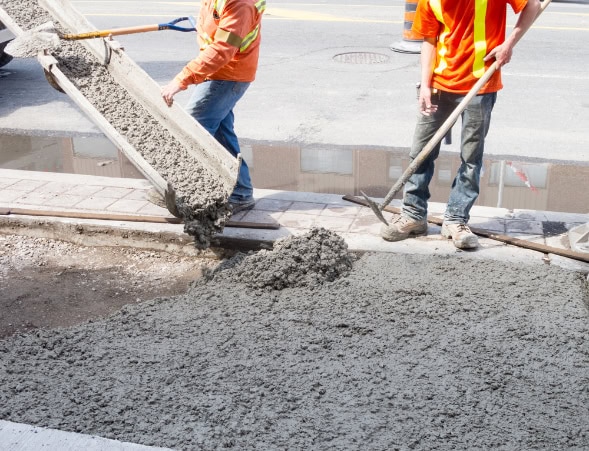
Hear from Our Customers
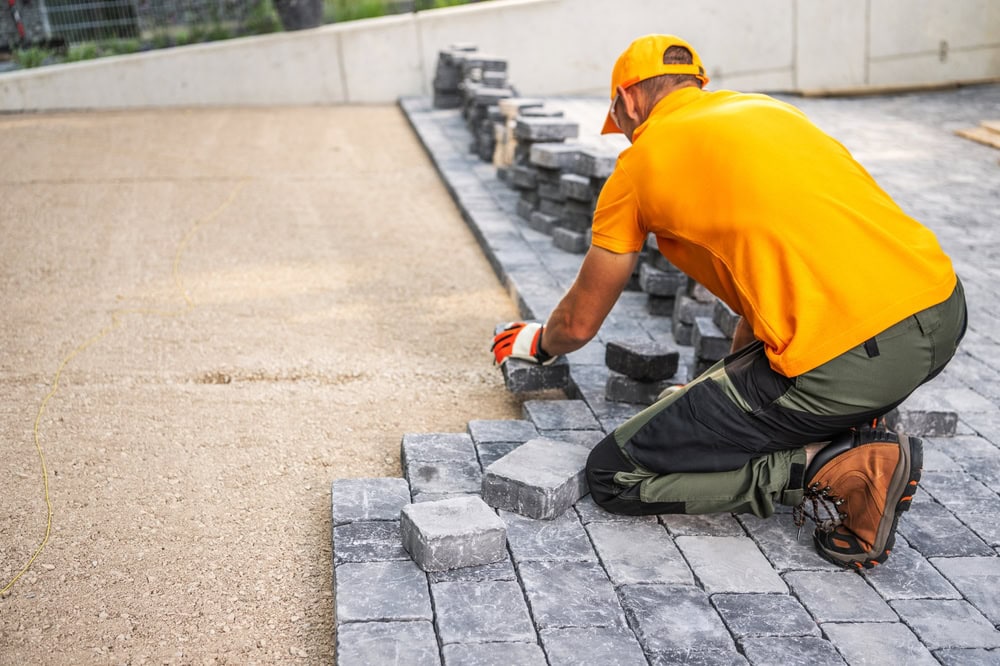
Old concrete doesn’t age gracefully in southeastern Pennsylvania. If you’ve lived in Folcroft for more than a few winters, you’ve probably watched a slab crack, a brick stoop settle unevenly, or a surface start collecting water in all the wrong places. That’s not bad luck it’s what happens when a patio wasn’t built with the right base underneath it.
Delaware County sees 40 or more freeze-thaw cycles every year. The ground expands, contracts, and shifts. If the base beneath your patio isn’t compacted and graded correctly, the surface above it won’t last no matter how good the materials look on day one. Most homeowners don’t find out until year three, when they’re calling a contractor about repairs they shouldn’t need.
What you actually get from a properly installed patio is simple: a surface that stays level, drains correctly, and doesn’t require you to revisit the decision every few years. For Folcroft homes near Darby Creek or Muckinipattis Creek, where soil holds moisture longer and drainage is less forgiving, getting the base right isn’t optional it’s the whole job. A patio that’s built correctly the first time is one you stop thinking about, and that’s exactly the point.
We’re based in Aston, PA about 8 to 10 miles from Folcroft via I-95 and Chester Pike. That’s not a coincidence. Renato Spennato built this business in Delaware County, and Folcroft sits squarely in the middle of the area our team works in every season. Sharon Hill, Glenolden, Collingdale, Norwood these are neighboring boroughs we know well, and Folcroft is no different.
What makes the difference here isn’t a sales pitch it’s structure. We use one experienced team from excavation through final cleanup. No subcontractors cycling through your backyard. No wondering who’s showing up tomorrow. In a compact Folcroft row home yard where access is tight and the neighbors are close, that consistency matters more than most homeowners realize until they’ve dealt with the alternative.
Fifteen-plus years in Delaware County means we’ve seen what works and what fails in this specific climate, on this specific housing stock. That experience shows in how the work gets done not just how it looks on the first day.
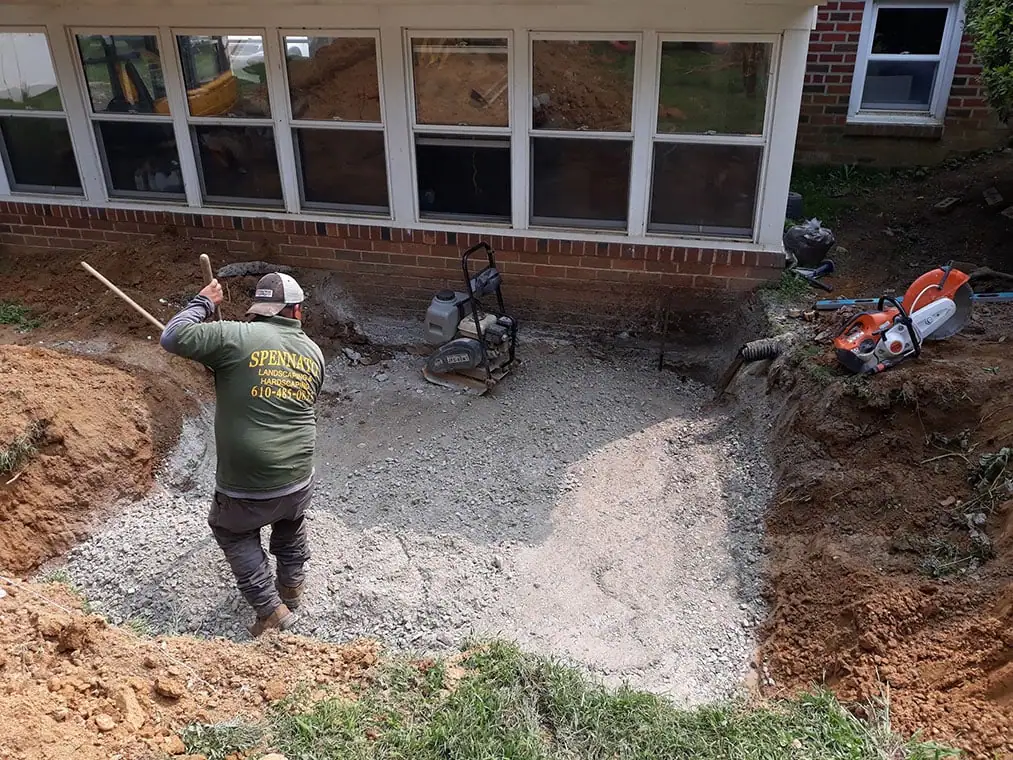
It starts with a site visit. Before any material gets discussed, Renato looks at your actual yard the dimensions, how water currently moves across it, where access points are, and what the space is realistically going to be used for. In Folcroft, where most backyards are bounded on two or three sides by adjacent structures or fencing, this step isn’t a formality. The layout of a Delmar Village row home backyard is fundamentally different from an open suburban lot, and the design has to reflect that from the start.
Once the plan is set and materials are chosen whether that’s interlocking pavers, Pennsylvania Bluestone, flagstone, or concrete our crew handles excavation and base preparation first. This is where the real work happens. A minimum five-inch compacted aggregate base, graded to move water away from your foundation, is what separates a patio that lasts 30 years from one that starts settling after the second winter. We can also walk you through what Folcroft Borough may require in terms of permits for your specific project ground-level installations typically have a different threshold than raised or attached structures, and knowing that upfront saves time.
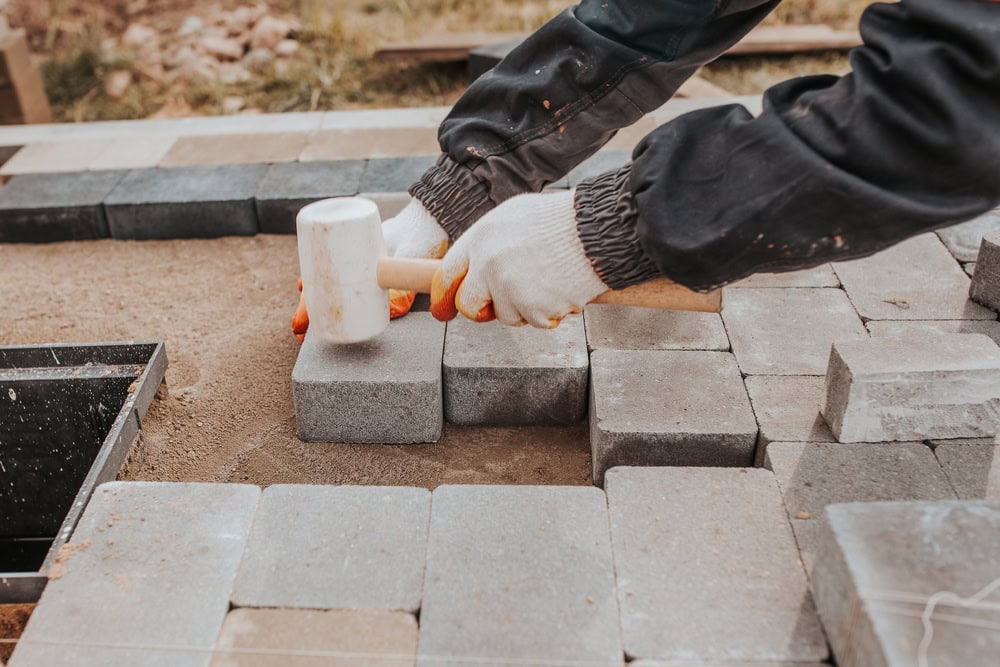
Installation follows, then final cleanup and a walkthrough with you before the crew leaves. The timeline is set before the project starts, and it’s held to. No open-ended “we’ll be done when we’re done.”
Ready to get started?
We install patios in three primary materials, and the right choice depends on your home’s architecture, how you plan to use the space, and what you’re trying to spend. For most Folcroft homeowners, that conversation is more straightforward than it sounds.
Interlocking concrete pavers are the most popular choice for a reason. They handle Delaware County freeze-thaw cycles better than poured concrete, they’re easier to repair if one section ever shifts, and they offer the best long-term ROI especially relevant in a market like Folcroft where median home values sit around $230,000 and every improvement dollar needs to work. Paver patio designs range from clean and simple to more detailed patterns depending on your preference. For the mid-century red-brick row homes of Delmar Village, a well-chosen paver color and layout can complement the existing architecture rather than fight it.
Flagstone and natural stone are a strong fit for Old Folcroft’s Dutch Colonial Revivals and early 20th-century twins, where the character of the home calls for something more organic. Pennsylvania Bluestone in particular pairs well with the older brick and stone construction common in that part of the borough. Stamped or standard concrete is also available for homeowners who want a lower upfront cost and when it’s installed correctly with proper base work, it performs well. Pricing runs $15 to $50 per square foot depending on material and scope, with most Folcroft-sized projects landing between $3,500 and $12,000.

Most Folcroft backyards particularly in Delmar Village are narrow and bounded on multiple sides, which means the patio footprint is determined by the space you actually have, not a standard template. A 150 to 250 square foot patio is a realistic and functional range for most attached or semi-detached homes in the borough. That’s enough room for a table, a few chairs, and a grill without overwhelming the yard or crowding the access points.
The design matters as much as the size. In a compact Folcroft backyard, how you orient the patio, where you place the edge restraints, and how you handle the transition to any remaining lawn or garden area all affect how usable the finished space feels. A well-designed small patio in a Folcroft row home can be just as functional as a much larger one the goal is to make the space work for how you actually use it, not to fill every square foot just because you can.
For southeastern Pennsylvania, pavers hold up better over time and the reason comes down to how they respond to freeze-thaw cycles. Poured concrete expands and contracts as one solid unit, which means when the ground shifts underneath it, the slab cracks. Pavers are individual units set in a flexible system, so when the ground moves, individual pieces can be reset rather than requiring a full replacement.
In Folcroft specifically, where homes near Darby Creek and Muckinipattis Creek sit on soil that holds moisture longer, the ground movement during freeze cycles is more pronounced. That makes the flexibility of a paver system a practical advantage, not just a preference. Pavers also return 30 to 50 percent more value at resale compared to plain concrete, which matters in a market where you want every improvement to contribute to your home’s equity. That said, concrete is a legitimate option if budget is the priority as long as the base work is done correctly.
The honest answer is that it depends on what’s underneath the surface, not just what you can see on top. A few cracked pavers or a minor settled section can often be repaired by pulling up the affected area, correcting the base, and reinstalling. That’s a straightforward fix. But if you’re seeing widespread cracking across a poured concrete slab, consistent low spots where water pools, or a surface that’s been patched multiple times without holding, those are signs that the base itself has failed and patching the surface again won’t solve it.
For Folcroft homes built in the 1920s through 1950s, a lot of the existing concrete slabs have simply reached the end of their useful life. Sixty or seventy years of Pennsylvania winters is a long run for any outdoor surface. If your slab is in that category, replacing it with a properly installed paver or flagstone patio is almost always the better investment compared to continued repairs on a foundation that’s already compromised.
Permit requirements in Folcroft depend on the scope and type of project. Ground-level paver and flagstone patios typically fall below the threshold that triggers a building permit in most Pennsylvania boroughs, but any raised structure, retaining wall above a certain height, or structure attached to the home can change that. The specifics are determined by Folcroft Borough, and the borough office is the right place to confirm what applies to your particular project.
The practical advice here is not to guess. We’re familiar with how permit requirements work across Delaware County boroughs, including Folcroft, and can help you understand what your project is likely to require before anything gets started. Getting that question answered upfront takes about five minutes and saves a lot of potential headaches later. It’s one of those things an experienced local contractor handles as a matter of course not something you should have to figure out on your own.
April through October is the primary installation window in southeastern Pennsylvania, with late spring and early fall being the most practical windows for most homeowners. The ground needs to be workable for excavation and base compaction, and the finished patio benefits from time to settle before the first hard freeze of the season. Installations completed by mid-October give the base adequate time to cure before winter sets in.
The planning season, though, runs earlier than most people expect. Contractor schedules in Delaware County fill up quickly once spring arrives, and homeowners who start the conversation in January or February tend to get their preferred timing. If your concrete slab looked rough after this past winter and a lot of them do in Folcroft, where older slabs have been through decades of freeze cycles early spring is when that damage is most visible and when the motivation to replace it is highest. Getting on a contractor’s schedule before the rush is the simplest way to make sure your project happens on your timeline.
Our pricing runs $15 to $50 per square foot depending on the material pavers, flagstone, or concrete and the complexity of the project. For a typical Folcroft backyard, where the patio footprint is often in the 150 to 300 square foot range, most projects land between $3,500 and $12,000. The lower end of that range reflects simpler concrete or basic paver installations; the upper end reflects natural stone, more detailed layouts, or projects with added elements like steps or edging.
What that investment returns matters too. Professionally installed patios recover more than 80 percent of their cost at resale on average, and paver patios specifically outperform plain concrete in long-term ROI. In a Folcroft market where the median home value is around $230,000, a well-built patio is one of the more efficient ways to add daily livability now and measurable equity later. We publish this pricing range openly because the goal is for you to know what you’re looking at before you ever pick up the phone not after a two-hour sales visit.
Useful Links