

Hear from Our Customers
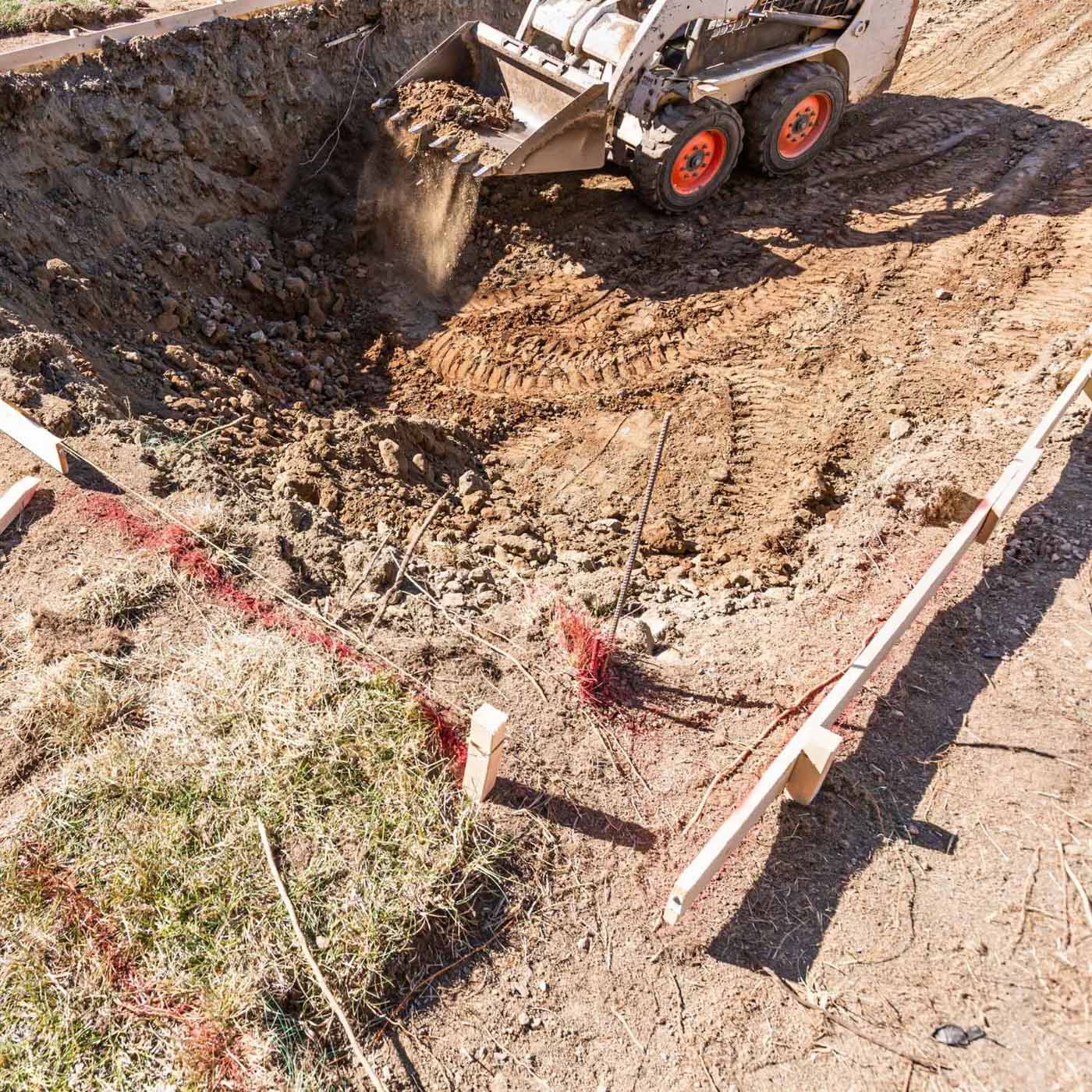
When excavation is done right in Bethel Township, you stop fighting your own yard. The low spots that flood every spring stop collecting water. The sloped backyard that was never quite usable becomes the space you actually wanted when you bought the house. That’s not a small thing it changes how you live on the property.
Bethel’s clay soils are the real variable most homeowners don’t think about until something goes wrong. Clay holds water, shifts with the seasons, and moves in ways that sandy or loamy soil doesn’t. If the grade isn’t planned with that in mind with proper slope away from the foundation and drainage layers built in you’ll be dealing with the consequences for years. The work has to account for how this specific ground behaves, not just how it looks on the day the crew leaves.
And because most of the homes in subdivisions like Smithfield Estates, Chartwell, and Northbrook were built in the 1980s and ’90s, a lot of the original grading and drainage infrastructure is now 30 to 40 years old. It wasn’t built to last forever. If you’re starting to see water pooling near your foundation, retaining walls shifting, or drainage that clearly isn’t working the way it once did, that’s a maintenance cycle catching up.
We’re based in Aston, PA which puts us directly next door to Bethel Township. That’s not a coincidence. We’ve been working in Delaware County long enough to know the difference between a Bethel cul-de-sac lot and a flat suburban parcel, and we plan every project accordingly.
Renato Spennato is personally involved in the work not in a “the owner is available by phone” way, but in the way that reviewers notice and name him specifically. That kind of accountability doesn’t come from a regional dispatch center. It comes from someone who’s invested in the outcome because his name is on it.
BuildZoom ranks us in the top 11% of more than 125,000 licensed Pennsylvania contractors. That’s a third-party number you can verify before you ever pick up the phone. We’re not asking you to take our word for it we’re asking you to check.

It starts with a site visit. Before any equipment is on your property, we look at the lot, assess the grade, and understand what the ground is doing where water moves, where it sits, and what the soil composition is telling us. In Bethel Township, that assessment almost always factors in clay content and the drainage slope relative to your foundation. That’s not optional it’s the part that determines whether the finished grade holds up or causes problems two years from now.
From there, we handle the permit side. Bethel Township’s Building and Code Department requires specific inspection checkpoints before backfilling can proceed exterior perimeter subsoil drains need to be in place and approved before the project can move forward. If you’ve never navigated that process, it can stall a project fast. We know the sequence, we coordinate directly with the township, and we keep things moving so you’re not chasing down inspectors on your own time.
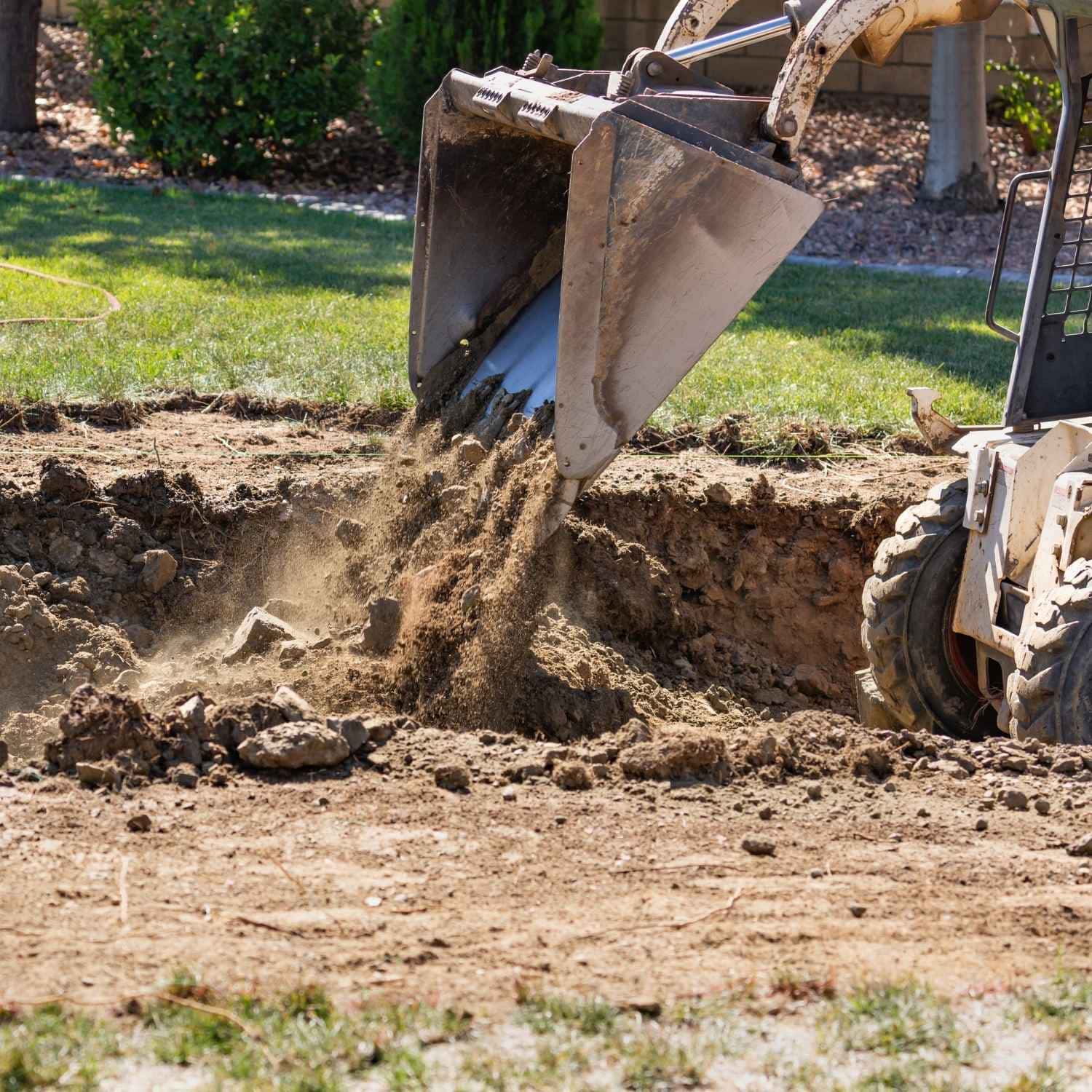
Once the work is underway, you’ll know what’s happening each day. No guessing, no silence, no showing up to find the crew gone with no explanation. When the excavation is complete, the grade is finished to slope, drainage is functional, and if you’re moving into a hardscape or outdoor living phase patio, retaining wall, outdoor kitchen we continue the work without a handoff to a second contractor. One crew, beginning to end.
Ready to get started?
Bethel Township sits at the southwestern edge of Delaware County, right on the Pennsylvania-Delaware state line, and the terrain here reflects that geography moderately sloped ground, clay-dominant soil, and lots that were carved out of agricultural land before subdivisions like Northbrook and Chartwell went in. The excavation work we do here is planned around those conditions, not around a generic process that gets copy-pasted from one job to the next.
On a typical Bethel residential excavation, that means grading for proper drainage slope away from the home, installing appropriate drainage layers given the clay soil’s poor natural permeability, and finishing to a grade that will hold up through the Delaware Valley’s wet springs and summer storm activity. Bethel Township is also an MS4 municipality under the Pennsylvania DEP, which means stormwater runoff from disturbed land is subject to compliance requirements. We build that into the work you’re not left to figure out whether your finished grade meets the township’s stormwater standards.
Whether you’re preparing a site for a new patio, correcting decades of drainage failure on a 1990s colonial, or leveling a large cul-de-sac backyard that was never properly graded to begin with, the scope gets matched to what your specific property actually needs. And if the project extends into hardscape retaining walls, paved surfaces, outdoor living you don’t need to bring in a second contractor. That’s already in our wheelhouse.
In most cases, yes and the specifics matter. Bethel Township operates under the Pennsylvania Uniform Construction Code, and any work that involves grading, foundation preparation, or significant land disturbance will typically require a permit through the Bethel Township Building and Code Department at 1092 Bethel Road in Garnet Valley. Beyond the permit itself, there’s a specific inspection checkpoint that catches a lot of homeowners off guard: before any backfilling can happen, exterior perimeter subsoil drains must be in place and approved by the township inspector. If you backfill before that inspection is cleared, you’re looking at a potential remediation order.
There’s also the stormwater layer. Because Bethel Township is an MS4 permittee under the Pennsylvania DEP and the Federal Clean Water Act, grading work that alters drainage patterns on your property has to comply with the township’s stormwater management program. That’s not something most homeowners are thinking about when they start planning a yard project, but it’s something a contractor working in this township should know before they touch the ground.
Residential excavation in the Philadelphia suburbs typically runs between $1,658 and $6,709 for a standard project, with the average landing around $3,975. In the Delaware County and Bethel Township market specifically, you’re working with a regional cost multiplier that runs 15 to 25% above rural Pennsylvania rates so budgeting toward the middle to upper end of that range is realistic for most Bethel projects.
What moves the number is scope and soil. Bethel’s clay-heavy ground is denser and harder to work than sandy or loamy soil, which affects machine time and labor. Lot size matters too a large, irregular cul-de-sac backyard in Smithfield Estates or Northbrook involves more square footage and more complex grading than a small flat parcel. Foundation excavation for a new structure typically runs $5,000 to $12,000. Backyard grading and leveling projects generally fall between $1,000 and $5,000 depending on the extent of the work. The best way to get an accurate number is a site visit, where we can actually look at your grade and tell you what it’s going to take.
Excavation is the act of removing earth digging down to create space for a foundation, pool, drainage system, or any below-grade structure. Grading is the process of reshaping the surface of the land to achieve a specific slope or elevation typically to direct water away from a structure, create a level surface, or prepare the ground for hardscape or landscaping. They’re related but not the same, and whether you need one or both depends on what you’re trying to accomplish.
For most Bethel Township homeowners, the answer is both. If you’re starting from a sloped backyard that needs to become usable outdoor living space, you’ll excavate to remove material and grade to create the finished surface. If you’re dealing with drainage failure on an aging 1980s or ’90s colonial which is one of the most common calls we get in this area you may need targeted excavation to access and correct the drainage infrastructure, followed by regrading to restore proper slope. In Bethel’s clay soil environment, getting the grade right isn’t cosmetic. It’s what keeps water moving away from your foundation instead of toward it.
The most obvious sign is standing water spots in your yard that stay wet for days after a rainstorm, particularly in the spring when Delaware Valley rainfall is heaviest and the ground is already saturated from winter. If you’re seeing that pattern in your Bethel Township yard, the grade is almost certainly not directing water away from the low points the way it should be.
Other signs are less obvious but just as telling. Soggy soil along your foundation line, water stains in a basement or crawl space, retaining walls that are leaning or showing signs of pressure from behind, and erosion channels forming in the lawn after heavy rain all of these point to a drainage issue that grading alone may not fix. In Bethel’s clay-dominant soil, water doesn’t percolate the way it does in more permeable ground. When the grade isn’t working, the water has nowhere to go, and it will find the path of least resistance which is often toward your foundation. An excavation and regrading project addresses the root cause rather than managing the symptom.
Fall is genuinely the best window for excavation and grading work in Bethel Township, and it’s underused by most homeowners. The ground is workable, the weather is moderate, crews are often more available than in the spring rush, and finishing the grade in the fall sets you up perfectly for spring hardscape or landscaping installation. If you’re planning a patio, retaining wall, or outdoor living project for next year, scheduling the excavation and grading now means you’re not waiting in line in March when everyone else is calling at once.
Spring is the peak demand season which means booking windows fill fast and timelines stretch. If you’re dealing with an active drainage problem that’s causing issues right now, spring is obviously when the urgency hits, but it’s also when you’re most likely to wait. Summer is steady and workable, though heat and humidity slow some of the finishing work. Winter is the slowest season, and frozen ground increases excavation costs but if you’re flexible, off-season scheduling sometimes comes with better availability. The short answer: if you’re planning ahead, fall. If you’re reacting to a problem, call now and get on the schedule before the spring rush hits.
Yes and honestly, that’s the better way to do it. The typical approach in this area is to hire an excavation-only contractor, have them move the dirt, and then coordinate a separate team for the retaining wall, patio, or outdoor kitchen. What that usually means in practice is a gap between phases, scheduling friction between two contractors who don’t communicate with each other, and a finished product where the hardscape doesn’t quite match what the excavation set up.
We handle the full scope excavation, grading, retaining walls, patios, and outdoor living installation with one team. For a Bethel Township homeowner investing in a premium outdoor project on a high-value property, that continuity isn’t just convenient. It’s the difference between a project that finishes cleanly and one that drags into the following season because two contractors are pointing at each other. The grade we set is the grade we build on, which means nothing gets lost in translation between the excavation phase and the finished outdoor space.
Useful Links