

Hear from Our Customers
When drainage works the way it should, you stop thinking about it. No more soggy patches killing your lawn every spring, no more mud tracking into the house after a rainstorm, no more watching water creep toward your foundation and wondering what’s happening underneath. That’s the goal and it’s a realistic one when the drainage system is designed around how your specific property actually moves water.
Bethel Township sits on a summit between the Delaware River watershed and the Brandywine Creek watershed. That ridge-top position means water on your property doesn’t always have one obvious direction to go. Depending on where your lot sits within the township’s topography, surface water can sheet in multiple directions and a drainage system that ignores that reality will just move the problem somewhere else on your property instead of solving it.
The Garnet Valley real estate market carries a median home price around $774,900. At that level, a drainage problem that goes unaddressed isn’t just an annoyance it’s a financial risk. Foundation crack repairs alone can run several thousand dollars per crack. A properly installed outdoor drainage system in Bethel, PA protects the value you’ve already built, and it does it for a fraction of what deferred damage costs to fix.
We’re based in Aston, PA the township directly north of Bethel. That’s not a coincidence, and it’s not just proximity talking. It means our crew working on your property has spent years in this exact corner of Delaware County, dealing with the same clay-influenced soils, the same freeze-thaw cycles, and the same drainage patterns that affect Bethel Township properties specifically.
Renato and our team have been doing this for over 15 years. No subcontractors, no handoffs the same people who assess your yard are the ones designing and installing your drainage system. That continuity matters when the job requires real problem-solving, not just a templated fix.
From the northern end of the township near Chelsea down through the Booth’s Corner area, we’ve worked across this landscape enough to know it doesn’t behave like a flat suburban lot. That local familiarity is built into every assessment we do.

The first step isn’t digging it’s reading your property. Before any French drain installation in Bethel, PA gets designed, we walk the site and map out where water is actually going. We look at your grading, identify low points, check how water moves off your roof and hardscape, and understand where it needs to end up. For Bethel Township properties, that site read is especially important because of the township’s ridge-top position surface flow here can be less predictable than on flatter terrain.
Once we understand the full picture, we design a system around it. That might be a French drain, a catch basin, a dry well, surface regrading, or some combination. The solution follows the diagnosis not the other way around. Bethel Township has its own Stormwater Management Ordinance and participates in the state’s MS4 program, which means drainage discharge needs to be handled correctly. We’re familiar with Delaware County’s regulatory environment and build that into how we design every system.
After installation, we don’t leave you with a torn-up yard. We restore disturbed areas, handle cleanup as part of the job, and walk you through what was done and why before we leave. The last thing a Garnet Valley homeowner needs is a drainage fix that creates a new landscaping problem.

Ready to get started?
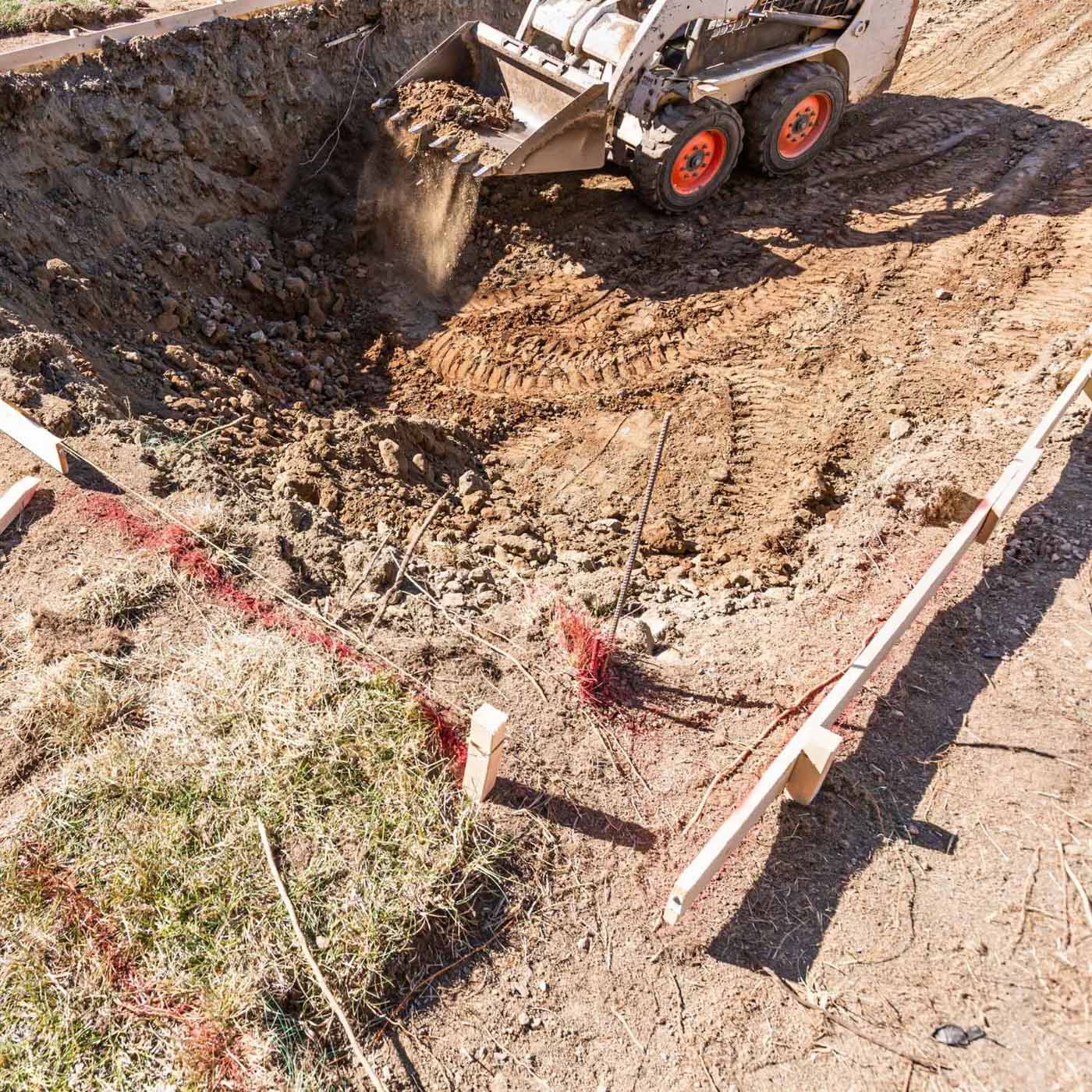
Most drainage problems in Bethel Township aren’t just about the drain they’re about the grade. If the ground around your home isn’t sloped correctly, no French drain in the world will fix standing water for good. That’s why every project starts with grading. We establish the right elevations and slopes first, then design the drainage infrastructure around them. It’s a more thorough process, but it’s the only one that actually holds up over time.
For yard drainage solutions in Bethel, Delaware County, the specific work depends on what your property needs. That could mean a French drain along a fence line where water pools after every storm, a catch basin in a low spot near your patio, a dry well to handle roof runoff that’s saturating the soil near your foundation, or a full regrading of a slope that’s been directing water toward the house for years. Naaman’s Creek rises within Bethel Township itself properties near Foulk Road and Naamans Creek Road sit in the upper watershed, which means surface water that isn’t managed on your lot flows directly into that system. Getting it right matters beyond your property line.
Pennsylvania’s freeze-thaw cycles are hard on outdoor installations. Every drainage system we install in Bethel uses materials and methods built for Delaware County winters not products designed for milder climates. A properly installed system here should last 30 to 40 years.
Bethel Township’s geography plays a bigger role in this than most homeowners realize. The township sits on a ridge between the Delaware River and Brandywine Creek watersheds, which means surface water on your property doesn’t always have one clear downhill path. Depending on your lot’s position within that terrain, water can sheet in multiple directions and collect in spots that seem random but are actually the result of how your grading was set up or how it’s shifted over time.
Suburban development along US 322 and Foulk Road has also increased impervious surface coverage throughout Bethel over the past few decades. As neighboring properties developed, natural infiltration decreased and surface runoff increased. A yard that drained fine 20 years ago may now be collecting water from a wider area than it used to. We identify the actual source of the problem not just where the water ends up, but where it’s coming from and why it’s getting stuck.
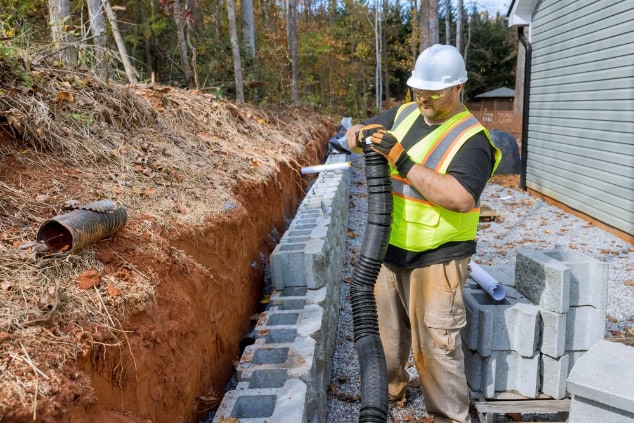
A French drain is a gravel-filled trench with a perforated pipe running through it, buried below the surface. Water seeps into the gravel, enters the pipe, and gets directed away from the problem area toward a safe discharge point like a dry well, a storm drain, or a daylight outlet at a lower elevation on your property. It’s one of the most effective tools for managing subsurface water and redirecting surface runoff that has nowhere else to go.
The key word in that description is “directed.” A French drain doesn’t just absorb water it moves it somewhere specific. That discharge point has to be chosen carefully, especially in Bethel Township where the stormwater ordinance and MS4 program govern how runoff is handled. A system that redirects water toward a neighboring property or discharges improperly into a local waterway like Naaman’s Creek creates a different problem than the one you started with. Designing the full system drain, pipe, and outlet is what separates a real fix from a temporary one.
It depends on the scope of the work. Bethel Township has its own Stormwater Management Ordinance and participates in Pennsylvania’s MS4 program under the Federal Clean Water Act. For smaller residential drainage projects a single French drain or a modest grading correction a permit may not be required. But for work that involves significant land disturbance, changes to impervious surface coverage, or a discharge that affects neighboring properties or local waterways, township review may be necessary.
Pennsylvania also requires a “Call 811 before you dig” notification for any excavation work, including French drain installation. That’s a standard step we handle as part of every project it’s not optional, and skipping it risks damaging buried utility lines. If your project is in a scope that requires township review, we can walk you through what that process looks like for Bethel Township specifically. The goal is a system that’s installed right, compliant with local requirements, and built to last not one that creates a code issue down the road.
Nationally, French drain installation averages between $5,000 and $9,250 for a typical residential project, with a broader range of roughly $500 to $18,000 depending on depth, length, soil conditions, and discharge complexity. Labor makes up the majority of that cost typically 80 to 85 percent which is why the contractor you choose matters more than almost any other variable. A cheaper installation that uses the wrong materials or skips proper grading will fail faster and cost more to fix than it would have cost to do it right the first time.
For Bethel Township homeowners in the Garnet Valley market, the investment case is straightforward. You’re protecting a home worth close to $774,900 on average. Foundation damage from unmanaged water, basement moisture issues, and landscape erosion are all significantly more expensive to remediate than a properly installed drainage system. The right question isn’t just “how much does this cost?” it’s “what does it cost if I don’t fix it?” Every project gets a site-specific estimate because there’s no honest way to quote drainage work without seeing the property first.
Delaware County winters put outdoor drainage systems through repeated freeze-thaw cycles that can crack pipes, heave gravel beds, and collapse poorly installed French drains within a few seasons. This is one of the most common reasons drainage systems fail prematurely in Pennsylvania not because the concept is wrong, but because the materials and installation methods weren’t built for this climate.
A properly installed French drain in Bethel, PA should last 30 to 40 years. Getting there requires using pipe and aggregate rated for freeze-thaw conditions, installing at the correct depth to stay below the frost line where needed, and making sure the system has adequate slope so water doesn’t sit in the pipe and freeze. It also means paying attention to the discharge point an outlet that ices over in January defeats the purpose of the whole system. We’ve been working through Delaware County winters for over 15 years, and every installation we do accounts for what this specific climate does to outdoor work over time.
In many cases, yes but the right answer depends on where the moisture is actually coming from. Foundation dampness in Bethel Township homes typically has one of two sources: surface water that isn’t being directed away from the house properly, or subsurface groundwater that’s migrating through the soil toward the foundation. Surface water issues are almost always fixable with a combination of regrading and a French drain or catch basin system positioned to intercept water before it reaches the foundation. Subsurface issues are more complex and may involve a curtain drain or interior drainage work depending on severity.
The starting point is always a site assessment. We look at the grading around your foundation, how water moves off your roof and hardscape, and whether there are any obvious collection points nearby that are feeding moisture toward the house. For older homes in the Garnet Valley area some of which were built when the surrounding land was more permeable drainage conditions may have changed significantly as Bethel Township developed. What wasn’t a problem when the house was built can become one as impervious cover increases around it. Understanding that history is part of diagnosing the problem correctly.
Useful Links