

Hear from Our Customers

When the water problem is actually solved not patched, not redirected onto your neighbor’s lawn your yard becomes usable again. No more soft spots swallowing your mower. No more mud tracked through the back door every time it rains. No more standing water sitting for three days after a storm while your grass slowly dies underneath it.
For Upper Chichester homeowners, especially in Boothwyn where more than half the homes were built before 1959, that kind of result takes more than a shovel and some gravel. Those homes were built before modern drainage standards existed at the residential level. The grading has settled over decades. The original drainage if there ever was any is long past its useful life. Delaware County’s clay soil doesn’t help either. It sheds water instead of absorbing it, which means every heavy rain is sending runoff straight toward the lowest point on your property. In a lot of cases, that’s your foundation.
There’s also something new to factor in. As of July 2025, Upper Chichester Township is billing residents a monthly stormwater fee through the Southeastern Pennsylvania Stormwater Authority. A qualifying drainage installation can reduce that fee by up to 15 percent. So fixing your yard drainage isn’t just about comfort anymore it’s a decision that protects your foundation, preserves your property value, and reduces what you owe the township every year.
We operate out of Aston, PA, which sits directly on Upper Chichester’s northern border. This isn’t a company with a Delaware County service area checkbox on our website this is a team that drives through Boothwyn regularly, knows the Conchester Highway corridor, and has spent 15-plus years working in the exact soil and slope conditions that Upper Chichester homeowners deal with.
Our work covers the full scope: grading, French drain installation, catch basins, dry wells, retaining walls, and hardscape all handled by the same crew. There’s no subcontracting the drainage to one company and the grading to another. One team, one point of contact, one crew that’s accountable for the finished result.
That matters in a township where the drainage problems are often layered a slope issue feeding a soil issue feeding a foundation issue. When the same people handle every part of the job, nothing falls through the cracks.

It starts with a site assessment not a sales call. Before anything is recommended, we take a real look at your property: where the water is coming from, where it’s going, what the natural flow patterns are, and what the slope is doing. In Upper Chichester, that assessment almost always turns up something the homeowner hadn’t considered, whether it’s a downspout directing water toward the foundation, a low spot collecting runoff from three different directions, or a grading issue that’s been slowly worsening since the house was built in the 1950s.
Once we understand the problem, we design the right solution for that specific property. Sometimes that’s a French drain running along a fence line. Sometimes it’s a catch basin tied into a discharge line. Sometimes the yard needs to be regraded before any drainage system will actually work. The scope depends on what’s happening on your property not on a standard package.
Upper Chichester Township’s Stormwater Management Ordinance and the newer SEPSA fee structure both factor into how we design drainage work here. If your installation qualifies for a stormwater fee credit under the township’s Credit and Appeals Manual, we build that into the plan from the start. After installation, we review the work to make sure water is moving the way it should and that it will keep moving through Pennsylvania’s freeze-thaw winters, not just during the summer rain season.
Ready to get started?
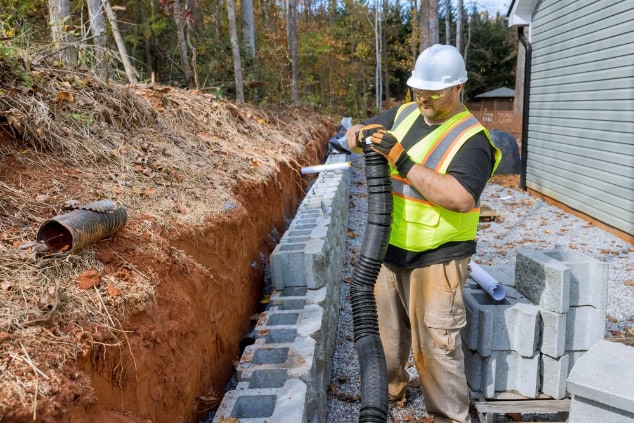
The drainage work we do for Upper Chichester properties covers the full range of what this township’s housing stock and soil conditions demand. French drain installation, surface grading corrections, catch basin placement, dry well systems, and downspout drainage extensions are all part of our toolkit and we combine them based on what your specific property needs, not based on what’s easiest to install.
Delaware County’s clay soil is a constant factor in every project we handle. Clay doesn’t drain it sheds. Any system that doesn’t account for that will fail faster than it should. The materials and methods we use are selected for Pennsylvania’s climate, including the freeze-thaw cycles that run from November through March and destroy improperly installed drainage infrastructure from the inside out.
For homeowners near the U.S. 322 Conchester Highway construction corridor where a $99.4 million PennDOT road-widening project is actively altering drainage flow paths along adjacent properties a fresh site assessment is especially worth doing now. Large-scale road construction changes runoff patterns in ways that aren’t always obvious until the next heavy rain hits. Whether the issue is a pre-existing problem that’s been deferred for years or something that’s gotten worse recently, we approach it the same way: find the actual source, design a solution that addresses it, and install it to last.
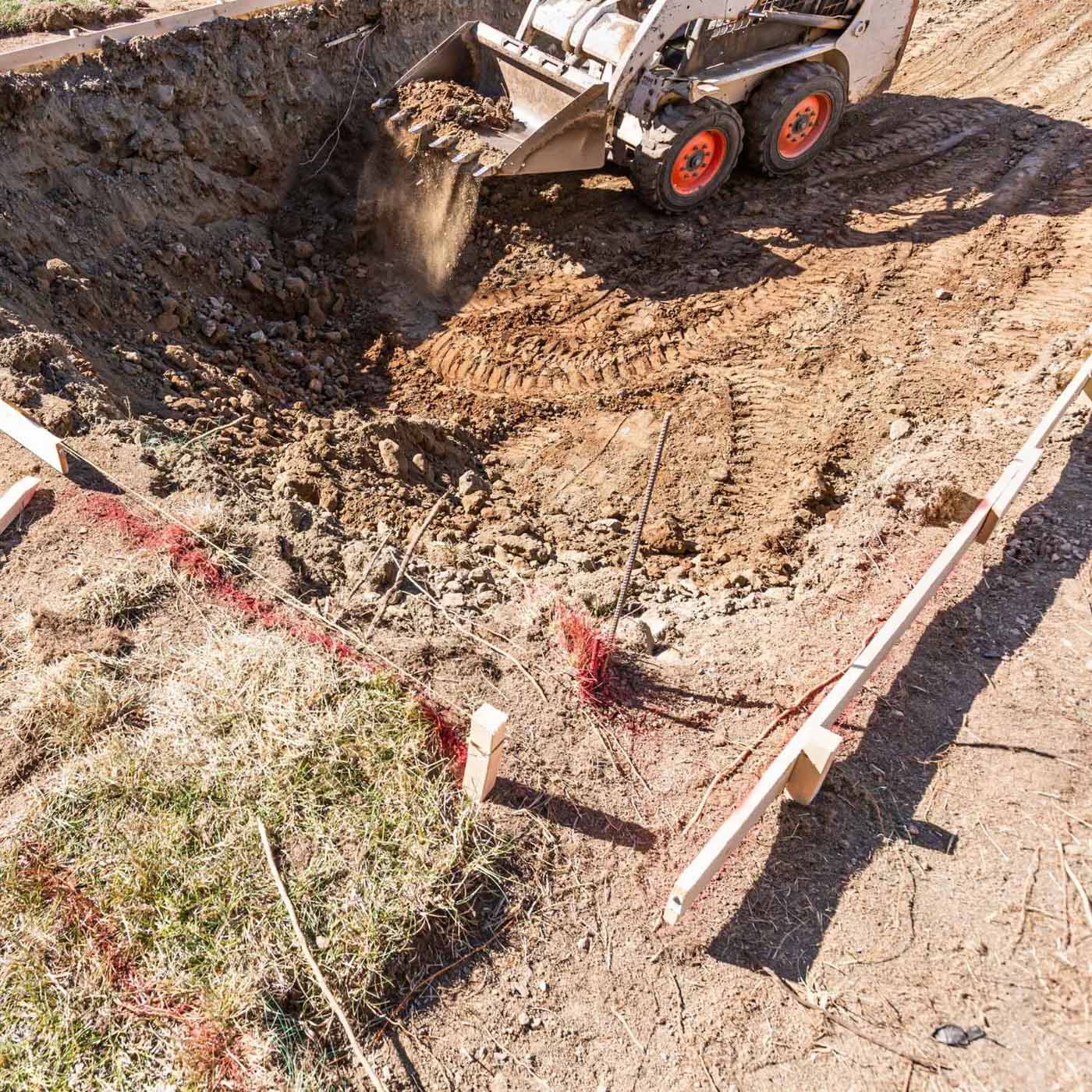
It depends on the scope of the work. Upper Chichester Township enforces the Pennsylvania Uniform Construction Code through a third-party agency, and any drainage work that meets the threshold for a land disturbance or significant site improvement may require a permit under the township’s Grading and Excavating ordinance or its 2022 Stormwater Management Ordinance. For most standard residential French drain installations, the permit requirement comes down to how much ground is being disturbed and whether the work affects stormwater runoff patterns beyond your property line.
Pennsylvania also requires 811 notification before any digging that’s not optional and it’s not something to skip. We handle that as part of our standard process. If your property falls within or near Upper Chichester’s Floodplain Conservation Overlay District, additional requirements apply, including design standards for how drainage facilities convey stormwater flow. Getting the permit question answered correctly before work starts protects you from compliance issues after the fact.
For a residential French drain installation in Upper Chichester, most projects fall somewhere between $5,000 and $9,500 depending on the length of the drain run, the depth required, site access, and whether grading corrections are needed at the same time. Labor makes up the majority of that cost typically 80 to 85 percent which is why quotes vary significantly between contractors.
The more useful comparison isn’t between drainage quotes. It’s between the cost of a properly installed drainage system and the cost of what happens if you don’t install one. Foundation repair after prolonged water intrusion runs well into five figures. Basement mold remediation is expensive and disruptive. And for Upper Chichester homeowners who are now paying a monthly stormwater fee to the Southeastern Pennsylvania Stormwater Authority, a qualifying drainage installation can reduce that annual fee obligation by up to 15 percent which adds up over time. The investment looks different when you account for what it’s actually protecting against.
The short answer is clay soil and inadequate drainage infrastructure and in Boothwyn specifically, those two things tend to compound each other. Delaware County’s clay-heavy soil has very low permeability. When it rains, the water doesn’t soak in it runs across the surface and collects in low spots. If your yard has any depression, even a subtle one, water will find it and sit there until it either evaporates or slowly infiltrates over several days.
In Boothwyn, where more than half the homes were built before 1959, the original grading on many properties has settled and shifted over decades. What was once a slight positive slope away from the house may now be nearly flat or even reversed, directing water toward the foundation instead of away from it. The drainage systems on these older homes gutters, downspouts, any subsurface drainage were designed for a different era of rainfall intensity and weren’t built to last 70 years. If your yard stays wet after every significant rain, the cause is almost always a combination of soil type, settled grading, and the absence of a functioning drainage system.
Yes, potentially. Upper Chichester Township created the Southeastern Pennsylvania Stormwater Authority in January 2025, and the first stormwater fee bills went out to residents in July 2025 at $11 per ERU per month. That fee is tied to impervious surface coverage on your property roofs, driveways, patios, and other hard surfaces that prevent water from soaking into the ground.
The township’s Credit and Appeals Manual allows homeowners to apply for a credit of up to 15 percent on their annual stormwater fee by installing approved volume control or peak rate control systems drainage systems designed to manage runoff on-site rather than sending it into the township’s stormwater infrastructure. Whether your specific installation qualifies depends on how it’s designed and whether it meets the township’s criteria. That’s something to confirm during the planning phase, before work begins, so the system can be designed to meet the credit requirements from the start rather than retrofitted afterward.
They solve different parts of the same problem, and in most cases you need both. Regrading corrects the slope of the surface so water flows away from your foundation and toward a defined discharge point instead of pooling in low spots or running toward your house. It’s a surface-level fix that changes where water goes when it hits the ground.
A French drain works below the surface. It’s a perforated pipe surrounded by gravel that intercepts water moving through the soil water that’s already below grade and heading toward your foundation or saturating your lawn from underneath. In Upper Chichester, where clay soil sheds surface water and older homes often have both grading issues and subsurface water problems, doing one without the other usually means the problem comes back. Regrading a yard without installing a drainage system to handle subsurface water is a partial fix. Installing a French drain without correcting a slope that’s directing runoff to the wrong place is also a partial fix. When both are done together by the same crew, you get a complete solution.
If the water is getting within 10 feet of your foundation on a regular basis, it’s serious enough. Hydrostatic pressure from soil that stays saturated near a foundation wall is one of the primary causes of basement seepage, wall cracking, and long-term structural damage and it builds slowly enough that a lot of homeowners don’t connect the wet basement to the soggy yard until the damage is already done.
Beyond foundation risk, standing water that returns every spring, a lawn that never fully dries out, erosion along a slope or retaining wall, or water pooling near a downspout after every rain are all signs that the drainage system or the absence of one isn’t keeping up with what your property is dealing with. In Upper Chichester, where the township’s own public works department has documented that its stormwater infrastructure wasn’t designed to handle current runoff volumes, private properties carry more of the water management burden than they would in a township with a newer system. If your yard is showing any of these signs consistently, a site assessment is the right starting point it costs nothing to understand what’s actually happening before committing to any work.
Useful Links
Other Services we provide in Upper Chichester