
Hear from Our Customers

Most driveways in Upper Chichester, Boothwyn, Ogden, and Twin Oaks weren’t installed yesterday. The homes in these neighborhoods were largely built out through the mid-20th century, and a lot of those original driveways or even the replacements from the 1990s are at the point where small problems are becoming expensive ones. A crack that looked minor last spring is a pothole by April. A pothole that goes unaddressed becomes a base failure that costs three times as much to fix.
What a properly installed asphalt driveway actually gives you is time. Time before you’re back to square one, writing another check to another contractor. Upper Chichester sees 25 to 35 freeze-thaw cycles every year water gets into every unsealed crack, freezes, expands, and opens the crack wider. That cycle doesn’t stop. But the right base preparation, proper drainage pitch, and a quality surface course slow it down dramatically.
There’s also the road salt factor. Properties along Conchester Highway and Market Street deal with significant runoff every winter. Salt accelerates asphalt oxidation, and if your driveway isn’t sealed, that surface is breaking down faster than it should. A sealcoat applied every two to three years creates a barrier that adds years sometimes decades to the life of the surface. That’s not a sales pitch. That’s just the math.
We’re based in Aston which shares a border directly with Upper Chichester Township. That’s not a coincidence worth ignoring. Our crews driving to your property in Boothwyn or Twin Oaks are passing through the same roads you drive every day, including the ongoing PennDOT construction on Conchester Highway that’s been reshaping traffic patterns across the township. We know this area because we work in it constantly.
What sets us apart in this market isn’t just location it’s scope. Most paving contractors in Delaware County do one thing. We handle asphalt paving, sealcoating, drainage correction, retaining walls, and full hardscaping as one integrated team. If the real problem behind your deteriorating driveway is a drainage issue or a shifting wall, that gets addressed in the same project not handed off to someone else or left for you to figure out later.
Our commitment is simple: show up when promised, do exactly what was discussed, and still be reachable when you have a question six months from now.
It starts with an honest assessment of what you’re working with. Before any asphalt gets laid, we evaluate the existing surface for base integrity, drainage patterns, and any underlying issues like water infiltration points or grading problems that would undermine a new surface within a few years. If there’s a drainage problem, that conversation happens upfront, not after the invoice is signed.
Once the scope is clear, the old surface comes out and the subbase gets graded and compacted. This is the step most corners get cut on, and it’s the one that determines how long your driveway actually lasts. Drainage pitch gets set here get it wrong and water pools under the surface, where freeze-thaw damage does its worst work from below. The base course goes down next, followed by the hot mix asphalt surface course, laid and compacted with a roller.
Upper Chichester Township requires a building permit for driveway construction that’s part of the process, not an optional add-on. Pulling the permit protects your investment and keeps the work on record, which matters when you go to sell the property. After the job is done, your new driveway needs 24 to 48 hours before vehicle use and a full year before the first sealcoat. We walk you through all of that before the crew leaves.
Ready to get started?
A new asphalt driveway is the starting point, not the finish line. What we deliver in Upper Chichester covers the full picture installation, drainage correction where needed, and an ongoing sealcoating plan that keeps the surface protected through Pennsylvania winters. For homeowners in Ogden or Boothwyn dealing with sloped lots or properties near Marcus Hook Creek’s drainage corridor, that means a grading conversation is part of every project, not an afterthought.
Sealcoating is available as a standalone service for driveways that are structurally sound but showing surface wear. The right window for sealcoating in southeastern Pennsylvania is late spring through early fall, when temperatures are consistently above 50 degrees once you’re into the colder months, the product won’t cure properly. If your driveway missed this year’s window, booking early for the spring season is the smarter move than waiting another full year.
For homeowners who need more than just paving a retaining wall that’s started to shift, a patio that’s settling, drainage that’s been a recurring problem we handle all of it under one project. That means one point of contact, one timeline, and no finger-pointing between separate contractors when something needs attention. Costs for asphalt driveway installation in this area typically run between $3,100 and $7,500 depending on size, condition of the existing base, and scope of any drainage work involved.
Yes Upper Chichester Township requires a building permit for driveway construction. This isn’t a technicality you can skip without consequence. The township enforces the Pennsylvania Uniform Construction Code through a third-party inspection agency, which means permitted work gets reviewed and documented. That documentation matters when you sell your home, since Upper Chichester requires a Certificate of Occupancy for property sales and unpermitted driveway work can create real complications in that process.
Any contractor who suggests skipping the permit to save time or money is doing you a disservice. The permit exists to protect you, not to slow the project down. We pull the required permits as a standard part of every driveway project in Upper Chichester it’s built into the process, not treated as an optional step. Your township code also specifies a minimum driveway width of 10 feet and a two-foot setback from any lot line, which gets factored into the project design from the start.
For most residential driveways in Upper Chichester, you’re looking at somewhere between $3,100 and $7,500 installed which works out to roughly $7 to $15 per square foot depending on the size of the surface, the condition of the existing base, and whether any drainage or grading work is needed alongside the paving. A straightforward replacement on a flat lot with a solid subbase sits at the lower end. A driveway on a sloped property near a drainage corridor, or one where the base has deteriorated significantly, will run higher because there’s more work involved in doing it right.
The number that often gets overlooked in these conversations is the long-term cost of not acting. A driveway that’s been deteriorating through Delaware County winters for years doesn’t get cheaper to fix the longer you wait. Sealcoating a structurally sound driveway every two to three years costs $150 to $300 per application. A full replacement, when the base has failed, can run $5,000 to $12,000 or more. The math on regular maintenance versus deferred replacement is pretty straightforward.
Every two to three years is the right rhythm for most driveways in this region. Upper Chichester’s climate is particularly hard on asphalt 25 to 35 freeze-thaw cycles annually means moisture is constantly working its way into any unsealed surface, and road salt runoff from Conchester Highway and Market Street accelerates the oxidation process on top of that. Sealcoating creates a barrier against both, and when it’s applied on a consistent schedule, it can extend the life of a driveway by up to 20 years.
The timing within the year matters too. Sealcoating requires temperatures consistently above 50 degrees Fahrenheit to cure properly which in southeastern Pennsylvania means your window is roughly late April through October. If a contractor is offering to sealcoat your driveway in November or December, that’s a problem. The product won’t bond correctly in cold temperatures, and you’ll end up with a surface that peels or washes away before winter is over. One more thing: if your driveway was just installed, wait a full year before the first sealcoat. New asphalt needs time to fully cure and off-gas before it’s ready to be sealed.
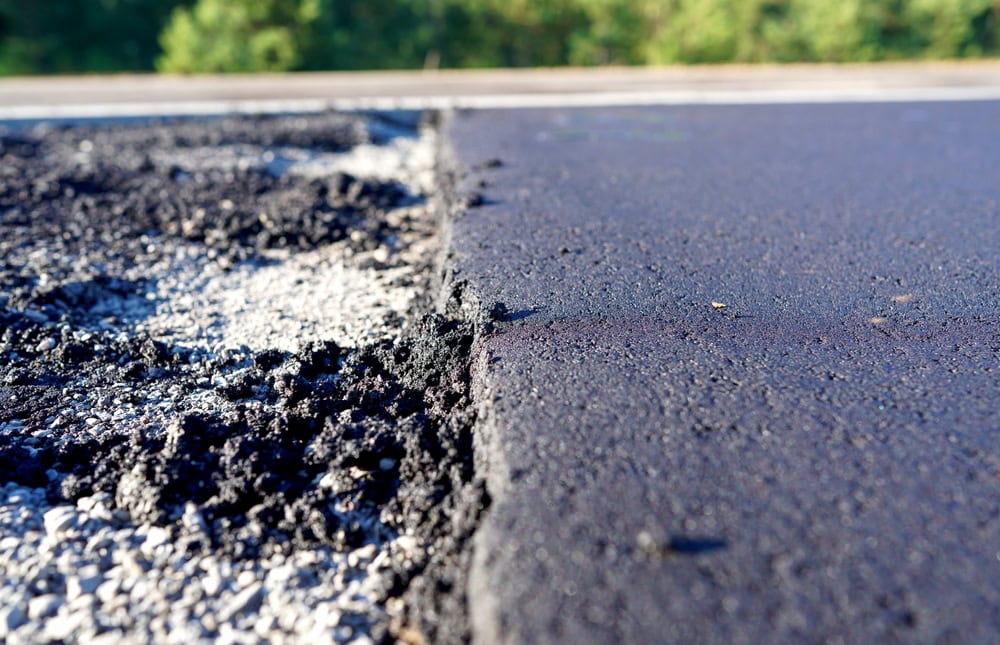
The honest answer depends on what’s happening below the surface. If your driveway has cracking, minor potholes, or surface wear but the subbase is still structurally sound, crack filling and sealcoating can extend its life meaningfully sometimes by several more years. That’s a repair situation, and it’s the right call when the foundation underneath is still doing its job.
If the base has failed which shows up as large alligator cracking patterns, sections that flex or sink under vehicle weight, or areas where water is pooling and not draining patching the surface is a short-term fix that won’t hold. You’re covering a structural problem with a cosmetic solution, and it will fail again, usually within a season or two. In Upper Chichester’s climate, where freeze-thaw cycles stress the subbase every winter, base failures are common in driveways that are 25 years or older, especially if they haven’t been maintained. A full assessment before any work starts is the only way to know which situation you’re actually in and that assessment should be honest, not designed to push you toward the more expensive option.
Pennsylvania requires any contractor performing $5,000 or more in annual residential work to register with the Attorney General’s Office under the Home Improvement Consumer Protection Act. You can verify a contractor’s registration directly through the PA AG’s website before signing anything. Registration requires proof of insurance and compliant contracts it’s a real accountability mechanism, not just a formality.
Beyond registration, a few things separate legitimate contractors from the ones you want to avoid. A real contractor provides a written estimate and a contract that spells out scope, materials, timeline, and payment terms before any work begins. We pull permits when the job requires them which in Upper Chichester means every driveway installation. We don’t show up at your door offering to pave your driveway with “leftover asphalt” from a nearby job. That’s a documented scam pattern the BBB has flagged throughout the Philadelphia metro, and it’s worth knowing about if you live along a busy corridor like Conchester Highway or Market Street. If someone knocks on your door with that pitch, the right answer is to close the door.
For most homeowners in Upper Chichester, asphalt is the more practical choice and the reason comes down to how each material handles Pennsylvania’s freeze-thaw cycles. Concrete is rigid. When the ground shifts through repeated freezing and thawing, concrete cracks and those cracks are expensive to repair properly. Asphalt has more flexibility, which means it absorbs ground movement better and is significantly easier and cheaper to patch or resurface when it does show wear.
Cost is the other factor. Concrete typically runs two to three times the price of asphalt per square foot installed. For a standard residential driveway in Boothwyn or Twin Oaks, that difference can be several thousand dollars upfront. Asphalt also heats up faster in winter, which helps with snow and ice management a practical benefit that concrete doesn’t offer. The tradeoff is that asphalt requires more regular maintenance: sealcoating every two to three years keeps it protected and extends its lifespan significantly. If you’re committed to that maintenance schedule, asphalt delivers strong long-term value in this climate. If you want a lower-maintenance surface and have the budget for it, concrete is worth discussing but for most Upper Chichester properties, asphalt is the right answer.
Useful Links
Other Services we provide in Upper Chichester