
Hear from Our Customers
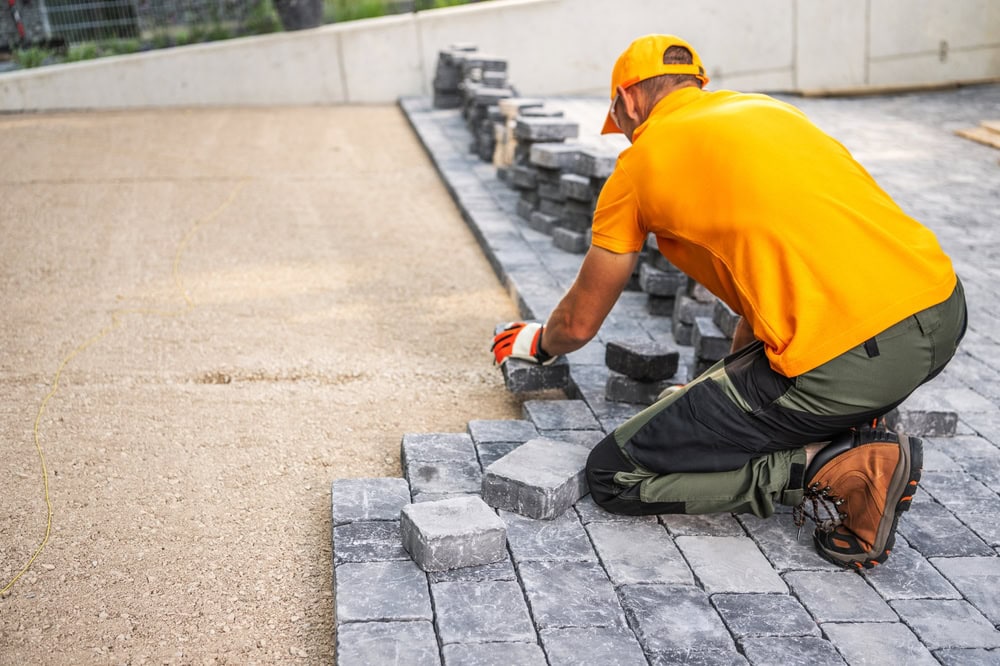
A patio that’s built right gives you something most homeowners in Upper Chichester haven’t had before outdoor space you don’t have to think about. No heaving pavers after a hard winter. No drainage pooling against the house after a heavy rain. Just a clean, functional space that works the way you planned it.
The older housing stock in Upper Chichester the ranches, Cape Cods, and split-levels that define this part of Delaware County often came with original concrete slabs or brick layouts that are now cracking, settling, or just past their useful life. Replacing that with a properly installed paver patio or flagstone design doesn’t just look better. It adds real, measurable value to a home you’ve invested in for years.
And because southeastern Pennsylvania runs through dozens of freeze-thaw cycles every winter, the base depth and drainage design matter more here than in almost any other region. When that work is done correctly proper excavation, compacted gravel base, graded drainage your patio holds up year after year without you lifting a finger.
We operate out of Aston, PA which shares a border directly with Upper Chichester to the north. That proximity matters. It means our crew already knows this area the soil conditions, the older lot layouts, the mature trees that complicate excavation on streets where homes have been standing since the 1950s.
Renato Spennato has been doing this work in Upper Chichester and across Delaware County for over 15 years. This is an owner-operated business, which means there’s a real person accountable for every project not a regional company managing crews from a distance. When you call with a question six months after your patio is finished, you’re calling someone who’s still here.
It starts with a conversation about how you actually use your yard not a sales pitch. From there, you get a clear design concept and an itemized written estimate with real numbers. Our pricing runs $15–$50 per square foot depending on material, and most residential projects in Upper Chichester fall between $3,500 and $12,000. You know what you’re working with before anything is scheduled.
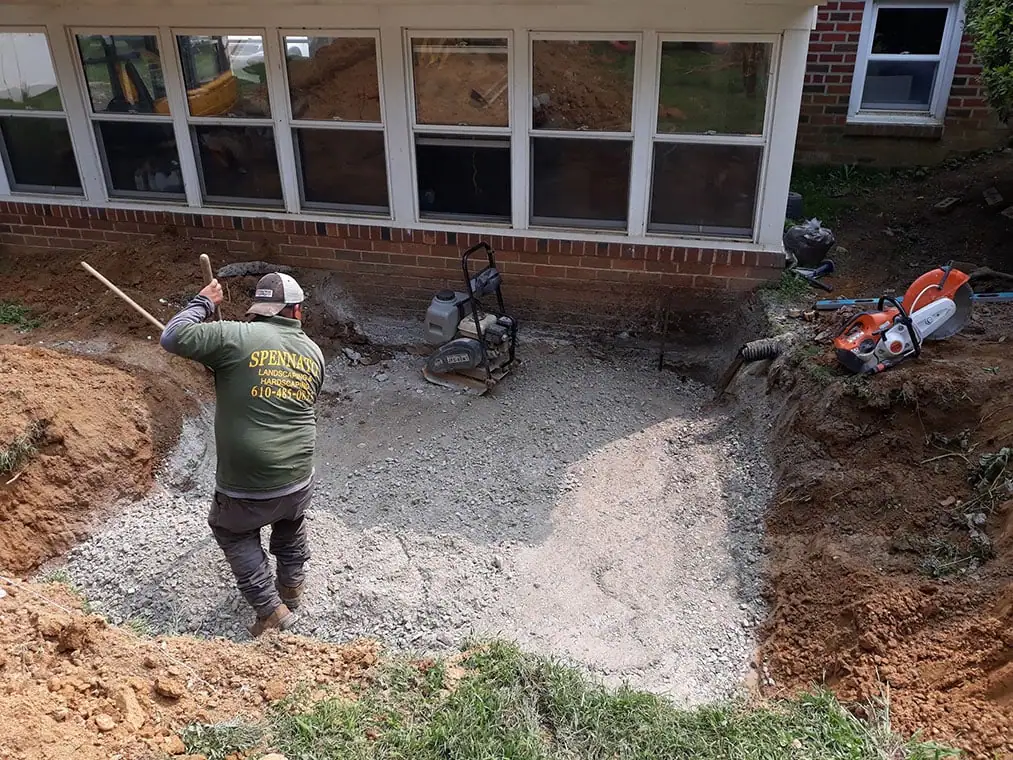
Once the project starts, the first priority is the base. In Delaware County’s clay-heavy soil, proper excavation goes 8–12 inches below grade, followed by compacted gravel and a graded drainage system that moves water away from the surface and your foundation. This is the work you can’t see when the job is done but it’s what determines whether your patio looks the same after five winters as it did on day one. One thing worth knowing: Upper Chichester Township requires a grading permit and a stormwater management plan for projects 750 square feet or larger. We handle the permitting process on your behalf.
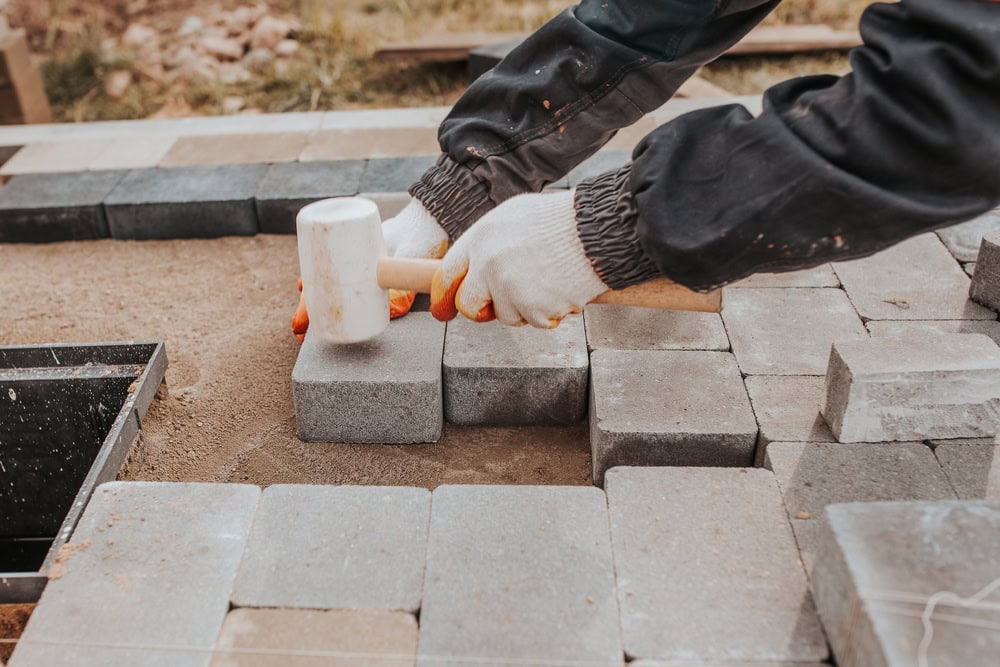
From there, it’s material installation, final grading, cleanup, and a walkthrough before the crew leaves. No disappearing act. No unfinished edges left for you to figure out.
Ready to get started?
Upper Chichester’s housing stock leans traditional ranches, colonials, Cape Cods and the right patio material should complement that, not fight it. Interlocking concrete pavers are the most popular choice in this area for good reason: they handle freeze-thaw cycles better than poured concrete, they’re repairable if a single paver ever shifts, and they come in enough colors and patterns to suit almost any backyard patio design. For homes with more character especially older Upper Chichester properties natural flagstone or Pennsylvania Bluestone brings a classic look that fits the architecture without trying too hard.
If budget is the priority, stamped or brushed concrete gives you more design flexibility than a plain slab at a lower material cost. It’s a solid option for smaller patios or homeowners who want a clean, finished look without the paver price point. We also offer covered patio structures, pergolas, and defined outdoor rooms for homeowners who want to extend the usable season which, in southeastern Pennsylvania, can make a real difference between April and November.
Whatever direction you go, the process is the same: proper base, proper drainage, proper installation. The surface material is a design choice. The foundation is non-negotiable.

For most standard residential patios in Upper Chichester, a permit isn’t required but there’s an important threshold to know about. Once a project reaches 750 square feet or more, the township requires a grading permit along with a stormwater management plan that’s signed and sealed by a licensed engineer. This applies to any project that involves significant grading changes or impervious surface at that scale.
If your patio is under that size, you’re typically in the clear without a permit. But if you’re planning a larger outdoor living space or if your yard has drainage considerations that require regrading it’s worth knowing upfront so there are no surprises mid-project. We’re familiar with Upper Chichester Township’s permitting process and can advise you on whether your specific project triggers that requirement. If it does, we handle the permit on your behalf so you’re not chasing paperwork.
Interlocking concrete pavers are generally the most durable option for southeastern Pennsylvania’s climate, and that’s not just a preference it’s a function of how the material handles freeze-thaw cycles. When water gets into a poured concrete slab and freezes, it expands and has nowhere to go. That’s how you get cracks. Pavers, by contrast, have joints that allow for minor movement without structural failure. If a paver ever does shift, you can lift and reset it without tearing out the whole surface.
That said, the material choice matters less than the base work underneath it. A paver patio on a shallow or poorly compacted base will still heave after a hard winter. Delaware County’s clay-heavy soil holds moisture, which is exactly what you don’t want sitting under a patio when temperatures drop. Proper excavation depth typically 8–12 inches and a compacted gravel base with graded drainage is what separates a patio that lasts 20 years from one that needs work after the third winter.
Most residential patio projects in Upper Chichester fall between $3,500 and $12,000, with pricing running $15–$50 per square foot depending on the material you choose. Concrete pavers sit in the mid-range. Natural flagstone and Pennsylvania Bluestone run higher. Stamped or brushed concrete is typically the most affordable entry point.
A few things affect where your project lands in that range: the size of the patio, how much excavation and grading is needed, whether there are mature trees or existing structures that complicate the work, and what material you select. Older Upper Chichester lots often have established landscaping that adds some complexity to the base preparation. The best way to get an accurate number is a site visit we provide written, itemized estimates so you know exactly what you’re paying for before any work begins.
A standard residential patio in the 200–400 square foot range typically takes two to four days of active work once the project is scheduled. That includes excavation, base preparation, material installation, and final cleanup. Larger or more complex projects those with retaining walls, covered structures, or significant grading can run longer.
The bigger timeline factor for most Upper Chichester homeowners is scheduling. Spring is the busiest season for patio work in Delaware County, and crews book up fast often by April. If you’re planning a patio for summer use, the best time to reach out is late fall or winter. That gives you first access to spring scheduling and time to finalize your design and material choices without feeling rushed. Fall installations are also a solid option cooler temperatures can actually benefit certain base materials during the settling process, and you’ll have the patio ready to go before the following spring.
The core difference comes down to durability over time and what happens when something goes wrong. A poured concrete patio is one continuous slab when it cracks, which it eventually will in Pennsylvania’s climate, the repair involves cutting out a section and patching it, and that patch rarely blends invisibly. A paver patio is made up of individual units, so if a paver shifts or a section settles, you can lift and reset just that area without disturbing the rest of the surface.
For the older Cape Cods and split-levels common in Upper Chichester, paver patios also tend to look more proportionate and finished they have a texture and visual weight that suits traditional home styles better than a plain concrete slab. Stamped concrete closes that gap somewhat on the aesthetic side, but it still carries the single-slab vulnerability. For most Upper Chichester homeowners who are planning to stay in their home long-term, pavers are the more practical investment both for durability and for the flexibility to repair without a full replacement.
This is one of the most common concerns homeowners bring up and for good reason. It’s not unusual for a contractor to be responsive and communicative right up until the final payment, and then difficult to reach when a question or issue comes up months later.
We’re based five minutes away in Aston. This isn’t a regional company managing projects from a distance it’s a local, owner-operated business whose next job in Upper Chichester often comes from a referral by the last customer. That proximity creates real accountability. If something comes up with your patio after the project is complete a drainage concern after a heavy rain, a paver that shifts you’re calling a named local contractor who is still here and still working in your community. The best way to evaluate this before you hire anyone is to ask for references from completed projects in the area and see how the contractor responds when you reach out.
Useful Links
Other Services we provide in Upper Chichester