

Hear from Our Customers
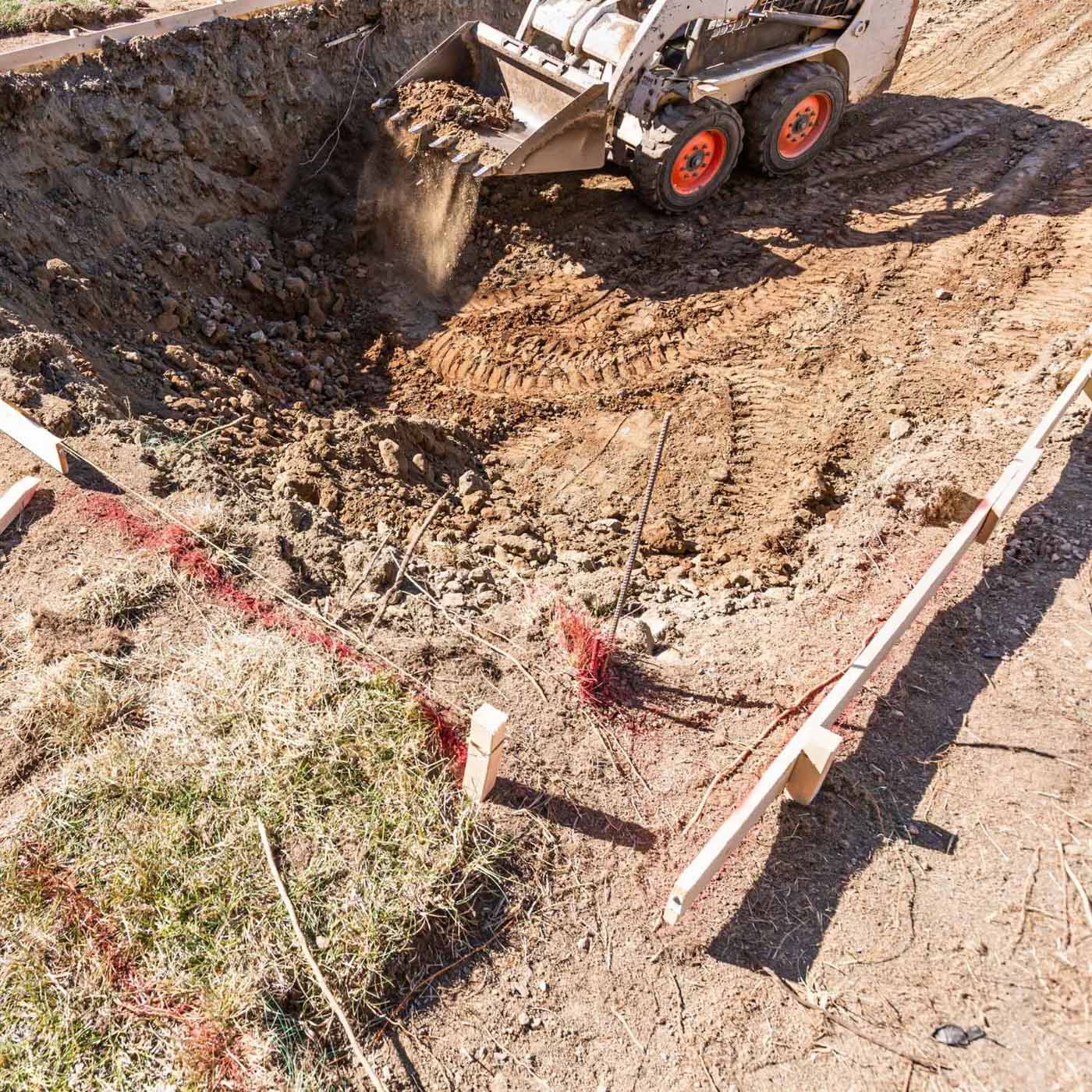
Most homeowners in Upland don’t call an excavation contractor because they want to they call because something is already wrong. Water pooling against the foundation. A yard that drains toward the house instead of away from it. A retaining wall that’s slowly losing the fight with gravity. These aren’t cosmetic problems. Left alone, they get expensive fast.
Upland’s housing stock is mostly early-to-mid 1900s construction built long before modern grading and drainage standards existed. Add in the clay-heavy soils that run through this part of Delaware County, and you’ve got a combination that holds water, shifts under load, and punishes any site work that wasn’t done right the first time. When the grading is done correctly, water moves away from your home, your foundation stays dry, and your outdoor space holds up through every freeze-thaw cycle this climate throws at it.
Chester Creek runs along Upland’s southern boundary, and its influence on drainage patterns throughout the borough is real. If your property sits anywhere near that corridor or even if it doesn’t proper slope, soil compaction, and drainage routing aren’t optional extras. They’re what separates a project that holds up from one that creates a new problem every spring.
We’re based in Aston a short drive from Upland and have been working on Delaware County properties long enough to know exactly how the soil behaves, where drainage problems tend to hide, and what it takes to execute on a tight residential lot without creating headaches for the neighbors next door.
What makes the difference here isn’t just the equipment. It’s that Renato Spennato is personally involved in every project. Not managing from an office actually on the work. Reviewers have said it directly: best contractor experience they’ve had as a homeowner, always on time or early. That’s a specific, documented track record, not a tagline.
We also hold a PA contractor license verified by the state and a BuildZoom score of 102 placing us in the top 11% of over 125,000 licensed Pennsylvania contractors. You can look that up yourself. And unlike excavation-only companies, we can take your Upland project from the first dig all the way through to a finished patio, retaining wall, or outdoor space no handoffs, no coordination gaps.

Every project starts with a site assessment. Before any equipment moves, our goal is to understand what’s actually happening on your property where water is going, what the existing grade looks like, what’s buried underground, and what the finished project needs to accomplish. In Upland, that assessment almost always includes a close look at drainage, because the combination of clay soil and aging lot grades means the problem is rarely just cosmetic.
Before any digging starts, Pennsylvania law requires calling 811 to have underground utilities marked. That’s a non-negotiable step, and we handle it as part of the process not something left for the homeowner to figure out. If your Upland project requires a permit through the Borough Building Inspector, we navigate that process upfront so there are no surprises mid-project.
Then the work begins excavation, grading, and compaction done in the right sequence, with the right equipment for the size of your lot. Upland’s dense residential layout means the machines doing the work need to fit the space without damaging neighboring structures or the borough’s infrastructure. Once the site work is complete, the ground is stabilized and ready whether the next step is a retaining wall, a patio foundation, or a finished outdoor living space that we build out from there.
Ready to get started?
Excavation in a borough like Upland isn’t the same job it is on a half-acre suburban lot in a newer development. The lots are small, the homes are old, and the margin for error is tight. Our excavation services in Upland cover the full range of what residential and renovation projects here actually require site preparation, land grading, drainage correction, retaining wall excavation, foundation work, and site prep for patios, additions, and outdoor living spaces.
Grading and excavation go together on almost every project. Moving dirt without accounting for drainage direction is how you trade one problem for another. Every grading project we do accounts for how water will move across the finished surface slope away from foundations, drainage pathways through the yard, and compaction that won’t settle and shift after the first heavy rain. For properties near the Chester Creek corridor, that planning goes a step further to account for the floodplain context and soil conditions specific to that part of Upland.
For homeowners who are renovating older Upland properties, our full-service capability means excavation is just the starting point. The same crew that grades your yard can build the retaining wall, install the patio foundation, and finish the outdoor space all under one scope of work, one schedule, and one person responsible for the outcome.
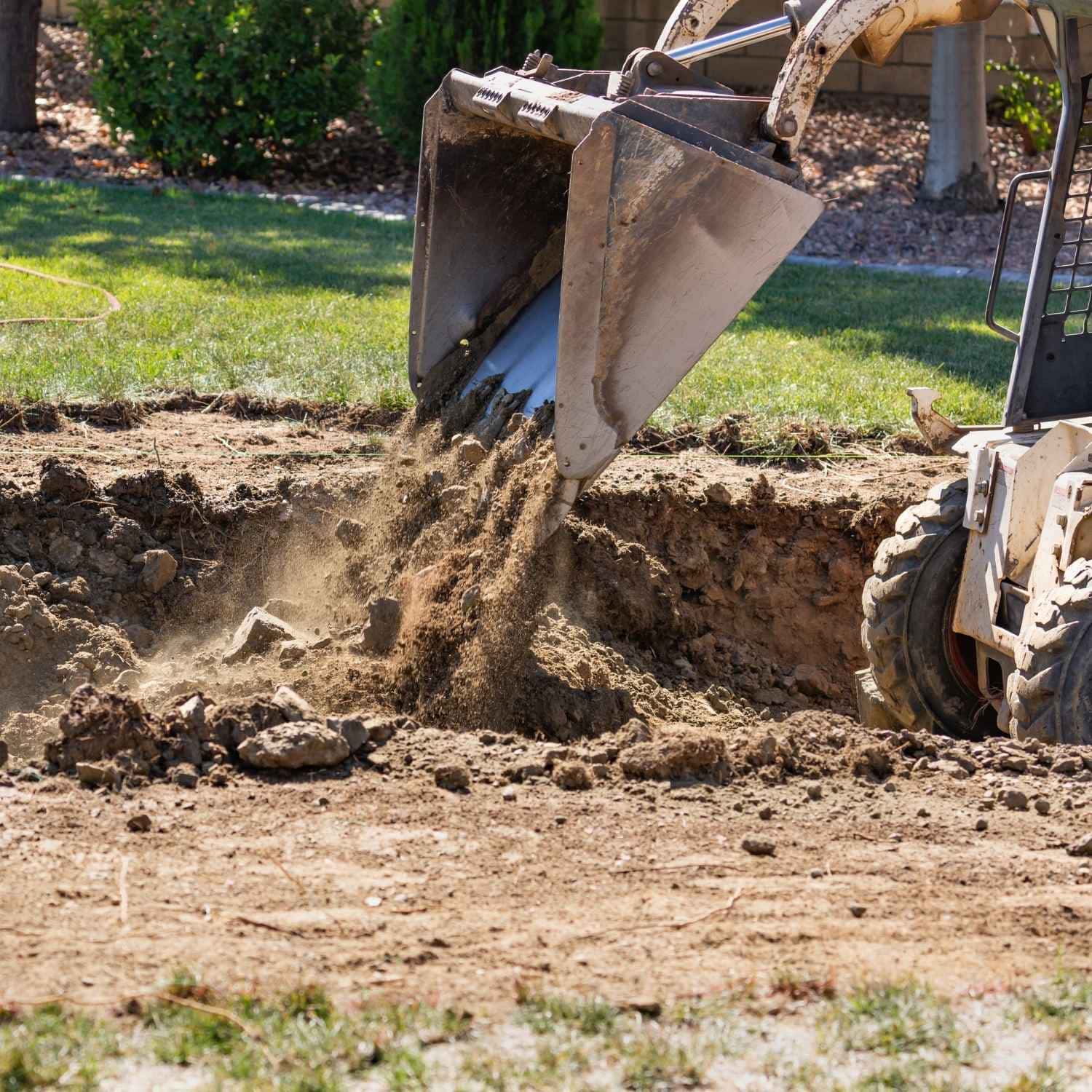
Residential excavation in the Philadelphia area typically runs between $1,658 and $6,709, with a national average around $3,975 but Delaware County labor tends to run 15 to 25 percent above national averages, so budgeting toward the middle to upper end of that range is realistic for most Upland projects. The actual cost depends on how much material needs to be moved, how deep the dig goes, what the soil conditions look like, and whether there are access constraints on your lot.
In Upland specifically, tight lot configurations and clay-heavy soils can affect both the time and equipment required to complete the job. Clay doesn’t move the same way sandy or loamy soil does it compacts differently, drains slowly, and requires more careful handling to avoid creating new drainage problems in the process. Getting a specific number means walking the site, understanding what the project actually involves, and giving you a scope that accounts for your property’s conditions not a ballpark pulled from a general estimate.
It depends on what the excavation is connected to. In Upland, the Borough Building Inspector handles permit issuance and inspections under Pennsylvania’s Uniform Construction Code. If your excavation is part of a permitted construction project a pool, an addition, a new structure the permit covers the associated site work. Standalone grading projects may or may not require a permit depending on scope, but any work that changes how water drains across your lot or affects neighboring properties needs to be done in compliance with the Delaware County Subdivision and Land Development Ordinance.
The safest approach is to confirm with the Upland Borough Building Inspector before work begins. Permit requirements aren’t complicated to navigate when you know what you’re doing, but skipping that step and getting flagged mid-project creates delays that cost more than the permit would have. We handle permit navigation upfront before equipment arrives as part of how a professional excavation contractor should operate in any Delaware County borough.
In most cases, the answer comes down to two things: the grade of your yard and the type of soil underneath it. In Upland and throughout Delaware County, clay-heavy soils are extremely common. Clay doesn’t absorb water quickly it holds it. When the yard’s slope directs water toward the house instead of away from it, that water has nowhere to go except against your foundation. Over time, that means saturated soil, hydrostatic pressure against foundation walls, and eventually water in the basement.
The fix is almost always a grading correction reshaping the surface so water moves away from the structure sometimes combined with a drainage pathway or a French drain to handle the volume. Homes built in the early 1900s, which make up a large portion of Upland’s housing stock, were constructed before modern grading standards existed. Many of these properties have never had their drainage properly assessed. A site visit that maps where water is currently going is the first step toward understanding what the correction actually needs to look like.
Excavation is the process of removing soil digging down to create space for a foundation, a patio base, a retaining wall footing, or any other structure that needs to go below the existing ground surface. Grading is the process of shaping the remaining soil surface to control how water drains across your property. They’re related, but they’re not the same job, and whether you need one or both depends on what the project requires.
On most residential projects in Upland, you need both. If you’re installing a patio, the excavation creates the depth for the base material, and the grading ensures the finished surface slopes correctly so water doesn’t pool. If you’re correcting a drainage problem, grading is the primary work but excavation may be required to install a drainage structure or reposition soil that’s been compacted in the wrong direction for years. A site assessment before any work begins is the most reliable way to determine exactly what your property needs.
Chester Creek runs along Upland’s southern borough boundary as a tributary of the Delaware River, and properties near that corridor sit within or adjacent to areas that FEMA has mapped for floodplain consideration. If your property is in or near the floodplain, any excavation or grading work that changes drainage patterns needs to account for that context both for your own protection and to stay compliant with Pennsylvania’s stormwater management requirements.
Even if your property isn’t in the immediate floodplain, proximity to Chester Creek means the water table and soil saturation levels in that part of Upland can be higher than in areas farther north toward Brookhaven. That affects how grading is designed, how deep compaction needs to go, and what drainage infrastructure makes sense for your specific lot. Pennsylvania flooding is the most common natural disaster in the state, and the consequences of getting drainage wrong on a property in this corridor are real a proper assessment before the work starts is the only way to know what you’re actually dealing with.
Yes but not every contractor has the right equipment for it, and that distinction matters more than most homeowners realize until something goes wrong. Upland covers just 0.65 square miles with a population density of roughly 4,500 people per square mile. The lots are small, homes sit close together, and in many cases your neighbor’s foundation is only a few feet from where the digging needs to happen. Sending an oversized commercial excavator into that environment creates real risk to neighboring structures, to underground utilities, and to the borough’s infrastructure.
The right approach is right-sized equipment operated by someone who has actually worked in these conditions before. Our fleet includes machines scaled for residential work in tight Delaware County settings, and the process always starts with 811 utility marking before any equipment touches the ground. Working in a dense borough like Upland requires more planning and more precision than a wide-open suburban lot and that’s exactly the kind of environment where experience and proper equipment selection make the difference between a clean project and a costly mistake.
Useful Links