
Hear from Our Customers
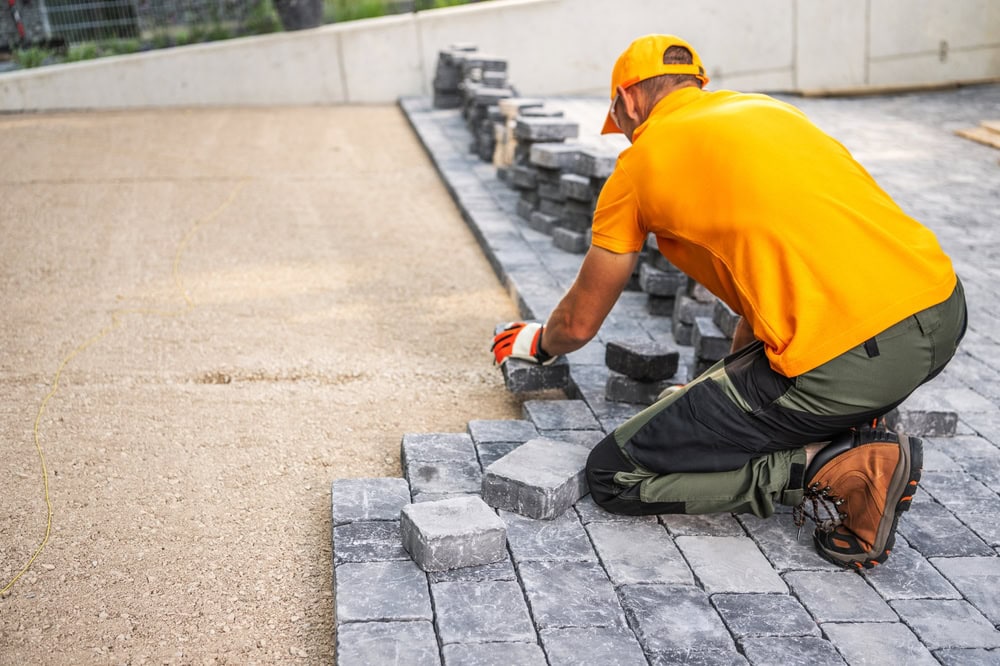
The most common patio problem in Upland isn’t the surface it’s what’s underneath it. Southeastern Pennsylvania sees 40 or more freeze-thaw cycles every year, and the clay-heavy soil common throughout the Chester-area corridor holds moisture that freezes, expands, and pushes up against anything sitting on top of it. A patio built on a shallow or poorly compacted base won’t make it through three winters before you’re watching pavers shift and concrete crack. That’s not bad luck that’s a skipped step.
When the base is done right proper excavation depth, compacted aggregate, drainage sloped away from your foundation the surface stays where it was put. That matters even more in Upland, where many homes were built in the 1940s and 50s with original concrete slabs that are finally giving out. Replacing a failed slab isn’t just about looks. It’s about not letting a drainage problem work its way toward your foundation over the next decade.
Beyond durability, a well-installed patio genuinely changes how you use your property. A backyard that currently sits empty most of the year becomes the place you actually spend time. And if you’re thinking about resale at any point, professionally installed patios return more than 80% of their cost pavers specifically outperform plain concrete by 30 to 50% at resale. That’s a real number worth knowing before you decide what material to use.
We’re based in Aston, PA less than 10 miles from Upland. This isn’t a regional company that added your zip code to a service map. We work in Upland and throughout Delaware County because it’s where we operate, where we know the soil conditions, and where our reputation is on the line with every project.
I run an owner-operated business with one experienced crew. No subcontractors, no handoffs, no wondering who’s actually going to show up. The same people who quote your job are the ones doing the work and when it’s done, you can still reach us. That’s not a given in this industry, and in a community like Upland, where contractor stories travel fast, it’s the difference that actually matters.
We’ve been serving homeowners throughout southern Delaware County for over 15 years, working on everything from compact backyard patios near the Crozer-Chester Medical Center corridor to full hardscape renovations across Upland Borough. The local knowledge shows up in the work.
It starts with a conversation about your yard, your goals, and your budget. Upland lots tend to run small many backyards are 25 to 40 feet deep so the design phase matters. Our goal is a patio that fits the space proportionally, creates real usable zones, and doesn’t overwhelm the yard. You’ll know what you’re getting, what it costs, and when it starts before anything moves forward.
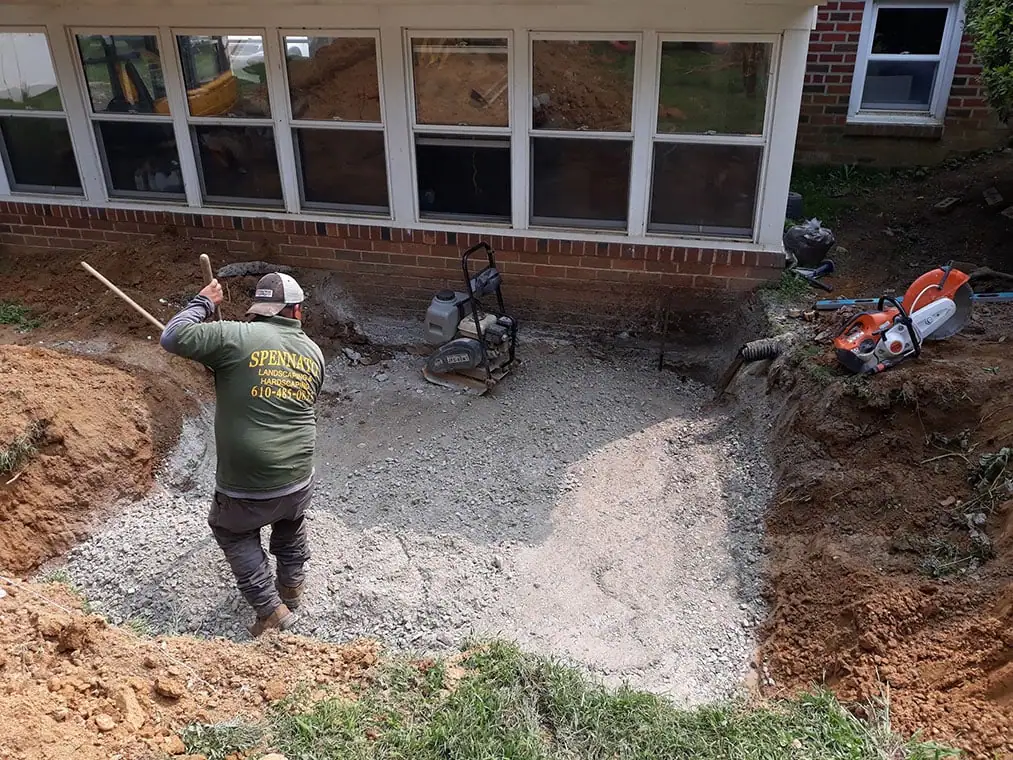
Once the project is scheduled, we handle everything from the ground up. If there’s an old concrete slab coming out which is common with Upland’s older housing stock demo and removal are part of the job. From there, the base work begins: excavation to the right depth, compacted aggregate laid in lifts, and drainage slope engineered away from your home. This is the part most homeowners never see, and it’s exactly where corners get cut. It won’t be cut here.
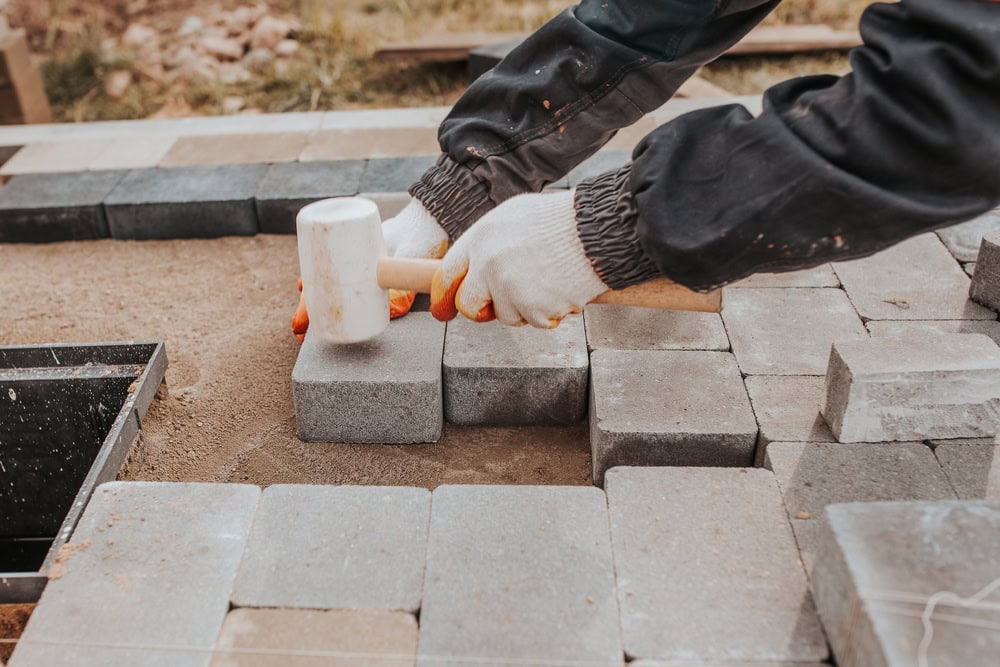
Surface installation follows pavers set and locked with edge restraints, joints filled with polymeric sand, and the finished surface checked for level and slope. Cleanup happens the same day. Pennsylvania’s installation window runs roughly late April through mid-October, and projects booked early in the season get better scheduling access. If you’re thinking about a patio for this year, the earlier you reach out, the more flexibility you’ll have.
Ready to get started?
Pavers are the most requested option, and for good reason. They can be individually replaced if one shifts or cracks, they handle Pennsylvania freeze-thaw cycles well when installed on a proper base, and they deliver the best return at resale. For Upland homeowners with smaller backyards, pavers also offer the most design flexibility you can work with the space you have rather than pouring a slab that dictates the shape of the yard.
Concrete is a lower upfront cost, and it’s a solid choice for the right project. The trade-off is that when it cracks and in southeastern Pennsylvania’s climate, it eventually will you’re replacing sections rather than individual units. Stamped concrete can give you visual variety at a mid-range price point. Flagstone, including Pennsylvania Bluestone sourced regionally, is a natural stone option that adds real character and holds up well in this climate. It tends to cost more but is a long-lasting, distinctive choice for homeowners who want something that looks different from the standard paver grid.
Pricing runs $15 to $50 per square foot depending on material, layout complexity, and site conditions. Most residential projects in Upland fall between $3,500 and $12,000. At-grade patios generally don’t require a permit in Pennsylvania, but if your project includes a retaining wall or attached structure, Upland Borough’s code office is the right call before breaking ground. We’ll walk you through what applies to your specific project.

This is one of the most common calls we get from homeowners in the Chester-area corridor, and the cause is almost always the same: the base wasn’t built to handle what Pennsylvania winters actually do to the ground. Southeastern Pennsylvania goes through 40 or more freeze-thaw cycles in a typical year. Each time moisture in the soil freezes, it expands and pushes upward. In Upland specifically, the clay-heavy soil common throughout this part of Delaware County holds onto that moisture more than sandy or loamy soils, which makes the heaving worse.
A patio installed on a base that’s too shallow, poorly compacted, or missing proper drainage slope will show movement within a few winters pavers rocking, concrete cracking, sections settling unevenly. The fix isn’t resetting the surface. It’s rebuilding the base correctly. If your patio is shifting, it’s worth having someone assess whether the base can be salvaged or needs to come out entirely before you invest in any surface work.
We publish our pricing openly: $15 to $50 per square foot, with most residential projects landing between $3,500 and $12,000. Where your project falls in that range depends on a few things the material you choose, the size and shape of the patio, whether there’s an existing slab that needs to come out first, and how much base prep the site requires.
For Upland homeowners dealing with an older concrete slab from the 1940s or 50s, demo and removal add to the total but are necessary. Skipping proper base prep to save money upfront is exactly how you end up with a patio that needs to be redone in three years. Pavers run higher than poured concrete but return more at resale and give you the ability to replace individual units if something shifts. The honest answer is that the right price depends on your specific yard and goals but you won’t be left guessing. You get a clear number before anything starts.
For most standard at-grade patio installations in Pennsylvania meaning a ground-level paved surface without structural elements attached to the home a building permit is typically not required. That covers the majority of residential patio projects in Upland. If your project involves a retaining wall above a certain height, an attached pergola or covered structure, or significant grading changes, that changes the picture and a permit may be needed.
Delaware County has also adopted stormwater management ordinances that can apply when you’re adding significant impervious surface area to a property. For a typical residential patio under 1,000 square feet, this rarely becomes a practical issue but it’s worth being aware of for larger projects. The safest move before breaking ground on anything that involves structures or drainage changes is a quick call to Upland Borough’s code enforcement office. We’re familiar with what triggers permit requirements in this area and can help you understand what applies to your specific project before you commit to anything.
Concrete pavers are the most durable option for southeastern Pennsylvania’s climate when they’re installed correctly. The key word is correctly the base matters far more than the surface material. Pavers set on a properly compacted aggregate base with adequate depth, drainage slope, edge restraints, and polymeric sand in the joints will handle 40-plus freeze-thaw cycles a year without shifting. They also give you the ability to replace individual units if something does move, rather than patching or resurfacing an entire slab.
Poured concrete is durable too, but it’s less forgiving when something goes wrong. A crack in a concrete slab typically means a more involved repair. Stamped concrete can look great but is more susceptible to surface wear over time in this climate. Pennsylvania Bluestone flagstone is a natural stone option that performs well here and is quarried regionally it’s a premium choice that holds up in freeze-thaw conditions and adds a distinctive look that pavers can’t replicate. For most Upland homeowners working with a modest backyard and a practical budget, concrete pavers offer the best combination of durability, repairability, and long-term value.
Yes and this is a question worth thinking through carefully before you assume your yard is too small to bother with. Many Upland backyards run 25 to 40 feet deep, bordered by fencing and neighboring properties. That’s a real constraint, but it’s not a barrier to a well-designed patio. The difference is in how the space is planned. A 250 to 400 square foot patio designed with defined zones a seating area, a dining spot, maybe a small fire pit corner can make a compact yard feel like an actual outdoor room rather than just a strip of grass behind the house.
The mistake most homeowners make with small yards is either going too large (the patio overwhelms the space and leaves no breathing room) or too small (it ends up feeling like an afterthought). Proportion matters. So does material choice certain paver patterns and colors can make a tight space feel more open. We design around the specific dimensions and conditions of your yard, not a catalog layout dropped into whatever footprint you have.
The contractor trust issue is real in this area, and it’s worth being direct about. Pennsylvania requires home improvement contractors to register with the Attorney General’s Office under the Home Improvement Consumer Protection Act ask for the HICPA registration number. Beyond that, look for a contractor who publishes pricing openly, gives you a written timeline, and has named reviews from real customers in Delaware County. We’re owner-operated, based in Aston, and have been working in communities like Upland for over 15 years. My name is on the business, which means accountability doesn’t get passed down a chain. You have one number to call before, during, and after the project.
Useful Links