

Hear from Our Customers
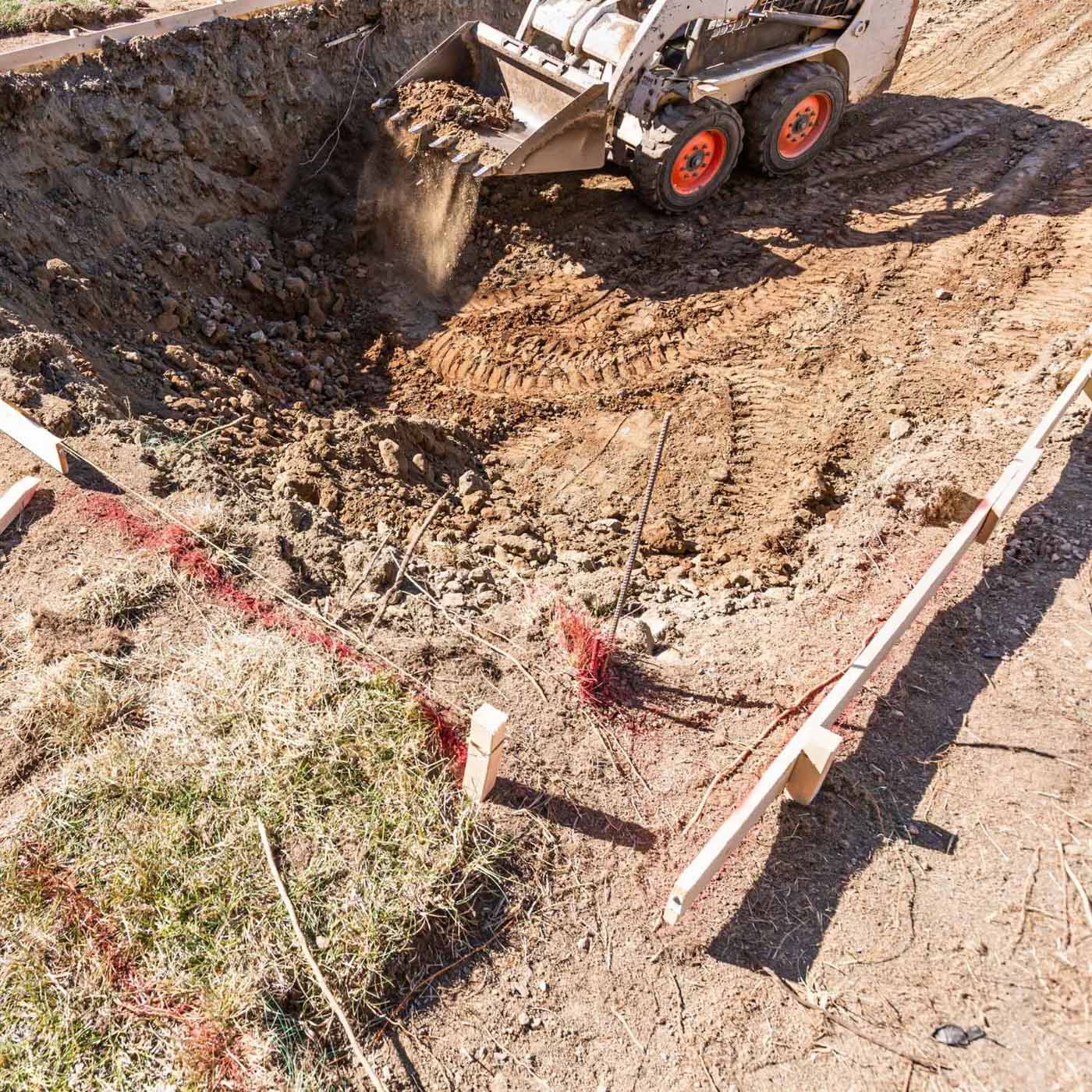
Standing water isn’t just an eyesore. When it sits within a few feet of your foundation which happens fast on Upland’s small, tightly packed lots it creates hydrostatic pressure that works against your basement walls every time it rains. Over time, that pressure leads to leaks, mold, and eventually structural damage that costs far more to fix than the drainage work that would have prevented it.
Upland’s housing stock makes this more urgent than it might be in a newer suburb. A lot of homes here were built in the 1940s and 1950s, and original drainage infrastructure if there’s any at all has had decades to shift, clog, or fail completely. Add in Delaware County’s freeze-thaw cycles, which loosen soil and compromise buried pipe year after year, and you’ve got a yard that’s fighting against its own history.
What changes after we install proper drainage isn’t just the water it’s the whole relationship with your property. Your yard becomes usable again. Your basement stays dry. You stop dreading every heavy rain. And if you ever sell, a documented drainage solution on an older Upland home is a real selling point, not a footnote.
We’re based in Aston, PA a few miles down I-95 from Upland. This isn’t a regional company dispatching crews from a distant office. We work in Upland and throughout Delaware County because we know it, and this borough is one we’ve been active in for years, including grading and outdoor construction projects on properties just like yours.
We handle everything in-house no subcontractors, no handoffs, no situation where one person assesses the problem and a different crew shows up to fix it. The same team that evaluates your drainage issue is the one that installs the solution and restores your yard when the work is done.
Over 15 years in Delaware County means we’ve worked through the full range of what this area throws at a property heavy clay soils, aging drainage infrastructure, tight lot lines, and the kind of spring saturation that follows a hard Pennsylvania winter. We know what actually works in Upland, and we’re straightforward about what doesn’t.

It starts with a site assessment, not a sales pitch. Before anything is recommended, we walk your property and map how water is actually moving where it’s coming from, where it’s pooling, and where it needs to go. In Upland, that last part matters more than most places. With lots this small and neighbors this close, a drainage solution that redirects water improperly can create a problem next door. We design with the full water pathway in mind.
From there, we explain exactly what we’re recommending and why. That might be a French drain installation, targeted regrading, a catch basin, or a combination of approaches depending on what your property actually needs. We don’t apply the same solution to every job. Upland’s older homes often have multiple compounding issues settled grading, failed original drainage, and compacted soil and addressing only one of them typically means the problem comes back.
Once the work is approved, we handle everything: excavation, installation, backfill, and yard restoration. Upland Borough has its own Stormwater Management Ordinance under Chapter 157 of the Borough Code, and our work is designed to meet those requirements. When we leave, your yard looks like a crew was never there except the water is gone.

Ready to get started?
Upland sits along Chester Creek, and that matters for drainage in a way that doesn’t apply to higher-elevation Delaware County boroughs. During heavy rain events, creek levels rise and temporarily limit how quickly groundwater can discharge from properties nearby. That means water management in Upland isn’t just about moving water off your lot it’s about engineering a system that works even when the surrounding water table is elevated.
Our drainage services include French drain installation, surface and subsurface grading, catch basin installation and repair, downspout extensions, and dry creek bed construction for properties where both function and appearance matter. Every system we design is based on your specific lot conditions soil type, slope, proximity to structures, and how your property connects to adjacent lots and the public right-of-way.
Because so many Upland homes were built before modern drainage standards existed, we also assess what’s already in the ground before recommending what needs to be added. Sometimes the issue is a failed original system that just needs to be replaced. Sometimes there was never a system at all. Either way, you get a clear explanation of what we found, what we recommend, and what it will cost before any work begins.
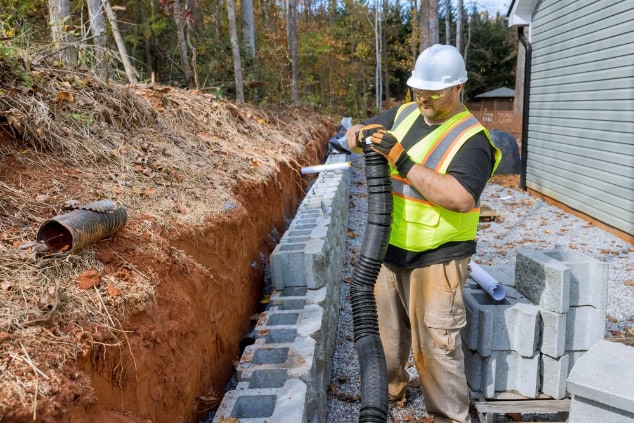
Upland’s combination of dense lot coverage, clay-heavy Delaware County soil, and proximity to Chester Creek creates conditions where water concentrates fast and drains slowly. When a significant portion of your lot is covered by impervious surfaces driveways, walkways, the home’s footprint itself there’s very little permeable ground left to absorb rainfall. What little yard you do have gets overwhelmed quickly.
In many Upland homes, the grading around the foundation has also shifted over decades. Soil settles, landscaping changes, and what was once a yard that sloped away from the house gradually flattens or reverses. That means water that used to run off now runs toward the foundation instead. A proper site assessment can identify whether you’re dealing with a grading issue, a failed drainage system, soil compaction, or some combination of all three and the fix depends on which of those is actually driving the problem.
A French drain is a perforated pipe buried in a gravel-filled trench that intercepts groundwater or surface runoff and redirects it to a safe discharge point away from your foundation, your yard, or your neighbor’s property. It’s one of the most effective tools for managing standing water, but it’s not the right solution for every situation.
Whether a French drain is the right call depends on where your water is coming from and where it can realistically go. On a small Upland lot with close neighbors and a defined property line, the discharge point matters as much as the installation itself. If water is pooling because of a grading problem rather than a high water table, regrading may solve the issue more efficiently. We assess both before recommending either because installing a French drain in the wrong location, or without addressing a grading issue that’s feeding the problem, typically means the water finds a new place to collect.
Upland Borough has adopted its own Stormwater Management Ordinance, codified in Chapter 157 of the Borough Code. Drainage work is also subject to the Pennsylvania Uniform Construction Code, and the borough actively monitors stormwater issues residents can report drainage problems that affect neighboring properties or public infrastructure directly to the borough.
For most residential drainage projects a French drain, catch basin, or regrading work you’re typically working below the threshold that triggers state-level NPDES permit requirements, which generally apply to earth disturbance of one acre or more. But local ordinance compliance still matters, especially in a dense borough like Upland where drainage from one property can directly affect the next. We’re familiar with the local regulatory environment and design our installations to meet borough requirements, so you’re not left navigating that on your own after the work is done.
Nationally, French drain installation typically runs between $5,000 and $9,250 for a full residential system, with labor making up the majority of that cost. In Delaware County, actual pricing depends on the length of the drain run, how deep the trench needs to go, what the soil conditions are like, and where the water needs to discharge. Upland’s older housing stock sometimes adds complexity if there’s existing drainage infrastructure in the ground that needs to be removed or worked around, that affects both time and cost.
The most honest answer is that we can’t give you an accurate number without seeing the property. What we can tell you is that every estimate we provide is itemized and explained before any work begins. There are no surprises after the job starts. And when you’re weighing the cost of a drainage system against the alternative foundation repair that routinely runs $10,000 to $30,000 or more the math on getting it done right the first time tends to be straightforward.
The line between a yard drainage problem and a foundation problem isn’t always obvious, and in Upland’s older homes, the two are often connected. Water that pools consistently near your foundation especially on the downhill side of a lot that’s lost its original grade creates hydrostatic pressure that pushes against basement walls over time. If you’re seeing efflorescence (white mineral deposits) on basement walls, hairline cracks that weren’t there before, or moisture appearing after every significant rain, the yard drainage situation outside is likely contributing to what you’re seeing inside.
A site assessment can usually identify whether the source of the problem is exterior drainage, interior waterproofing, or both. If the water is getting in because it has nowhere to go outside, fixing the exterior drainage often resolves the interior moisture as well. If there’s already structural damage, that’s a separate conversation but in most cases we see in Delaware County, catching the drainage issue before it becomes a foundation issue is entirely possible with the right system in place.
The most common time homeowners in Upland discover they have a drainage problem is late winter into spring when the ground is saturated from snowmelt, freeze-thaw cycling has loosened the soil, and spring rains hit a yard that has no capacity left to absorb water. That’s when the problem becomes impossible to ignore. The challenge is that spring is also when drainage contractors are busiest, so lead times can stretch.
If you’re dealing with a problem right now, it’s worth calling sooner rather than waiting for the busy season to pass. Fall is actually an ideal installation window the ground is workable, crews are more available, and you’ll have a functioning system in place before the next winter cycle begins. In Upland specifically, getting drainage infrastructure installed before the ground freezes means you’re not spending another spring watching water pool against your foundation while you wait for a contractor to have an opening.
Useful Links