
Hear from Our Customers
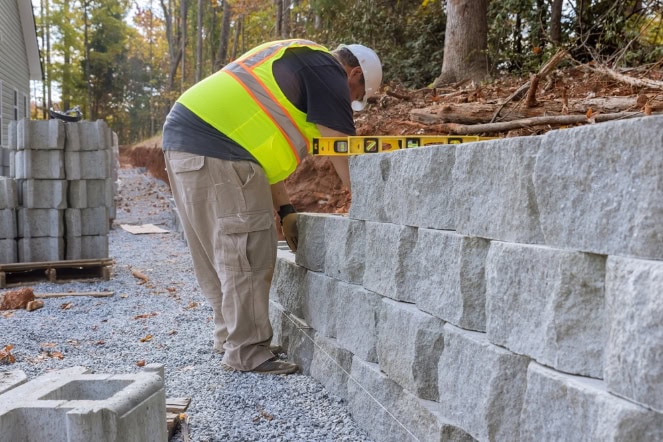
If your backyard slope loses a little more soil every time it rains, you already know the problem isn’t going away on its own. Upper Chichester Township has publicly acknowledged that much of its existing stormwater system wasn’t designed for today’s runoff volumes. When that system gets overwhelmed and it does the water ends up on private property. Yours included.
A properly built retaining wall stops that cycle. It holds the grade, redirects water before it builds pressure behind the structure, and turns a slope that’s been bleeding soil for years into something level and usable. That could mean a patio, a garden terrace, a flat lawn space you’ve been writing off because the grade made it impossible.
The older housing stock in Upper Chichester adds another layer to this. Homes built in the 1940s through 1960s were graded for farming-era drainage, not modern suburban runoff. If your property has never had a proper retaining wall or the original one is pushing 60 years old what you’re dealing with now is the natural result of that. Property appraisers put the return on a well-built retaining wall at 100 to 200 percent at resale. That slope you’ve been ignoring might be the highest-return improvement on your entire property.
We’re based in Aston the township directly north of Upper Chichester, sharing a border. That’s not a marketing angle. It means Renato Spennato and our crew are already working in Upper Chichester regularly, we know what the terrain looks like off Chichester Avenue and along Naamans Creek Road, and we understand how the clay soil in this part of Delaware County behaves after a hard winter.
Renato holds an active Pennsylvania contractor license (PA057623) and carries a BuildZoom score of 102 placing Spennato Landscaping in the top 11 percent of over 125,000 licensed contractors in the state. More importantly, he runs a single crew from first site visit through final cleanup. There are no subcontractors, no handoffs, and no disappearing act once the last block is set.
Reviews on Yelp, Angi, and BuildZoom mention Renato by name not just the company. That’s the difference between hiring a brand and hiring a person who’s accountable for the work.
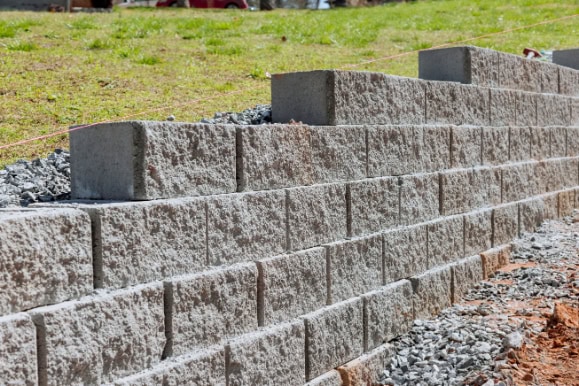
It starts with a site visit. Renato walks the property, looks at the slope, reads the drainage patterns, and asks what you actually want the space to do. That conversation shapes everything material choice, wall height, drainage design before any plans are drawn.
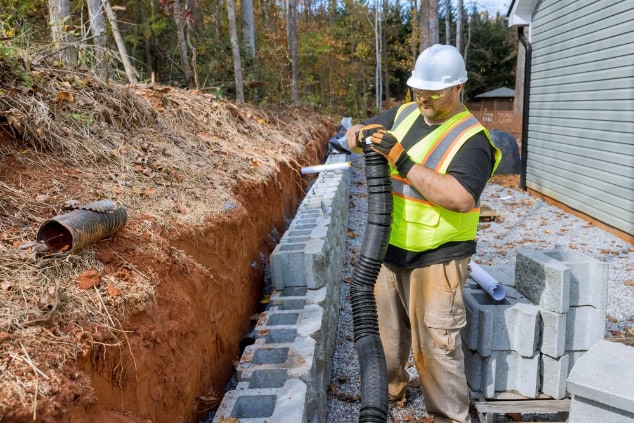
Drainage gets planned first. That’s not the standard approach in this industry, but it’s the right one. In Upper Chichester specifically, where the township’s own stormwater infrastructure is under documented pressure, water behind a wall isn’t a theoretical problem it’s a near-certainty if drainage isn’t engineered in from the start. Hydrostatic pressure from trapped water is the single most common reason retaining walls fail, regardless of how good the surface looks. Getting this right at the design stage is what separates a wall that holds for 30 years from one that starts bowing after three winters.
Once drainage is mapped, material is selected based on your site not whatever happens to be available. For projects that meet Upper Chichester Township’s grading thresholds, we handle the permit process, including any engineer-sealed plans required for larger earth-moving work. Installation uses stepped layering and compacted backfill throughout. When our crew leaves, the site is clean, the grade is set, and you know exactly what was built and why.
Ready to get started?
Not every retaining wall is the same job, and the differences matter more here than in a lot of places. Delaware County’s soil is predominantly clay-based it swells when wet, contracts when dry, and places cyclical stress on any structure that wasn’t designed with that movement in mind. Pair that with Pennsylvania’s freeze-thaw cycle, and a wall without proper drainage and base preparation isn’t a question of if it fails it’s when.
Material selection is part of the site assessment, not an afterthought. VERSA-LOK’s pinning system handles curves, corners, stairs, and freestanding walls, requires no frost footings, and performs well in Pennsylvania’s climate. Natural stone, when installed correctly, can last well over a century. Concrete block delivers reliable performance at a mid-range price point for projects where budget and function matter more than aesthetics. The right choice depends on your wall’s height, load, and what the site actually demands.
On the permit side: Upper Chichester Township issues its own building permits independently. In Pennsylvania, retaining walls under four feet generally don’t require a permit but projects involving 750 square feet or more of earth disturbance trigger grading and stormwater management requirements, including engineer-sealed plans and an escrow account. Building without the right permits can create real problems at resale. We navigate that process so you’re covered before a single shovel goes in the ground.
In Pennsylvania, retaining walls under four feet in height are generally exempt from building permits under the Uniform Construction Code but that’s the state baseline, and Upper Chichester Township can amend those provisions locally. So the short answer is: it depends on your wall’s height and the scope of work around it.
Where it gets more specific is with grading. Upper Chichester Township requires grading and stormwater management compliance for projects involving 750 square feet or more of disturbed area. That threshold can be reached faster than most homeowners expect once excavation and backfill are factored in. Projects that hit it require plans signed and sealed by a registered professional engineer, a grading permit, and an escrow account. Building without the right documentation can result in fines, forced removal of the wall, and complications when you go to sell the property. We handle the permit process for you we know what Upper Chichester’s License and Inspection department requires and we don’t skip steps to save time.
Retaining wall pricing varies more than most homeowners expect, and the range is wide for good reason. Generally, residential projects in Delaware County run between $3,500 and $10,000 depending on wall height, length, material, and site conditions. Per linear foot, that typically falls somewhere between $40 and $150 for standard installations, with more complex or taller walls running higher.
What drives cost up in Upper Chichester specifically is the combination of clay soil and drainage requirements. A wall built on clay without proper drainage engineering and base preparation is a wall that’s going to fail and reconstruction costs run $3,000 to $8,000 or more when that happens. The drainage and base work that prevents that failure adds to the upfront cost, but it’s not optional if you want the wall to actually hold. When you’re comparing quotes, the number to scrutinize isn’t the total it’s whether drainage, base preparation, and permitting are included or quietly left out.
The most common cause of retaining wall failure in this region is hydrostatic pressure water that builds up behind the wall because drainage wasn’t planned properly. When the soil behind a wall becomes saturated, it generates thousands of pounds of lateral force against the structure. A wall that wasn’t designed to handle that load will bow, crack, or shift, sometimes within just a few seasons of installation.
Delaware County’s clay soil makes this worse. Clay holds water rather than letting it drain through, so saturation happens faster and lasts longer here than it would in sandier soil conditions. Add Pennsylvania’s freeze-thaw cycle water seeps into the soil, freezes and expands, loosens the earth, then thaws and you have a recurring mechanical stress that compounds every winter. Upper Chichester’s documented stormwater infrastructure challenges mean that during heavy rain events, more water ends up on private property than the system was designed to handle. A retaining wall built here needs drainage engineered in from the start, not added as an afterthought.
Lifespan depends heavily on material and how well the wall was built specifically whether drainage was handled correctly and whether the base was properly prepared for the soil conditions on your site. Natural stone installed correctly can last well over 100 years. VERSA-LOK segmental block, properly drained and backfilled, typically delivers 50 or more years of reliable performance. Concrete block falls in the 30 to 50-year range under normal conditions.
What shortens that lifespan dramatically is skipping the drainage work. In Upper Chichester’s clay soil, a wall without adequate drainage can start showing stress bowing, cracking, shifting at the base within three to five years, regardless of how good the surface looks at installation. Pennsylvania’s freeze-thaw cycle accelerates that deterioration every winter. The walls that last in this climate are the ones where drainage was the first design decision, not the last. That’s the difference between a 30-year wall and a wall you’re rebuilding in a decade.
The right material depends on what your wall needs to do, how tall it needs to be, and what the site looks like but there are a few things worth knowing for Upper Chichester properties specifically. VERSA-LOK is a strong option for most residential retaining walls here. It requires no frost footings, which matters in Pennsylvania’s freeze-thaw climate, and its pinning system allows for curves, corners, stairs, and freestanding walls without losing structural integrity. It can be built significantly taller using geogrid reinforcement for slopes that need serious grade change.
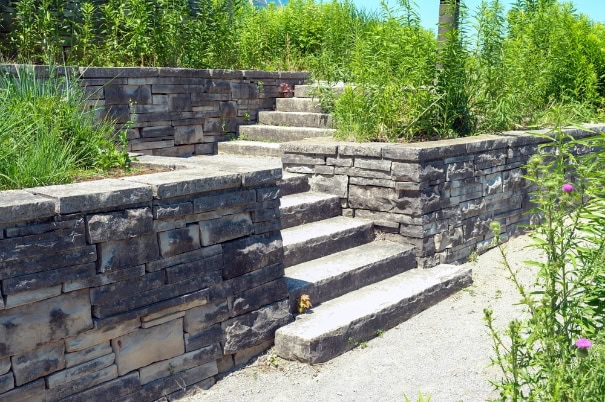
Natural stone is worth considering for properties where the wall is highly visible or where you want something that genuinely improves curb appeal a well-built stone wall can last a century and adds real value at resale. Concrete block is the practical middle ground: durable, cost-effective, and reliable for standard residential applications. For the older homes throughout Upper Chichester many built in the 1940s through 1960s on lots that were never properly graded the material conversation always starts with the drainage conversation. Get that right first, and the material choice becomes much more straightforward.
Erosion on a sloped yard in Upper Chichester is almost always a drainage problem before it’s a grading problem. Water is moving across or through your soil faster than the ground can absorb it, and the slope gives it speed. The fix depends on how severe the grade is and how much soil you’re losing each season.
For mild slopes, ground cover plantings with deep root systems, combined with surface grading corrections, can slow erosion meaningfully. French drains or channel drains can redirect surface water away from the problem area before it gains enough momentum to carry soil with it. But for anything beyond a gentle grade especially on properties near Naamans Creek or in neighborhoods where the township’s stormwater system regularly gets overwhelmed during heavy rain those measures tend to be temporary. The underlying issue is that water has nowhere controlled to go, and until that’s addressed structurally, you’re managing symptoms. A retaining wall with integrated drainage solves the root problem: it holds the grade, controls where water moves, and stops the cycle of losing soil every spring. Whether that’s the right call for your yard is something worth talking through on-site, where the actual conditions can be assessed.
Useful Links
Other Services we provide in Upper Chichester