
Hear from Our Customers
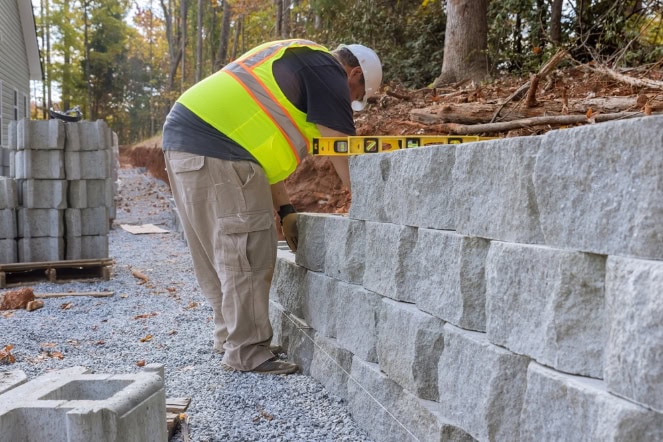
Most retaining walls don’t fail because of bad materials. They fail because nobody planned for what happens behind the wall water building up, clay soil expanding, freeze-thaw pressure doing its work through January and February until something gives. In Upland, that cycle is real and it’s relentless.
When a wall is designed with drainage as the starting point not an afterthought the result is a structure that doesn’t move, doesn’t bow, and doesn’t need to be rebuilt in eight years. You get a yard that’s actually usable. Level ground where there was a slope. A foundation that isn’t absorbing runoff after every storm. That’s the difference between a wall that looks good on day one and one that still looks good a decade later.
Upland’s older housing stock a lot of it dating back to the late 1800s and early 1900s means many properties are sitting on retaining walls that were built long before modern drainage standards existed. If your wall is starting to lean or crack, the freeze-thaw cycle has likely been working on it for years. Replacing it the right way now costs far less than dealing with the erosion, foundation damage, or full reconstruction that comes after it fails.
We’re based in Aston a few miles from Upland, in the same Delaware County corridor. This isn’t a Wilmington-based company extending its service map across the state line. Our team knows how the soil behaves along the Chester Creek corridor, how the terrain shifts on the older streets near Hill Street, and what Upland Borough’s zoning code actually requires before a wall goes in.
Renato Spennato holds an active Pennsylvania contractor license (PA057623) and runs a one-crew operation no subcontractors, no rotating teams. The same people who build your wall are the same people you call if something ever needs attention. In a small, tight-knit borough like Upland, that kind of accountability isn’t a selling point. It’s just how the work should be done.
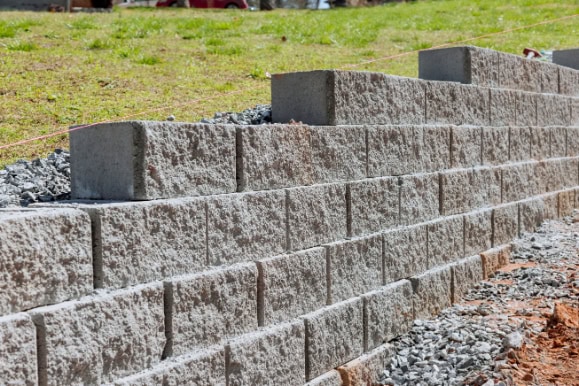
It starts with a site visit not a phone estimate. Upland’s terrain, soil conditions, and the specific slope of your property all affect what a wall actually needs. A quote built from a conversation is a quote that changes once work starts. Visiting the site first means the number you get is the number you pay.
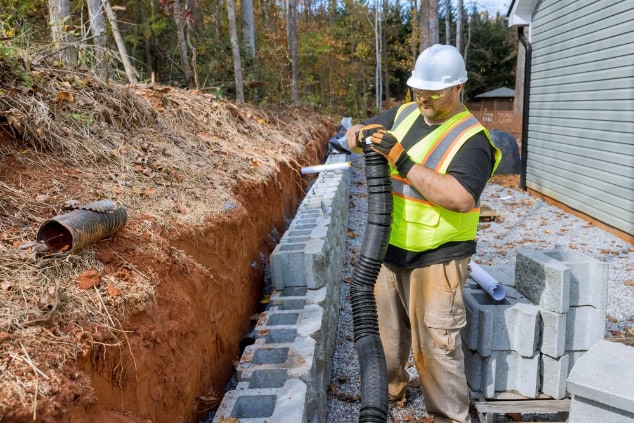
From there, drainage is planned before anything else. We identify where water moves across your property, how the clay soil will behave after heavy rain, and what system will prevent hydrostatic pressure from building up behind the wall over time. Chester Creek’s proximity isn’t just a geographic detail it affects how water moves through properties across the borough, especially after significant storms. That gets factored in before material selection, not after.
Once the drainage plan is set, material selection follows based on your site’s specific conditions and what you want the finished wall to look like. For walls over four feet, Upland Borough requires a building permit and plans sealed by a registered Pennsylvania engineer we handle that process as part of the project, not hand it off to you to figure out. Installation runs from excavation and base preparation through final grading and cleanup, with the same crew on site start to finish.
Ready to get started?
Retaining wall construction in Upland isn’t one-size-fits-all. The borough’s clay-heavy soils, hilly topography, and proximity to Chester Creek create drainage conditions that vary property to property. Material selection whether that’s VERSA-LOK block, natural stone, or concrete gets matched to what the site actually needs, not just what looks good in a catalog. VERSA-LOK’s pinning system, for example, requires no frost footings, which makes it a strong fit for Pennsylvania’s freeze-thaw climate specifically.
On the permit side: under Pennsylvania’s Uniform Construction Code, walls under four feet generally don’t require a building permit, but a local zoning permit is typically still required in Upland Borough regardless of height. Walls four feet and taller require a building permit and engineer-sealed plans. Upland’s zoning ordinance (Chapter 185) also includes visibility requirements for walls on corner lots. Skipping the permit process in a dense borough like this where neighbors are close and the borough council is active creates real risk at resale and with your homeowner’s insurance. We navigate that process as part of the job.
What you’re left with is a wall that’s structurally sound, properly drained, code-compliant, and built to handle what Delaware County’s winters and wet springs actually deliver not what a mild climate would require.
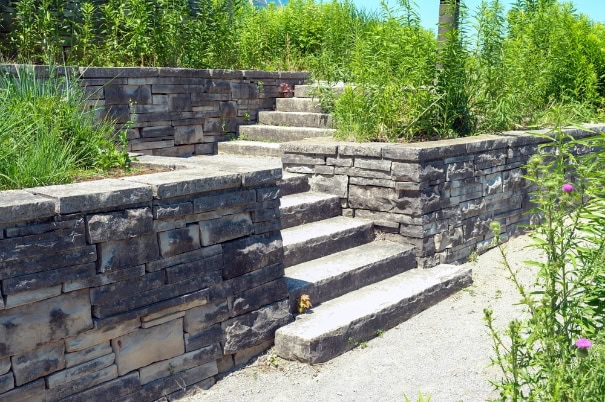
The short answer is: probably yes, even for a shorter wall. Under Pennsylvania’s Uniform Construction Code, retaining walls under four feet in height are generally exempt from a building permit but that doesn’t mean you’re exempt from local requirements. In Upland Borough specifically, a zoning permit is typically required for any retaining wall regardless of height, and the borough’s zoning ordinance (Chapter 185) includes specific provisions around structures on corner lots that could affect placement and design.
For walls four feet or taller, a building permit is required, and the plans need to be sealed by a registered Pennsylvania architect or engineer. Skipping this step in a small, dense borough like Upland where properties are close together and the borough council is engaged creates real exposure: potential fines, forced removal, and complications when you go to sell or file an insurance claim. Getting it permitted correctly from the start protects you on all of those fronts.
Retaining wall costs typically range from $40 to $345 per linear foot, depending on materials, wall height, drainage requirements, and site conditions. That’s a wide range and the reason it’s wide is that two walls of the same length can have very different requirements depending on what’s behind them and what the soil is doing.
In Upland specifically, a few factors tend to push costs toward the middle and upper end of that range. The borough’s clay-heavy soils require more robust drainage systems than you’d need in sandier ground. Properties near Chester Creek or on the slopes above it face elevated drainage pressure after heavy rain, which affects both the drainage design and the materials needed to handle it long-term. A proper on-site assessment is the only way to give you a number that actually reflects your property which is exactly why the process starts with a site visit, not a phone estimate.
The most common cause of retaining wall failure isn’t the wall itself it’s what happens behind it. When water builds up in the soil behind a wall and has nowhere to go, it generates hydrostatic pressure that can push thousands of pounds of lateral force against the structure. Eventually, something gives. The wall bows, the blocks shift, or the base gives way.
In Upland, this problem is compounded by two local factors. First, Delaware County’s clay soils don’t drain the way sandy or loamy soils do water accumulates and the clay expands, putting cyclical pressure on the wall through every wet season. Second, the freeze-thaw cycle from December through March means that water saturating the soil behind a wall freezes, expands, and loosens the earth every winter. Walls built without drainage systems designed for these specific conditions will show stress within a few seasons. The fix isn’t a stronger wall it’s a properly engineered drainage system built in from the start.
For a typical residential retaining wall, installation generally runs between two and five days once work begins though that range shifts based on wall length, height, drainage complexity, and site access. Longer walls, taller walls, and sites with significant grade changes or tight access (which is common in Upland’s denser, older neighborhoods) tend to take longer.
The more relevant timeline question for most homeowners is scheduling. Peak installation season in Delaware County runs from roughly March through October, and quality contractors in this area book four to eight weeks out during the busiest months. Spring is particularly high-demand because freeze-thaw damage becomes visible as the ground thaws homeowners who’ve been watching a wall deteriorate through winter are ready to move once the weather breaks. If you’re planning a project for this season, earlier inquiry means more scheduling flexibility and a better chance of getting the timing you want.
For most properties in Upland, the strongest performers are VERSA-LOK segmental block and natural stone. VERSA-LOK’s pinning system doesn’t require frost footings, which is a meaningful advantage in Pennsylvania’s freeze-thaw climate it’s engineered to handle the ground movement that happens between December and March without the footing depth that poured concrete walls require. Natural stone, when properly installed, can last well over a century in PA’s climate and tends to complement the older brick colonial character of Upland’s housing stock.
Treated timber is the material most worth reconsidering for this area. It performs reasonably in dry climates, but in Upland’s clay soil environment with its moisture retention, creek proximity, and wet spring seasons timber walls tend to land at the lower end of their 10-to-30-year lifespan. That means a reconstruction cost in the not-too-distant future. Matching the material to the actual site conditions from the start is what separates a wall that holds from one that becomes a recurring expense.
If your wall is leaning, cracking, or showing gaps between blocks, the freeze-thaw cycle has almost certainly been a factor and depending on how old the wall is, it may have been working on it for years. Upland has a lot of housing stock from the late 1800s through mid-1900s, and many of those properties have retaining walls built long before modern drainage engineering was standard. Walls from that era were often built without the drainage systems needed to handle hydrostatic pressure, which means every wet season adds stress that compounds over time.
The visible signs bowing, cracking, block separation are typically the result of water pressure that built up behind the wall and had nowhere to go. In some cases, the wall can be repaired; in others, the drainage problem is significant enough that rebuilding with a properly engineered system is the more cost-effective long-term answer. The only way to know which situation you’re dealing with is to have someone assess the wall and the drainage conditions behind it in person, not from a photo or a description over the phone.
Useful Links