
Hear from Our Customers
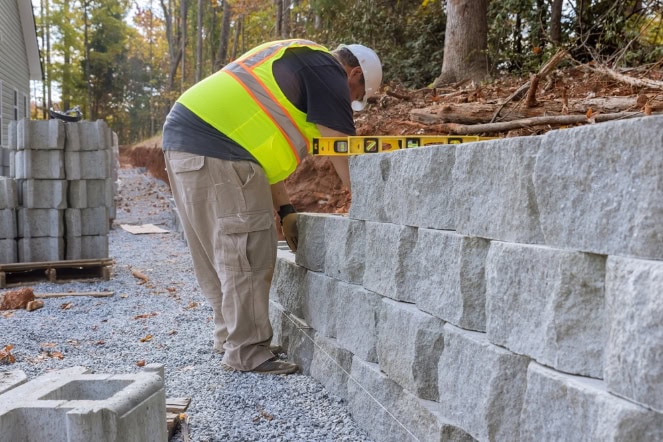
Most of the homes in Lower Chichester were built between the early 1900s and 1930s. That’s nearly a century of freeze-thaw cycles, heavy rain events, and slowly shifting soil and if the slope in your yard has been getting worse every spring, that’s exactly why. A well-built retaining wall stops the erosion cycle and turns a problem area into something you can actually use.
For properties throughout Lower Chichester, surface runoff during heavy rain is a real, recurring issue. The dense residential street grid doesn’t give water many places to go, and when it hits an unprotected slope, it takes your topsoil with it. A retaining wall with proper drainage behind it changes that equation entirely the water moves through the system instead of through your yard.
Beyond the functional fix, there’s real financial value here. Property appraisers consistently estimate 100–200% ROI on well-built retaining walls. For a home in Lower Chichester, where you’ve likely owned the property for years and plan to keep it, that kind of return on a structural improvement isn’t a small thing.
We’re based in Aston, PA one township over from Upper Chichester, which borders Lower Chichester directly. That’s not a marketing detail. It means we’re familiar with the older residential lots in Lower Chichester, the drainage patterns near the Delaware River corridor, and the soil conditions that affect how walls perform in this part of Delaware County.
Renato Spennato holds an active Pennsylvania contractor license (PA057623) and a BuildZoom score of 102, placing him in the top 11% of over 125,000 licensed contractors statewide. More importantly, he runs one crew with no subcontractors which means the same people who plan your wall are the same people who build it, and the same people who answer the phone if you have a question two years later.
In a community like Lower Chichester, where people have often lived in their homes for decades, that kind of accountability isn’t optional. It’s the baseline.
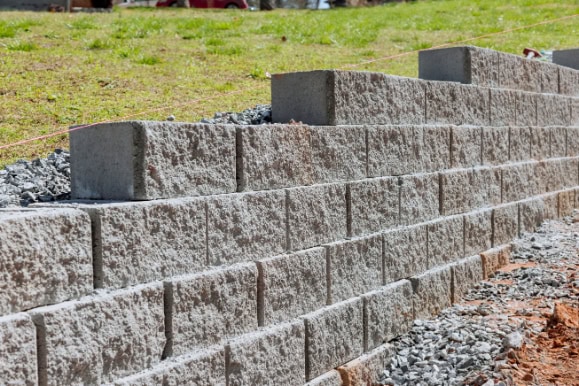
It starts with an in-person site visit not a phone estimate, not a number pulled from square footage alone. We come out, look at your specific slope, assess the drainage patterns on your property, and understand what’s actually causing the problem. For older lots in Lower Chichester, that assessment often reveals issues that a phone quote would completely miss.
From there, we put together a clear plan: materials, drainage design, timeline, and a firm quote before any work begins. If your wall requires a permit and under Lower Chichester Township’s municipal code, artificial walls do require an application and approval from the building inspector we walk you through that process. Walls over four feet may require additional engineering review, and we factor all of that in before the first shovel hits the ground.
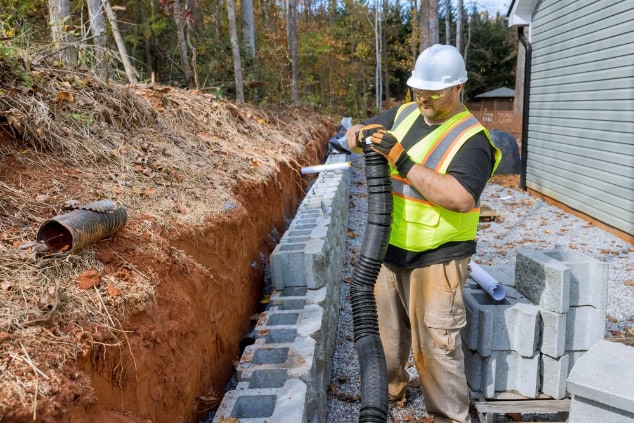
Once construction starts, drainage comes first. We install the drainage system before the wall goes up, because that’s what determines whether a wall holds for three years or thirty. After the wall is complete, we don’t disappear. If something comes up down the road, you’re calling the same number and reaching the same person.
Ready to get started?
Lower Chichester gets around 40–45 inches of rain annually, and the township’s position near the Delaware River means your property sits within a watershed where stormwater management is a genuine ongoing concern. Add Pennsylvania’s freeze-thaw cycles to the mix water seeps in, freezes, expands, loosens the soil, and thaws and you have a climate that puts real stress on any wall not built to handle it. Material selection matters here more than most contractors will tell you upfront.
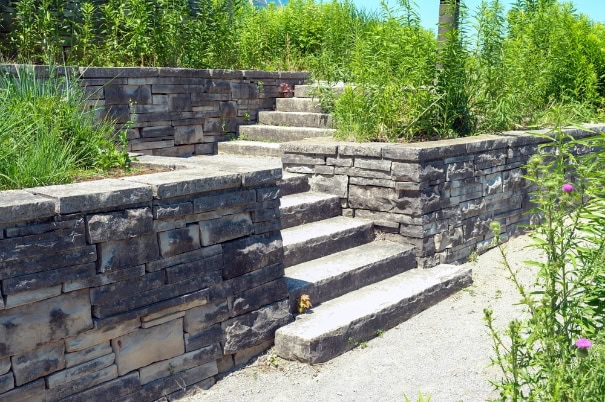
Depending on your site, your slope, and your goals, the right material might be VERSA-LOK modular concrete block, natural stone, or poured concrete each with a different lifespan, cost range, and performance profile. Treated timber walls typically last 10–30 years. Concrete block runs 30–50 years. Natural stone, built correctly, can last a century or more. We recommend based on what your wall actually needs to do, not what’s easiest to install.
Every project includes a proper drainage system behind the wall not as an add-on, but as a standard part of how we build. That’s what separates a wall that performs from one that leans and fails. For homes in Lower Chichester where surface runoff is a consistent issue, getting the drainage right the first time is the whole point.
Yes Lower Chichester Township requires a permit for artificial walls under Section 1290.07 of their municipal code. When you apply, you’ll need to submit a plan or sketch showing the proposed location and materials. The building inspector reviews it and issues a permit that’s valid for six months from the date of approval.
Beyond the local permit, Pennsylvania’s Uniform Construction Code comes into play for taller walls. Retaining walls under four feet are generally exempt from a state building permit, but that doesn’t override the township’s own permit requirement. Walls four feet or taller may require additional engineering review, and in some cases, plans sealed by a licensed professional engineer. We handle the permit process as part of the project you don’t have to figure out which forms go where or which office to call.
Retaining wall costs vary significantly depending on height, material, length, and how much drainage work the site requires. In general, you’re looking at a range of roughly $40 to $345 per linear foot which is a wide spread, and the reason phone estimates are almost always inaccurate. Most residential projects in Lower Chichester fall somewhere between $3,500 and $10,000 total, though larger or more complex walls can go higher.
For Lower Chichester specifically, older properties with decades of soil displacement and poor original grading can require more prep work before the wall even goes in and that affects cost. The best way to get an accurate number is an in-person site visit where we can actually see the slope, the drainage situation, and the access conditions. We provide itemized quotes after that visit so you know exactly what you’re paying for before anything starts.
The most common cause of retaining wall failure is hydrostatic pressure water building up behind the wall with nowhere to go. As that pressure increases, it pushes laterally against the wall until something gives. In Lower Chichester’s climate, where freeze-thaw cycles hit the soil repeatedly each winter, that pressure compounds over time. A wall that looks fine in October can start showing real stress by March.
Signs your existing wall may be in trouble include visible leaning or bowing, cracks running horizontally through the face of the wall, soil or water seeping through gaps, or sections that have shifted out of alignment. Older walls particularly timber or basic concrete block installations common on homes built in the early 1900s are especially vulnerable once they’ve been in the ground for 30 or 40 years. If you’re seeing any of those signs, it’s worth having someone look at it before the next hard winter.
Lifespan depends almost entirely on two things: the material used and whether the drainage was done correctly. Treated timber walls typically perform for 10–30 years before the wood begins to rot and lose structural integrity. Concrete block, including modular systems like VERSA-LOK, is rated for 30–50 years under normal conditions. Natural stone walls built with proper drainage can last well over a century which is fitting for a community where the homes themselves are already 90–120 years old.
Pennsylvania’s climate shortens the lifespan of any wall that wasn’t built with freeze-thaw cycles in mind. Water that gets trapped behind a wall and freezes puts enormous stress on the structure from the inside. That’s why drainage isn’t a secondary consideration it’s the primary factor in how long your wall actually holds up. A well-drained wall in Lower Chichester’s climate will outlast a poorly drained one by decades, regardless of what it’s made of.
Grading and added fill can help in some situations, but they don’t solve the underlying problem if the slope is steep enough or if water is the main driver of erosion. On older properties which describes most of Lower Chichester the original grading has often settled and shifted over decades, and simply adding more soil to a problem slope tends to wash away the same way the original soil did.
A retaining wall creates a fixed, structural boundary that holds the grade in place permanently. It doesn’t just cover the symptom it changes the physical dynamic of the slope. When combined with a proper drainage system, it redirects water flow so the soil behind the wall stays stable instead of saturating and shifting. For homeowners in Lower Chichester dealing with slopes that have been eroding for years, a retaining wall is typically the only solution that actually holds long-term.
It can and the value tends to show up in two ways. The first is functional: a wall that stops erosion, manages drainage, and creates usable yard space makes the property genuinely more livable. For a homeowner who has lived in the same house for 20 or 30 years, that’s not a small quality-of-life improvement. The second is financial property appraisers estimate 100–200% ROI on well-built retaining walls, meaning the investment often returns more than it costs at resale.
In Lower Chichester, where median home values range from roughly $102,000 to just under $200,000, a retaining wall that solves a visible drainage or erosion problem can meaningfully improve how a buyer perceives the property. It signals that the home has been maintained, that the yard is functional, and that there isn’t a deferred structural problem waiting to become their problem. For a community where long-term homeownership is the norm, that kind of investment makes practical sense.
Useful Links
Other Services we provide in Lower Chichester