
Hear from Our Customers
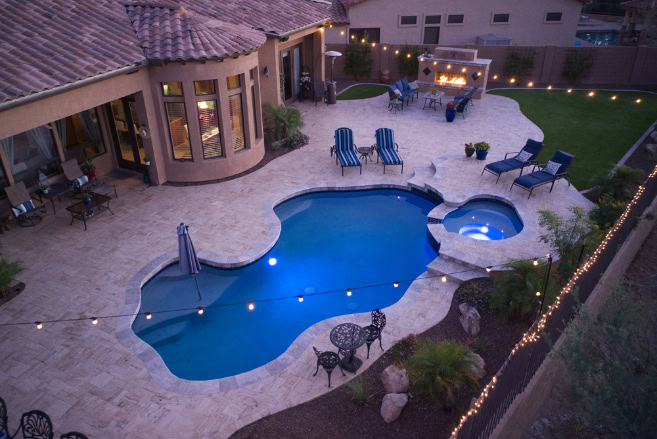
Most of the homes along Glenolden’s residential streets were built in the 1940s and 50s capes, ranches, split-levels that were designed for function, not outdoor living. The backyard was an afterthought then. It doesn’t have to be now. When the design is done right, you go from a lawn you mow to a space you actually use weekend dinners outside, summer cookouts that don’t require hauling everything in and out of the house, evenings that stretch later than they used to.
The other thing worth knowing is that not every outdoor kitchen is built to last in this part of Pennsylvania. Delaware County winters are hard on outdoor structures temperatures cycling above and below freezing repeatedly, expanding and contracting every material that wasn’t engineered for it. A build that isn’t designed with frost-proof materials and a properly prepared base will start showing problems within a few years. You’ve probably already seen it with driveways and patio pavers in your Glenolden neighborhood. The right outdoor kitchen doesn’t have that problem.
And because Glenolden lots are modest most backyards are under a quarter-acre the design conversation here isn’t about how big you can go. It’s about how smart the layout can be. A well-designed outdoor kitchen on a smaller lot feels intentional and proportional. A poorly designed one feels crammed. The difference is in the planning, and that’s where the process starts.
We’ve been doing hardscape and landscaping work in Delaware County for over 15 years. Our base is in Aston a straight shot up Chester Pike from Glenolden which means we’re not a regional company dispatching crews from somewhere unfamiliar with the area. We’re a local operation that works in Glenolden and its neighboring communities like Norwood, Folcroft, and Ridley Township regularly.
What makes the biggest practical difference for you is our single-crew model. One team handles your project from the first site visit through the final walk-through no subcontractors who’ve never met each other, no gaps in communication between trades, no wondering who to call when something needs attention. The same people who designed it built it. That accountability doesn’t disappear after the last day on the job.
Renato Spennato is personally involved in the projects we take on. That’s not a marketing line it shows up in the reviews, and it shows up in how the work gets done.
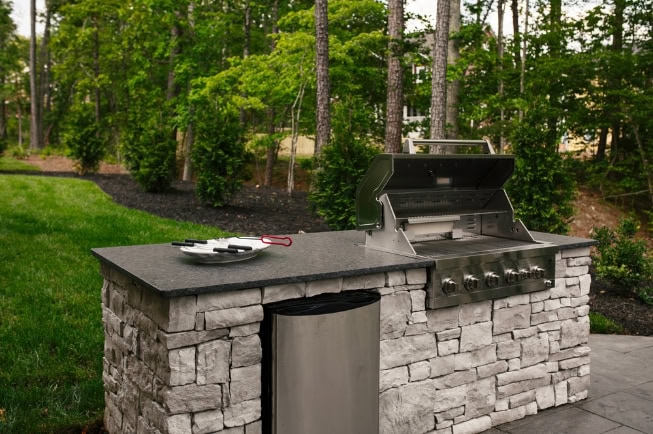
It starts with a site visit not a phone estimate, not a generic quote based on square footage. Glenolden lots have real constraints: compact dimensions, mature trees maintained by the borough’s active Shade Tree Commission, and setback requirements in the borough zoning code that require a minimum three-foot clearance from property lines for outdoor structures. Those details matter before a single design decision gets made. The site visit is where that all gets mapped out.
From there, the design phase is a back-and-forth. How do you cook? How many people do you typically have over? Do you want a built-in grill and counter space, or are you thinking about adding a sink, a refrigerator, maybe a pizza oven down the line? The layout gets built around your answers, not around a catalog template. Once the design is set, we handle the permit submission through Glenolden Borough’s online system including any coordination needed for gas, electrical, or plumbing connections, each of which requires its own licensed trade permit in Pennsylvania.
Construction runs April through October in this region. Masonry and hardscape work can’t be done safely below 40°F, so if you want the outdoor kitchen ready for Memorial Day entertaining, the conversation needs to start in late winter January or February at the latest. That’s not a sales tactic. It’s just how the Delaware County build calendar works, and knowing it upfront saves a lot of frustration later.
Ready to get started?
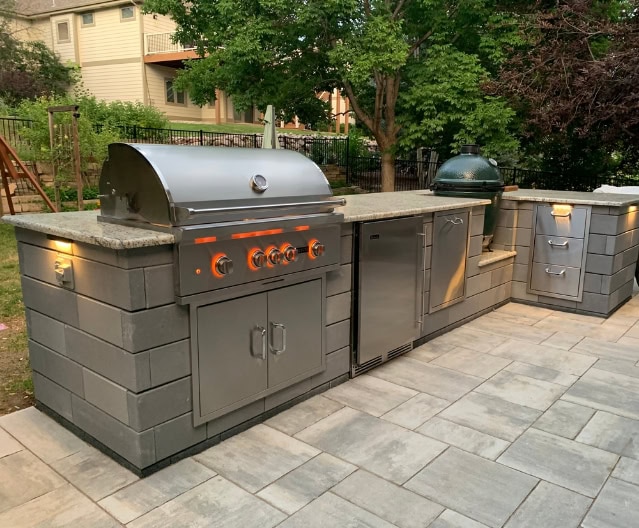
Every outdoor kitchen we build in Glenolden starts from the same place: your actual backyard, not an idealized version of it. The material selection is deliberate frost-proof stone veneer, stainless steel appliances rated for outdoor exposure, marine-grade cabinetry that handles humidity without warping, and base preparation that accounts for the freeze-thaw cycles Delaware County delivers every winter. These aren’t upgrades. They’re the baseline for a build that holds up.
The scope is flexible. Some homeowners in Glenolden want a well-built grill station with counter space and storage clean, functional, and scaled to a smaller yard. Others want the full setup: built-in grill, side burners, refrigerator, sink, and a designated seating area. Both are valid, and both get the same design process. The difference is in what you want the space to do, not in how much attention the build gets.
Gas line installation, electrical connections, and plumbing are all coordinated through us licensed tradespeople brought in at the right phase, permitted correctly, and integrated into the overall project timeline. You’re not managing three separate contractors. One point of contact handles all of it. For a Glenolden homeowner investing $15,000 to $35,000 in their backyard, that coordination isn’t a convenience it’s the difference between a project that goes smoothly and one that doesn’t.

Yes, and it’s worth understanding what that actually means for your project before you start. Glenolden Borough requires permits for outdoor kitchen structures, and the zoning code enforces a minimum three-foot side yard setback from property lines for decks and outdoor structures. On a compact Glenolden lot, that setback is a real design factor not a technicality and it has to be accounted for before the layout is finalized. Violations carry fines of up to $500 per day, so this isn’t something to skip or figure out after the fact.
Beyond the structural permit, any outdoor kitchen that includes a gas line, electrical connection, or plumbing requires separate licensed trade permits coordinated with the borough’s building department. Glenolden processes permit applications through an online system, and payment is only accepted after permit approval not before. We manage the full permit process: submitting the application, coordinating with the borough, and ensuring everything is approved before construction begins. You don’t need to learn the code. That’s already handled.
The range is wide because the scope varies significantly. A straightforward grill station with counter space, storage, and quality materials typically starts around $12,000 to $18,000. A more complete setup built-in grill, refrigerator, sink, side burners, and a designated seating area generally runs $20,000 to $35,000 depending on material choices and site conditions. Larger or more complex builds with premium stone, pizza ovens, or pergola structures can go higher.
For a Glenolden homeowner, the context worth keeping in mind is that the median home value in the borough sits around $235,000. A $20,000 outdoor kitchen represents roughly 8 to 9 percent of that value and industry data consistently shows outdoor kitchens returning 55 to 100 percent of their cost at resale. In a Delaware County market where buyers increasingly expect outdoor living features, a well-built outdoor kitchen doesn’t just improve how you use your home it improves what it’s worth when you’re ready to sell.
It depends entirely on how it was built. Delaware County winters are hard on outdoor structures temperatures that cycle repeatedly above and below freezing create the freeze-thaw conditions that crack inferior masonry, shift improperly prepared bases, and degrade materials that weren’t rated for this climate. If you’ve watched a concrete driveway or patio pavers deteriorate on your Glenolden street over the years, you’ve already seen what this does to the wrong materials.
A properly built outdoor kitchen uses frost-proof materials throughout stone veneer rated for freeze-thaw exposure, stainless steel appliances designed for outdoor use in four-season climates, and a base that’s excavated and compacted correctly to prevent frost heave. The base preparation is especially important and often where cheaper builds cut corners. When the foundation moves, everything above it moves with it. We build with materials and methods specific to Pennsylvania’s climate, not just what looks good in a showroom photo. A build done right here should still look and function exactly as built ten or fifteen years from now.
Yes but the design has to be honest about the space. Glenolden’s post-WWII housing stock sits on compact lots, and the usable backyard area is often smaller than it looks on paper once you account for setbacks, existing structures, and the mature trees that are a recognized feature of the borough’s residential character. A design that ignores those constraints ends up feeling cramped. A design that works with them can feel intentional and genuinely livable.
The key is starting with a real site assessment rather than a standard layout. Some of the best outdoor kitchens on smaller lots are L-shaped or linear configurations that hug a fence line or exterior wall, leaving the center of the yard open. Others incorporate the existing grade or hardscape to define the cooking zone without adding unnecessary footprint. There’s no single answer for every Glenolden backyard, which is why the design process starts with your specific space not with a catalog option that may or may not fit. Compact doesn’t mean compromised. It just means the design has to be smarter.
From the first conversation to a completed outdoor kitchen, most projects run six to twelve weeks total though the timeline depends on design complexity, permit approval speed, and where you fall in the construction schedule. The permit process through Glenolden Borough adds time upfront, and that’s time worth taking. Rushing into construction before permits are approved creates real legal and financial risk, including fines and potential mandatory removal of unpermitted structures.
The practical thing to understand about timing in Delaware County is that the outdoor construction season runs roughly April through October. Masonry and hardscape work can’t be done safely in cold or wet conditions mortar and concrete don’t cure properly below 40°F, and a build done in those conditions is a structural problem waiting to happen. If you want your outdoor kitchen ready for summer, the planning conversation needs to start in January or February. Homeowners who reach out in April or May are typically looking at a mid-summer or fall completion. Starting early isn’t just about getting a spot on the schedule it’s about giving the design and permit process the time it needs to be done right.
The honest answer is accountability. A larger regional operation may have a polished website and a wide service area, but when your project is one of dozens running simultaneously across multiple counties, you are not the priority. The most common contractor complaints in Delaware County documented in BBB filings involve contractors who go quiet after taking a deposit, subcontract the actual work to crews the homeowner never met, and become unreachable when something needs attention after completion.
A local contractor with a single-crew model and an owner who is personally involved in the work operates differently not because of values language on a website, but because of structure. When one team builds your outdoor kitchen and one person is accountable for the result, there’s no ambiguity about who to call if something comes up. We’ve been working in this part of Delaware County for over 15 years, serving Glenolden and the surrounding boroughs along the Chester Pike corridor. That’s 15 years of working with the same soil conditions, the same permit offices, and the same homeowners who talk to their neighbors. In a tight-knit community like Glenolden, that track record means something.
Useful Links