
Hear from Our Customers

When water stops pooling against your foundation, a lot changes. The soggy corner of your yard that stays wet for days after a storm gone. The basement wall that sweats every spring addressed at the source, not just managed from the inside.
Glenolden’s housing stock was built primarily in the 1940s, and those original grades have shifted significantly over the past 70 to 80 years. What once sloped away from your home may now slope directly toward it. On a compact lot and most lots in Glenolden are compact there’s very little room for water to go anywhere except against your foundation or into your neighbor’s yard.
That’s the reality of drainage in a borough this dense. Under one square mile, over 7,200 residents, and row houses and attached homes making up nearly 40% of the housing stock. Fixing standing water here isn’t just about aesthetics. It’s about protecting a home that represents real financial value to your family and doing it before the damage becomes structural.
We’re based in Aston, PA a short drive down familiar Delaware County roads from Glenolden. This isn’t a regional company running ads in every zip code. We’re a local crew that has spent 15 years working in this county’s boroughs, understanding the soil, the housing stock, and the drainage conditions that come with it.
Renato and our team handle grading and drainage as one integrated scope not two separate services handed off between different contractors. That matters when the root cause of your flooding is a grading problem that a drainage pipe alone won’t fix.
If you’re near MacDade Boulevard or anywhere in the Interboro district, you’re in the area we know and work in regularly. Glenolden’s conditions are familiar to us the tight lots, the older homes, the Darby Creek watershed requirements and we bring that context to every job.
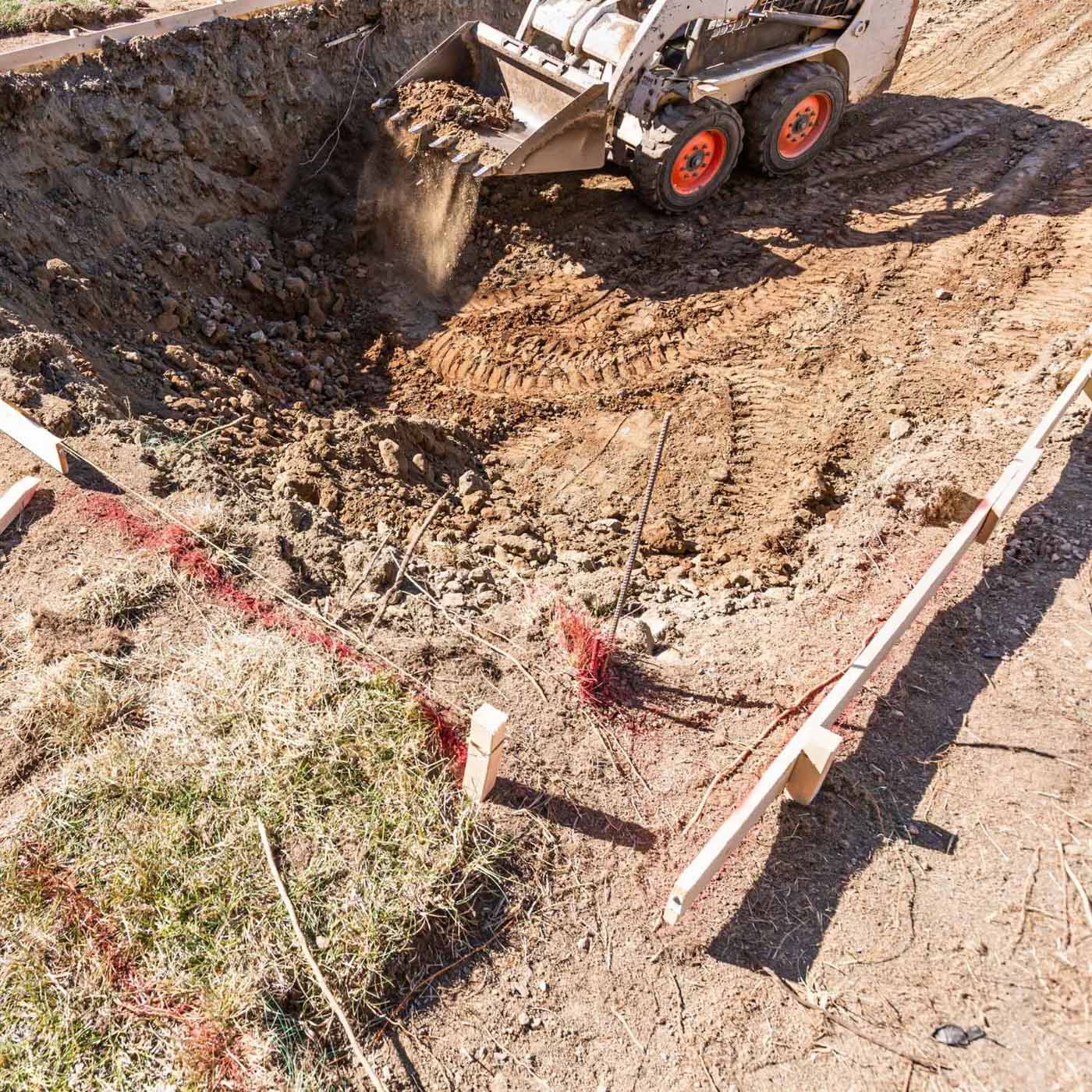
The first thing we do is walk the property and read where the water is actually going. That means looking at the existing grades, where the downspouts are discharging, how the lot sits relative to neighboring properties, and where water is entering or collecting. In a borough like Glenolden, where lots are small and homes sit close together, that site read determines everything because the wrong drainage solution on a tight lot can push your problem onto someone else’s property.
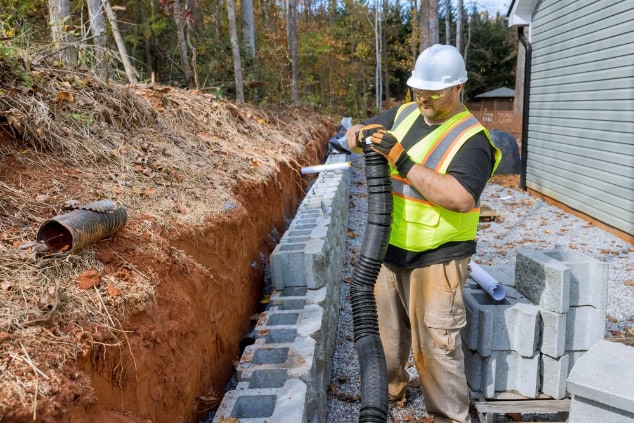
From there, we design a system that fits the actual space and addresses the actual cause. Sometimes that’s a French drain with a properly bedded pipe and gravel bed engineered to survive Pennsylvania’s freeze-thaw cycles. Sometimes it’s targeted regrading, extended downspout runs, or a catch basin tied into a discharge point that moves water away cleanly. Often it’s a combination. We’ll tell you which, and why, before any work starts.
Once the scope is agreed on, we handle the installation from start to finish same crew, no subcontractors. We also keep Glenolden Borough’s stormwater management ordinance and the Darby Creek watershed standards in mind throughout, so the work is done right and done to code. When we leave, your yard is restored and the system is built to last.

Ready to get started?
Every drainage job we take on in Glenolden starts with a grading assessment because in a borough where original grades are 70 to 80 years old, the slope of your yard is rarely what it was when the house was built. We correct that first. Drainage infrastructure installed on incorrect grades doesn’t drain it just moves the problem.
From there, the system is built around your specific property. French drain installation in Delaware County typically runs between $5,000 and $9,000 depending on linear footage, system complexity, and site conditions. On a compact Glenolden lot, that scope is often tighter than a larger suburban property which can work in your favor. We’ll give you a clear number before anything starts, with no ambiguity about what’s included.
What you get is a complete outdoor drainage system grading, pipe, aggregate, catch basins or channel drains where needed, and a discharge point that moves water fully off your property. We also account for Glenolden Borough’s stormwater ordinance and the Act 167 requirements tied to the Darby Creek watershed. Most homeowners don’t know those requirements exist. We do and we make sure the work meets them, so there are no issues down the road.

The most common reason is grading that has shifted over time. Homes in Glenolden were built primarily in the 1940s, and the original grading around those foundations has settled, been altered by landscaping, or simply eroded over 70 to 80 years. When that happens, the slope that was supposed to carry water away from your home starts directing it toward the foundation instead and on a small lot with limited absorption area, that water has nowhere to go except into your yard and eventually your basement.
The second factor is impervious surface coverage. In a borough this dense, a high percentage of every lot is covered by roofs, driveways, sidewalks, and patios. Water that hits those surfaces runs off immediately and concentrates in whatever low spots exist on your property. The ground simply can’t absorb it fast enough. The fix is usually a combination of corrected grading and a properly installed drainage system not one or the other, but both working together.
Regrading changes the physical slope of your yard so water flows away from your home and toward a safe discharge point. It’s the foundation of any drainage solution if the grade is wrong, nothing else works correctly. A French drain is a subsurface drainage system: a perforated pipe bedded in gravel that collects groundwater and moves it to a discharge point. It handles water that’s already in the soil, not just water running across the surface.
In practice, most Glenolden properties need both. The grading handles surface runoff, and the French drain handles subsurface saturation especially common in older Delaware County neighborhoods where soil has compacted over decades and drainage naturally slows. Installing a French drain without correcting the grade first is one of the most common mistakes homeowners make, and it’s why a lot of drainage installs fail within a few years. We assess both before recommending either.
It depends on the scope of the work. Glenolden Borough has its own stormwater management ordinance Ordinance 2146 which establishes standards for how stormwater runoff is managed on private property. The borough also falls within the Darby Creek watershed, which is subject to Pennsylvania’s Act 167 stormwater management planning requirements. Larger grading or earth disturbance projects may also require an erosion and sediment control permit through the Delaware County Conservation District.
For most residential drainage and grading projects, the permit requirements are manageable but they need to be accounted for, not ignored. A drainage system that doesn’t meet the borough’s stormwater standards can create compliance issues and may need to be redone. Pennsylvania law also requires notification through PA 811 before any excavation begins. We handle all of this as part of the standard project process, so you’re not left figuring out the regulatory side on your own.
For most residential properties in Delaware County, French drain installation runs between $5,000 and $9,000. The range comes down to a few factors: how many linear feet of pipe the system requires, how complex the discharge solution needs to be, whether grading corrections are needed alongside the drain installation, and the specific conditions of your site. Labor makes up the majority of the cost typically 80 to 85 percent which is why installation quality matters so much. A system that fails in three years because the pipe wasn’t properly bedded or the gravel specification was wrong costs more to fix than it did to install the first time.
On a compact Glenolden lot, the linear footage is often shorter than on a larger suburban property, which can bring the cost toward the lower end of that range. But the site complexity tight access, proximity to neighboring foundations, older utility infrastructure can offset that. We give you a specific number after seeing the property, not a range designed to get you on the phone.
In many cases, yes and it’s often more effective than interior waterproofing alone. Basement moisture in Glenolden’s older homes is frequently caused by water that accumulates against the foundation from the outside, either because the grading slopes toward the home or because downspouts are discharging too close to the foundation. When you correct the exterior drainage and grading, you remove the source of the pressure that’s pushing water through the foundation wall in the first place.
Interior waterproofing systems sump pumps, interior drain tile manage water after it’s already entered the structure. Exterior drainage work stops it before it gets there. For homes built in the 1940s with aging foundation materials, that distinction matters. We’re not saying interior systems are never needed, but if the exterior drainage and grading haven’t been addressed, an interior system is working harder than it should. Fixing the outside first is almost always the right starting point.
A properly installed system in Delaware County should last 30 to 40 years or more. The key word is properly. Pennsylvania’s freeze-thaw cycles are hard on drainage infrastructure pipe joints that weren’t correctly bedded, catch basins set at the wrong depth, and gravel beds that weren’t adequately compacted will shift and fail after a few winters. This is one of the most common reasons homeowners end up calling a contractor to redo drainage work that was done only five or six years earlier.
The materials matter too. Perforated pipe, the right aggregate specification, and properly sealed outlet points are not interchangeable with cheaper alternatives. In Glenolden specifically, where lots are small and access for future repairs is limited, getting the installation right the first time is especially important digging up a compact yard twice is significantly more disruptive than doing it once and doing it correctly. We use materials and methods built for this climate, and we stand behind the work we do.
Useful Links