
Hear from Our Customers

Living near the Delaware River in Marcus Hook isn’t just scenic — it means your driveway is dealing with more ground moisture than most inland communities. Water saturates the soil longer here, works its way into surface cracks, and when temperatures drop below freezing, it expands. That cycle repeats all winter. By spring, what started as a hairline crack is a problem that costs real money to fix.
Sealcoating is the most straightforward thing you can do to interrupt that cycle. A properly applied sealcoat blocks moisture at the surface before it has a chance to get underneath. For Marcus Hook homeowners sitting on properties that have nearly doubled in value since 2000, spending a few hundred dollars every couple of years to protect a driveway that would cost $5,000 or more to replace is just practical math.
And if your driveway is already past the point of maintenance — which is common in a borough where much of the housing stock dates back to the early 20th century, including homes in Viscose Village — a full replacement done right, with proper base preparation for the local soil conditions, will last decades instead of failing in five years. That’s the difference proper work makes.
We’re based in Aston, PA — a few miles up the road in Delaware County from Marcus Hook. This isn’t a company adding Marcus Hook to a list of zip codes we’ll drive to. We’ve been working across this county for over 15 years, and we understand what the soil, the weather, and the older housing stock in Marcus Hook actually demand from a paving job.
Owner Renato Spennato is personally involved in projects — not handing them off to a rotating subcontractor. When you call, you’re reaching a real local business with a real local reputation. In a tight-knit borough like Marcus Hook, accountability matters more than any sales pitch.
The other thing worth knowing: we’re not a paving-only company. If your project involves more than just the driveway — a retaining wall, a patio, grading work — it can all happen under one roof, one timeline, one team.
It starts with an honest assessment of what you’re working with. Some driveways in Marcus Hook need full replacement — especially older ones where the base has been compromised by years of saturated soil and freeze-thaw stress. Others are solid candidates for resurfacing or sealcoating. You’ll get a straight answer on which is which, and why, before any work is scheduled.
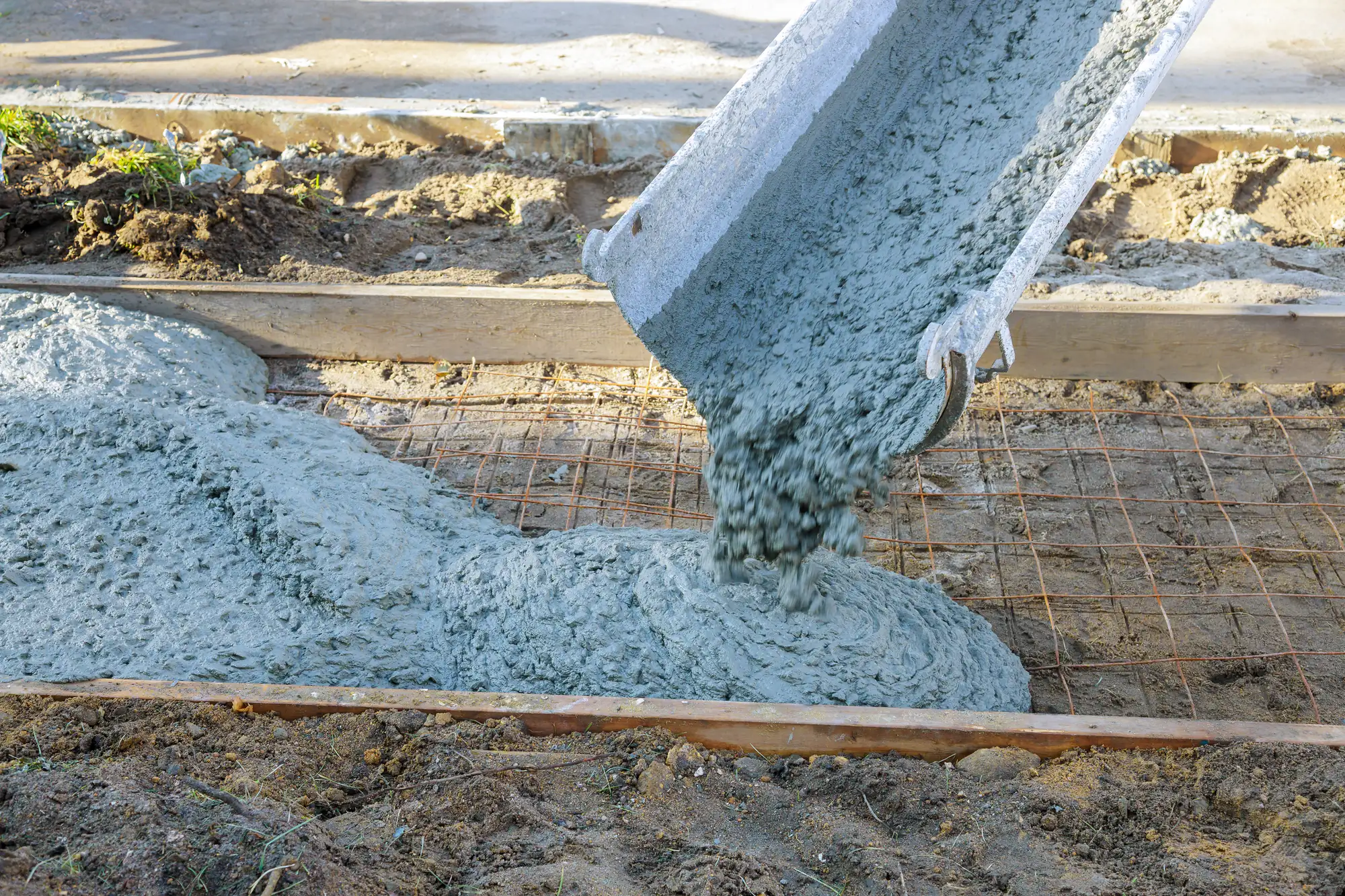
If replacement is the right call, the job starts with excavation and base preparation. In Delaware County’s clay-heavy soil — and particularly in areas close to the Delaware River where ground saturation runs higher — skipping or shortcutting the sub-base is how driveways fail early. A properly compacted crushed gravel base is what gives the asphalt above it somewhere stable to live. This step doesn’t get rushed.
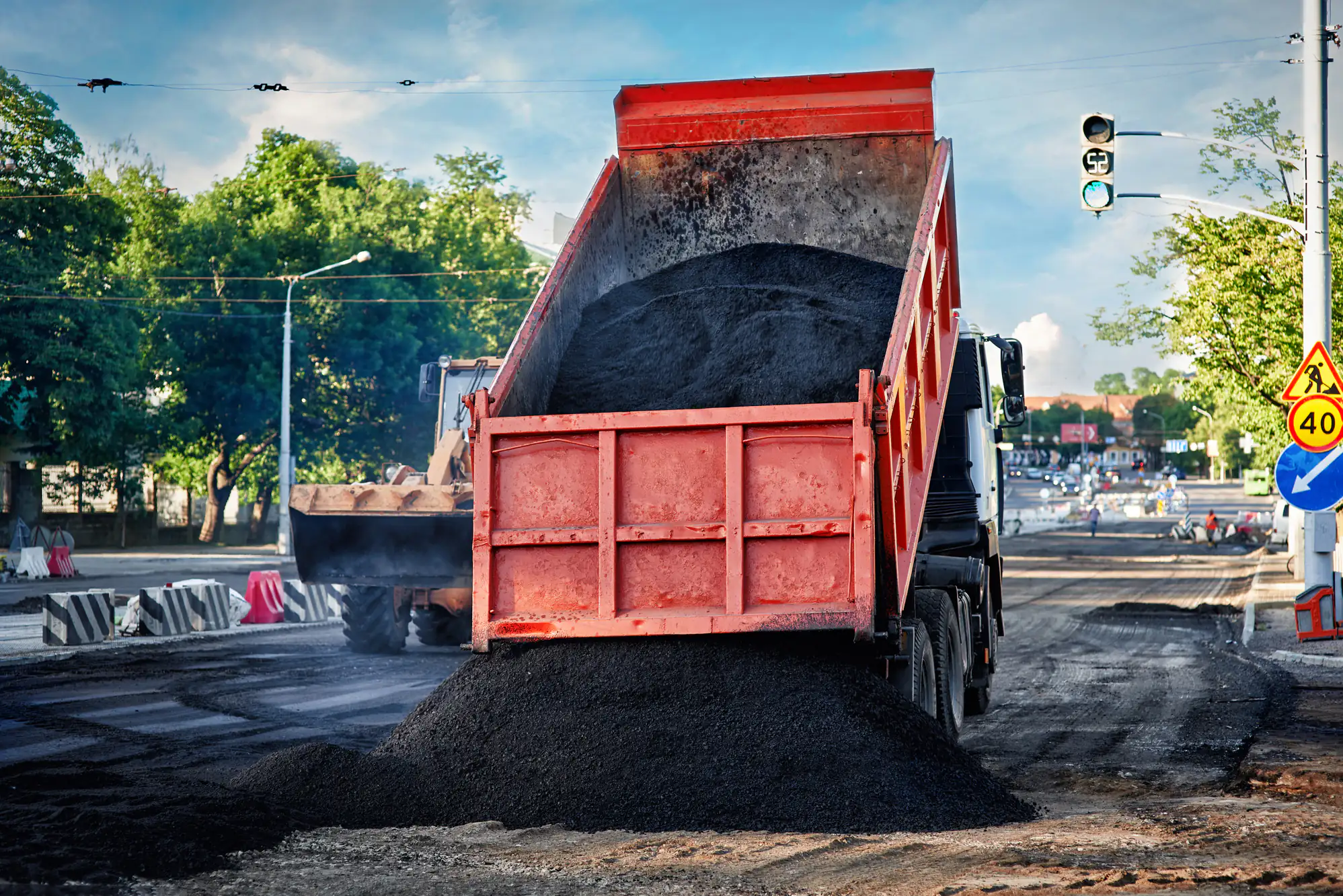
Once the base is set, asphalt is installed and compacted to the correct depth. For driveways that connect to a public road like 10th Street or Market Street, the work within the right-of-way meets PennDOT thickness requirements. If your project requires a borough permit — particularly if it touches the curb line or gutter — we handle that coordination upfront, not as an afterthought. After installation, new asphalt needs time to cure before sealcoating is applied — typically six to twelve months. That’s not a delay, it’s just how the material works, and doing it on the right timeline protects the investment you just made.
Ready to get started?
We handle the full range of residential asphalt work — new driveway installation, driveway sealcoating, crack filling, pothole repair, and resurfacing. For homeowners in Marcus Hook, that often means starting with a conversation about what’s worth repairing versus what’s reached the end of its useful life. Asphalt driveways in Pennsylvania typically last 20 to 30 years with proper maintenance, and considerably less without it. A lot of the housing in Marcus Hook is old enough that the original driveway has already outlived that window.
New installation runs between roughly $3,100 and $7,400 for a typical residential driveway, depending on size, current conditions, and how much base work is involved. Sealcoating on its own averages $355 to $600 — and it’s the most cost-effective maintenance service available for a driveway you already own. Crack filling and pothole repair fall in between, and in many cases, addressing those issues early is what prevents a manageable repair from turning into a full replacement job.
For Marcus Hook’s townhome stock — most units running between 1,000 and 1,500 square feet with smaller driveway footprints — sealcoating is particularly accessible. The cost is proportionally lower than a large suburban driveway, and the protection is the same. Whether you’re on a side street off Route 13 or in one of the older residential blocks near the waterfront, the goal is the same: a surface that holds up through the winters and doesn’t need to be replaced on a five-year cycle.
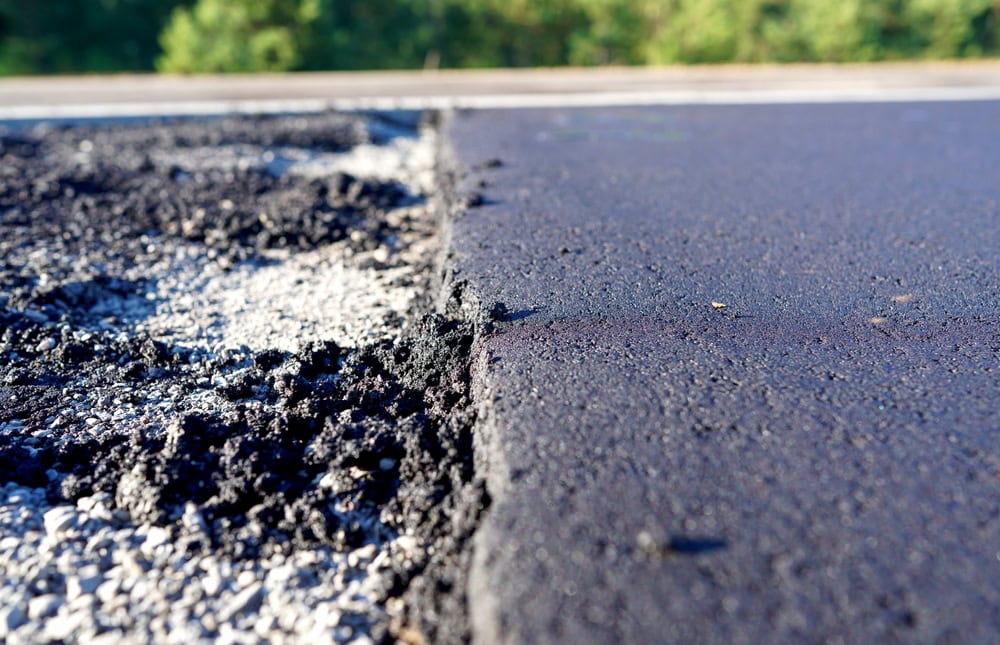
The honest answer is that it depends on the condition of the base, not just the surface. If your asphalt has surface cracking that hasn’t gone deep, sealcoating and crack filling can extend the life of the driveway meaningfully — sometimes by five to seven years. That’s a legitimate option, and it’s usually the right starting point if the driveway is otherwise structurally sound.
Where replacement becomes necessary is when the base has been compromised. In Marcus Hook, that happens more often than in drier, inland communities because the soil near the Delaware River stays saturated longer. When water gets under the asphalt, the sub-base softens, the surface starts to heave or sink, and no amount of patching fixes the underlying problem. If you’re seeing large alligator-pattern cracking, significant sinking, or sections that flex underfoot, those are signs the base is the issue — and resurfacing over a failed base just delays the inevitable. We’ll give you a proper assessment before any money changes hands.
Sealcoating applies a protective layer over your asphalt surface that blocks water, UV exposure, and minor surface abrasion from penetrating the material. The main job it does in Pennsylvania — and especially in a riverside borough like Marcus Hook — is prevent moisture infiltration. Water is the primary enemy of asphalt in this climate. Once it gets into surface cracks and the temperature drops, it freezes, expands, and widens those cracks from the inside. Sealcoating interrupts that process at the surface level.
The National Asphalt Pavement Association recommends sealcoating every one to three years for residential driveways. The right interval for your specific driveway depends on traffic, sun exposure, and how well the previous coat held up. What’s worth knowing is that sealcoating is only effective on asphalt that’s in reasonable condition — it’s a maintenance tool, not a repair. If your driveway has existing cracks, those get filled first, then the sealcoat goes on top. Done on the right schedule, sealcoating is the single best way to push a driveway’s lifespan from 15 years to 25 or beyond.
For basic sealcoating or crack filling that doesn’t affect the curb, gutter, or public right-of-way, a permit is typically not required in Marcus Hook. However, if your driveway project involves changes to the curb line, the gutter, or any portion of the work that falls within the borough’s right-of-way, a permit through Marcus Hook Borough may be necessary — and the work within that right-of-way needs to meet borough specifications for curb returns and gutter construction.
For driveways that access US Route 13 (10th Street) or PA Route 452 (Market Street), Pennsylvania state requirements under 67 Pa. Code § 441.8 apply — driveway pavement within the state right-of-way must be at least four inches thick and meet PennDOT material standards. The practical takeaway is that for most straightforward residential sealcoating or resurfacing jobs in Marcus Hook, permits aren’t an issue. For new installation or anything that touches the public right-of-way, it’s worth confirming with the Marcus Hook Borough office before work starts — and we can walk you through what applies to your specific project.
New asphalt can typically handle foot traffic within 24 hours and light vehicle traffic within two to three days, but it’s not fully cured for several weeks. During that curing window, the asphalt is still somewhat pliable — especially in warm weather — so it’s worth avoiding sharp turns, heavy vehicles, and parking in the same spot repeatedly until the surface has fully hardened. In the summer months, when temperatures in the Marcus Hook area regularly climb into the upper 70s and 80s, new asphalt stays softer longer and needs a bit more care in those first few weeks.
One thing that often comes up is timing around sealcoating. New asphalt should not be sealcoated immediately after installation — the surface needs six to twelve months to cure and off-gas its natural oils before a sealcoat will bond properly. Applying it too early can actually trap those oils and damage the surface. This is a detail that matters, and it’s one of the reasons you want a contractor who gives you the honest timeline rather than upselling you on a service your new driveway isn’t ready for yet.
For most residential driveways in Pennsylvania — and particularly in a borough like Marcus Hook where freeze-thaw cycles are a real annual factor — asphalt is generally the better fit. The core reason is flexibility. Asphalt flexes slightly as the ground moves through freeze-thaw cycles, which means it absorbs that stress rather than cracking under it the way rigid concrete does. Concrete driveways in Pennsylvania climates are more prone to cracking and spalling, especially when road salt or ice melt products are used nearby.
Asphalt also has a meaningful cost advantage. Installation typically runs $3,100 to $7,400 for a residential driveway, compared to concrete which tends to run higher. Repairs are easier and less expensive as well — a cracked asphalt section can be patched cleanly, while concrete repairs are more visible and structurally complicated. The trade-off is that asphalt requires periodic maintenance (sealcoating every one to three years), while concrete is more hands-off. But given the moisture and temperature conditions specific to southeastern Pennsylvania, asphalt’s flexibility and repairability make it the more practical long-term choice for most Marcus Hook homeowners.
The most documented risk in this area is the door-to-door paving offer — a crew shows up claiming they have leftover asphalt from a nearby job and can give you a deal if you book today. The BBB and consumer protection agencies across southeastern Pennsylvania have flagged this repeatedly. The asphalt used in these situations is often low-grade, the base preparation is skipped entirely, and the “company” has no local address, no verifiable reviews, and no accountability if the driveway fails in six months. In a working-class borough like Marcus Hook where a driveway replacement is a real household expense, that’s a costly mistake.
Beyond the obvious scams, the more common issue is contractors who are real businesses but cut corners on base preparation — the step that actually determines how long your driveway lasts. Ask any contractor you’re considering how they handle sub-base preparation, what depth they excavate to, and whether they can provide local references from completed jobs in Delaware County. A contractor who’s done honest work in this area will have no problem answering those questions. One who gets vague or pushes you to sign before giving straight answers is worth walking away from, regardless of the price.
Useful Links
Other Services we provide in Marcus Hook