
Hear from Our Customers
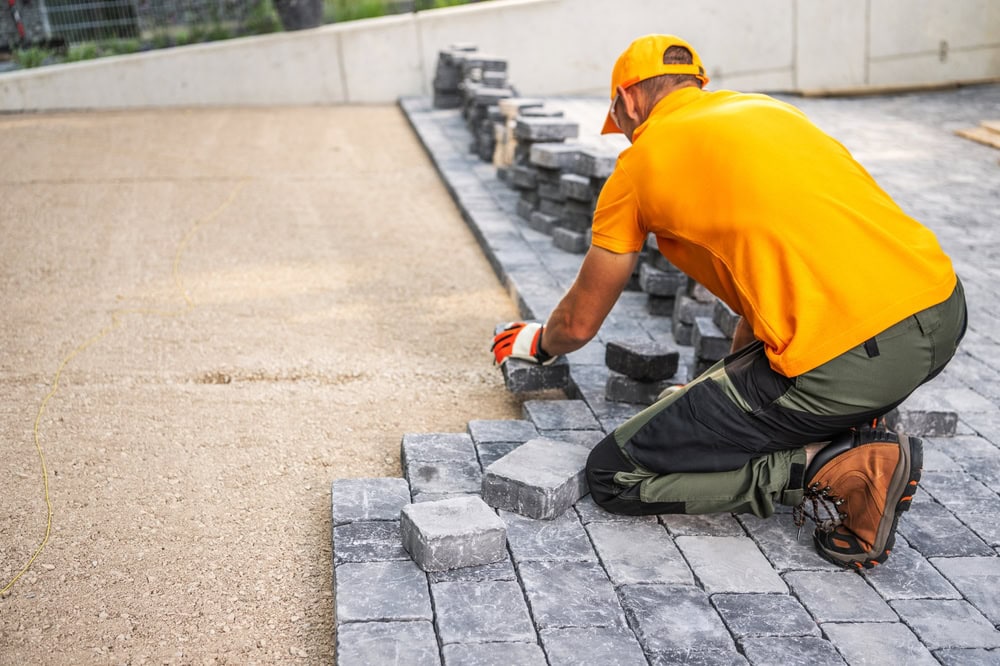
Most patios that fail in Marcus Hook and the surrounding area don’t fail because of bad materials. They fail because the ground underneath wasn’t prepared for what Delaware County winters actually do. When temperatures drop below freezing, rise back up, and drop again — sometimes in the same week — moisture in the soil expands and pushes upward against whatever’s sitting on top of it. If the base isn’t deep enough, properly compacted, and built with drainage in mind, you’ll see shifting, cracking, and uneven surfaces within a few years.
Marcus Hook sits on the same clay-heavy soil that runs through most of Delaware County. Clay holds moisture longer than sandy or loamy soil, which means the freeze-thaw stress on an improperly built patio here is real and consistent. A well-built base accounts for that — deeper excavation, the right aggregate, the right compaction, and a drainage slope that moves water away from your foundation instead of toward it.
The homes in Marcus Hook were built for working families, not magazine layouts. Most backyards are modest, and that’s fine. A 10×14 or 12×16 patio built the right way can completely change how you use your outdoor space — without overwhelming the yard or leaving you with a surface that looks rough by year three.
We’re based in Aston, PA — a few miles up Route 13 from Marcus Hook. That’s not a coincidence. This is the part of Delaware County we work in every day, and we know what the ground does here, what the winters demand, and what homeowners in Marcus Hook and the surrounding neighborhoods actually need from a contractor.
When you hire us, the same crew that starts your project finishes it. No subcontractors rotating in and out, no accountability gaps when something comes up mid-job. You’ll know who’s showing up, what they’re doing, and when the work is expected to be done — before the first shovel hits the ground.
We’ve been serving Delaware County for over 15 years. Marcus Hook residents — whether they’re in Viscose Village or closer to Market Square — have seen what it looks like when a contractor cuts corners on base prep. We don’t do that. Not because it’s a selling point, but because it’s the only way to build something that holds up.
It starts with a conversation about your space, your goals, and what you’re actually looking to get out of the project. Marcus Hook backyards tend to be compact, so we spend time early in the process talking through layout, material options, and what’s going to work best for your specific footprint — whether that’s concrete pavers, flagstone, or another surface that fits the character of your home.
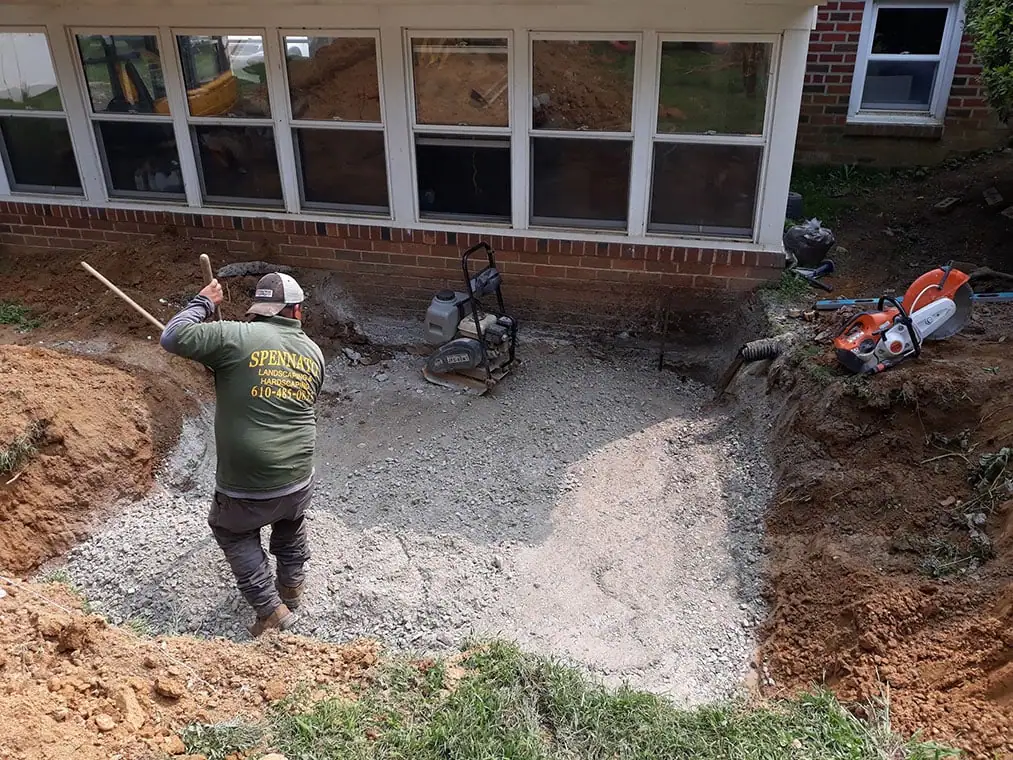
Before any work begins, we’ll walk you through the permit side of things. Marcus Hook Borough requires zoning permits for outdoor structures, and we factor that into the project timeline from the start so there are no delays once the crew is ready to go. Once everything is in order, excavation comes first — and this is where the work that actually matters happens. In Delaware County’s clay-heavy soil, the base preparation phase isn’t something you rush. Proper depth, compacted aggregate, and drainage slope are built in before a single paver gets set.
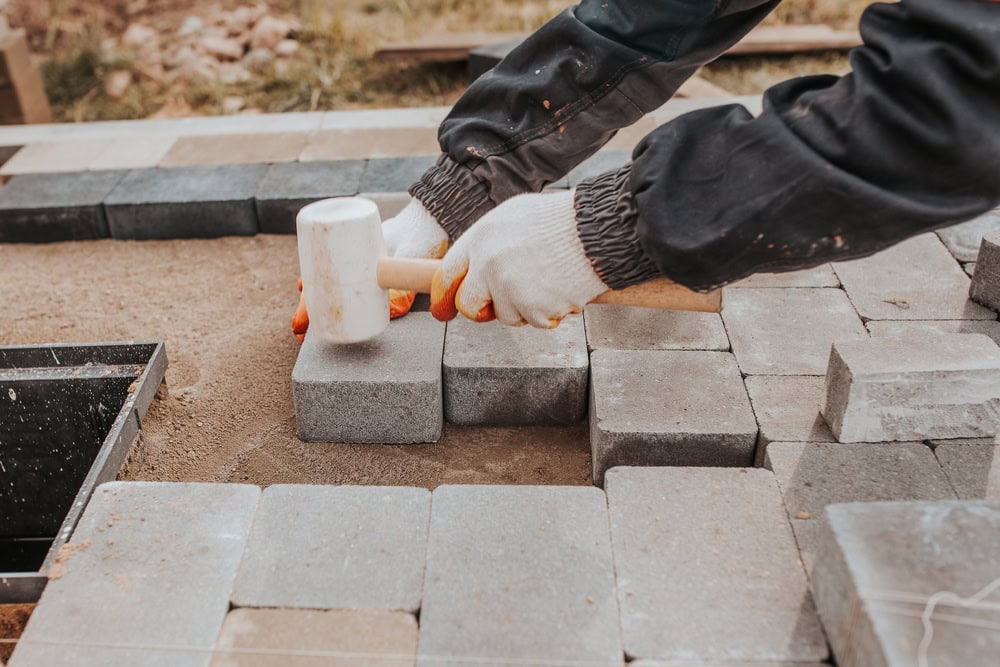
From there, installation moves in a clear sequence: base layer, bedding sand, paver placement, and edge restraints. When it’s done, you get a full walkthrough before we leave. The yard gets cleaned up, and you’re not left wondering what just happened to your property.
Ready to get started?
Concrete pavers are the most common choice for patio installation in southeastern Pennsylvania, and for good reason — they handle freeze-thaw cycling better than poured concrete, they’re easier to repair if a section ever does shift, and they come in enough styles and finishes to complement the older architectural character found throughout Marcus Hook’s residential blocks. If you’re near Viscose Village or living in one of the borough’s early 20th-century homes, a paver design can match the tone of the property without looking out of place.
Flagstone is a strong option if you want a more natural look. It works especially well on smaller patios where the texture and variation of the stone adds character to a compact space. Poured concrete is available for homeowners working with tighter budgets — and when it’s installed correctly with proper base preparation and control joints, it holds up well in this climate.
Every project includes drainage planning. Given Marcus Hook’s proximity to the Delaware River and the borough’s own stormwater guidance encouraging permeable and drainage-conscious surfaces, we build slope and water management into every patio from the design phase. The goal is a surface that handles rain and runoff the way it should — not one that pools water against your foundation every time it storms.

Marcus Hook Borough requires zoning permits before construction begins on outdoor structures and accessory improvements to residential properties. That includes patios, depending on the scope and configuration of the project. It’s worth contacting the borough directly — or having us handle that conversation — before any work starts, because starting without the right approvals can create complications when it comes time to sell the property or if a neighbor raises a concern.
The permit process in Marcus Hook is manageable, and building it into the project timeline from the beginning means it doesn’t become a delay. We factor permit requirements into the schedule upfront so the crew isn’t waiting on paperwork once they’re ready to break ground. If you’re unsure whether your specific project requires a permit, that’s one of the first things we’ll clarify during the initial consultation.
For most residential patio installations in the Marcus Hook area, the actual installation work takes anywhere from two to four days depending on the size of the project, the material being used, and the condition of the existing ground. Smaller patios — which are common in Marcus Hook’s compact residential lots — can sometimes be completed in a day and a half to two days once the crew is on-site.
What adds time to any project is what happens before installation begins: permit approval, material lead times, and scheduling. If you’re planning to have a patio ready for summer use, reaching out in late winter or early spring gives you the best shot at a timeline that works. Contractors who do this work well in Delaware County fill their schedules quickly once the ground thaws, so the earlier you start the conversation, the better your options.
Concrete pavers are generally the most reliable option for southeastern Pennsylvania’s climate. The reason comes down to how they handle freeze-thaw cycling — rather than one solid slab that cracks under ground movement, individual pavers can flex slightly with the ground and are far easier to repair if a section does shift over time. Poured concrete can also perform well, but only when it’s installed with proper base preparation, control joints, and the right mix for cold-weather conditions. Skipping any of those steps leads to the kind of cracking and heaving that homeowners in Marcus Hook have seen on older slabs around the borough.
Flagstone is a durable natural option that holds up well in this climate too, provided the base work is done correctly. The material itself isn’t the weak point in most failed patios — the base underneath is. Delaware County’s clay-heavy soil holds moisture longer than other soil types, which means the freeze-thaw pressure on an underprepared base is more intense here than in areas with sandier ground. Whatever material you choose, the base preparation is what determines how long it lasts.
Most homes in Marcus Hook were built in the early-to-mid 20th century for working families, and the backyards reflect that — they’re functional, not sprawling. But a smaller footprint doesn’t limit what a patio can do for your outdoor space. A well-designed 10×12 or 12×16 patio can fit a table, a few chairs, and a grill without making the yard feel crowded. The key is designing the layout to work with the space rather than against it — keeping the patio proportional, leaving enough green space around it, and choosing a material that complements the existing character of the home.
Pavers in a simple running bond or herringbone pattern work well in smaller spaces because they add visual interest without requiring a complicated design. Flagstone is another option that feels natural and unforced in a compact yard. If you want to add a covered element — a pergola or shade structure — that’s worth planning for in the initial layout so the patio can accommodate it without feeling squeezed. Small patio ideas work best when the design is intentional from the start, not an afterthought.
Patio installation costs in the Marcus Hook area vary based on size, material, site conditions, and the scope of any prep work required. As a general range, a basic concrete paver patio for a modest-sized backyard typically starts somewhere in the range of $3,000 to $6,000 for smaller projects, while larger or more detailed installations using flagstone or premium pavers can run $8,000 to $15,000 or more depending on square footage and complexity.
What affects cost most in this area is what’s happening underground. Properties with significant grading issues, old concrete that needs to be demolished and removed, or soil conditions that require deeper excavation will add to the base cost. Given Marcus Hook’s older housing stock, it’s not uncommon to encounter an existing slab or deteriorated surface that needs to come out before new work can begin. Getting a detailed, itemized quote — not just a number — is the best way to understand what you’re actually paying for and compare contractors fairly.
It matters because the ground in Delaware County — including Marcus Hook — doesn’t stay still. Clay-heavy soil expands when it absorbs moisture and contracts when it dries out. In winter, that moisture freezes and the ground pushes upward. If the base underneath a patio isn’t excavated deep enough, properly compacted, and built with drainage in mind, that ground movement transfers directly to the surface above it. Pavers shift. Concrete cracks. Edges drop. You end up with a patio that looks rough in year two and is genuinely unsafe by year five.
The fix isn’t complicated — it’s just work that takes time and can’t be rushed or skimped on. Proper excavation depth, a compacted gravel base, and a drainage slope built into the design from the start are what separate a patio that holds up for 30 years from one that becomes a problem before it’s paid off. This is especially true for properties near Marcus Hook’s lower-lying areas closer to the Delaware River, where soil moisture levels can be higher and drainage planning is more critical. Getting the base right isn’t an upsell — it’s the job.
Useful Links
Other Services we provide in Marcus Hook