

Hear from Our Customers
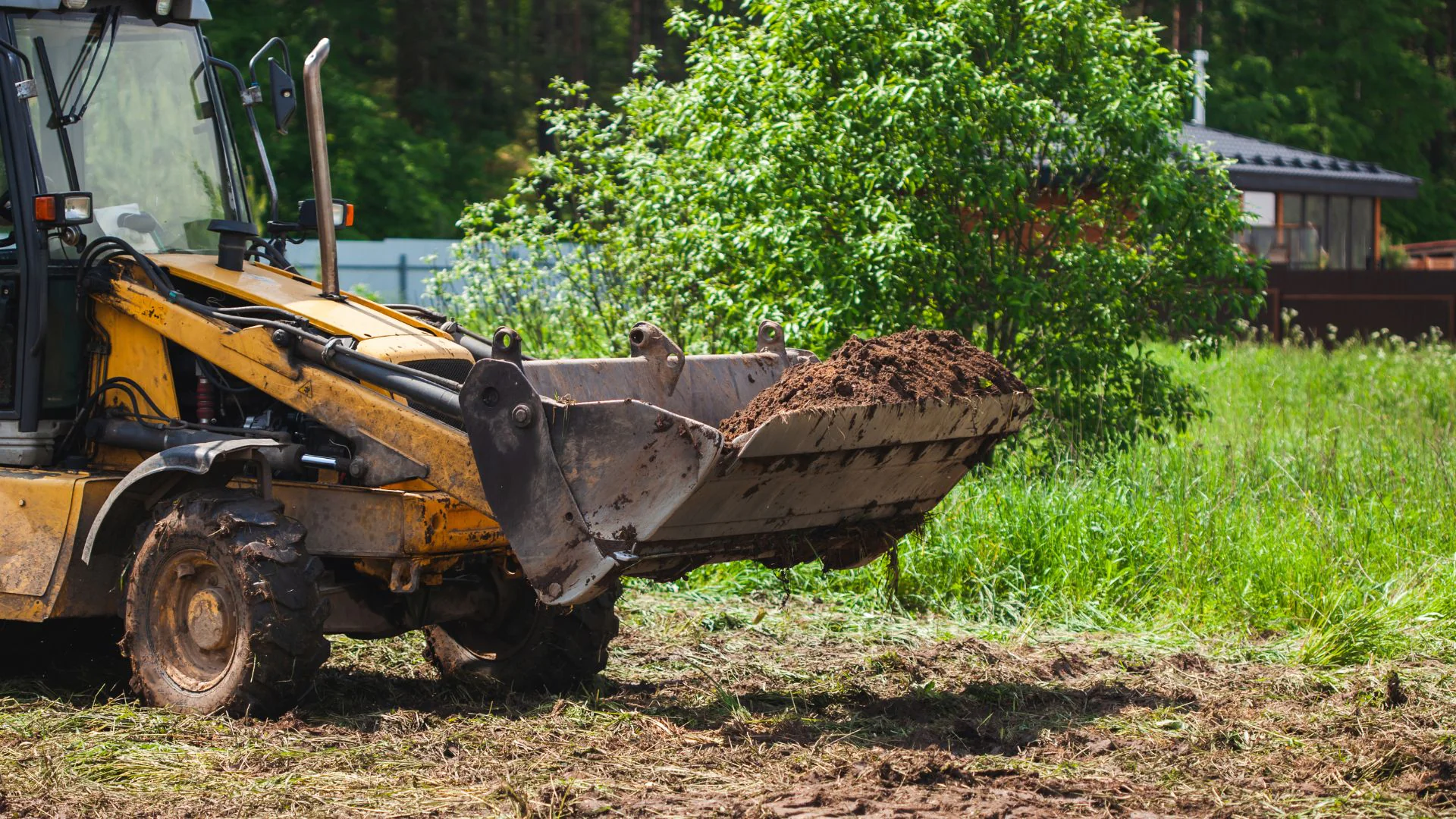
Most Wayne homeowners who call about land clearing aren’t just trying to remove trees. They’re trying to get somewhere a pool, an addition, a reclaimed backyard, or a build-ready lot on one of the last remaining parcels in a township that’s nearly fully developed. The clearing is just the first step. What matters is what the site looks like after.
South Wayne was laid out over rolling farmland in a valley of creeks and springs, and that terrain still shows up on properties today. If a contractor clears without accounting for the drainage patterns underneath, you’re left with erosion, pooling, and a site that needs expensive correction before anything else can happen. Getting the grading and drainage right during the clearing phase isn’t extra it’s the whole point.
Wayne properties also tend to carry mature tree canopies and established wooded edges that took decades to grow. Clearing with some judgment protecting what contributes to the character of the property and removing what doesn’t is what separates a well-executed project from one that leaves a lot looking stripped. When the job is done, your site should be stable, clean, and ready for the next contractor or the next phase of your project, not a rough field of stumps and debris.
We’re based in Aston, PA in Delaware County, the same county that governs Wayne. Renato has been running projects across this county for over 15 years, which means he’s worked on properties like yours: large lots, mature trees, wooded edges, and the kind of terrain that comes with being on the northern edge of Delaware County where the Main Line meets rolling creek topography. We understand Wayne’s specific challenges because we’ve cleared dozens of properties here.
When you call Spennato Landscaping, you’re not getting a multi-state forestry company dispatching a crew from two counties away. You’re getting a local operator who knows Radnor Township’s clearing permit requirements, understands the drainage considerations that come with South Wayne’s creek and spring terrain, and has spent a decade and a half building a track record in this specific market.
Renato is personally involved in every project. His name shows up in reviews because he shows up on-site. For a property in Wayne, that level of accountability matters.

It starts with a free on-site consultation. Renato walks the property with you, assesses what needs to come out, identifies any drainage or grading considerations, and gives you a written estimate that covers the full scope no hidden costs added later for stump removal or debris hauling. You know what you’re paying before anything starts.
If the project involves removing six or more trees which is common on larger Wayne lots a clearing permit is required by Radnor Township’s Engineering Department. That’s not a surprise if you know the code, and we handle the permit process as part of the project. Clearing permits in Radnor expire if work isn’t started within six months or completed within one year, so the timeline is real and the planning matters.
Once the permit is in place, our crew handles the complete sequence: tree removal, stump management, brush and debris clearing, grading, and drainage where it’s needed. The goal at the end isn’t a rough lot it’s a finished, stable site that’s ready for whatever comes next, whether that’s a pool installation, a home addition, a landscaping build, or new construction. One team, one contract, no coordination handoff to a second contractor.
Ready to get started?
Land clearing in Wayne isn’t a one-size job. The properties here vary historic lots in North Wayne with mature Victorian-era landscaping, larger wooded parcels in South Wayne where the natural terrain includes seasonal wet areas and slope changes, and infill sites tied to the active development pipeline currently moving through Radnor Township. Each one requires a different approach.
We cover the full scope: tree removal, stump grinding, brush and overgrowth removal, rock and debris clearing, rough grading, and drainage work where the site requires it. For Wayne properties specifically, that drainage piece is often more relevant than homeowners expect the creek and spring topography in parts of this area means water moves in ways that aren’t always obvious until the canopy comes down. Addressing it during the clearing phase is far less expensive than fixing it afterward.
Because we’re a full-service landscaping and construction contractor not just a clearing crew we can take the project further if you need it. Excavation, masonry, retaining walls, and finished landscaping are all in-house. For Wayne homeowners planning a larger project, that means one team carries the job from overgrown lot to finished result, without the coordination gaps that come from hiring multiple contractors in sequence. Radnor Township’s 27 zoning districts and its stormwater and grading code requirements are part of every project conversation from the start.

Yes and the threshold is more specific than most people expect. Radnor Township requires a clearing permit from the Engineering Department for the removal of six or more trees from any lot within the Township. That number applies to most meaningful clearing projects on Wayne residential properties, especially on the larger wooded lots in South Wayne and North Wayne where mature canopy is common.
The permit process runs through Radnor’s Engineering Department and involves review for compliance with the Township’s zoning code, stormwater management requirements, and grading regulations. Clearing permits expire if work isn’t started within six months or completed within one year from the issue date, so the timeline is something you need to plan around. We handle the permit process as part of every qualifying project you don’t have to figure out Radnor Township’s code on your own before the job can start.
Cost depends on what’s on the lot and what condition you need it in afterward. For a typical residential clearing project in Wayne trees, brush, stumps, and rough grading you’re generally looking at a range of $3,000 to $15,000 depending on the size of the lot, the density of the vegetation, and whether drainage or finish grading is part of the scope. Heavily wooded lots with large-diameter trees or significant slope work will sit toward the higher end.
Wayne properties, particularly in South Wayne, often involve terrain considerations that affect cost seasonal wet areas, slope changes tied to the creek and spring topography, and root systems from mature trees that require more than a flush cut. These aren’t surprises if they’re identified upfront. We provide a written estimate after an on-site consultation, so the number you get reflects the actual scope of your property not a ballpark figure that grows once the crew shows up.
Tree removal means a crew cuts down trees and typically leaves. You might get the logs hauled away, but what’s left is stumps at ground level, root systems intact, rough uneven ground, and often scattered brush and debris. That’s not a build-ready site it’s a lot that needs significant additional work before anything else can happen on it.
Land clearing is the complete process: trees come down, stumps are ground out or removed, brush and debris are cleared, and the ground is graded to a usable condition. On Wayne properties where the end goal is a pool, an addition, or new construction, the clearing and grading have to be done together because the drainage patterns on South Wayne’s rolling terrain don’t sort themselves out just because the trees are gone. Hiring a tree service for a clearing job often means paying twice: once to cut and once to fix what the cutting left behind.
Radnor Township divides its land into 27 distinct zoning districts covering residential, commercial, office, institutional, and public uses, with an additional Wayne Business Overlay District layered over downtown properties. Which district your parcel falls in determines what’s allowed and what the review process looks like for any clearing or site development work.
For most residential properties in Wayne, the primary regulatory touchpoints are the clearing permit requirement, the stormwater management code, and the grading, excavations and fills chapter all of which Radnor’s Engineering Department reviews together for any significant site work. The Township also describes itself as an almost fully developed municipality, which means remaining parcels and larger-lot properties carry more scrutiny during the permitting process. Knowing which district applies to your lot and what that means for your specific project is something we work through as part of the planning conversation, not something you’re left to figure out on your own.
Fall is generally the best window for major clearing work in the Wayne area, and there are a few practical reasons for that. Once deciduous trees drop their leaves, the canopy opens up and it’s much easier to assess what’s actually on the lot tree health, structure, what needs to come out and what’s worth keeping. Ground conditions in fall are typically drier than spring, which matters on properties with the kind of creek and spring terrain that South Wayne is known for.
Spring clearing is possible, but saturated soils from late-winter and early-spring rainfall can complicate grading work and create compaction issues with heavy equipment. Summer is workable but hot and humid conditions slow the pace. Winter clearing on frozen ground can actually be efficient for access, though scheduling depends on weather. If you’re planning a project for spring construction a pool, an addition, a new build getting the clearing done in fall puts you ahead of the permit timeline and gives the site time to stabilize before construction begins.
Yes, and for most Wayne homeowners planning a larger project, that’s actually the more practical way to structure it. We’re a full-service landscaping and construction contractor not a clearing-only crew which means we handle the complete sequence: land clearing, grading, excavation, drainage, masonry, retaining walls, and finished landscaping, all under one contract with one team.
The reason that matters in Wayne specifically is that the properties here tend to involve more than a simple clearing job. South Wayne’s terrain, Radnor Township’s stormwater and grading requirements, and the scale of most projects in this market mean that the clearing phase directly affects everything that follows. When the same team that clears the lot also handles the grading and drainage, there’s no handoff gap where something gets missed or a second contractor inherits a site condition they didn’t create. For a property in Wayne where the investment is significant, that continuity is worth more than saving a few hundred dollars by splitting the job between two crews.
Useful Links