
Hear from Our Customers
Most patios in Wayne and the surrounding Radnor Township area don’t fail because of the surface they fail because of what’s underneath it. This region sees 40 or more freeze-thaw cycles every winter. Water gets into a poorly prepared base, freezes, expands, and starts moving everything above it. By year two or three, you’ve got shifting pavers, cracked concrete, or flagstone that’s no longer sitting level. It’s not a cosmetic problem at that point it’s a full rebuild.
When the base is built correctly properly excavated, compacted aggregate at the right depth, drainage sloped away from your foundation, edge restraints that actually hold none of that happens. The surface stays where it was put. That’s the outcome worth paying for.
Wayne’s older housing stock adds another layer to this. Many homes in the North Wayne and South Wayne historic districts are 80 to over 100 years old. Older foundations don’t handle poor drainage the way newer construction does. A patio that directs water toward your home instead of away from it isn’t just an eyesore it’s a liability. Getting the grading right from the start protects both the patio and the home underneath it.
We’ve been doing this work in Delaware County for over 15 years. That means hundreds of completed projects, real references, and a reputation that’s had time to prove itself in a market where word travels fast. On the Main Line, neighbors talk. That keeps us honest, and it keeps our standards where they need to be.
We serve Wayne, Radnor Township, and the surrounding communities as our core service area. We’re not stretching outside our territory to pick up a job this is where we work. When you call, you’re talking to someone who knows the terrain along the Radnor Trail corridor, understands what Radnor Township’s permit process actually requires, and has worked on properties in Wayne Estate and the historic districts.
There are no subcontractors on your property. One experienced team handles the project from excavation to final cleanup. One point of contact throughout. If something needs attention after we’re done, you can reach us.
It starts with a conversation about what you actually want how you use your backyard, what your home looks like, what your budget is. For properties in Wayne’s historic districts, that conversation includes material options that make sense architecturally. Pennsylvania Bluestone and natural flagstone look like they belong alongside century-old stonework. A standard gray concrete slab does not. We talk through those trade-offs before anything else happens.
Once we’ve agreed on the design and materials, we handle permitting. In Radnor Township, any new patio that adds impervious surface requires a grading permit, and all contractors must be licensed with the Township. If your project exceeds 499 square feet, there are additional stormwater requirements that need to be reflected in the site plan. We manage that process you don’t have to figure it out yourself.
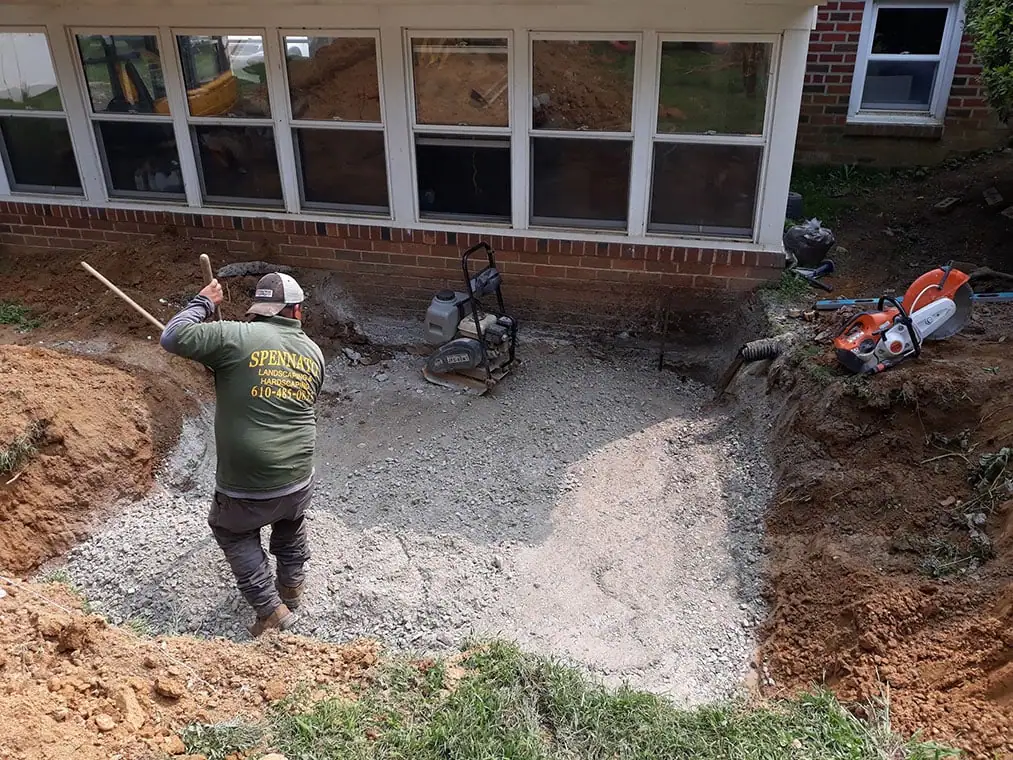
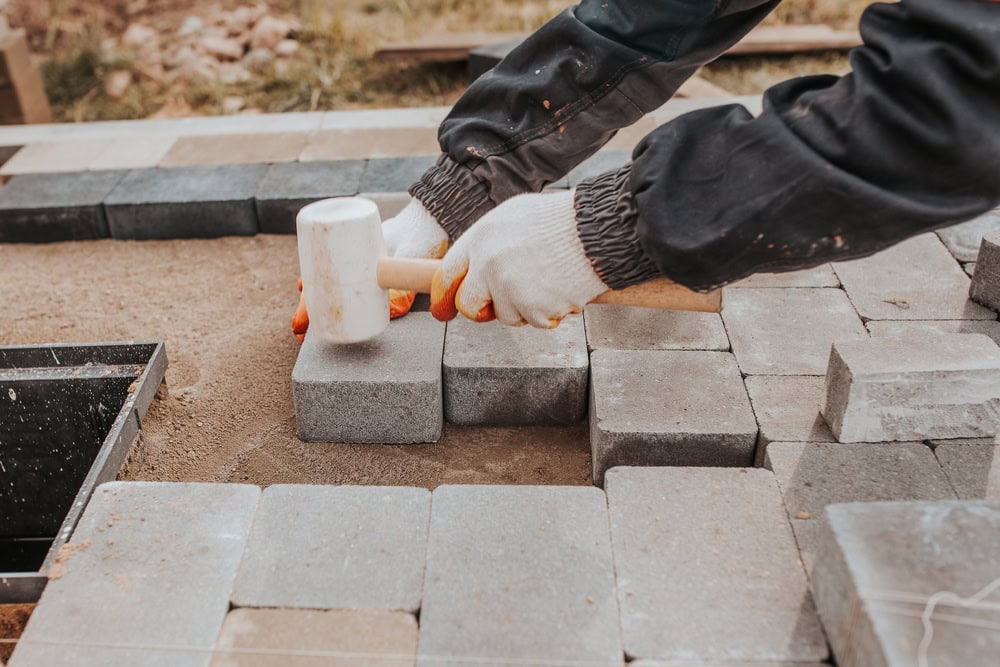
On-site, the work starts with excavation and base preparation. This is where the real work happens and where most shortcuts get taken. We compact the aggregate base to the depth and density the project requires, set the drainage slope correctly, install edge restraints, and then lay the surface material. Polymeric sand goes in last to lock the joints and resist weed growth. When we leave, the site is clean and the project is done not “mostly done.”
Ready to get started?
There’s no single right answer for every Wayne property. The material that works best depends on your home’s architecture, your yard’s conditions, and how you plan to use the space. Here’s how we think about it honestly.
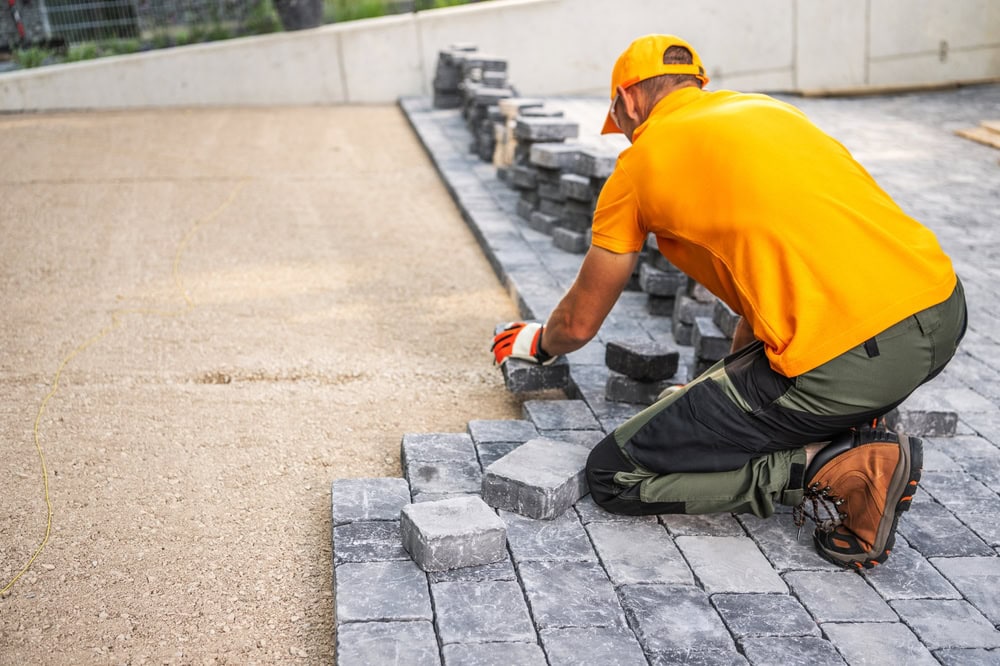
Pennsylvania Bluestone and natural flagstone are the natural fit for Wayne’s older homes particularly in the North Wayne Historic District, South Wayne Historic District, and the Wayne Estate streets. The look is timeless, it complements stone colonials and Victorian-era homes, and it holds up well when it’s installed properly. It’s also the material that Wayne’s neighbors and buyers recognize as a quality choice. For a home in this price range, that matters.
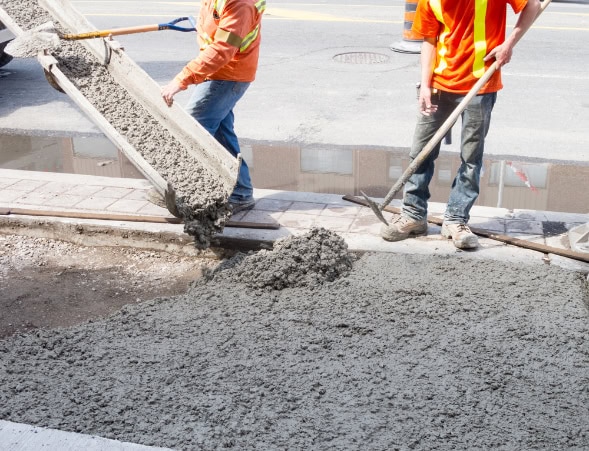
Interlocking concrete pavers give you more flexibility in shape, pattern, and color, and they’re easier to repair if a section ever needs to be replaced. For larger backyard patio projects outdoor dining areas, fire pit surrounds, covered patio foundations pavers are often the most practical choice. Concrete is also a legitimate option for the right project, particularly when budget is a real constraint or the application calls for a clean, simple surface. We don’t steer you toward the most expensive option. We give you a clear picture of what each material costs, how it performs in Pennsylvania winters, and what it looks like on your specific property and then you decide.

Yes and this is one area where Wayne differs from some other Delaware County communities. Because most Wayne residential properties fall under Radnor Township’s jurisdiction, any new patio that adds impervious surface to your property requires a grading permit before work begins. This isn’t optional, and it’s not something a contractor can talk you out of. The Township also requires that all contractors working on permitted projects be licensed with Radnor Township specifically not just generally licensed in Pennsylvania.
There’s an additional threshold worth knowing: if your patio exceeds 499 square feet, Radnor Township requires a groundwater recharge bed to be included in the site plan. That can affect both the design and the cost of the project, and it’s something your contractor needs to account for upfront. We handle the permitting process as part of every project, which means you won’t end up with an unpermitted installation that creates problems when you sell.
One more note: Wayne’s geography is unusual in that it straddles three townships across three counties Radnor Township in Delaware County, Tredyffrin Township in Chester County, and Upper Merion Township in Montgomery County. Depending on your exact address, a different municipality may govern your permit requirements. We identify which jurisdiction applies to your property before we start anything.
The honest range is $15 to $50 per square foot, and most Wayne projects land somewhere between $3,500 and $12,000 depending on size, material, and site conditions. That range is wide because the variables are real a small concrete patio on a flat lot costs very differently than a Pennsylvania Bluestone installation on a sloped Wayne Estate property with a mature root system to work around.
For Wayne specifically, a few factors tend to push projects toward the higher end of that range. Older properties in the historic districts often require more careful excavation to avoid root systems from large oaks and maples that have been there for decades. Sloped lots in Radnor Township require more grading work to get drainage right. And material choice matters significantly natural flagstone and Pennsylvania Bluestone cost more than concrete pavers, which cost more than poured concrete. We publish our pricing openly because we think you should know what you’re working with before you pick up the phone. There are no mystery numbers after the estimate is written.
For homes in the North Wayne Historic District, South Wayne Historic District, or along the original Wayne Estate streets, Pennsylvania Bluestone is usually the strongest choice both aesthetically and practically. It’s the material that fits naturally alongside the stone colonials, Victorian-era homes, and Colonial Revival architecture that define those neighborhoods. It’s also a material that Wayne buyers and appraisers recognize as a quality investment, which matters in a market where homes are selling at or above $1 million.
Natural flagstone is a close second and gives you slightly more flexibility in shape and layout, which can be useful on irregularly shaped lots or around mature trees. Interlocking concrete pavers are a solid option for larger or more contemporary backyard spaces where design flexibility and repairability are priorities. What we generally steer away from for historic properties is standard poured or stamped concrete not because it can’t work, but because it tends to look out of place against older stonework and doesn’t hold up as well through Pennsylvania’s freeze-thaw cycles without cracking over time.
Southeastern Pennsylvania, including Wayne and the rest of Radnor Township, sees roughly 40 freeze-thaw cycles per year. That number matters because every cycle is an opportunity for water to infiltrate a poorly prepared base, freeze, expand, and shift whatever’s above it. A patio that looks perfect in October can start showing movement by March if the base wasn’t built to handle that stress. The surface material pavers, flagstone, concrete is almost never the problem. The base is.
In terms of timing, the installation season in this area runs from roughly April through October. Fall installations are possible and sometimes advantageous the base materials can be set before the first hard freeze if the timing is managed correctly, and you’ll have the patio ready to go when spring arrives. We don’t rush projects to beat a deadline in a way that compromises base preparation. If the ground conditions or weather don’t support doing it right, we’ll tell you that and schedule accordingly. Getting it done correctly once is worth more than getting it done fast.
The two things that cause the most problems in this market are base shortcuts and communication failures and they often come from the same contractors. A base that’s too shallow or not properly compacted looks identical to a correctly built one on day one. You won’t know the difference until after a couple of Pennsylvania winters. By then, the contractor may be unreachable. BBB complaint data consistently shows that contractors who are responsive during the sales process become difficult or impossible to contact once the final payment clears. That pattern is frustratingly common.
When you’re evaluating contractors for a Wayne project, ask specifically about base depth and compaction standards, how they handle Radnor Township permitting, and whether they carry Township-specific licensing. Ask for references from completed projects in the area not just general testimonials. And pay attention to how they communicate before you’ve hired them. If a contractor is slow to respond, vague about pricing, or reluctant to discuss the permit process, that behavior doesn’t improve after the deposit is paid. The contractor who communicates clearly at the start is the one who communicates clearly when it matters.
For a standard residential patio in Wayne say, 300 to 600 square feet of interlocking pavers or flagstone the physical installation typically takes two to four days once the crew is on-site. Larger projects, covered patio structures, or installations with significant grading challenges can run longer. The more variable part of the timeline is permitting. In Radnor Township, the grading permit must be approved before a building permit application is accepted, so the sequencing of that process affects when we can break ground. We factor permit lead time into the project schedule from the beginning so it doesn’t catch anyone off guard.
Weather is the other variable worth mentioning. Wayne’s spring season can be wet, and saturated ground affects both excavation and base compaction. We build realistic timelines that account for conditions rather than committing to dates we can’t keep. When something changes a permit delay, a weather hold we communicate it directly and adjust the schedule with you. The goal is a completed project that performs the way it should, not a rushed job that meets an arbitrary deadline.
Useful Links