

Hear from Our Customers

Springfield is a mature suburb. The homes are older, the lots are smaller, and the trees that were planted 60 or 70 years ago have had a long time to spread, root, and take over. When a backyard has gone untouched for a few seasons or a few decades what you’re left with isn’t just overgrowth. It’s a problem that sits between you and whatever you actually want to do with your property.
Overgrowth removal on a Springfield lot isn’t a large-scale land operation. It’s precise, careful work done within feet of your neighbor’s fence, your foundation, and the mature trees you actually want to keep. That’s a different job than clearing raw acreage, and it requires a different level of attention. When it’s done right, you don’t just have an empty space you have a clean, level, usable surface that’s ready for a patio, a pool, an addition, or a drainage correction that’s been on the list too long.
Springfield’s proximity to Darby Creek and Crum Creek also means that grading and drainage aren’t afterthoughts on most properties here. Water moves through this township in ways that affect how clearing and site preparation need to be approached. A crew that doesn’t understand that can leave you with a cleared lot and a drainage problem you didn’t have before. That’s not a trade-off worth making.
We’ve been working across Delaware County for over 15 years. Based in Aston, PA less than 10 miles from Springfield this is the market we know. The permit processes, the creek corridors, the township codes, the way properties in neighborhoods like Scenic Hills and Colonial Park sit on the land. None of that is new to us.
Renato runs this operation personally. That’s not a tagline customers mention him by name in reviews because he’s actually involved in the work. When you call for a consultation, you’re talking to someone who will be accountable for the outcome, not a scheduler passing your job to whoever’s available.
We carry full liability and workers’ compensation insurance, which Springfield Township requires before any permitted work begins. And because we also handle grading, excavation, drainage, and masonry, we’re not just the crew that clears and leaves. We’re the contractor who can take your property from overgrown to finished without you having to coordinate four different companies to get there.
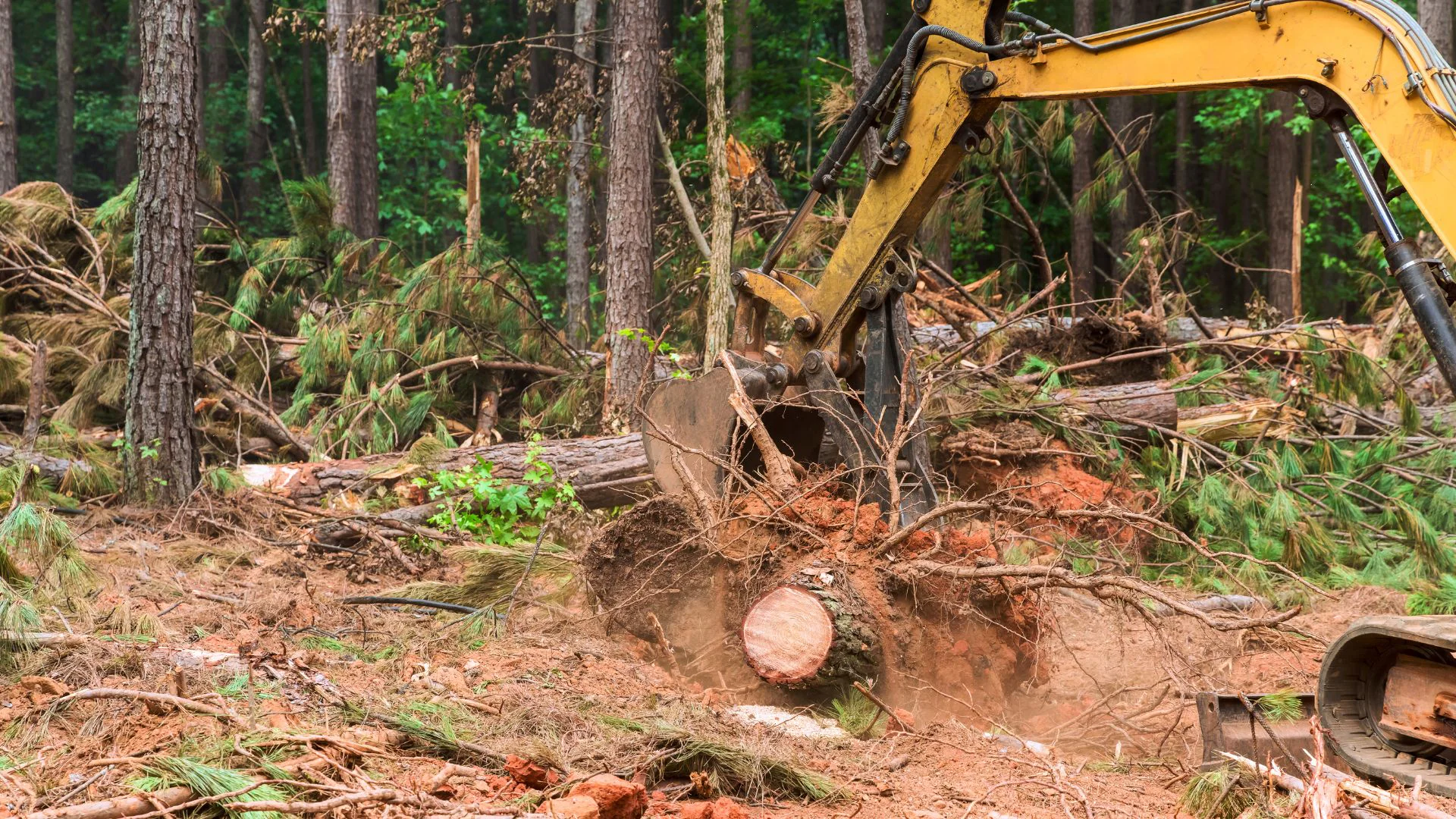
It starts with a free on-site consultation. Renato walks the property with you, looks at what’s there, and gives you a written estimate based on the actual scope of work not a ballpark that inflates once the job starts. That estimate covers clearing, debris removal, and any grading or drainage work that needs to happen before the next phase of your project can begin.
From there, the permit question gets answered early. Springfield Township’s stormwater management ordinance requires an approved erosion and sediment control plan before any regulated earth disturbance begins. If your property is near Darby Creek or Crum Creek, there may be additional DEP review under Pennsylvania’s Chapter 105 regulations. We know what triggers those requirements and handle that process as part of the job so you’re not left figuring it out on your own or finding out mid-project that work needs to stop.
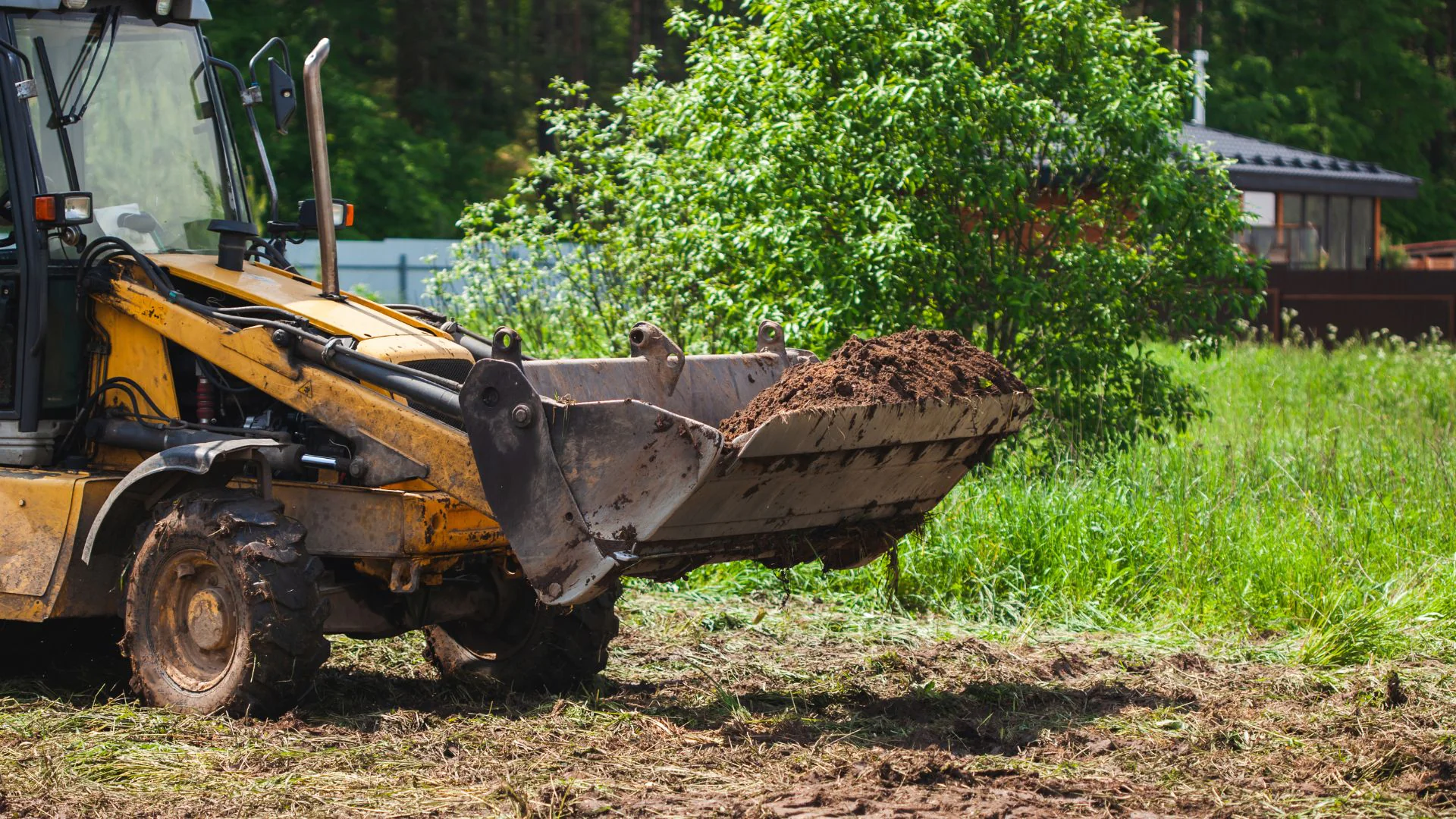
Once work begins, the same crew handles everything through completion. On a Springfield lot typically under a half-acre, close to neighboring properties that consistency matters. There’s no handoff between a clearing crew and a grading crew where things fall through the cracks. When we’re done, the site is clean, the debris is hauled, and the ground is in the condition it needs to be for whatever comes next. No brush piles left behind. No ruts in the lawn. No half-finished work waiting on a callback.

Ready to get started?
Land clearing in Springfield typically falls into one of a few categories: reclaiming an overgrown backyard that’s been neglected for years, clearing a specific area to prepare for a pool, patio, or outdoor addition, or addressing a grading and drainage situation that’s gotten worse over time. In some cases, it’s all three. What’s included in the job depends on what the property actually needs not a preset package that may or may not fit your situation.
Brush clearing and overgrowth removal on a Springfield lot usually involves cutting and removing invasive shrubs, vines, and fast-growing trees that have taken over fence lines and property edges. Stump grinding, grading, and debris hauling are part of the process when the scope calls for it. If drainage corrections are needed before the site can be used, that work happens in the same sequence with the same team not as a separate contract with a separate crew.
Because Springfield’s housing stock is older most homes here were built in the 1950s and 1960s the lots often have decades of accumulated landscape change that goes beyond surface-level clearing. Root systems, grading that’s shifted over time, and drainage patterns that have changed as trees grew and soil settled all factor into how the work gets done. Site preparation clearing for a Springfield property isn’t a one-size job, and we don’t approach it that way.
It depends on the scope of the work. Springfield Township’s Stormwater Management Ordinance Chapter 88, adopted in 2004 requires that any regulated earth disturbance include an approved erosion and sediment control plan before work begins. This applies to clearing projects that involve significant ground disturbance, not just minor yard cleanup. If your property sits near Darby Creek or Crum Creek, you may also be subject to DEP review under Pennsylvania’s Chapter 105 regulations, which govern work in or adjacent to waterways and wetlands.
The practical answer is that most meaningful land clearing jobs in Springfield anything beyond surface-level brush removal will involve some level of permit or plan review. The township’s Code Department handles permit applications through their OpenGov portal, and they can be reached at 610-544-1300 ext. 125. We walk through this with every client before work starts, so there are no surprises and no stop-work orders mid-project.
For a residential lot in Springfield which typically runs under a half-acre basic brush clearing and overgrowth removal generally falls somewhere in the $1,500 to $4,000 range, depending on vegetation density, how much debris needs to be hauled, and whether stump grinding is involved. If the project includes grading, drainage corrections, or site preparation for construction, the total can run higher full site prep on a half-acre project can range from $8,000 to $25,000 or more depending on the complexity of the work.
What matters most is that the estimate you receive reflects the actual scope of your property, not a low number designed to get the job and inflate later. We provide written estimates after an on-site walkthrough, which means the number you get is based on what we actually see the slope of the land, the type and size of vegetation, how close the work is to neighboring properties, and whether any permit-related steps need to be factored in. No guessing, no surprises.
Springfield Township is bordered by Darby Creek to the northeast and Crum Creek to the west, and those waterways have a real effect on how clearing and grading work needs to be approached on properties near them. Under Pennsylvania’s Chapter 105 regulations, any work within or adjacent to natural drainageways, wetlands, or surface waters may require a DEP permit before it can proceed. That review process takes time, and a contractor who doesn’t flag it early can put your project in a position where work has to stop.
Beyond the permit question, the creek corridors affect drainage patterns across a wide area of the township not just the properties immediately adjacent to the water. Springfield’s soil and topography mean that wet spring conditions can delay work on lower-lying lots well into April or May. Understanding how water moves through a specific property before clearing and grading begins is part of doing the job right. We assess drainage as part of every consultation, so the work we do supports the property’s long-term drainage performance rather than creating new problems.
Brush clearing typically refers to removing surface-level overgrowth invasive shrubs, vines, dense weed growth, and smaller woody vegetation that has taken over a fence line, property edge, or neglected area of a yard. It’s the right scope for properties where the main issue is reclaiming usable space that has been overtaken by fast-growing vegetation. In Springfield, this is a common need on older properties where a previously maintained area has been left unmanaged for several seasons.
Full lot clearing goes deeper. It involves removing trees, grinding stumps, clearing root systems, and preparing the ground to a condition where grading, excavation, or construction can follow. This is the appropriate scope when you’re preparing a site for a pool, an addition, a patio installation, or a drainage correction that requires reshaping the ground. The line between the two isn’t always obvious from the homeowner’s side, which is why the on-site consultation matters what looks like a brush clearing job sometimes has stump and root work underneath it that changes the scope and the cost.
Yes and for most Springfield homeowners, that’s the better way to do it. Land clearing is rarely the end goal. It’s the first step toward a pool, a patio, an outdoor kitchen, a drainage fix, or a backyard renovation that’s been planned for a while. When the clearing contractor hands off to a separate grading crew, and that crew hands off to an excavation company, and so on, the coordination gaps between those handoffs are where projects slow down, costs increase, and quality problems show up.
We handle land clearing, grading, excavation, drainage, masonry, and full landscaping under one contract with one crew. That means the clearing work is done with the next phase in mind the grade is set correctly, the drainage is considered from the start, and the site is ready for construction when the clearing is complete. For Springfield homeowners managing a larger project, that continuity is worth a lot more than the marginal savings of piecing together separate contractors for each phase.
Spring and fall are the two busiest windows for land clearing in Springfield, and both make sense for different reasons. Spring March through May is when most homeowners are motivated to move on projects they’ve been planning through winter, and it’s when pre-construction clearing for pools, patios, and additions needs to happen before the build season gets underway. The downside is that wet spring conditions in Springfield, particularly on properties near Darby Creek or in lower-lying areas of the township, can delay work on saturated ground.
Fall is the second strong window. Leaf-off conditions make it easier to assess wooded areas accurately, equipment access is generally better, and scheduling tends to be more flexible than the spring rush. Late winter January and February can also work well for certain properties where frozen ground makes equipment movement cleaner and less disruptive to the surrounding lawn. The honest answer is that the best time to schedule is as soon as you know the project is happening. Springfield’s clearing season books up, and waiting until the week before you need the site ready is the most common way to delay the whole project.
Useful Links