

Hear from Our Customers

Standing water in a Springfield yard isn’t just an eyesore. It kills grass, saturates soil, and when it sits long enough near your foundation, it starts working against the structure of your home. The good news is that most of these problems have a clear cause and a permanent fix.
Springfield’s housing stock tells the story. Most of the homes here were built between the late 1940s and early 1960s. The Stoney Creek development, those stone-front colonials between West Avenue and Providence Road, is a perfect example. Beautiful homes but the drainage infrastructure underneath them is 60 to 70 years old. Original grades have shifted. Clay tile pipes have cracked. Dry wells have silted over. What worked in 1952 isn’t keeping up with today’s impervious surfaces, heavier storms, or the accumulated runoff from decades of added driveways and patios.
When drainage is corrected properly grading adjusted, water directed away from the foundation, and the right system installed for your specific yard the results are visible and lasting. No more muddy patches. No more soggy corners that never dry out. No more watching your lawn deteriorate year after year while the problem quietly gets worse underground. With median home values in Springfield approaching $450,000, protecting that investment with a properly engineered drainage system isn’t a luxury it’s just smart property ownership.
We’re based in Aston, PA about seven miles from Springfield on I-476. That’s not a detail we throw in to sound local. It means we work in the same watershed, deal with the same compacted clay soils, and operate under the same Springfield Township stormwater ordinances that govern your property. We’re not a regional chain with a Springfield page and a dispatched crew. We’re a Delaware County company that has been doing this work in these neighborhoods for over 15 years.
Every project runs through one experienced team the same people who assess your yard are the ones who design the solution and install it. There are no subcontractor handoffs, no miscommunication between crews, and no one showing up who doesn’t already know your property. Renato runs the operation directly, and that accountability shows in the work.
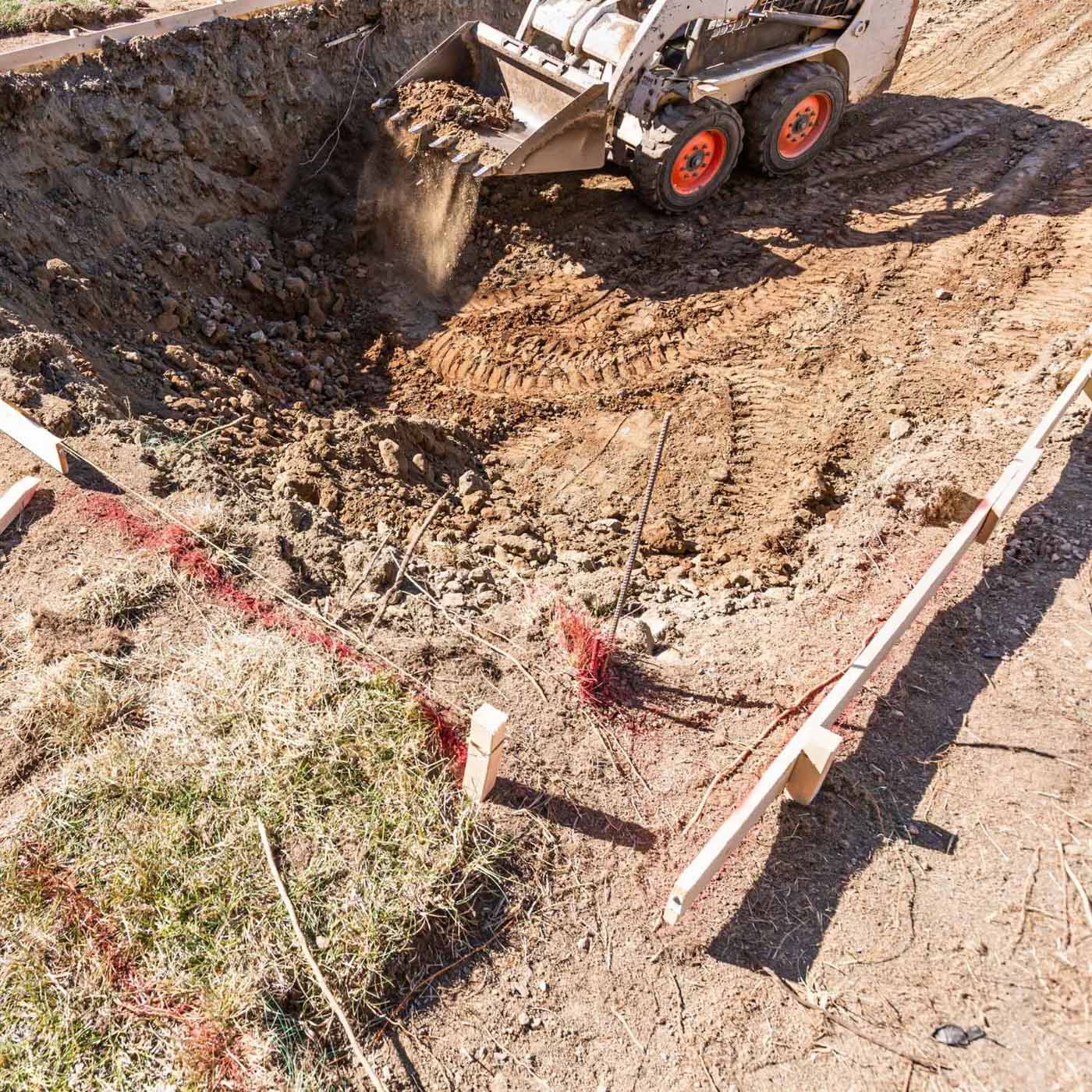
Every drainage project starts with a site assessment, not a sales pitch. Before we recommend anything, we walk your property and look at what’s actually happening where water enters, where it pools, how your current grade is directing flow, and whether your existing drainage infrastructure is contributing to the problem or just overwhelmed by it. In Springfield, that assessment almost always turns up a grading issue alongside the drainage failure. The two are connected, and fixing one without addressing the other is how you end up calling a contractor twice.
Once we understand the full picture, we design a system that fits your yard not a template. That might mean a French drain routed to a proper outlet, a catch basin in a low-lying area, regrading around the foundation, or a combination of all three. If the scope of work triggers Springfield Township’s stormwater management requirements under Ordinance No. 1624, we handle that process. You shouldn’t have to navigate Delaware County’s permitting framework on your own, and with a contractor who works here regularly, you won’t have to.
Installation is clean and thorough. We handle the excavation, the system, and the restoration so when we leave, your yard looks like the work was done right, not just done. Timing matters too. The best window for drainage work in Springfield is late spring through early fall, before the ground freezes. A properly installed system handles Pennsylvania’s freeze-thaw cycle without cracking or shifting but only if the installation was done correctly in the first place.

Ready to get started?
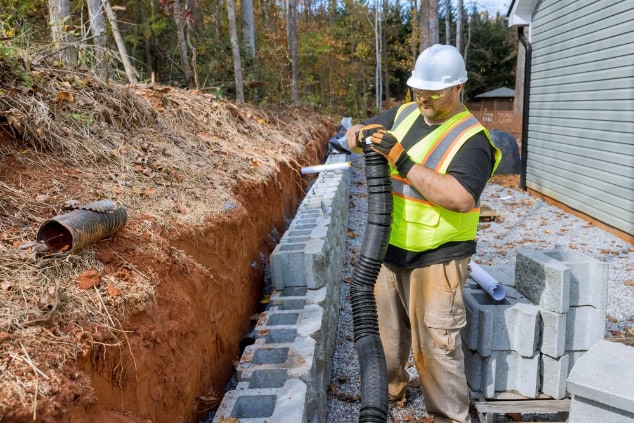
Drainage work in Springfield covers more ground than most homeowners expect when they first call. The most common solution is a French drain a perforated pipe set in a gravel bed, designed to intercept groundwater or surface runoff and redirect it to a safe outlet away from your home and your neighbor’s property. But a French drain is only as effective as the grade it’s installed in. If the surrounding soil still slopes toward your foundation, the drain manages the symptom without fixing the cause.
That’s why every drainage project we take on in Springfield includes a grading evaluation. We look at the full picture downspout discharge points, hardscape runoff, soil composition, and slope before any pipe goes in the ground. Springfield’s clay-heavy soils don’t absorb water the way sandy or loamy soils do, which means surface water moves fast and accumulates quickly in low spots. The system we design accounts for that.
Beyond French drains, the work we do in Springfield includes catch basin installation, dry well replacement, surface regrading, and downspout extension and management. For properties near the Crum Creek or Darby Creek corridors where the watershed itself adds baseline drainage pressure we engineer with that context in mind. The goal is a yard that handles a heavy Delaware Valley rainstorm without leaving you with standing water three days later.
It depends on the scope of the work. Springfield Township adopted an updated Stormwater Management Ordinance in September 2022 Ordinance No. 1624 which governs regulated earth disturbance activities within the township. Delaware County also adopted a new county-wide stormwater ordinance in January 2024, which adds a second layer of requirements for larger projects. If your drainage work involves significant excavation or grading, a permit review may be required before work begins.
For most standard French drain installations on residential properties in Springfield, the scope doesn’t cross the threshold that triggers a full permit application. But if your project involves substantial regrading, work near a property boundary, or discharge that connects to the township’s stormwater system, it’s worth confirming with the township before breaking ground. We know where the lines are and handle the process when it applies.
For most residential properties in Springfield, French drain installation runs somewhere between $5,000 and $9,000. That range shifts based on the length of the drain, how deep it needs to go, what the outlet situation looks like, and whether regrading is part of the scope. Properties with significant clay soil which is common throughout Delaware County sometimes require more excavation than a straightforward install, which affects the cost.
The number that puts this in perspective is what you’re protecting. Foundation repair for a home with chronic water intrusion runs $10,000 to $30,000 or more. Basement mold remediation adds another $3,000 to $10,000 on top of that. A properly installed drainage system in the $5,000 to $9,000 range is a fraction of what deferred maintenance costs once water damage sets in. In a market where Springfield homes are valued around $450,000, that math is pretty straightforward.
The most likely explanation is a combination of clay soil and grade. Springfield sits in a part of Delaware County where clay-heavy soils are the norm, and clay doesn’t drain the way sandy or loamy soil does. Water percolates slowly, which means surface runoff accumulates faster than it can absorb especially on older lots where the soil has been compacted for decades. If your yard also has any low spots or areas where the grade slopes inward rather than away from the house, water collects and has nowhere to go.
The other factor is impervious surface accumulation. Every driveway, patio, and addition added to a Springfield property over the past 60 years redirects water that used to percolate into the ground. That water ends up on your lawn. The Crum Creek Watershed Act 167 Stormwater Management Plan actually documents this exact dynamic impervious surfaces preventing rainwater from percolating and causing rapid runoff as the primary driver of flooding in this watershed. Your soggy yard is part of a larger pattern, and the fix starts with understanding how your specific property fits into it.
A French drain is a subsurface system a perforated pipe set in gravel that intercepts water moving through or across the soil and redirects it to an outlet. It works best for groundwater that’s rising up through saturated soil or sheet flow moving across a lawn. A catch basin is a surface-level inlet essentially a grated box set into the ground at a low point that collects water pooling on the surface and channels it through a pipe to a discharge point.
In practice, many Springfield properties need both. The French drain handles the subsurface water movement, and the catch basin handles the low spots where surface water accumulates after a heavy storm. The right combination depends entirely on your yard’s specific topography and how water actually moves across it. That’s why the assessment step matters a catch basin installed in the wrong location, or a French drain routed to an inadequate outlet, won’t solve the problem. It just moves it somewhere else.
Yes, and it’s one of the more common outcomes of drainage problems that go unaddressed for years. When water consistently pools against or near a foundation especially in a home built in the 1950s or 1960s with original grading that has since settled it creates hydrostatic pressure against the foundation walls. Over time, that pressure causes cracks, bowing, and moisture intrusion. Once water is getting into the basement on a regular basis, you’re dealing with mold risk, structural risk, and a home inspection issue when it comes time to sell.
Springfield’s postwar housing stock is particularly exposed to this. The original foundation drainage on a 1952 colonial was designed for a different era lighter impervious surface loads, less developed surrounding lots, and drainage infrastructure that was new. Seventy years later, the grade has shifted, the clay has compacted further, and the surrounding neighborhood has added driveways and hardscape that increase runoff. Fixing the drainage now is significantly less expensive than repairing the foundation later.
A well-installed French drain in Pennsylvania should last 30 to 40 years. The factors that shorten that lifespan are poor installation, inadequate materials, and failure to account for the freeze-thaw cycle. Springfield’s average January low is around 25°F cold enough to freeze water that’s trapped in pipes, joints, or gravel beds that weren’t properly drained or sloped. When that happens repeatedly over several winters, pipes crack, joints separate, and gravel beds shift. The system stops working, and the homeowner assumes French drains just don’t last.
The difference is in how the system is installed. Proper slope, the right pipe material, clean gravel that won’t compact and restrict flow, and a clear outlet that doesn’t back up in winter these aren’t optional details. They’re what separates a system that holds up through 30 Pennsylvania winters from one that fails in five. When we install drainage in Springfield, the freeze-thaw cycle is part of the design, not an afterthought.
Useful Links
Other Services we provide in Springfield