
Hear from Our Customers

Most excavation problems in Aston don’t start with bad work they start with work that ignored the soil. Delaware County’s Piedmont clay doesn’t drain freely. It holds water, shifts under weight, and puts steady pressure on anything near it: foundations, retaining walls, patios, the whole picture. When that’s not accounted for from the start, you end up fixing the same problem twice.
Get the grading right the first time and the downstream effects are real. No more standing water after every storm. No more retaining wall slowly leaning toward your neighbor’s yard. No more patio that heaved itself apart over two winters. The yard works the way it’s supposed to and everything built on it lasts longer because the ground under it was prepared correctly.
For homeowners in Aston especially those in Village Green–Green Ridge or on the older split-level lots off Pennell Road this isn’t a theoretical benefit. The mid-century housing stock here was built with drainage solutions that made sense in 1965. Sixty years later, with additions, extended driveways, and settled grading, most of those original systems are overdue for a rethink. That’s exactly the kind of work we do.
We operate out of Aston, PA 82 Judy Way, to be exact. Renato Spennato has been doing excavation, grading, and site preparation work in Delaware County for over 15 years, and the homes here aren’t a mystery to him. He knows the lot types, the soil conditions, and the drainage patterns that come with Aston’s housing stock.
BuildZoom ranks us in the top 11% of more than 125,000 licensed Pennsylvania contractors a score earned through documented project history and verified reviews, not just a claim on a website. Homeowners across Delaware County have called out Renato by name for showing up on time, communicating clearly, and pricing jobs fairly. That track record matters more than any badge.
What separates us from the excavation-only operators in the area is what happens after the dig. Retaining walls, patio installation, finish grading, full outdoor living buildouts it’s all handled by the same crew, under one contract. No handoffs. No coordination gaps. No finger-pointing when something doesn’t line up.

It starts with a site visit. Before any equipment shows up, Renato walks the property, looks at existing drainage patterns, checks the grade, and talks through what you’re trying to accomplish. For most Aston properties, that conversation includes a real look at how water currently moves across the lot because in this township, drainage is almost always part of the answer, even when it wasn’t part of the original question.
From there, you get a clear scope and a straight estimate. No vague ranges. No surprises at the end. If the project requires permits through Aston Township’s Building Code Department which applies to in-ground pools, larger grading projects, and anything that triggers stormwater management review under Delaware County’s NPDES requirements that process gets handled as part of the job. Pennsylvania also requires an 811 call before any digging begins, and that’s built into the timeline, not an afterthought.
Once work starts, the excavation and grading happen in the right sequence: dig, grade, drainage infrastructure if needed, then any finished construction retaining walls, patios, whatever the project calls for. When the crew leaves, the site is finished, not just dug up and handed off. That’s the difference between a single-trade operator and a team that can take a project from raw earth to a completed outdoor space.
Ready to get started?
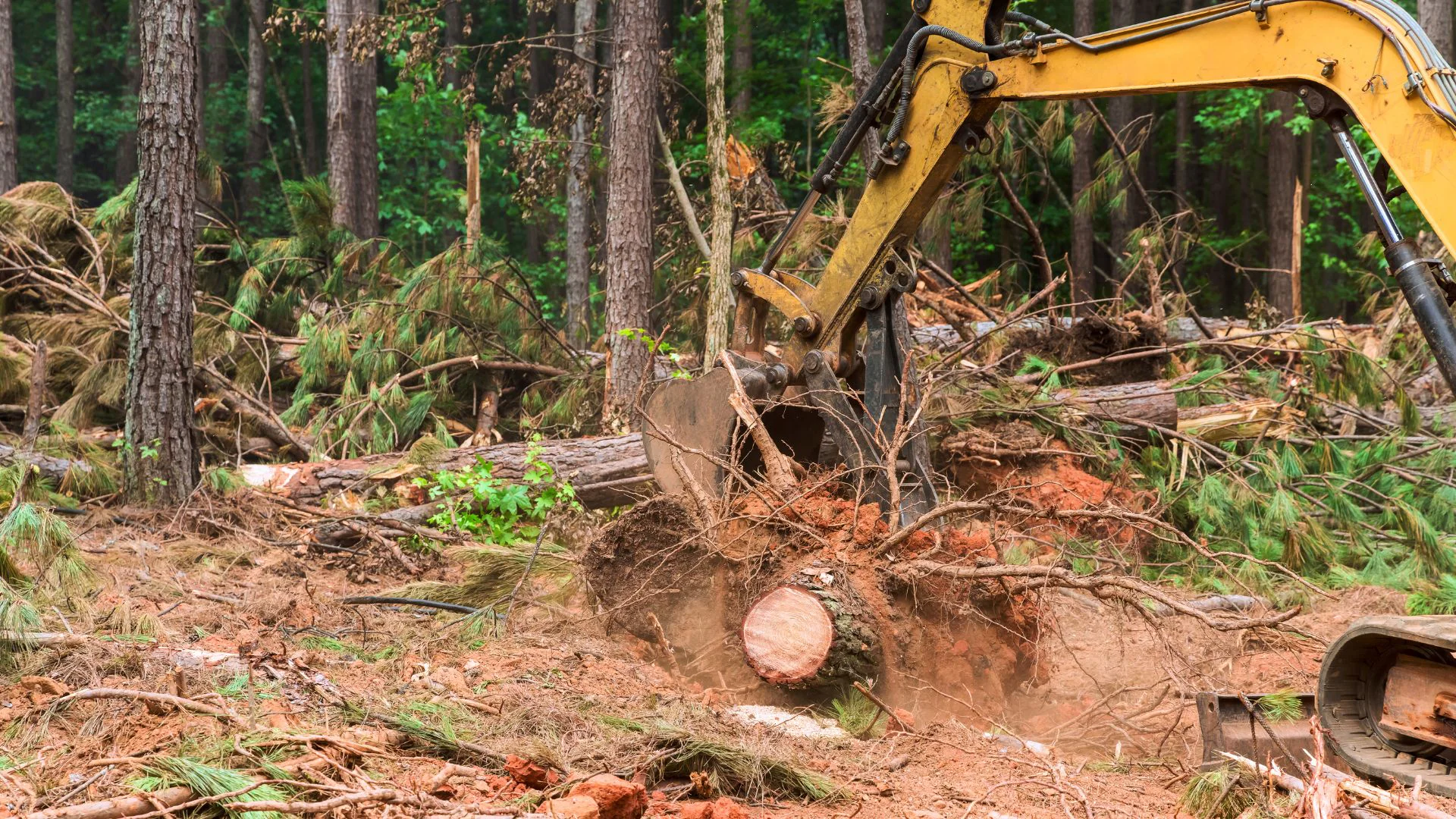
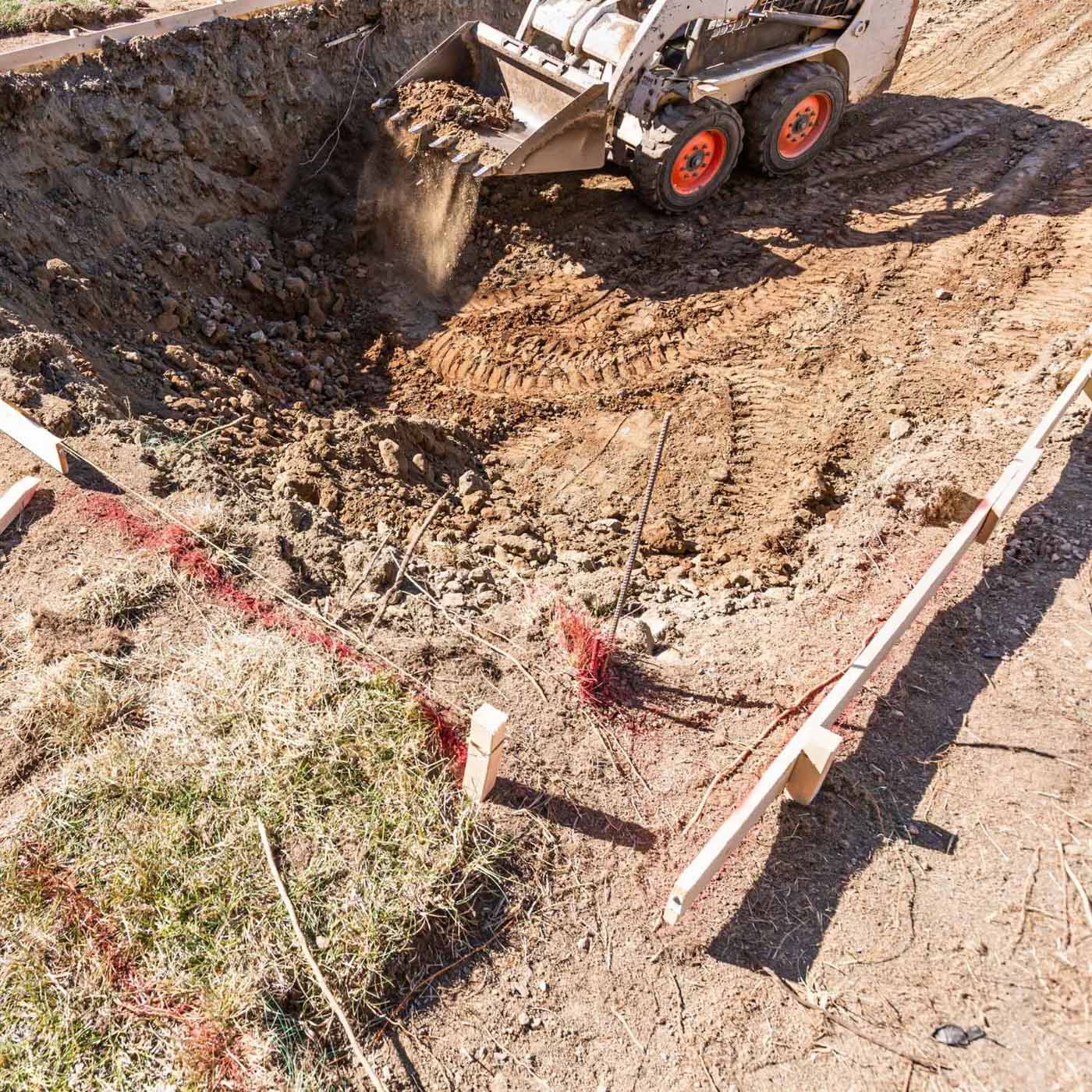
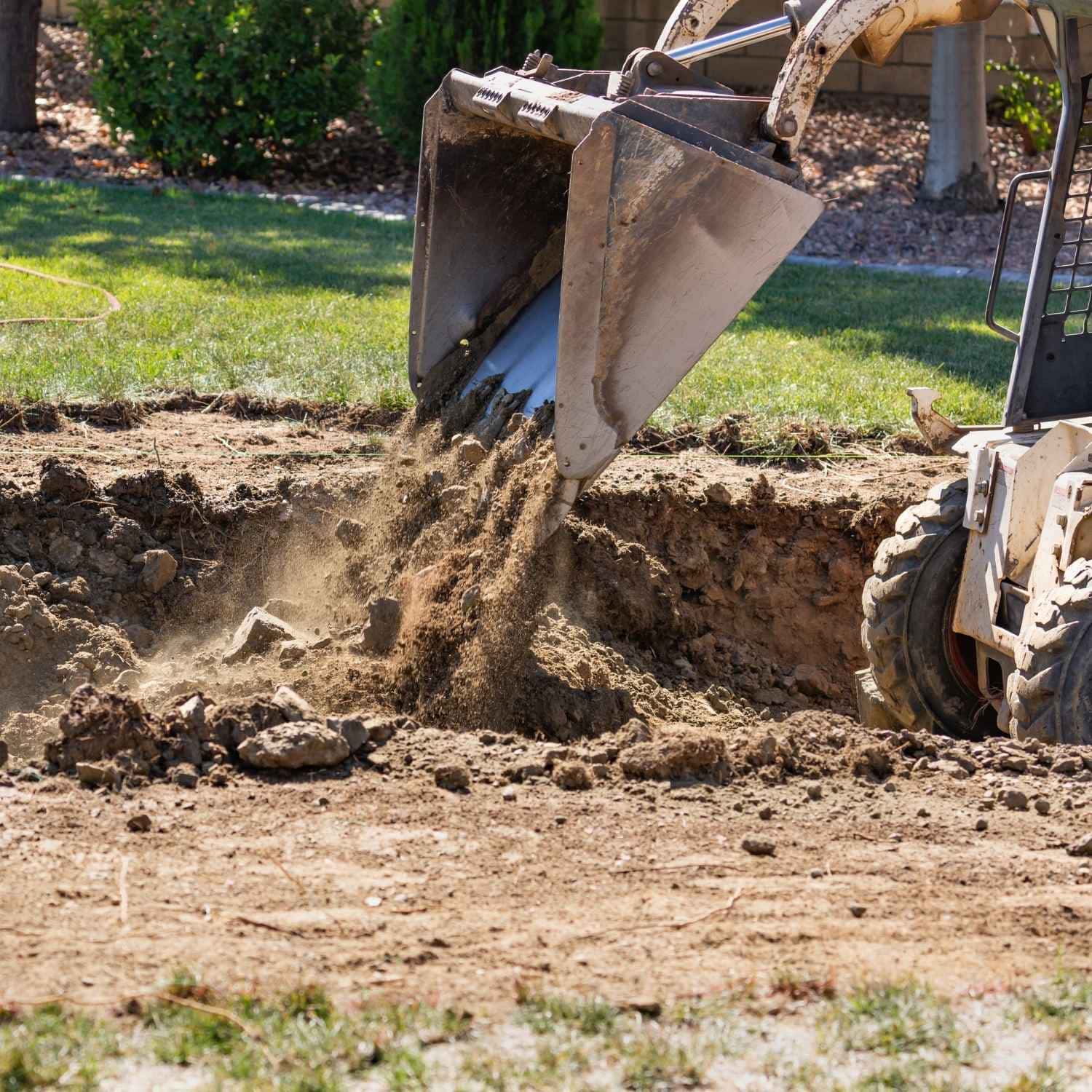
We handle the full range of residential excavation and site preparation work in Aston and throughout Delaware County. That includes foundation excavation, yard grading and leveling, drainage correction, land clearing, retaining wall base preparation, pool excavation, and full site prep for new construction or additions. Our equipment fleet excavators, bulldozers, loaders is sized for residential work, which matters on the suburban lots that define most of Aston’s housing stock. Bringing the wrong machine to a tight lot off Concord Road or Dutton Mill Road creates more problems than it solves.
Because we also handle masonry, paving, and outdoor living construction, the excavation work is done with the finished project in mind from the start. Grades are set to support what’s being built on them. Drainage is integrated, not added as an afterthought. If you’re putting in a patio, a retaining wall, or a full outdoor living space, the site prep is designed around that outcome not just around moving dirt efficiently.
For Aston homeowners dealing with water infiltration, erosion along Chester Creek’s watershed, or aging drainage infrastructure under a mid-century home, this is the kind of excavation work that actually fixes the problem. Not just the visible symptom the underlying cause.
It depends on the scope of the project, but in many cases, yes. Aston Township’s Zoning Ordinance explicitly recognizes grading and excavation as regulated development activities, so larger grading projects and anything involving structural work retaining walls, foundations, in-ground pools typically require a permit through the Township’s Building Code Department. For pools specifically, a full set of plans is required before approval.
Beyond local permits, any project that disturbs one or more acres triggers Pennsylvania DEP’s NPDES stormwater requirements, which apply across Delaware County. Even smaller residential projects may require erosion and sediment control measures under state regulations. Pennsylvania law also requires an 811 utility locate call before any digging begins no exceptions. We handle the permit coordination as part of the project, so you’re not navigating the Township’s process on your own or finding out mid-job that something needed approval first.
Nationally, residential excavation averages around $3,975, with most projects falling somewhere between $1,600 and $6,700 depending on scope. In the Philadelphia suburbs including Aston and the surrounding Delaware County area labor rates run roughly 10 to 25 percent above the national average, so it’s reasonable to budget accordingly. Yard grading alone typically ranges from $1,000 to $5,000 for a standard residential lot. Foundation excavation for most homes runs $5,000 to $12,000.
What moves the number most is site complexity: how much material needs to be removed, whether drainage infrastructure is part of the scope, how accessible the lot is for equipment, and whether the project connects to additional construction like a retaining wall or patio. Aston’s mid-century lots many of them sloped, with mature trees and established landscaping often involve more complexity than a flat, clear lot. The best way to get an accurate number is a site visit, not a phone estimate. That’s where you find out what the ground is actually doing.
Nine times out of ten in this area, it comes back to the soil and the original grading. Delaware County sits in the Piedmont region, where clay-heavy soils dominate. Clay doesn’t drain freely it holds water, expands when wet, and releases it slowly. When a yard was graded 50 or 60 years ago and the original drainage plan was designed around a smaller footprint, any changes since a new addition, a wider driveway, extended gutters, settled grading can push water somewhere it wasn’t supposed to go.
In Aston specifically, many of the split-level and ranch homes built in the 1950s through 1970s are now showing the effects of decades of incremental change on top of an original drainage system that was never updated. Water ends up pooling in the yard, pushing against the foundation, or running toward a neighbor’s property. The fix usually involves regrading the yard to restore proper slope away from the structure, adding drainage infrastructure where needed, and in some cases correcting a retaining wall that’s holding water rather than redirecting it.
Site preparation is everything that happens before the actual construction starts clearing vegetation, excavating to the right depth, grading the ground to the correct slope, and compacting the base material so what gets built on top of it stays stable. It’s the part of the project most homeowners don’t see, which is exactly why it’s the part that determines whether the finished work holds up or fails in two winters.
In Aston, where clay soils shift seasonally and freeze-thaw cycles put real stress on hardscape, skipping proper site prep is how you end up with a patio that heaves, a retaining wall that leans, or a set of steps that separates from the structure. The prep work isn’t just about making the surface level it’s about building a stable foundation that accounts for how this specific ground behaves. That’s why we approach every patio and retaining wall project as a grading-first job, not a construction-first job.
Spring and fall are generally the most practical windows for excavation in the Philadelphia suburbs. Spring March through May is peak demand season, and for good reason: the ground has thawed, homeowners want projects moving before summer, and the weather is workable. The catch is that Aston’s clay soils are at their most saturated in early spring, which can complicate certain types of grading work. If you’re planning a spring project, booking in late winter gives you better scheduling options and more flexibility on timing.
Fall is often underrated. September through November typically offers dry, workable ground conditions, better contractor availability than summer, and enough time to let graded areas settle before the first hard freeze. For homeowners planning to build a patio or retaining wall the following spring, doing the excavation and grading in fall puts you in the best possible position. Winter work is possible but more expensive frozen ground increases excavation difficulty and cost, and it’s not the right time to be grading anything that needs to settle properly.
Yes and honestly, that’s the better way to do it. When excavation and finished construction are handled by separate contractors, you end up with a coordination gap: the excavation contractor leaves the site in a condition that may or may not match what the next contractor needs. If the grades are off, the drainage wasn’t considered, or the base prep doesn’t meet the spec for the hardscape going on top, someone has to go back and redo work and both contractors will tell you it was the other one’s fault.
We handle the full scope: excavation, grading, drainage, retaining walls, patios, and complete outdoor living construction. That means the site prep is done with the finished project in mind from the first day, not handed off to someone who wasn’t there for the dig. For Aston homeowners investing in their outdoor spaces and in a market where over half of homes sold above asking price in late 2024, that investment has real return having one crew accountable for the whole job is the cleaner, lower-risk approach.
Useful Links