

Hear from Our Customers

Standing water isn’t just an eyesore. When it sits within a few feet of your foundation which happens constantly in Aston’s older housing stock it creates hydrostatic pressure that works against your basement walls every single time it rains. Fix the drainage, and you stop that pressure from building. That’s not a minor upgrade. That’s protecting the structural integrity of a home that’s likely been standing since the late 1960s or early 1970s.
Aston’s homes were graded and drained for a different era. Driveways were smaller. Patios didn’t exist. Impervious surface was a fraction of what most properties carry today. The original drainage was fine for 1968 it’s just not built for what your property looks like now. Once the grading is corrected and a proper drainage system is in place, the yard sheds water the way it should have been doing all along.
The other thing that changes is peace of mind heading into spring. Delaware County goes through multiple freeze-thaw cycles every winter, and saturated soil that freezes and thaws repeatedly is brutal on foundations, grading, and anything underground. A drainage system that’s properly installed right materials, right bedding, right slope holds up through that. One that isn’t won’t make it five seasons.
We’re based in Aston, PA. Not Delaware County in general Aston specifically. That matters because the crew that shows up to assess your property on Pennell Road or in the Village Green neighborhood isn’t driving in from another county and guessing at your soil conditions. We’ve been working in this township for over 15 years. We know the terrain, we know the housing stock, and we know what drainage approaches actually hold up here.
That local history shows up in how we work. We don’t show up with one solution and apply it to every yard. We start with a site assessment looking at where the water is coming from, where it needs to go, and what your property’s grade and soil will allow. Then we recommend the right fix, not the easiest one to sell.
And because we handle grading, drainage, and hardscape under one roof, you’re not coordinating three separate contractors who each blame the others when something doesn’t work. One crew, one point of contact, one project done right.
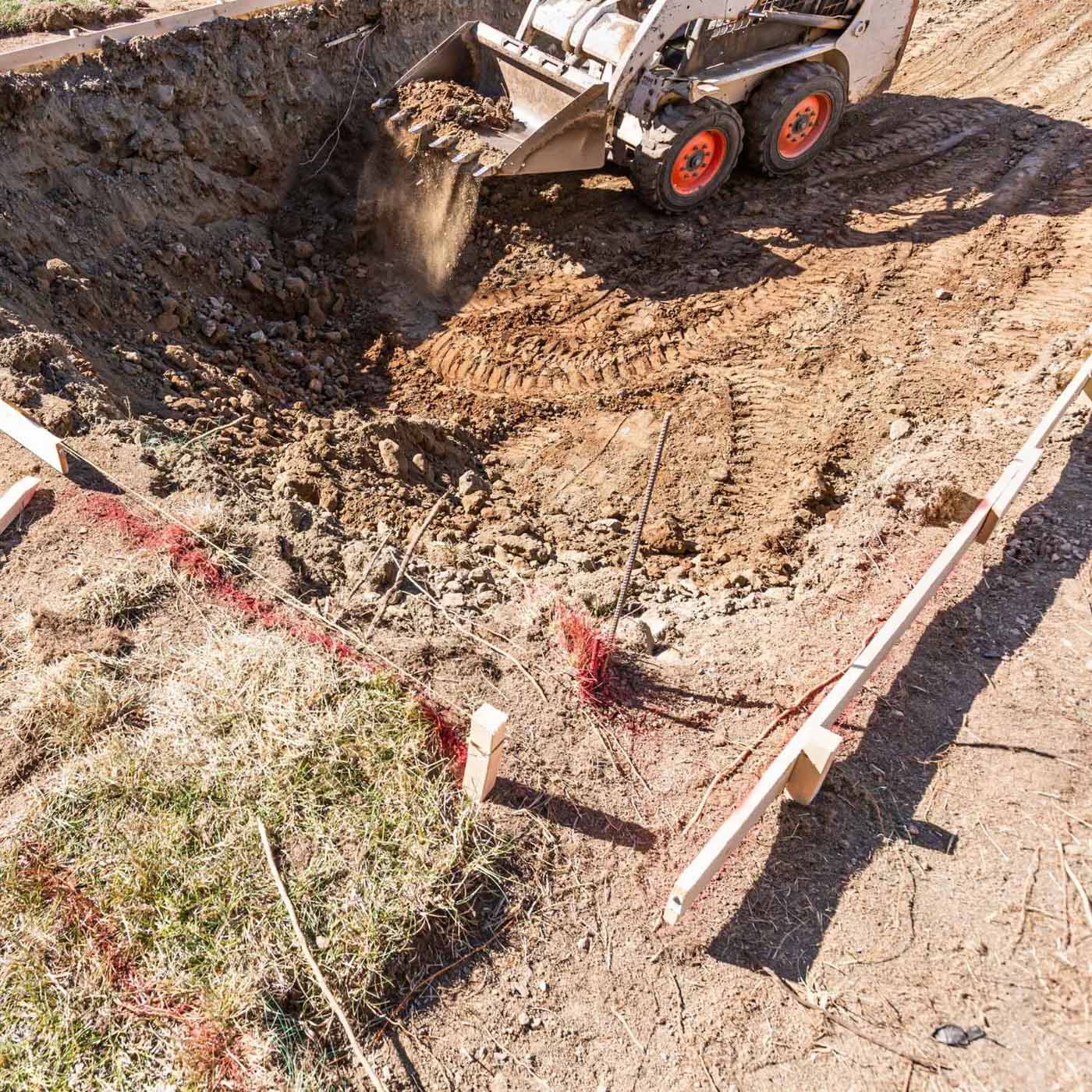
It starts with a site assessment. Before anything is recommended, we walk your property and evaluate the grade, the soil, where the water is pooling, and where it needs to discharge. In Aston, that often means accounting for older grading that’s settled unevenly over 50-plus years, and sometimes for properties that sit in or near the Marcus Hook Creek watershed where runoff from surrounding impervious surfaces compounds what your own yard is already dealing with.
From there, we design the drainage solution that fits your specific conditions. That might be a French drain, a catch basin, a dry well, regrading, or some combination. If your project adds impervious surface a new patio, an extended driveway we’ll also walk you through Aston Township’s stormwater requirements under Chapter 1043 of the municipal code. Some projects require a Simplified Method worksheet, a sketch plan, and a signed Operation and Maintenance Agreement submitted to the township before construction starts. We handle that process so you don’t get a violation after the work is done.
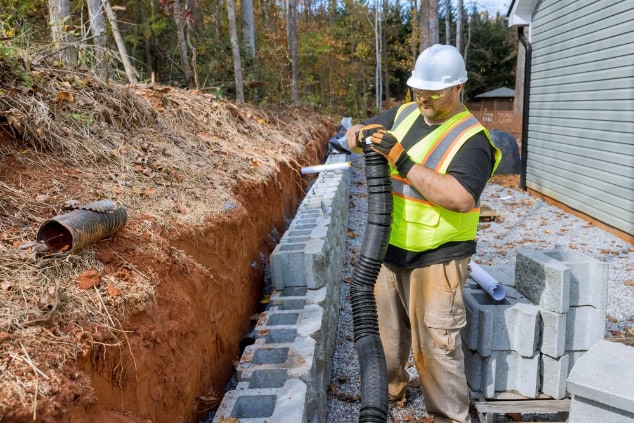
Installation follows a clear sequence: excavation, proper gravel bedding, filter fabric, pipe placement, backfill, and surface restoration. When we leave, your yard looks like a yard again not a construction site. And the system underneath is built to handle Delaware County winters, not just the next rainstorm.

Ready to get started?
Not every wet yard in Aston needs a French drain. Some properties need the grade corrected first because a French drain in a yard that still slopes toward the house is just an expensive delay. Some need a catch basin installed at the lowest point to intercept surface water before it reaches the foundation. Some need a dry well to handle roof runoff that’s overwhelming the soil near downspout discharge points. Many need a combination of these, sequenced correctly so each piece of the system works with the others.
What you get from us is a diagnostic approach, not a product pitch. We assess your yard’s specific drainage pattern, identify where the system is failing, and build a solution around that not around what’s fastest to install. For Aston homeowners in the Aston South or Green Ridge neighborhoods, where lot grades and housing layouts vary significantly, that specificity matters. A solution designed for your property performs differently than a generic install, and it lasts longer.
Everything we install is selected for Pennsylvania’s climate. That means pipe and aggregate that hold up through freeze-thaw cycles, filter fabric that doesn’t collapse under load, and discharge points that won’t back up when the ground is still frozen in late February. The goal isn’t just to fix the problem it’s to fix it in a way that doesn’t need to be redone in three years.
It depends on the scope of work. Aston Township has a formal Stormwater Management Ordinance under Chapter 1043 of its municipal code. For projects that add between 500 and 999 square feet of new impervious surface which can include a patio extension, a widened driveway, or a new outbuilding you’re required to submit a Simplified Method worksheet, a basic sketch plan, and a signed Operation and Maintenance Agreement to the township before construction starts. You don’t need a full formal drainage plan at that scale, but you do need to go through the process.
Projects adding 1,000 square feet or more of impervious area trigger more detailed drainage plan requirements. And even projects that don’t add impervious area may still need to meet water quality and infiltration goals under the ordinance. We’re familiar with Aston Township’s requirements and walk through the compliance piece with you before any work begins, so there are no surprises after the fact.
A French drain is a subsurface system perforated pipe surrounded by gravel and filter fabric that captures water moving through the soil and redirects it to a discharge point. Regrading is reshaping the surface of your yard so that water flows away from structures rather than toward them. These are not interchangeable. One manages water underground; the other prevents it from pooling in the wrong place to begin with.
In Aston, where most homes were built in the 1960s and 1970s, the grading has often settled unevenly over decades. Sometimes the original slope has reversed entirely near the foundation. In those cases, installing a French drain without correcting the grade first means you’re intercepting water that shouldn’t be reaching that area in the first place you’re managing a symptom rather than fixing the source. The right answer for your property depends on what a site assessment reveals. Many Aston properties need both, done in the right sequence.
For a standard residential French drain on a single-family lot in Aston, most installations take one to two days once work begins. The timeline depends on the linear footage of the system, the complexity of the discharge point, whether grading corrections are also needed, and how much existing hardscape or landscaping needs to be worked around.
What adds time isn’t usually the installation itself it’s the preparation. Proper gravel bedding, correct pipe slope, and careful backfill take longer than cutting corners, but they’re what separates a system that holds up through Delaware County winters from one that shifts and clogs after the first hard freeze. If your project requires submitting documentation to Aston Township under the stormwater ordinance, that review process happens before installation begins, so factor that into your overall timeline when planning spring work.
More urgent than most people treat it. Water that consistently pools within several feet of your foundation creates hydrostatic pressure against your basement walls every time it rains. Over time, that pressure leads to seepage, efflorescence, and eventually cracking the kind of damage that shows up in a home inspection and complicates a sale. For homes in Aston built in the 1960s and 1970s, the foundation waterproofing that was standard at the time was not designed to handle the runoff loads that today’s properties generate.
The other factor is Delaware County’s freeze-thaw cycle. Saturated soil near your foundation that freezes in January and thaws in February expands and contracts repeatedly. That movement accelerates foundation deterioration in ways that aren’t always visible until the damage is already significant. Addressing standing water near your foundation now is considerably less expensive than addressing the structural consequences of leaving it alone for another few seasons.
This is one of the most common questions we hear from Aston homeowners, and the answer usually comes down to cumulative change. Over the past few decades, many properties in Aston have added impervious surface a new patio, a wider driveway, a shed, a deck with solid footings. Each addition reduces the amount of ground available to absorb rainfall and increases the volume of runoff your original drainage was never designed to handle. The grading and drainage installed when your home was built in 1968 was sized for a different property than the one you have today.
There’s also a municipal piece. Aston Township’s stormwater infrastructure has been under strain. When the municipal system is overwhelmed, it backs up into private properties. That’s not something you can wait on the township to fix. Property-level drainage solutions are what actually protect individual homes when the system around them is at capacity.
For a residential French drain installation, most homeowners in Aston are looking at somewhere between $3,500 and $9,000 depending on the scope. The main cost drivers are the linear footage of the system, how complex the discharge point is, whether grading corrections are needed alongside the drain, and how much existing landscaping or hardscape needs to be disturbed and restored.
Simpler installs a shorter run with a straightforward discharge to daylight come in on the lower end. More involved projects that include regrading, catch basins, or multiple drainage zones will run higher. The best way to get an accurate number for your specific property is a site assessment, because two yards on the same street in Aston can have completely different drainage conditions depending on lot grade, soil composition, and how much impervious surface has been added over the years. What we won’t do is give you a number before we’ve actually looked at your yard that’s how you end up with a quote that bears no resemblance to the final invoice.
Useful Links