

Hear from Our Customers
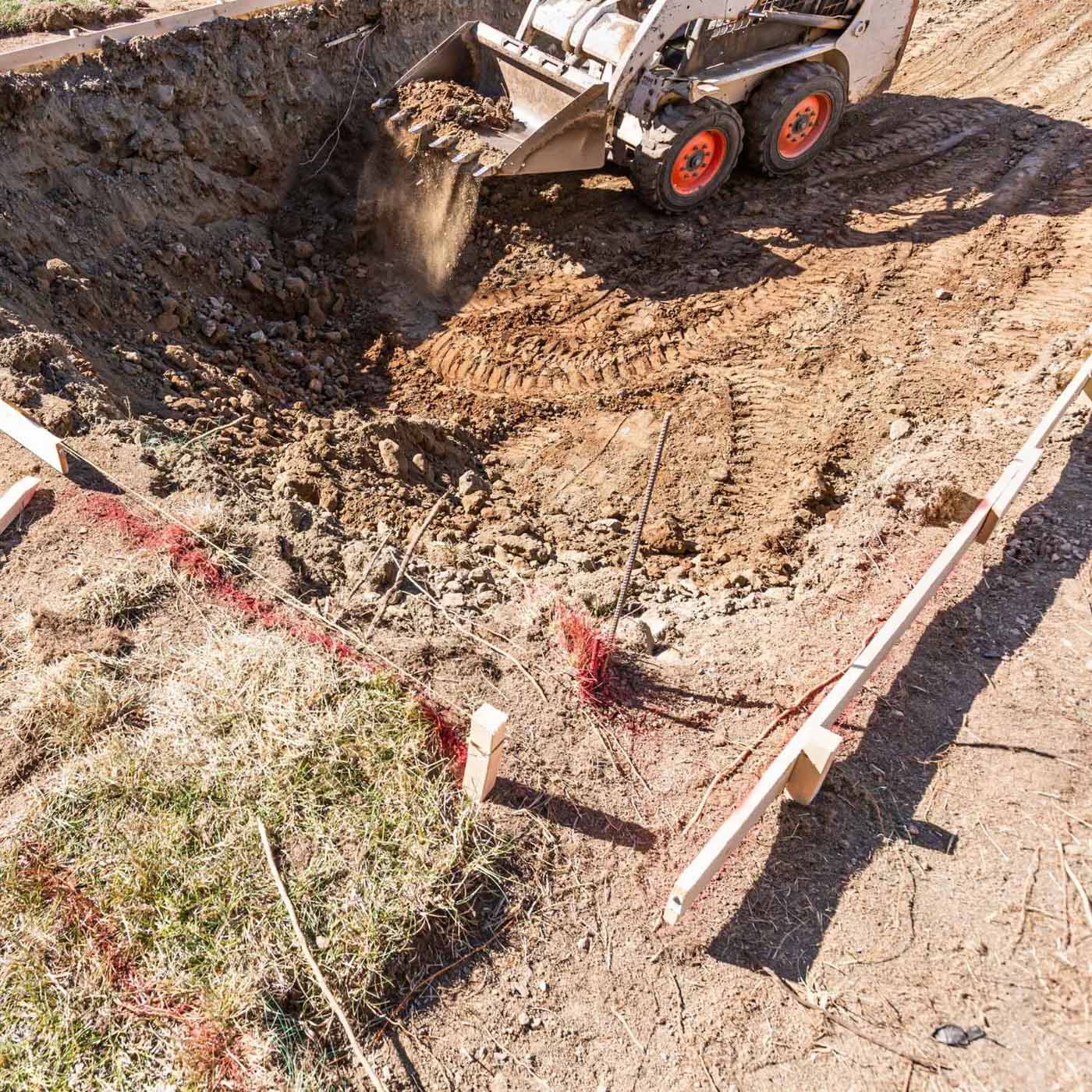
When water pools near your foundation after every storm, it’s not just inconvenient it’s compounding. Moisture works into foundation walls, settles into crawl spaces, and quietly starts costing you money long before it shows up as a visible problem. In Radnor Township, where the median home value sits around $663,900, that’s a risk worth taking seriously.
A lot of the drainage issues we see in Radnor trace back to how properties sit within the Ithan Creek, Gulph Creek, and Darby Creek watersheds. When heavy rain hits, runoff from neighboring lots, campus grounds, and road surfaces all funnel through the same corridor and your yard is often in the path. That’s not something a single catch basin fixes. It takes a real look at how water moves across your specific property.
The right drainage system does more than stop the flooding. It gives you back the parts of your yard you’ve been avoiding the soggy corner where nothing grows, the low spot where you’ve been putting off a patio for two years, the slope that washes out every spring. Fix the drainage, and those spaces become usable again.
We’re based in Aston, PA, and have been working across Delaware County for over 15 years. That includes properties throughout Radnor Township from the older homes along the Wayne and St. Davids corridors to the established lots near Villanova and Ithan. This isn’t a company that showed up in a Google ad from three counties over. Delaware County is where we work, and Radnor is part of that territory.
Renato leads every project. His name is on the business, and he’s on the job not managing from a distance while a subcontracted crew figures things out on your property. Customers consistently mention him by name in reviews, which tells you something about how this operation runs.
The work covers drainage, grading, retaining walls, and hardscape all under one crew. That matters when your drainage fix in Radnor also needs a regraded slope or a wall to hold it. You’re not coordinating three separate contractors; you’re making one call.

The first step is a site assessment not a sales pitch. We look at how your property is graded, where water is entering, where it’s collecting, and where it needs to go. In Radnor, that means paying attention to which watershed your lot drains toward, whether runoff from adjacent properties is contributing to your problem, and whether your current grade is working for you or against you. That context shapes everything that comes after.
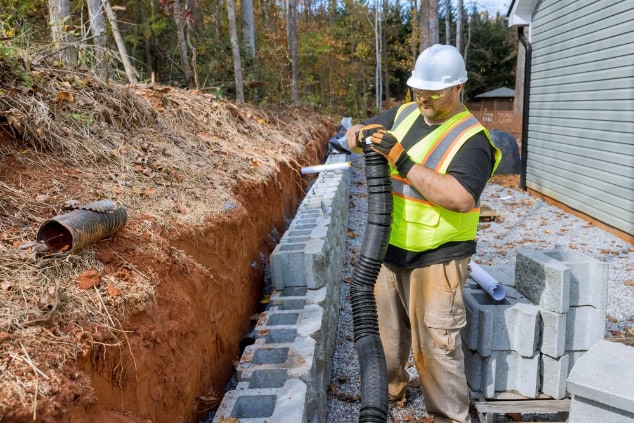
From there, we design a system that actually matches your property. That might mean a French drain routed to a safe discharge point, a dry well to handle roof runoff, catch basins in low spots, or a combination of all three. If the grade needs correction first and often it does we handle that before any pipe goes in the ground. Radnor Township requires permits for grading and stormwater management work, and we navigate that process as part of the job. The township’s permit structure includes a Professional Services Account review process, and we’re familiar with how it works so you’re not caught off guard mid-project.
Once the system is installed, we restore the disturbed areas. Your lawn gets put back together. The goal is a yard that drains correctly and looks exactly as it should not a property that shows the scars of a drainage project.
Ready to get started?
Most of Radnor’s housing stock is mature the township grew only about 3% in housing units from 1990 to 2020. That means the majority of homes here were built before modern stormwater standards, with original grading that has settled, shifted, or been disrupted by decades of landscaping changes. The drainage problems we see in Wayne, Villanova, Garrett Hill, and Ithan aren’t random they’re predictable outcomes of aging infrastructure on properties that were never designed to handle today’s impervious surface loads.
Our work in Radnor Township covers French drain installation, grading corrections, dry well systems, catch basin installation, and downspout management. When a project involves adding or replacing impervious surface a patio, a driveway extension, a retaining wall we factor in Radnor’s stormwater ordinance requirements from the start. Anything over 499 square feet of new impervious coverage triggers recharge bed requirements under Ordinance 2022-15. We build that into the plan so there are no surprises at the permit stage.
If your property is in one of Radnor’s HARB-regulated historic districts, we work with that in mind too. Drainage routes, discharge points, and any grading work near the front of the property get planned with visibility and neighborhood character as real considerations not afterthoughts.

In most cases, yes and Radnor Township’s permit process is more involved than many neighboring municipalities. The township requires a Grading Permit for work that disturbs the grade, which carries a $1,500 fee structure that includes a Professional Services Account the township draws from for engineering reviews and inspections. If your project involves new or replacement impervious surface, a separate Stormwater Management Permit may also be required, with a $3,050 fee and its own PSA balance.
The practical implication is that you want a contractor who already knows this process before they start your job. A contractor unfamiliar with Radnor’s PSA-based review structure can cause delays and unexpected costs that fall back on you. We’ve worked within Delaware County’s municipal permitting frameworks long enough to know what Radnor requires and how to move through it without the project stalling.
For a standard French drain installation, most residential projects in Radnor fall somewhere between $5,000 and $9,000. More complex work properties with significant grading corrections, multiple drainage components, or larger square footage can run $12,000 to $18,000 or more depending on what the site actually needs.
In Radnor specifically, a few factors tend to push projects toward the higher end of that range. Older homes with settled grading often need more extensive regrading before any drain system goes in. Properties near the Ithan Creek or Gulph Creek watersheds sometimes require more carefully engineered discharge solutions to avoid simply moving the water problem to a neighbor’s lot or a protected waterway. And if your project triggers Radnor Township’s stormwater ordinance requirements which kicks in at 500 square feet of new impervious surface there are permit costs to account for as well. We give you a clear written estimate before anything starts, so you know exactly what you’re looking at.
The most common cause is a grading problem the slope of your property is directing water toward a low spot rather than away from it. Over time, soil settles, landscaping changes alter drainage patterns, and original grading that worked decades ago stops doing its job. In Radnor’s older neighborhoods like Wayne, Ithan, and Garrett Hill, this is extremely common because most of the housing stock predates modern stormwater management standards.
The other factor we see frequently in this area is upstream runoff. If your property sits in the Ithan Creek or Gulph Creek watershed, water from neighboring lots, roads, and institutional grounds can be funneling onto your property during heavy rain events adding more volume than your yard’s natural drainage can handle. That’s not something you can fix by just adding a drain. It requires understanding how water is moving across your entire site and designing a system that intercepts and redirects it before it pools.
The honest answer is that you usually need both or at least a grading assessment before deciding. A French drain installed on a property with incorrect grade will work against the slope instead of with it, which limits how effective it can be and shortens the life of the system. Grading establishes the foundation that makes drainage infrastructure actually function.
That said, not every Radnor property needs full regrading. Some sites have adequate slope but lack the infrastructure to move water off the lot efficiently and a well-placed French drain or catch basin system is the right fix. The only way to know for certain is a proper site assessment that looks at your grade, soil conditions, and how water is entering and collecting on your property. We do that evaluation before recommending anything, because the wrong solution wastes your money and still leaves you with a wet yard.
It will cause some temporary disruption there’s no way to install a drainage system without disturbing the ground. But how much disruption, and how the property looks when we’re done, depends entirely on how the work is planned and executed.
For properties in Radnor’s HARB-regulated historic districts North Wayne, South Wayne, St. Davids, Ithan, and others we’re deliberate about where drainage routes run, where discharge points are located, and what the finished grade looks like relative to the character of the property and street. We restore disturbed lawn and landscape areas as part of the project. The goal is always a yard that looks like the work was never there, which matters more in an established historic neighborhood than it might in a newer subdivision. If your project requires HARB review for any exterior modifications, we can talk through what that process involves before we start.
A properly installed French drain in Pennsylvania should last 30 to 40 years. The key phrase there is “properly installed” because Pennsylvania’s freeze-thaw cycle is genuinely hard on drainage infrastructure that wasn’t built with it in mind. Radnor Township averages temperatures around 30°F in January, which means the ground freezes and thaws repeatedly through the winter season. Pipe that’s installed too shallow will heave. Gravel backfill selected without accounting for frost depth will shift. Fabric wrap that isn’t rated for the conditions will clog faster than it should.
The systems that fail in five to seven years are almost always ones where depth, material selection, and discharge point design didn’t account for how Pennsylvania winters actually behave. We install to the standards that hold up through those cycles not to a spec sheet written for a milder climate. When the work is done right the first time, you’re not calling someone back in a few years to redo it.
Useful Links