

Hear from Our Customers

Standing water in a Darby yard isn’t just an eyesore it’s a slow threat to your foundation, your basement, and the structural integrity of a home you’ve invested in. When drainage is done right, that water stops pooling against your foundation walls, stops saturating the soil around your crawl space, and stops turning your backyard into a swamp every time MacDade Boulevard floods after a heavy rain.
Darby’s clay-heavy soil is a big part of why water lingers so long after a storm. Clay doesn’t drain it holds. So even when the rain stops, the moisture stays pressed against your foundation for days. A properly graded yard with the right drainage infrastructure redirects that water before it ever reaches your home, which means drier basements, less hydrostatic pressure, and far less risk of the kind of structural damage that costs $10,000 to $30,000 to repair.
For row houses and attached homes which make up the majority of Darby’s housing stock drainage problems can be especially concentrated. When a full row of rooflines sheds water into a single narrow side yard with nowhere to go, the damage compounds fast. Getting that water out of those tight spaces and into a proper discharge point is exactly the kind of problem a well-designed drainage system solves.
We’ve been doing this work in Delaware County for over 15 years grading yards, installing French drains, and solving the kind of drainage problems that come with older housing stock, clay soil, and a watershed that doesn’t forgive poor planning. We’re based in Aston, PA, which means we’re not driving in from three counties away and guessing at local conditions. We know Darby and the surrounding area.
What makes the difference on a drainage job isn’t just the pipe in the ground it’s whether the person who assessed your yard is the same person overseeing the installation. On our projects, one crew handles the evaluation, the grading, and the build. There’s no handoff to a subcontractor who’s never seen your property. That matters in a borough like Darby, where small lots, dense construction, and the Darby Creek watershed make every project a little different from the last.
You get a clear assessment, a written scope, and a team that sees the job through from the first site visit to the final grade check.
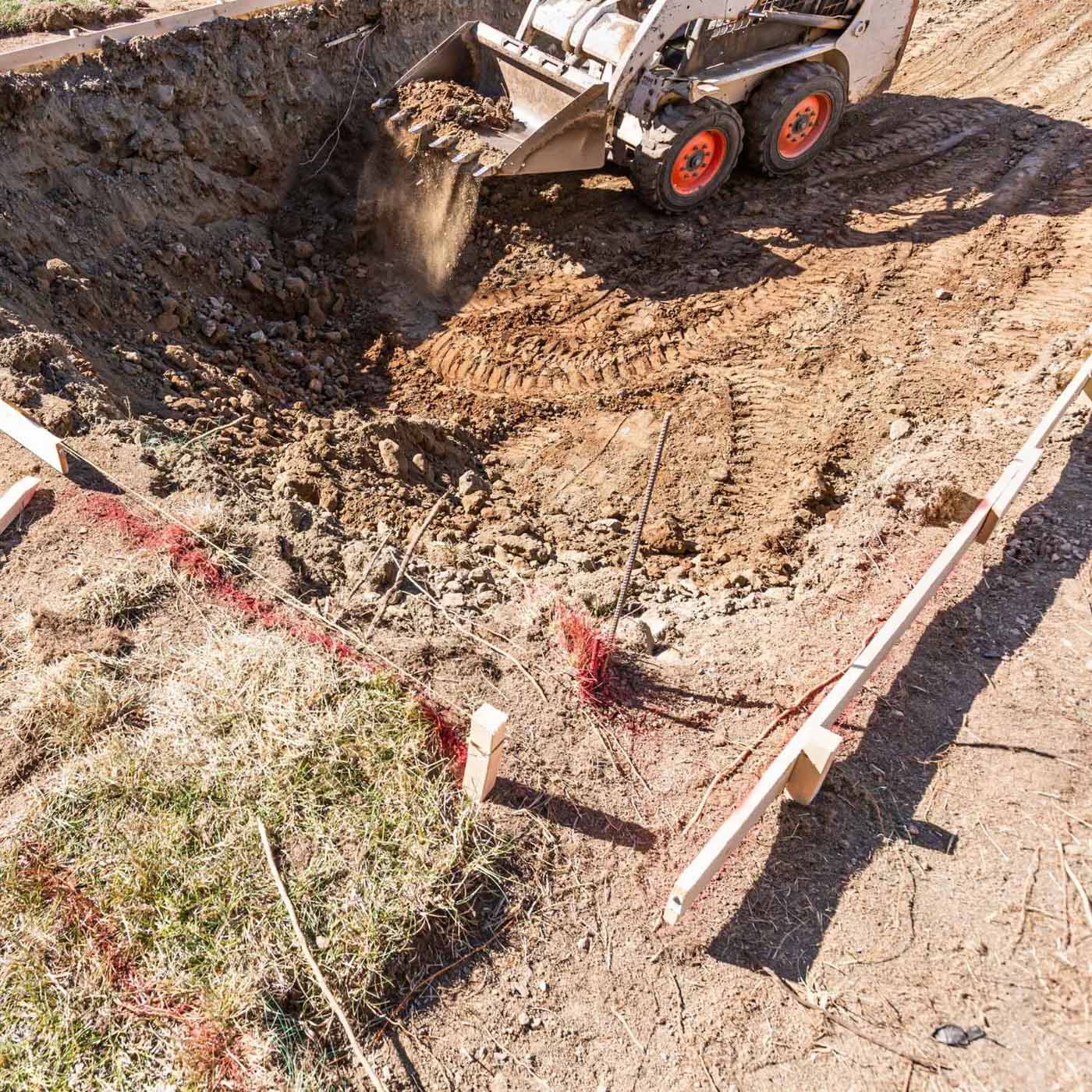
It starts with a site assessment. Before anything is recommended, we walk your property and map how water is actually moving where it’s entering, where it’s pooling, and where it needs to go. In Darby, that assessment includes looking at your yard’s position relative to the surrounding grade, because in a low-lying borough where runoff flows downhill from neighboring communities, your drainage system has to handle more than just what falls on your roof.
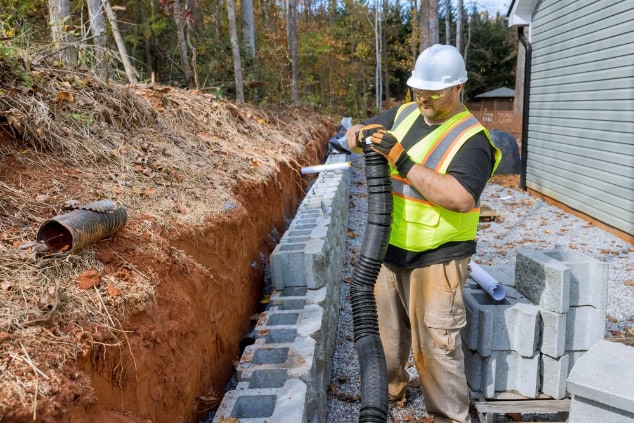
From there, we design a solution around your specific property. That might be a French drain running along the back of your lot to intercept groundwater before it reaches your foundation. It might be a catch basin at a low point in the yard to capture surface runoff. It might be a combination of regrading and downspout extensions to redirect water away from the house entirely. The answer depends on what your property actually needs not what’s easiest to install.
Once the scope is agreed on and any required permits are confirmed with the Borough of Darby Building Department, installation begins. Excavation is precise and contained, especially important on the tight lots common throughout Darby. When the drainage system is in, disturbed lawn areas are graded, seeded, and restored. The job isn’t finished until the yard looks right and water is moving the way it should.
Ready to get started?
Every drainage project we take on in Darby is designed around the conditions that actually exist here not a generic template. That means accounting for clay soil that resists infiltration, aging foundations that can’t handle sustained hydrostatic pressure, and a stormwater system that the Borough of Darby’s own ordinance (Chapter 124) regulates closely. Discharge points are designed to meet local code, which requires that only stormwater enters the borough’s storm system no exceptions.
For most Darby properties, the core solution involves some combination of French drain installation, land grading, and surface water capture. French drains intercept groundwater moving through the soil before it reaches your foundation. Catch basins handle concentrated surface runoff the kind that builds up fast in a tight side yard or at the back corner of a row house lot. Grading ensures the ground around your home is sloped away from the foundation, not toward it, which is a problem in many of Darby’s older homes where decades of soil settlement have reversed the original slope.
Pennsylvania’s freeze-thaw cycles also factor into how we build these systems. Drainage infrastructure that isn’t installed correctly won’t survive repeated freezing and thawing pipe joints fail, gravel beds shift, and the system stops functioning. We select materials and installation methods specifically for Delaware County’s climate, so what goes in the ground this season is still working five winters from now.

Darby sits in a low-lying position in the Darby Creek watershed what locals have described as “the bottom of the bowl.” That means your yard isn’t just managing the rain that falls on your property. It’s managing runoff flowing downhill from surrounding communities, off impervious surfaces like rooftops and pavement, and through soil that’s been compacted and developed for well over a century. When the watershed is already saturated, even a moderate rain event has nowhere to go.
The other factor is clay soil. Darby’s soil holds water rather than absorbing it, which means moisture lingers near your foundation long after the storm has passed. If your yard also has any negative grade where the ground slopes toward your foundation instead of away from it, which is common in homes built in the 1940s and 1950s water is being directed straight at your house every time it rains. Fixing that combination of low topography, clay soil, and grade issues is exactly what a properly designed drainage system addresses.
A French drain is a gravel-filled trench with a perforated pipe running through it, installed at a slope so it intercepts groundwater moving through the soil and redirects it away from your home to a safe discharge point. It’s one of the most effective tools for managing the kind of persistent groundwater pressure that builds up in clay-heavy soil like what you’ll find throughout Darby Borough.
Whether it’s the right solution for your specific yard depends on what’s causing the problem. If water is pooling on the surface after rain, a catch basin or regrading might be the better starting point. If water is seeping into your basement through the foundation walls, a French drain installed along the perimeter of your foundation can relieve that pressure significantly. In many Darby properties, the right answer is a combination grading to redirect surface water, and a French drain to handle what the soil won’t absorb. That’s why a site assessment matters before any solution is proposed.
Yes, drainage work that involves excavation or modifications to how stormwater is managed on your property can require a building permit through the Borough of Darby Building Department. The borough has an adopted Stormwater Management Ordinance Chapter 124 of the borough code and the Pennsylvania DEP’s rule for Darby’s municipal storm system is explicit: stormwater only. That means any drainage discharge point has to be designed to direct only stormwater into the borough’s system, and it has to be done correctly.
The Darby and Cobbs Creeks Watershed Act 167 Stormwater Management Plan also sets standards that apply to construction and drainage work across the watershed. This isn’t something to skip or guess at. A drainage system that isn’t permitted or that discharges improperly can create liability for you as the homeowner down the road. We confirm permit requirements with the borough before work begins on every project it’s part of how we operate responsibly in Darby.
French drain installation typically runs between $5,000 and $9,250 for a residential property, with pricing calculated at roughly $10 to $100 per linear foot depending on depth, soil conditions, and how far the water needs to travel to reach a proper discharge point. Labor accounts for the majority of the cost usually 80 to 85 percent because excavation, grading, and proper installation in clay soil takes real time and skill.
In Darby specifically, the tight lot sizes and row house configurations can affect pricing in both directions. Less linear footage may be needed on a smaller lot, but working in a confined side yard or near a shared foundation wall requires more precision, which takes more time. The most accurate number comes from a site assessment of your specific property. What’s worth keeping in mind is the cost comparison: a French drain in the $5,000 to $9,000 range is a fraction of what foundation repair costs and in a borough with Darby’s flood history, the risk of doing nothing is well documented.
A properly installed drainage system should last 30 to 40 years or more. The key word is properly. In Delaware County, the freeze-thaw cycle from December through March is the primary stress test for any underground drainage infrastructure. Water that gets into a poorly sealed pipe joint freezes, expands, and damages the system from the inside. Gravel beds that aren’t compacted correctly shift over winter and lose their drainage capacity. These aren’t hypothetical failure points they’re what happens when installation shortcuts are taken.
Darby’s clay soil adds another layer. Clay is dense and slow to drain, which means the drainage system is doing real work every time it rains. Materials that hold up in sandy or loamy soil may not perform the same way in clay over a decade of use. Selecting the right pipe type, gravel specification, and filter fabric for clay soil conditions and installing it at the correct depth and slope is what separates a system that’s still functioning in year 15 from one that needs to be dug up and redone in year four.
It depends on where the water is coming from. If your basement is getting wet because of hydrostatic pressure groundwater pushing through the foundation walls or floor due to saturated soil exterior drainage work can absolutely reduce or eliminate that problem. A French drain installed along the foundation perimeter intercepts that groundwater before it builds up enough pressure to force its way in. Correcting the grade around your home so surface water runs away from the foundation rather than toward it also makes a significant difference.
If the water is coming in through cracks in the foundation itself, or through window wells, or as a result of a failing interior drain tile system, that’s a different problem that may require a waterproofing contractor in addition to or instead of exterior drainage work. In Darby, where a large portion of the housing stock was built in the 1940s and 1950s and has never had its original drainage systems updated, it’s common for both issues to exist at the same time. A site assessment can help identify what’s actually driving the moisture and whether exterior drainage alone will solve it or whether additional work is needed.
Useful Links