
Hear from Our Customers
Darby Borough isn’t a sprawling suburb. It’s dense, it’s historic, and it sits right along Darby Creek which means drainage isn’t just a design preference, it’s a real concern. A patio that doesn’t slope away from your foundation isn’t just an eyesore after a heavy rain. In a borough where flooding events along MacDade Boulevard have made the local news, water directed toward an aging rowhouse foundation is a problem that compounds quietly until it isn’t quiet anymore. Every patio we install is graded correctly from the start.
Then there’s the winter. Delaware County cycles through freeze and thaw dozens of times between November and March. Water gets into a poorly compacted base, freezes, expands, and pushes the surface up. By spring, you’ve got a buckled, cracked patio that looks like it’s been there forty years even if it’s only been two. The difference between a patio that holds and one that doesn’t isn’t the surface material you pick. It’s the base work underneath it, the part you never see. That’s where the real job happens, and that’s where corners get cut most often.
When it’s done right, your patio becomes the one genuinely private outdoor space you have in a community this dense. For Darby homeowners commuting in and out on the trolley or the regional rail, that rear yard isn’t just nice to have it’s your retreat. A well-built patio makes it usable, comfortable, and worth coming home to.
We’re based in Aston Delaware County, same as Darby. Not a regional chain dispatching crews from two counties over. Renato Spennato runs the operation, and his name is on every job. That kind of accountability means something in a tight-knit borough like Darby, where neighbors talk and a bad experience travels fast.
Our crew has been building patios across Delaware County for over 15 years, which means we’ve worked through enough Pennsylvania winters to know what fails and why. We understand the soil conditions here, the permit process through Darby Borough, and what it actually takes to build something that holds up on a compact rowhouse lot near Darby Creek not just something that looks good in photos the week it’s finished.
One crew, start to finish. No subcontractors handed your job off mid-project. You’ll know who’s on your property and who to call if you ever have a question after the work is done.
It starts with a walkthrough of your yard. For most Darby properties, that means a compact rear yard with real constraints narrow width, older foundation walls, maybe an alley along the back. That’s not a problem to work around; it’s the starting point for a design that actually fits the space. We look at how you use the yard, what you want from it, and what the lot will realistically support before anything gets drawn up.
From there, you’ll get a clear scope and a price range before any work begins. We publish pricing openly $15 to $50 per square foot depending on material, with most projects landing between $3,500 and $12,000. No bait-and-switch, no number that shifts after you’ve already committed. If a permit is required through Darby Borough, we handle that process. You don’t need to figure out what the borough requires or navigate the application yourself.
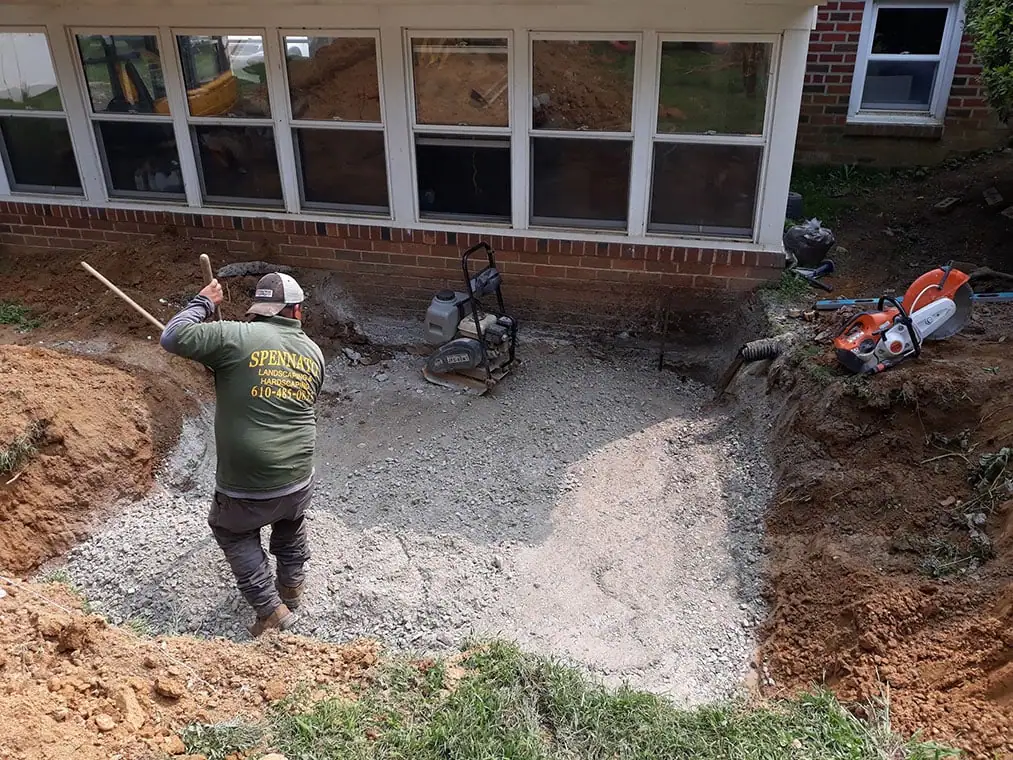
Installation starts with excavation and base preparation the part that determines whether your patio holds up through ten Delaware County winters or starts failing after two. Proper depth, compacted aggregate, drainage slope built in from the beginning. Then the surface goes down, edges are set, and the site gets cleaned up before the crew leaves. When it’s done, you’ll know exactly what was built and why it was built that way.
Ready to get started?
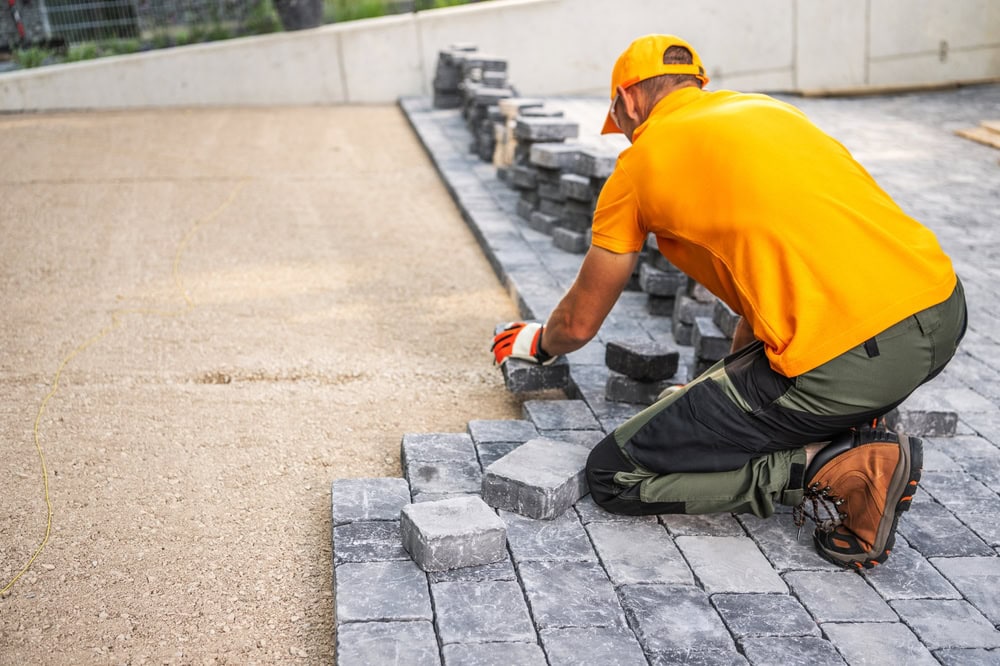
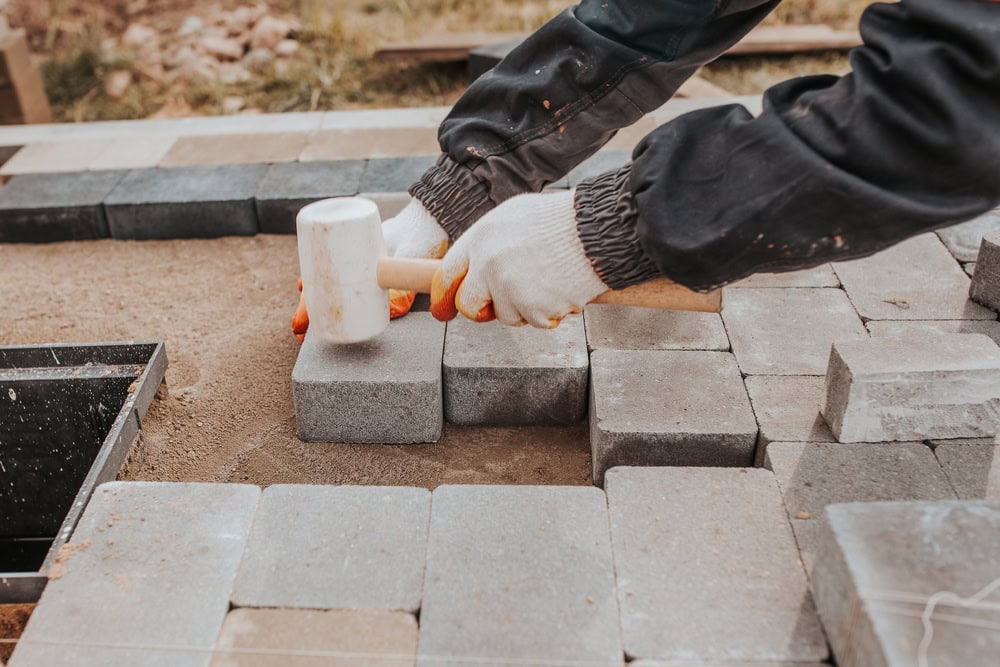
Pavers are the most popular choice for good reason. They handle Pennsylvania’s freeze-thaw cycles better than poured concrete, they deliver stronger ROI at resale, and if one shifts or cracks years down the road, you replace that piece not the whole surface. For a Darby rowhouse lot where the investment is meaningful relative to the home’s value, that long-term math matters. Paver patio installation also gives you real design flexibility: pattern choices, border treatments, and material combinations that can make a compact rear yard feel intentional and finished rather than just filled in.
Flagstone is worth considering if you want something that feels more natural and organic it complements the character of Darby’s older neighborhood architecture in a way that a uniform paver grid sometimes doesn’t. It works well in smaller footprints and gives the space a more settled, established look.
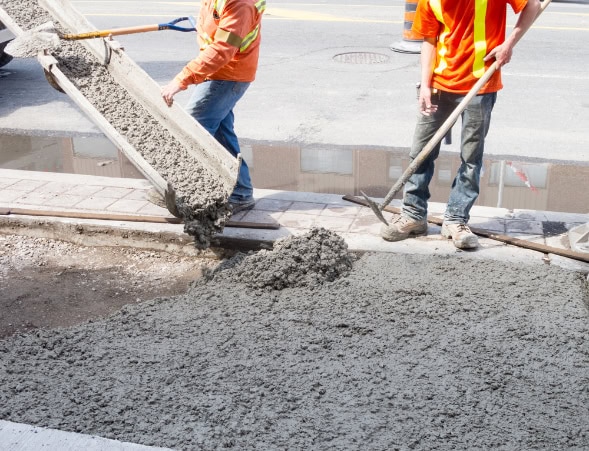
Concrete is the most budget-accessible option, and we install it. But the honest conversation about concrete in a freeze-thaw climate like Delaware County’s is that it cracks, and when it does, you’re typically looking at full replacement rather than a patch. That’s worth knowing before you choose based on upfront cost alone. Whatever material fits your yard and your goals, you’ll get a straight answer on the trade-offs before you decide.

It depends on the scope of the project, but in many cases, yes Darby Borough requires a building permit for new or expanded hardscape installations. The borough manages its own permitting separately from Delaware County, through the borough offices at 1020 Ridge Avenue. The specific threshold can vary based on the size of the patio, whether it’s covered, and how it affects drainage or impervious surface coverage on your lot.
The good news is you don’t have to figure that out yourself. We handle the permit process as part of the project. If a permit is required, it gets pulled before work begins not after, and not skipped. Working without a required permit creates real problems when you go to sell your home, and it’s not something a contractor who plans to be around long-term takes shortcuts on.
Most patio installations in Darby run between $3,500 and $12,000, with the per-square-foot cost ranging from $15 to $50 depending on material, base requirements, and design complexity. Pavers sit toward the higher end of that range. Concrete is typically lower upfront. Flagstone falls somewhere in the middle depending on the stone selected and the pattern.
For a Darby rowhouse lot where the patio footprint is usually compact most projects land in the $4,000 to $8,000 range. That’s a meaningful investment relative to a home valued in the $165,000 to $205,000 range, and it’s worth understanding the full picture: professionally installed patios return more than 80% of their cost at resale, and pavers specifically outperform plain concrete by 30 to 50% on ROI. The goal isn’t to spend the most it’s to spend it right so you’re not redoing it in three years.
Pavers are the most durable choice for Pennsylvania’s climate, and that’s not a sales pitch it’s just how the material performs. Delaware County goes through dozens of freeze-thaw cycles every winter. Water infiltrates, freezes, expands, and pushes. Poured concrete handles this poorly over time because it’s a single rigid slab when it cracks, it cracks through, and repair usually means full replacement.
Pavers are individual units set in a flexible base, which means they can absorb minor ground movement without catastrophic failure. If a paver shifts or cracks after years of use, you pull that piece and replace it. The rest of the surface stays intact. Flagstone behaves similarly when set correctly. The key with any material in this climate is the base proper excavation depth, compacted aggregate, and drainage slope built in from the start. That’s what separates a patio that holds through ten winters from one that looks rough after two.
Yes and honestly, small-space patio design is where the work gets interesting. Most rear yards in Darby Borough are compact by nature. The borough covers less than a square mile and the housing stock is predominantly rowhouses and attached twins, many built before 1939. There isn’t a lot of depth to work with, and the width is often constrained by shared walls and alley access.
But a well-designed patio doesn’t need to be large to function well. The right proportions, a clean material choice, defined edges, and thoughtful placement relative to the back door and any existing landscaping can transform a 12-by-16-foot rear yard into a space you actually use for morning coffee, evening dinners, or just somewhere to decompress after the commute. The mistake most people make is assuming the space is too small to bother with. It usually isn’t. It just needs a design approach that starts with the real constraints rather than ignoring them.
Darby Borough’s location along Darby Creek means stormwater management is a real, ongoing concern not just a theoretical one. The borough is a member of the Eastern Delaware County Stormwater Collaborative specifically because flooding and stormwater runoff have been persistent issues in the watershed. Heavy rain events have flooded MacDade Boulevard and caused evacuations in Darby. That context matters when you’re installing hardscape on your property.
A patio that isn’t graded correctly doesn’t just pool water on the surface it can direct runoff toward your home’s foundation. In Darby’s older rowhouse stock, where foundations are already aging and the homes are attached, that’s a compounding problem. Every patio we install is sloped away from the home’s foundation as a standard part of the build not an add-on, not an upgrade. Proper drainage slope is how the job gets done here. If your yard has existing drainage issues, that gets assessed during the initial walkthrough before any design decisions are made.
For most residential patio projects in Darby, the actual installation takes anywhere from two to five days on-site, depending on the size of the patio, the material selected, and site conditions. Pavers and flagstone take a bit longer than poured concrete because of the individual placement involved. A covered patio or pergola addition extends the timeline further.
What affects the overall timeline more than the installation itself is scheduling and, when applicable, permitting. Darby Borough processes its own building permits, and lead times vary. We manage that process, but it’s worth building it into your planning window especially if you’re targeting a specific date like a summer gathering or a home listing. The best time to start the conversation is late winter or early spring, when the schedule is more open and you have time to get everything lined up before the peak installation season hits. We commit to a project timeline before work begins and stick to it that’s not a standard practice in this industry, but it’s how we operate.
Useful Links