

Hear from Our Customers
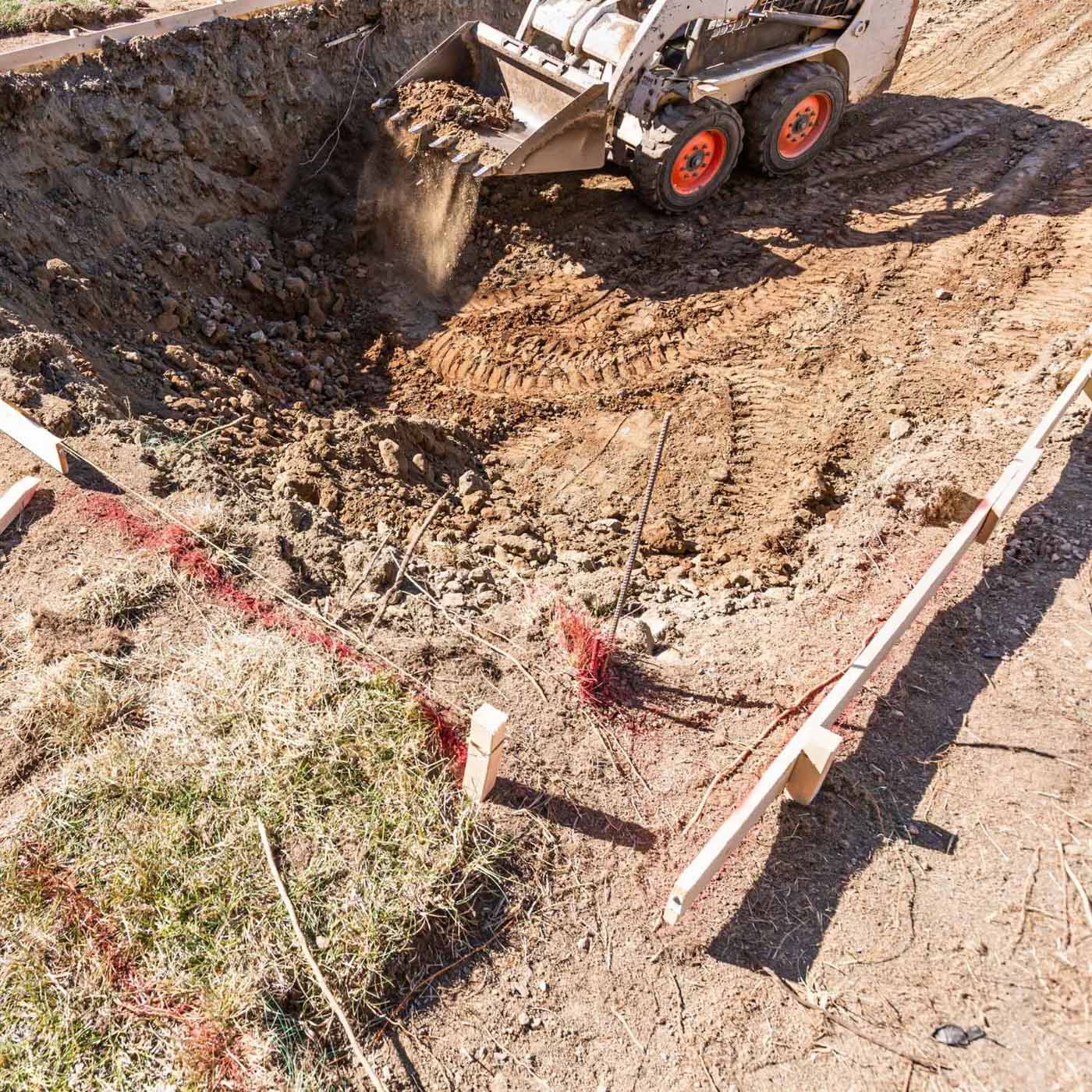
The West Branch of Chester Creek starts right near Route 202 here in Concord Township. That’s not a fun geography fact it’s the reason water moves the way it does across properties in this area, and why drainage problems here tend to be more persistent than homeowners expect. When the ground is already saturated from a wet spring, there’s nowhere for additional runoff to go. It pools. It sits. It finds the path of least resistance, and that path is often toward your foundation.
Concord’s housing stock doesn’t help either. Most homes in the Garnet Valley corridor were built in the 1980s and 1990s, which means original drainage infrastructure if any was installed at all is now 30 to 45 years old. French drains from that era are prime candidates for failure. Silt clogs the fabric, roots push through the pipe, and the system that once worked quietly underground stops working entirely. You don’t find out until water is somewhere it shouldn’t be.
A properly installed drainage system changes the daily reality of your property. Soggy patches that killed your grass disappear. The low spot near the back corner that turned into a pond every March dries out. And the anxiety every time a heavy storm rolls through that goes away too. That’s what a real drainage fix actually delivers.
We’re based in Aston, PA which shares a border directly with Concord Township. The West Branch Chester Creek flows from Concord right into Aston, which means we work in the same watershed, the same soil conditions, and the same drainage environment every single day. That’s not a marketing angle. It’s just geography, and it matters when someone is designing a system for your yard.
We’ve been working in Delaware County for over 15 years. In that time, we’ve seen what happens to properties in the Garnet Valley area when drainage gets ignored, and we’ve seen what it looks like when it’s done right. We handle grading, French drain installation, catch basins, dry wells, and outdoor drainage systems all with the same crew, not a rotating cast of subcontractors.
Concord Township has its own stormwater ordinance Chapter 148 and a Chester Creek Stormwater Management Plan that governs how drainage systems must be designed. We know those requirements. When we design a system for your property, it’s built to work and built to comply.

It starts with a site assessment not a sales pitch. Before anything gets recommended, we walk your property and look at how water actually moves across it. Where does it enter? Where does it collect? What’s the slope doing, and where is it directing flow? In Concord Township, that assessment also accounts for your proximity to the West Branch Chester Creek watershed and whether your property falls within the township’s Floodplain Conservation District, which carries additional design considerations.
From there, we put together a recommendation based on what your property actually needs. For some yards, that’s a French drain running along the perimeter of a low area, discharging to daylight at the property edge. For others, it’s a catch basin system tied into a subsurface pipe network, or a combination of regrading and drainage infrastructure working together. We explain what we’re recommending and why you’re not just approving a line item, you’re understanding the plan.
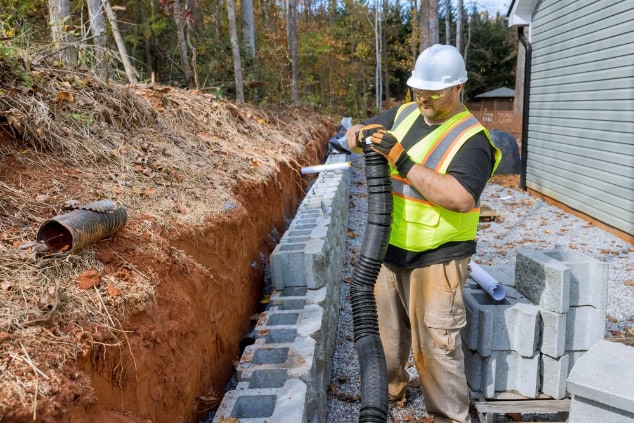
Installation is handled by our crew from start to finish. We call 811 before any excavation that’s required in Pennsylvania and non-negotiable. We plan our excavation routes to protect existing landscaping as much as possible, because we know that mature trees and established plantings in Concord’s larger-lot properties took years to develop. When the work is done, disturbed areas are restored. You’re not left with a trench scar across your lawn.

Ready to get started?
Drainage work in Concord Township isn’t one-size-fits-all, and the service we deliver reflects that. Properties in subdivisions like Smithfield Estates, Chartwell, and Northbrook tend to sit on larger lots with complex grading multiple low points, varied slopes, mature landscaping that redirects flow in ways the original builder never accounted for. A single French drain running along one edge of the yard often isn’t enough. We assess the full picture before we touch anything.
The services we bring to Concord properties include French drain installation, surface regrading, catch basin installation, dry well systems, and drainage swale construction and we combine them when the site calls for it. Because we also handle grading and hardscaping, we can address both the symptom and the cause in the same project. A contractor who only installs drains without correcting the underlying slope problem is solving half the issue.
Delaware County’s clay-heavy Piedmont soil is a constant factor in this work. Clay doesn’t drain it holds water and forces it to the surface or toward structures. Every system we install in Concord is designed with that soil behavior in mind: proper pipe grade, the right gravel specification, and outlet placement that moves water where it needs to go without creating a new problem for a neighboring property. Concord Township’s Chapter 148 stormwater ordinance requires exactly that kind of responsible discharge design, and we build it in from the start.
It depends on the scope of the work. Concord Township adopted its Watershed Stormwater Management Ordinance Chapter 148 in 2018, and it governs how stormwater is managed on private property, particularly when work involves grading, excavation, or changes to how runoff flows off your lot. For smaller drainage installations that don’t disturb significant land area or alter drainage patterns beyond your property line, a formal stormwater management plan may not be required. But for more complex projects especially those near the West Branch Chester Creek or within the township’s Floodplain Conservation District the township may require a drainage plan reviewed by the township engineer for consistency with the Chester Creek Stormwater Management Plan.
Beyond the township level, Pennsylvania requires a PA One Call (811) notification before any excavation, regardless of project size. We handle that as a standard part of every project. If your project does require township review, we can walk you through what that process looks like and what documentation is needed.
French drain installation in Delaware County generally runs between $5,000 and $9,250 for a standard residential system, with more complex projects reaching $12,000 to $18,000 depending on the scope. Cost is driven primarily by linear footage, depth of excavation, site access, and whether additional work like regrading or catch basin installation is needed alongside the drain itself. Labor makes up the majority of the total, typically 80 to 85 percent, which is why quotes vary significantly between contractors based on experience and crew quality.
For Concord Township properties specifically, larger lot sizes and the clay-heavy soil conditions in this part of Delaware County often mean more excavation depth and more complex system design than a smaller suburban lot would require. Properties in the Garnet Valley corridor with existing mature landscaping may also require more careful installation planning to avoid damage, which affects labor time. The right way to get an accurate number is a site assessment there’s no substitute for actually seeing how water moves across your specific property before pricing the fix.
The most common cause in Concord Township is the combination of clay-heavy Piedmont soil and inadequate or aging drainage infrastructure. Clay soil has very low permeability it doesn’t absorb water the way sandy or loamy soil does. When rain falls faster than the ground can accept it, water pools at low points and stays there until it slowly evaporates. If your home was built in the 1980s or 1990s, which describes most of the Garnet Valley housing stock, any original drainage infrastructure is now 30 to 45 years old and may have failed silently underground.
Slope is the other major factor. Water follows gravity, and if your yard’s grade directs flow toward a low corner or toward your foundation that’s where it’s going to collect. Sometimes the issue is a neighbor’s grading that sends their runoff onto your property. Concord Township’s stormwater ordinance specifically prohibits drainage systems that discharge excess water onto adjacent properties, but that doesn’t stop it from happening through natural grade relationships. A site assessment identifies the actual source, which is the only way to design a fix that works long-term.
Most residential drainage installations in Concord Township take one to three days of active work on-site, depending on system complexity. A straightforward French drain installation along a single problem area can often be completed in a day. A more involved project multiple catch basins tied into a subsurface network, combined with regrading and outlet construction typically runs two to three days. The larger lot sizes common in Concord’s Garnet Valley subdivisions can extend that timeline if the system needs to span a significant distance across the property.
Scheduling is the part that takes longer than the work itself. Spring is our peak season in Delaware County that’s when drainage failures become visible after winter snowmelt and early spring rains saturate the ground. If you’re calling in March or April, expect a wait. Fall is actually a smart time to schedule drainage work in this area the ground is workable, the wet season hasn’t started yet, and you go into the following spring with a functioning system already in place. We give you a firm timeline before we start and stick to it.
Yes, and in Concord Township the stakes are higher than in most markets. Homes in the Garnet Valley corridor regularly sell in the $700,000 to $900,000 range, and buyers in that price range typically families who chose this area specifically for the Garnet Valley School District are not overlooking drainage issues during inspection. A chronically wet yard, visible foundation moisture, or a landscape that shows signs of recurring water damage signals deferred maintenance, and that signal affects both perceived value and negotiating leverage.
Beyond the sale itself, active drainage problems cause real damage over time. Foundation repairs in this region can run $10,000 to $30,000 or more. Mold remediation in a basement that’s been receiving moisture for years is expensive and disruptive. Landscape replacement after years of root rot and soil erosion adds up quickly. A drainage system that costs $6,000 to $10,000 today is protecting an asset worth nearly a million dollars that’s not a hard equation. Buyers who’ve been through a difficult home inspection know this, and sellers who’ve addressed drainage problems before listing are in a much stronger position.
A French drain is a subsurface system a perforated pipe wrapped in filter fabric and surrounded by gravel, buried in a trench. It collects water that’s moving through or sitting in the soil and redirects it to a discharge point. It’s most effective when the problem is groundwater coming up from below, water migrating through the soil from an uphill source, or a consistently soggy area where the soil just can’t drain fast enough on its own.
A catch basin is a surface-level inlet typically a grated box set into a low point in the yard that intercepts water before it spreads. It connects to an underground pipe that carries the collected water to a discharge point. Catch basins are most effective when the problem is surface runoff pooling in a specific low spot, or when water is sheeting across a paved or hardscaped surface with nowhere to go. Many properties in Concord Township’s larger subdivisions need both a catch basin to intercept surface flow at the low point, and a French drain to manage the subsurface moisture that feeds it. That’s exactly why a site assessment matters before any system gets designed. The right answer depends entirely on how water is actually moving across your specific property.
Useful Links