
Hear from Our Customers
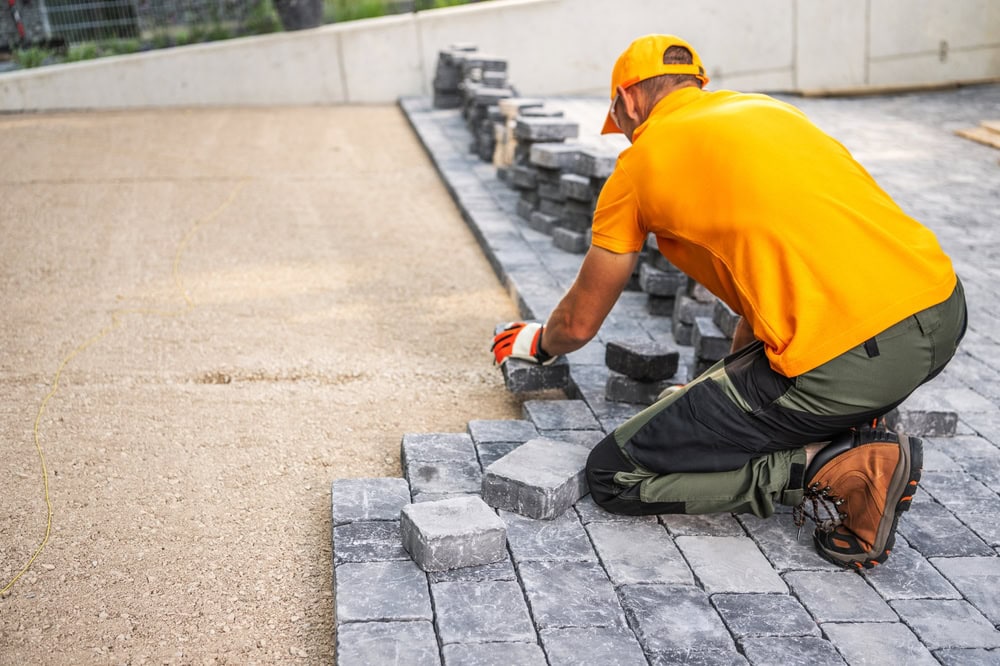
Most homeowners in Concord and Concordville aren’t short on space they’re short on a plan for it. A half-acre lot with nothing but grass isn’t an outdoor living space. It’s an unfinished project. The right patio gives that space a purpose: somewhere to eat, somewhere to sit, somewhere that feels like an extension of the home instead of an afterthought.
What most people don’t think about until after the fact is what’s underneath. Concord Township sits within both the Brandywine Creek and Chester Creek watersheds, and southeastern Pennsylvania delivers 40-plus freeze-thaw cycles every year. That combination puts real mechanical stress on any patio built on a shallow or poorly compacted base. A properly excavated and compacted aggregate base at least five to six inches in frost-affected areas is what separates a patio that looks the same in year ten as it did on installation day from one that’s already shifting and sinking by year three.
The other thing worth knowing: a professionally installed patio in a Garnet Valley School District market, where homes are transacting near $665,000, returns more than 80% of its cost at resale. Pavers specifically outperform plain concrete by 30 to 50% on ROI. This isn’t just about enjoying your backyard it’s a decision that holds its value.
We’re based in Aston the township directly east of Concord on the Route 322 corridor. This isn’t a company that added your area to a service map. Delaware County is where Renato Spennato has been working for over 15 years, and Concord Township is part of that territory in the most literal sense.
One crew handles your project from excavation to final cleanup. No subcontractors brought in for portions of the work, no handoffs between teams, no accountability gaps. When you have a question before the project, during it, or after there’s one person responsible for the answer.
We publish our pricing openly: $15 to $50 per square foot, with most projects falling between $3,500 and $12,000 depending on material and scope. You’ll know the range before the first conversation, which is more than most contractors in this market will tell you upfront.
It starts with a conversation about how you actually use your outdoor space. Not a generic design pitch a real discussion about what you want the patio to do, how large your lot is, where the drainage runs, and what materials fit the look and feel of your property. For wooded lots in Glen Mills or Concordville, natural stone or flagstone often reads better than uniform concrete pavers. For newer construction in communities like Spring Lake or Concord Hunt, the starting point is usually a blank slate that needs both design direction and a durable surface.
Before any work begins, we handle the permit process with Concord Township. The township explicitly requires permits for patios and decks it’s listed on their building and codes page and skipping that step creates real legal and resale exposure on a home worth $650,000 or more. That’s handled correctly from the start, not treated as an afterthought.
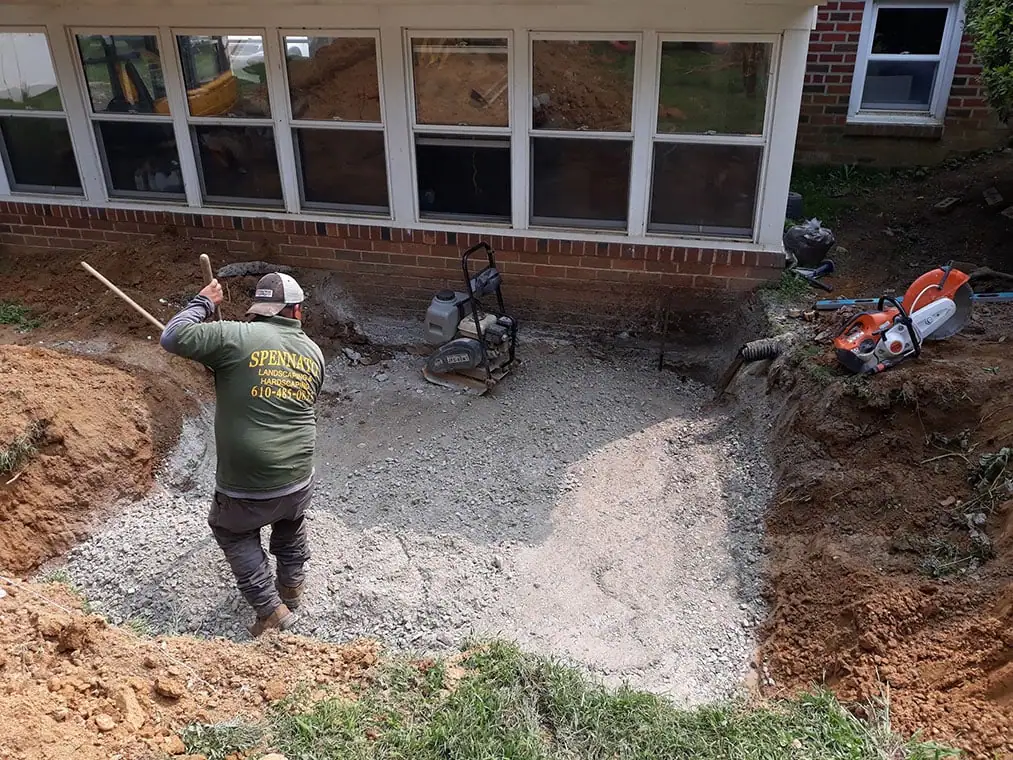
Installation follows a defined sequence: excavation to the right depth, a compacted aggregate base, edge restraints, surface installation, and polymeric sand jointing to lock everything in place. Given Concord Township’s watershed context, drainage slope away from the foundation is built into every project not something you have to ask for. When the crew leaves, the site is clean, the surface is set, and you know exactly what was done and why.
Ready to get started?
Concord Township isn’t a one-size-fits-all market, and the patio material that works best on your property depends on more than just budget. For homes near the wooded, naturalistic areas of Concordville or the established Glen Mills neighborhoods, Pennsylvania Bluestone and irregular flagstone tend to integrate with the landscape in a way that manufactured surfaces don’t. These materials carry a character that fits a township with a 340-year history and multiple National Register of Historic Places sites they belong here.
Interlocking concrete pavers are the most popular choice across Delaware County for good reason. They’re durable, repairable, and offer real design flexibility different patterns, colors, and border options that can complement the exterior of almost any home. If one section shifts after a hard winter, individual pavers can be reset without tearing out the whole surface. That repairability matters in a climate with the freeze-thaw cycles southeastern Pennsylvania delivers.
Poured concrete stamped, colored, or standard is available for buyers who want a lower entry price point or a seamless surface aesthetic. The trade-off is repairability: concrete cracks, and when it does, the fix is more involved than resetting a paver. We’ll walk you through that trade-off honestly, based on your specific lot conditions, not based on what has the highest margin. For properties in HOA communities like Concord Woods or Spring Lake, material selection should also account for any association guidelines something worth confirming before installation begins.

Yes Concord Township explicitly lists patios, decks, and gazebos as structures requiring permits on the township’s building and codes page. You can contact the Township Office at 610-459-8911 to confirm requirements before any work begins. This isn’t a gray area, and it’s not something worth skipping.
An unpermitted patio on a home in the Garnet Valley School District market where properties are selling at or above $664,000 creates real legal exposure and potential complications at resale. Buyers and their attorneys look for this. We handle the permit process as part of every project in Concord, so you’re not navigating township paperwork on your own or hoping the contractor remembered to file. It’s handled correctly from the start, which protects you and the investment you’re making in the property.
The material matters, but the base matters more. Southeastern Pennsylvania delivers 40-plus freeze-thaw cycles per year, and every one of them applies mechanical stress to whatever is sitting on top of the ground. A patio built on a properly excavated and compacted aggregate base at least five to six inches deep in frost-affected areas will hold up regardless of the surface material. One built on a shallow base will shift and sink within a few winters, no matter what’s on top.
That said, interlocking concrete pavers have a practical advantage in this climate: if a section does move, individual pavers can be reset without replacing the whole surface. Natural stone like Pennsylvania Bluestone is extremely durable when installed correctly and integrates well with the wooded, semi-rural character of Concord Township properties. Poured concrete is the most vulnerable to freeze-thaw cracking and the hardest to repair cleanly when it happens. Your specific lot conditions drainage, sun exposure, tree coverage affect which material makes the most sense, and that’s a conversation worth having before you commit.
We publish our pricing range openly: $15 to $50 per square foot, with most projects landing between $3,500 and $12,000. Where your project falls within that range depends on material choice, square footage, site conditions, and whether the design includes features like steps, walls, or a covered structure.
On the lower end, a standard concrete paver patio on a relatively flat lot with straightforward access will come in closer to $15 to $20 per square foot. Natural stone Pennsylvania Bluestone, irregular flagstone pushes toward the upper range. Covered patio structures, built-in steps, and significant grading work add to the total. For Concord Township’s larger lots, where a 400 to 600 square foot patio is common, most projects fall in the $8,000 to $15,000 range depending on material. Premium natural stone installations on larger footprints can go higher. The best way to get an accurate number is a site visit lot conditions, drainage, and access all affect the final scope in ways that a square footage estimate alone can’t capture.
Concord Township sits within both the Brandywine Creek and Chester Creek watersheds, with the West Branch of Chester Creek draining through the township. That watershed context means drainage isn’t just a design preference it’s a functional requirement that affects how a patio performs over time and how it interacts with neighboring properties and local waterways.
Every patio we install is graded with a slope away from the home’s foundation typically a quarter inch per foot minimum to direct water off the surface and away from the structure. On wooded lots or properties near natural drainage features, this is especially important. Improperly graded patios don’t just puddle they can direct water toward a foundation or contribute to erosion in ways that compound over time. For buyers interested in permeable paving options, open-jointed flagstone or permeable pavers can reduce runoff further and are worth discussing if your property has significant drainage considerations or sits near a natural feature.
For a standard patio in the 300 to 500 square foot range, most installations take two to four days of active work once the project is scheduled and materials are on site. Larger projects, complex designs with steps or walls, or sites that require significant grading can extend that timeline. The permit process with Concord Township adds lead time before installation begins typically a few weeks depending on the township’s current processing volume which is why it’s worth starting the conversation earlier in the season rather than waiting until you want the patio done.
The best installation window in southeastern Pennsylvania runs from April through October. Fall installations are possible, but timing matters the base needs adequate time to settle before the first hard freeze. If you’re planning for next spring, the fall and winter months are actually a good time to finalize the design and get on the schedule, since crews book up quickly once the season opens. Waiting until May to start the conversation often means a July or August installation at the earliest.
Larger lots in Glen Mills and Concordville present a different design challenge than the smaller suburban lots closer to Philadelphia. The question isn’t whether you have room for a patio it’s how to define a space that feels proportional and purposeful without either overwhelming the yard or getting lost in it.
The most effective approach on a half-acre or larger lot is to think in zones rather than a single surface. A primary dining or seating area closest to the house, with a transition to lawn or garden, creates a natural flow without requiring a massive patio footprint. Natural stone and flagstone work particularly well in wooded or naturalistic settings they read as part of the landscape rather than imposed on it, which fits the semi-rural character of much of Concord Township. If the lot has mature trees, designing around them rather than removing them typically produces a better result and preserves the character of the property. A covered patio element a pergola or shade structure can also help define the space and extend how many months of the year you actually use it.
Useful Links