
Hear from Our Customers

Most excavation problems in Boothwyn don’t start with bad intentions they start with contractors who don’t understand what Delaware County clay actually does. It swells when it’s wet, contracts when it’s dry, and compacts under equipment in ways that look fine in August and cause flooding by April. When we grade with that in mind, you stop fighting your yard every spring and start using it.
Boothwyn’s housing stock mostly ranch homes, Cape Cods, and split-levels built between the 1930s and 1960s has had decades to settle. Original drainage slopes reverse. Retaining walls built without proper footings start to lean. Rear yards that were never leveled stay unusable. Fixing those things isn’t just cosmetic. It protects your foundation, keeps water out of your basement, and gives you the outdoor space you’ve been putting off.
When we handle excavation and grading correctly with the right slope, the right compaction, and a drainage plan that accounts for your lot the results hold up. No re-dos, no surprise water intrusion next season, and no second crew to call when the first one leaves a mess behind.
We’re based in Aston right next door to Boothwyn along the PA 452 corridor. That’s not a coincidence. Renato Spennato and our crew have been working in Delaware County for over 15 years, on the same clay soils, the same modest residential lots in Boothwyn and Upper Chichester, and under the same township permit requirements that apply to your project.
What sets our operation apart isn’t just the equipment or the experience it’s the scope. Most excavation contractors in this area dig and leave. We handle the full project: site prep, excavation, grading, retaining walls, and the finished outdoor living space. One team, one point of accountability, from the first machine on site to the last stone set in place.
Out of more than 125,000 licensed Pennsylvania contractors, we rank in the top 11% on BuildZoom. That’s a third-party number any homeowner can verify before making a call and it matters in a market where not all contractors are operating at the same standard.
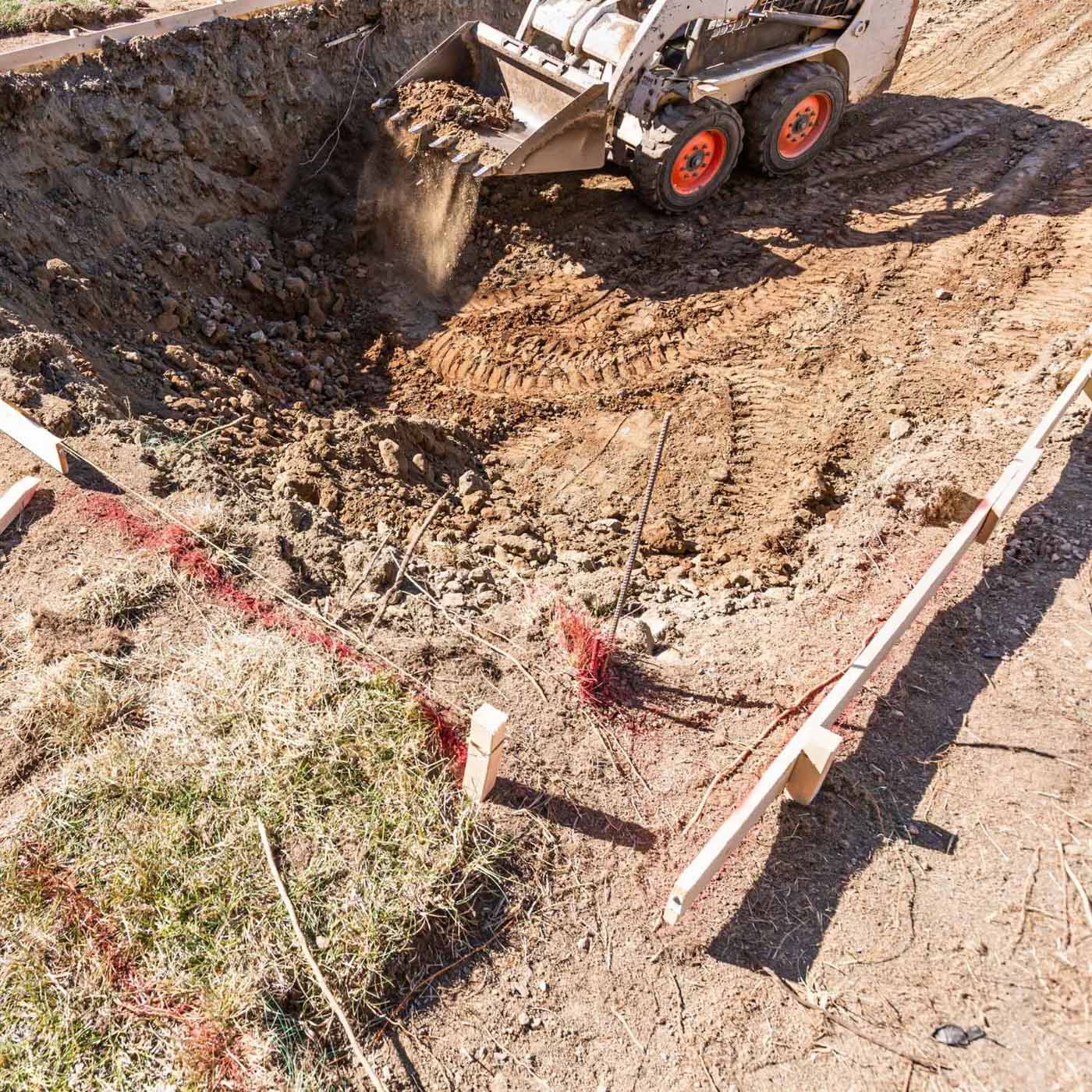
It starts with a site visit and an honest conversation about what you’re working with. Lot size, soil conditions, drainage patterns, what’s already there, and what you want when it’s done. For most Boothwyn properties, that conversation also includes a review of Upper Chichester Township’s permit requirements because projects involving 750 square feet or more trigger Chapter 334’s grading and stormwater management rules, which require a permit, engineering-stamped plans, and an escrow account. That’s not a detail most homeowners know going in, and it’s not something you want to discover mid-project.
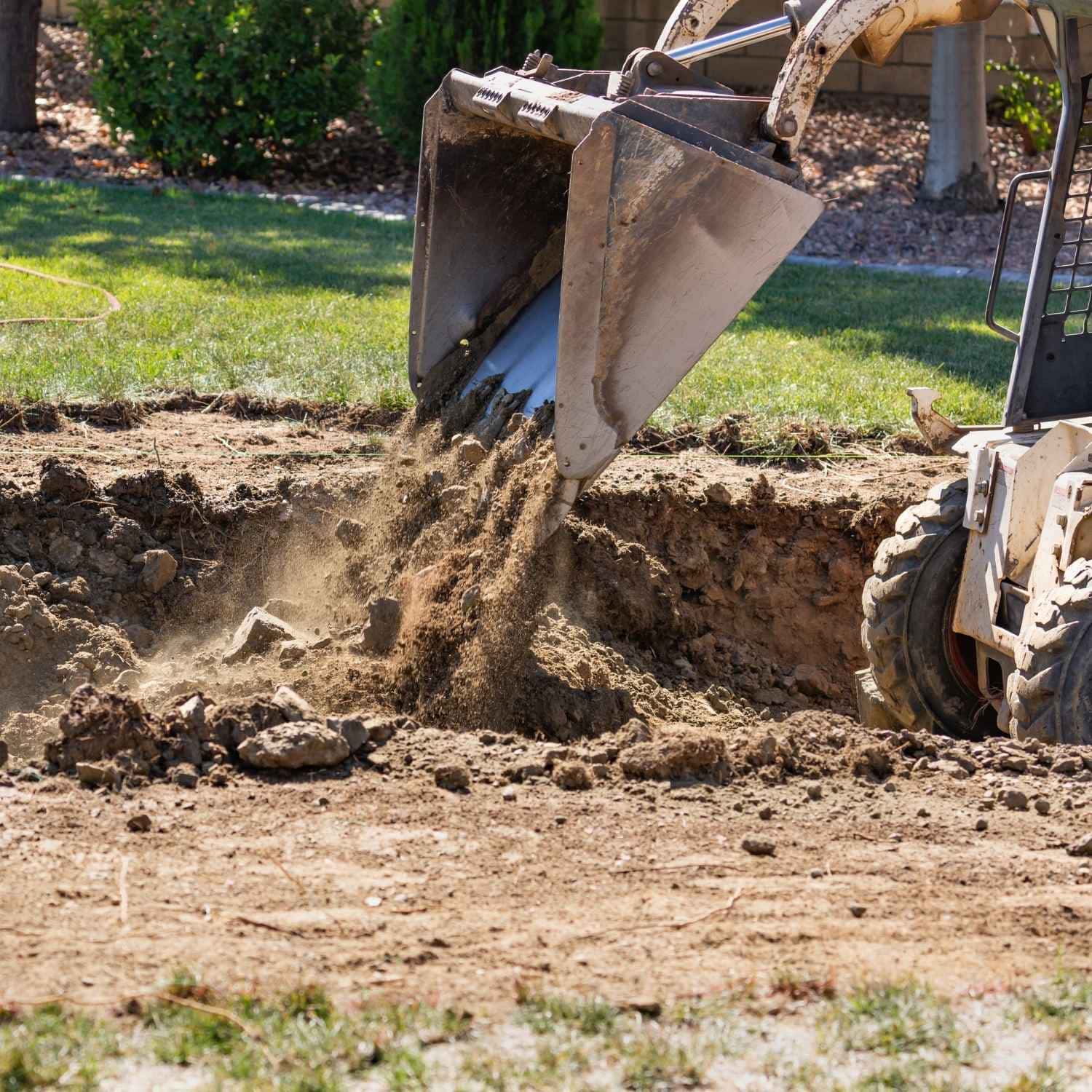
Once the scope is clear and permits are in order, the dig begins. We select equipment based on your lot not the biggest machine available, but the right one for a residential property in a dense neighborhood where neighboring fences and lawns are two feet away. Every excavation and grading plan we create accounts for Delaware County’s clay soil behavior, because the way you compact and slope a clay-heavy lot directly determines how it drains for the next 20 years.
After the earthwork is done, the project doesn’t stop there. If you’re adding a patio, a retaining wall, or a full outdoor living space, we handle it. No scheduling a second contractor, no gaps between what the dig crew left and what the finish crew expected. You get one clean handoff from raw ground to finished space.
Ready to get started?
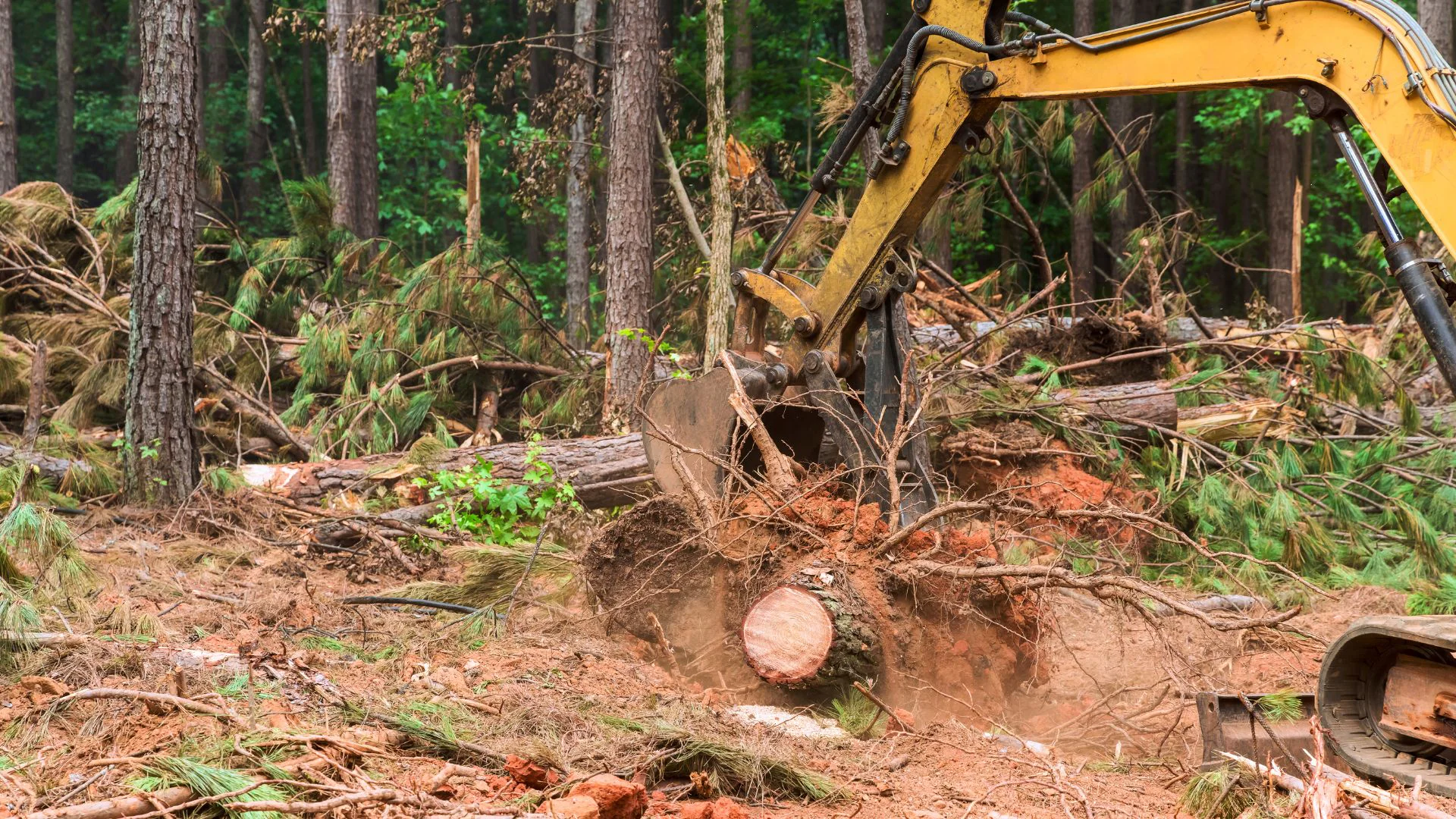
Excavation in Boothwyn covers more ground than most homeowners expect and that’s a good thing. A standard residential excavation project through us includes site clearing and grubbing, bulk excavation, rough and finish grading, drainage planning, and soil compaction suited to Delaware County’s clay-heavy conditions. For projects that require it, retaining wall excavation and foundation-adjacent regrading are part of the same scope.
Upper Chichester Township’s stormwater management requirements under Chapter 490 are built into every plan we create not added on as an afterthought. For projects over 750 square feet, that means engineering-stamped plans and proper drainage design that satisfies the township’s L&I department. We handle the permit process as part of the project, so you’re not navigating that paperwork on your own.
For homeowners along the Naamans Creek corridor or in the lower-lying areas near the Town Center, drainage planning carries extra weight. Those properties sit closer to variable terrain and higher water table conditions that require more careful grading decisions. And for the homeowner who wants to go further a finished patio, an outdoor kitchen, a boulder retaining wall the excavation work connects directly into our full outdoor living scope. The groundwork and the finished product come from the same hands.

Yes, and the threshold is lower than most homeowners expect. Upper Chichester Township’s Chapter 334 Grading and Excavating ordinance requires a permit, engineering-stamped plans, and an escrow account for any project involving 750 square feet or more. A standard patio, retaining wall, or yard regrading job in Boothwyn will often hit that threshold without the homeowner realizing it.
There’s also a bonding requirement for excavation projects exceeding half an acre that bond has to be filed with the Board of Commissioners before any soil removal permit is issued. On top of that, Pennsylvania law requires a PA 811 One Call utility mark before any digging begins, regardless of project size. These aren’t obscure rules they’re enforced, and skipping them creates compliance problems that can surface at resale. Working with us means you don’t get blindsided halfway through the job.
Residential excavation in the Philadelphia area averages around $3,975, with most projects falling somewhere between $1,600 and $6,700 depending on scope, soil conditions, and site access. Foundation excavation for a larger project can run $5,000 to $12,000. Delaware County typically runs 15 to 25 percent higher than rural Pennsylvania due to regional labor costs, so it’s worth factoring that in when comparing quotes.
What drives cost on a Boothwyn lot specifically is the clay soil. Clay takes more time to work correctly it compacts differently than sandy or loamy soil, and improper compaction leads to settling and drainage problems that cost far more to fix after the fact than to address during the original job. Permit fees, engineering sign-off, and disposal costs also factor into the total. A detailed, itemized estimate upfront tells you exactly what you’re paying for and protects you from surprise charges that show up when a contractor didn’t account for local conditions before quoting.
In short you’ll know by the first hard rain. Boothwyn’s clay soil holds water rather than absorbing it, so a yard graded without proper slope or drainage planning will pool, erode, or push water back toward the foundation. That leads to wet basements, soil erosion along retaining walls, and in some cases, structural pressure on foundation walls that builds up over multiple seasons.
The older the home, the more likely the original grading has already shifted. Ranch homes and Cape Cods built in the 1930s through 1950s were graded to standards that have long since settled. A lot that looked fine when the house was built may now have reversed slope toward the foundation meaning every rain event is slowly working against you. Correcting that requires more than just adding topsoil. It requires understanding how the whole lot drains, where the water needs to go, and how to create a stable, compacted grade that holds its shape through Delaware County’s wet springs and freeze-thaw cycles.
The clearest signs are visible lean, cracking along the face or cap, soil pushing through gaps in the wall, or water pooling directly behind or in front of it. Any of those conditions means the wall is no longer doing its job and in most cases, the problem isn’t just the wall itself, it’s the lack of proper drainage behind it.
Most retaining walls on Boothwyn’s older residential lots were built without drainage aggregate, filter fabric, or weep holes. Over time, hydrostatic pressure from Delaware County’s clay soil which swells significantly when saturated builds up behind the wall and forces it forward. Patching or re-facing a wall in that condition buys you a season or two at best. A proper fix means excavating behind the wall, installing drainage correctly, and rebuilding with materials and a footing depth appropriate for the soil conditions. It’s more work upfront, but it’s the last time you deal with it.
Fall is often the best window September through November gives you drier soil, moderate temperatures, and workable ground conditions before the freeze sets in. It’s also a good time to address drainage issues before winter, since water sitting against a foundation or behind a retaining wall through a freeze-thaw cycle accelerates damage.
Spring is the peak demand season, and booking windows fill fast. Homeowners who planned projects over winter often want to start as soon as the ground thaws, which means the best contractors are scheduled out quickly. If you’re planning a spring project, reaching out in late winter gives you the best chance of securing the timing you want. Summer is workable but can bring saturated ground conditions after heavy rain and Delaware County gets its share of those. Whatever the season, the key is giving us enough lead time to pull Upper Chichester Township permits and complete any required engineering review before work begins.
Most can’t and that gap creates real problems. The typical excavation contractor in this area digs, grades, and moves on. The homeowner is then left coordinating with a separate masonry or landscaping crew who inherits ground they didn’t prep and can’t fully vouch for. If the base isn’t right, the patio settles. If the drainage wasn’t planned around the retaining wall, the wall fails. And when that happens, both contractors point at each other.
We handle the full scope excavation, grading, retaining walls, and finished outdoor living spaces with one crew and one point of accountability. For Boothwyn homeowners who want a leveled rear yard that leads to a patio, or a regraded slope that becomes a usable outdoor space, that continuity matters. The person who digs the ground is the same person who finishes it, which means the drainage plan, the compaction approach, and the finished surface are all designed to work together from the start.
Useful Links